As of the end of 2020, Vietnam, Thailand, the Philippines and Malaysia have installed 98% of operating Solar Backup System photovoltaic capacity in Southeast Asia. However, Vietnam is the only country that will continue to install photovoltaic systems steadily in 2020. As the FIT deadline is imminent, about 76% of installations in Vietnam come from the roof, and the remaining 24% are ground installation projects under the feed-in tariff (FIT) system. Thailand and the Philippines are currently driven by rooftop installations of up to 5 megawatts. In Malaysia, large-scale solar (LSS) projects have contributed to recent growth beyond rooftop systems. As emerging markets, Cambodia and Indonesia also have some large-scale project developments.
Vietnam passed a 9.2GW roof installation in 2020. However, unless the government approves new support, it will slow down by 2021. According to the proposed draft of the National Power Development Plan (PDP), 9.1 GW of ground-based photovoltaic projects are in the planning and pre-planning stage, of which 6.3 GW will be completed by 2025 and 2.8 GW will be completed by 2030. These projects are planned to be included in the direct power purchase agreement, and the capacity in the photovoltaic auction plan is 400 MW to 1 GW.
Thailand's photovoltaics were hit by Covid-19 in 2020. According to government data, there will be no new ground-based photovoltaic installations in 2020.
Malaysia continues to be driven by utility-scale projects under the LSS program. Except for 2020, the government has awarded photovoltaic tenders every year since 2017. As of 2021, the upper limit of the project scale will be increased to 100 megawatts.
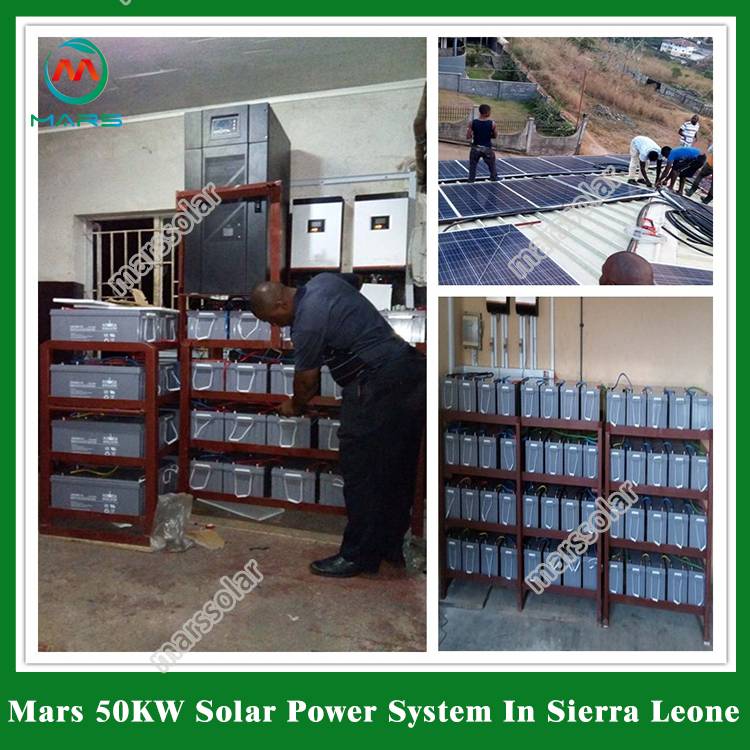
The rooftop market in the Philippines is booming. Photovoltaic systems directly consumed by shopping malls, schools, cold storages, and factories are increasing because permits are easy to obtain. The Philippines is an obvious example of a market driven by photovoltaic competitiveness and does not require clear policy support.
The ongoing political crisis in Myanmar has brought great uncertainty to the 1 GW photovoltaic project awarded in 2020. Most of them were won by Chinese developers such as China Mechanical Engineering Corporation (CMEC) at an average electricity price of US$0.0422/kWh. The original deadline for completion was March 9, 2021. However, under the current situation, the developers are reconsidering the project. , May exit.
Laos relies on hydropower and coal, and exports large amounts of electricity at certain times of the year. However, the summer hydropower dropped and the government eventually imported. In order to diversify the power structure, Laos has begun to allocate photovoltaic projects.
The Cambodian government has installed 260 megawatts of photovoltaic capacity, mainly on the ground outside of any auction plans. Since 2019, the government has been working with the Asian Development Bank to develop a 100 MW auction plan. In 2019, the government awarded Prime Road Alternative Company a capacity of 60MW. Another 40MW capacity is in the second stage of the tender.
The Indonesian photovoltaic market is dominated by 125MW ground-mounted installations. The government’s goal is to achieve 6.5 gigawatts of photovoltaic capacity and 45 gigawatts by 2025 and 2050. According to tracking, Indonesia has 841 megawatts of photovoltaic projects in preparation, including 174 megawatts of floating photovoltaics.
The Southeast Asian market covers the full range of opportunities in the photovoltaic industry. At the same time, regulatory uncertainty has increased the risk for investors in several regions. Despite the uncertainty, it is predicted that the Southeast Asian market will increase its share of 27 GW by 2025.
-
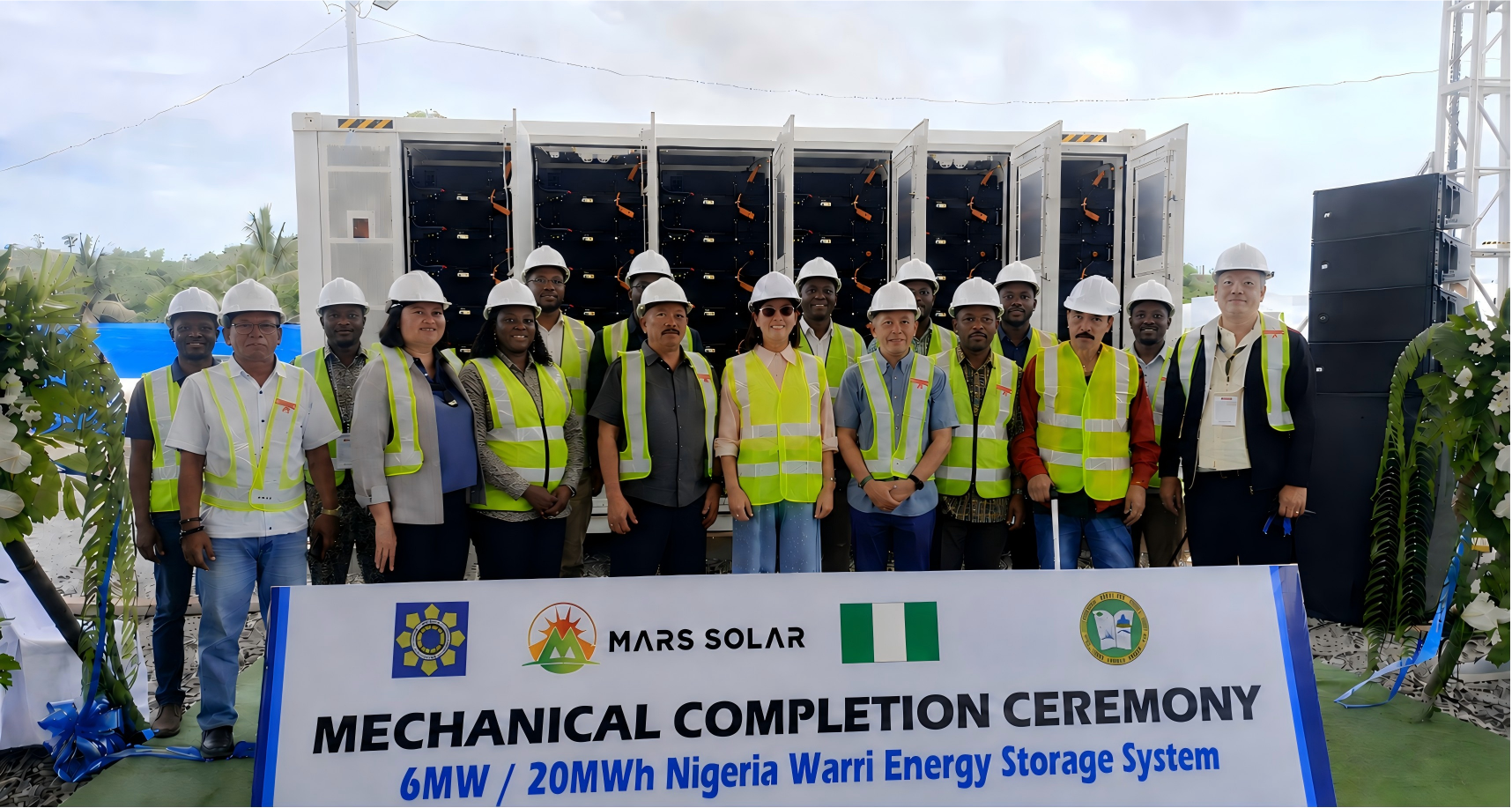 6MW 20MWh Solar Storage in Nigeria Factory + Farm + Residential Case StudyA 6MW solar PV + 20MWh LFP battery storage system in Nigeria powers an integrated factory, farm, and residential complex. The system delivers $108,000+ in monthly electricity savings, reaches payback in approximately 24 months, and provides 25 years of renewable power. This case study covers the engineering configuration, financial model, and operational performance of one of West Africa's most ambitious factory + farm + residential solar deployments.
Do you like ?0
Read more -
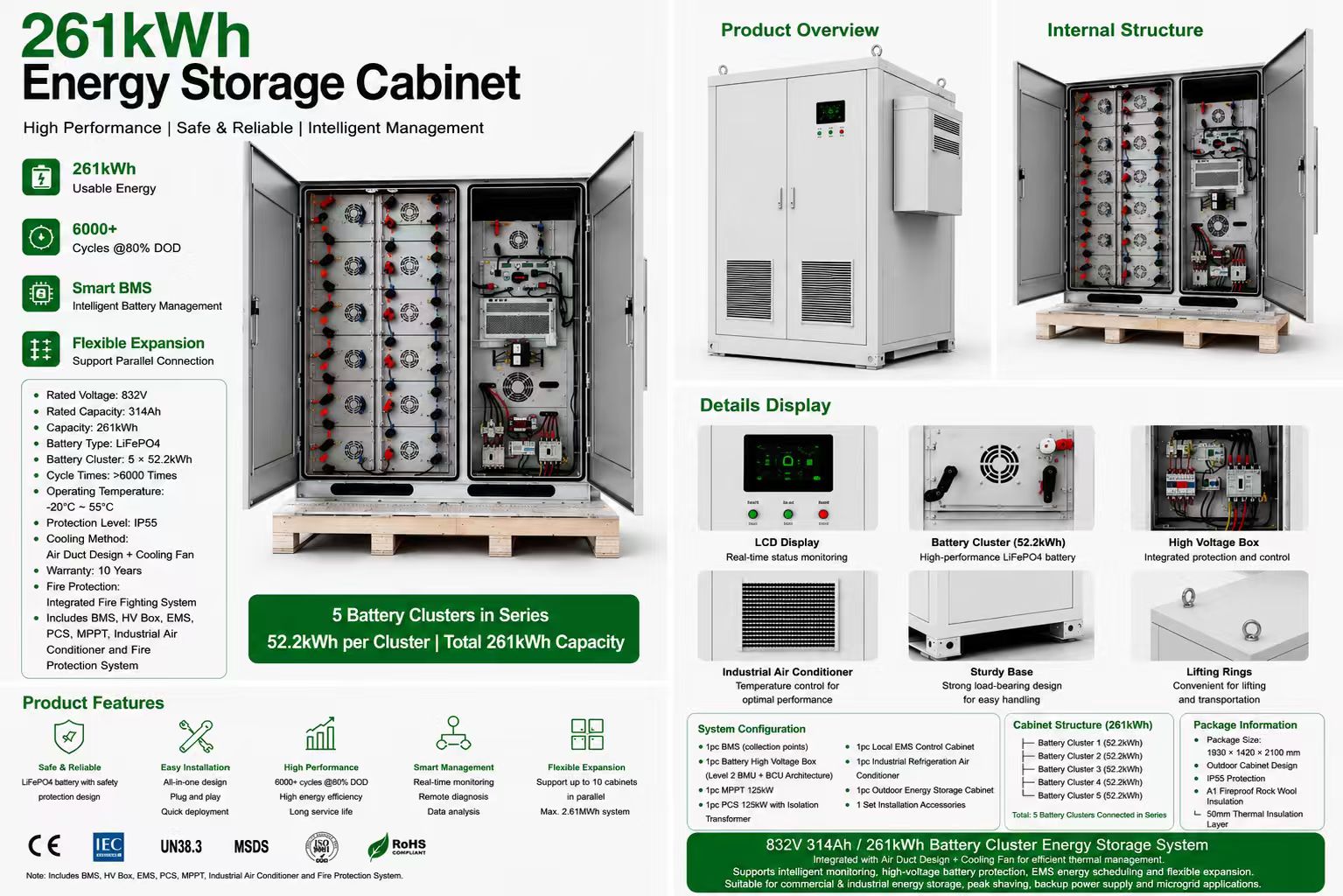 BESS in Nigeria 2026: Battery Energy Storage Cost, Diesel Payback & Import GuideBESS in Nigeria: 2026 pricing, diesel payback, SONCAP, China import guide. Save 60%+ vs diesel. Factory-direct LFP from Mars Solar.
Do you like ?0
Read more -
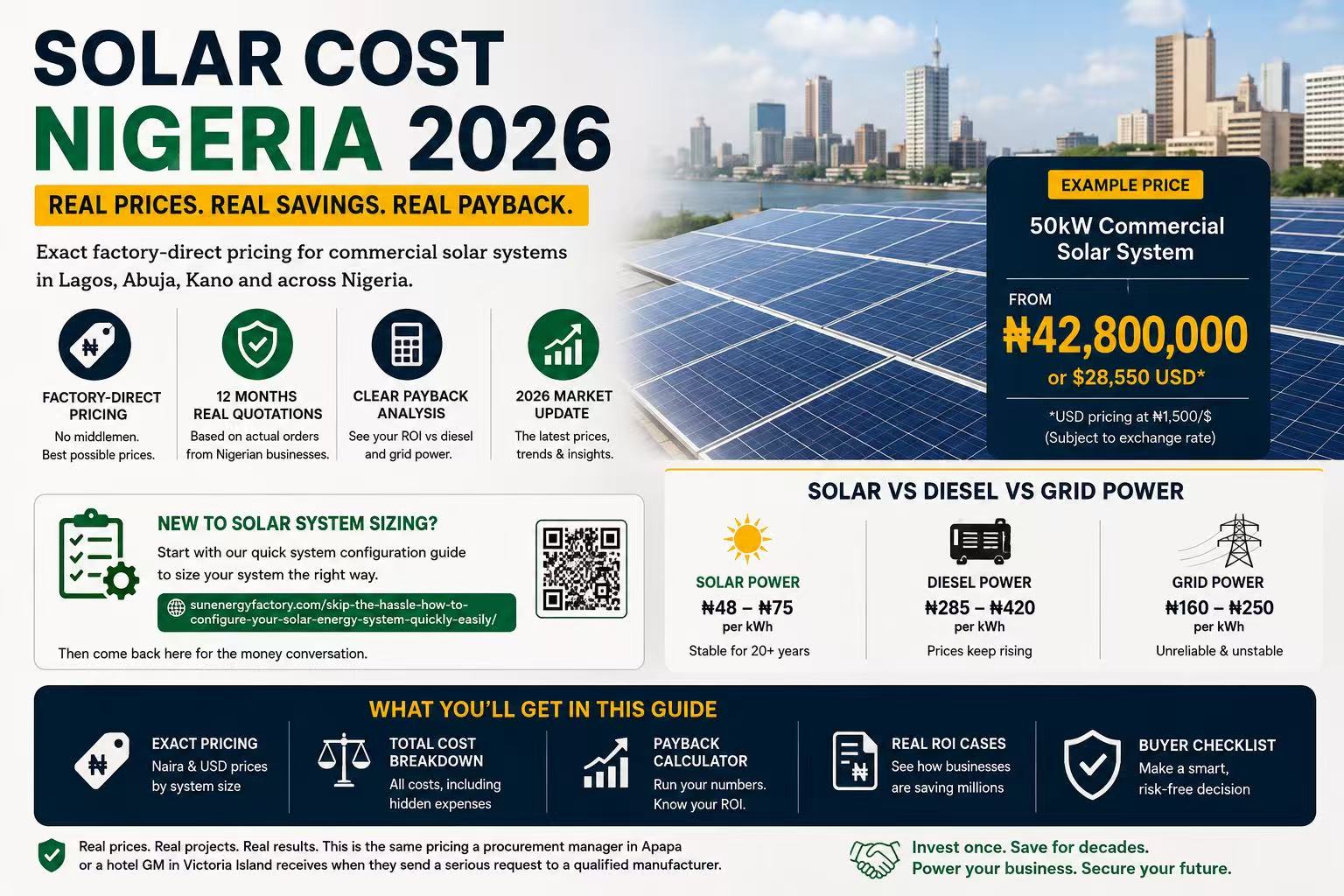 How Much Does Solar Cost in Nigeria? 2026 Real Pricing GuideSolar cost in Nigeria for 5kW to 250kW systems, in Naira and USD. Compare solar vs diesel vs grid, calculate payback, and explore financing options.
Do you like ?0
Read more -
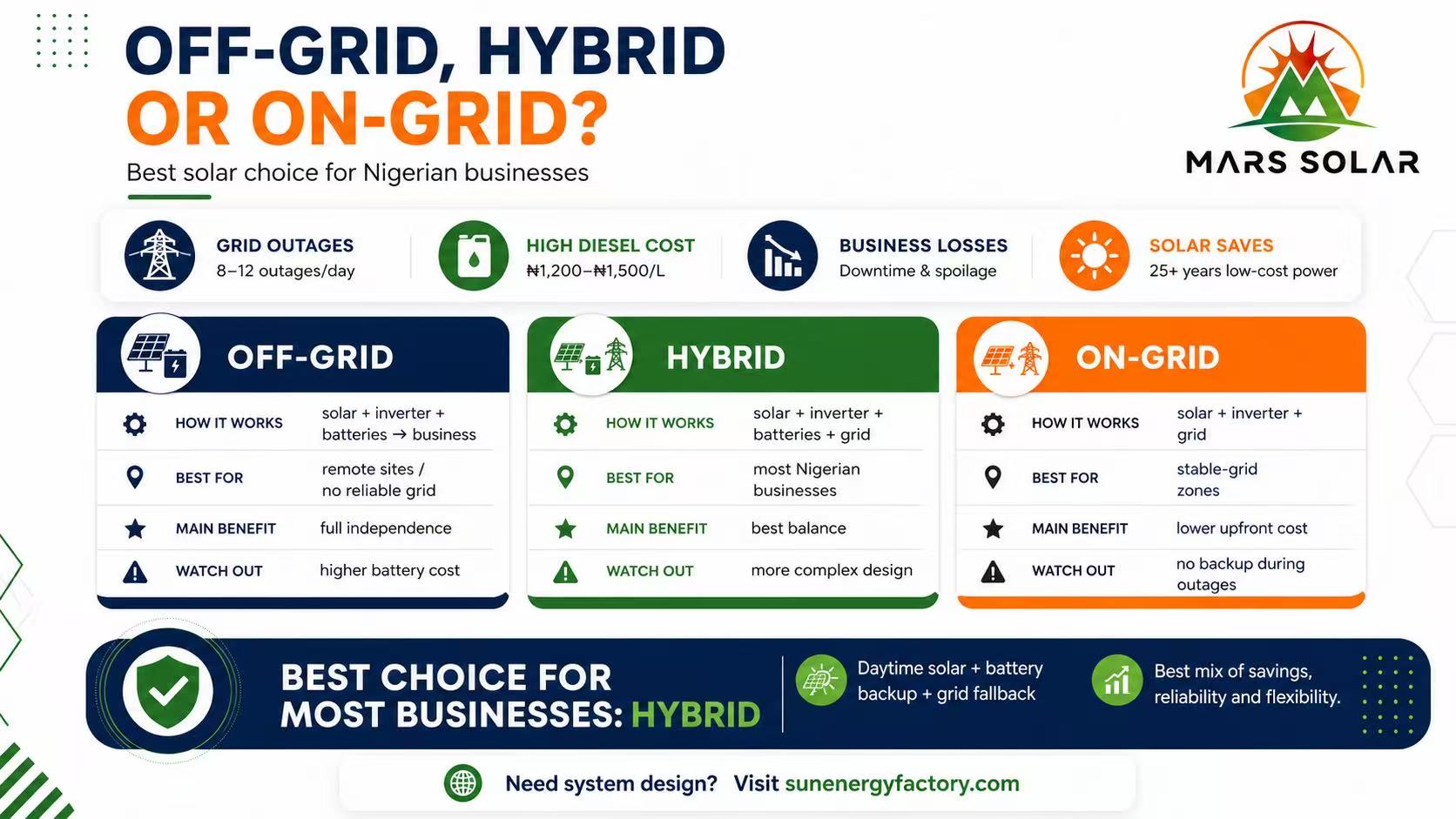 Solar Power Nigeria 2026: Off-Grid vs Hybrid vs On-GridNigeria’s unreliable grid and soaring diesel costs are forcing business owners to take solar seriously. But the biggest question remains: which system — off-grid, hybrid, or on-grid? This 2026 guide breaks down all three solar architectures for Nigeria
Do you like ?0
Read more -
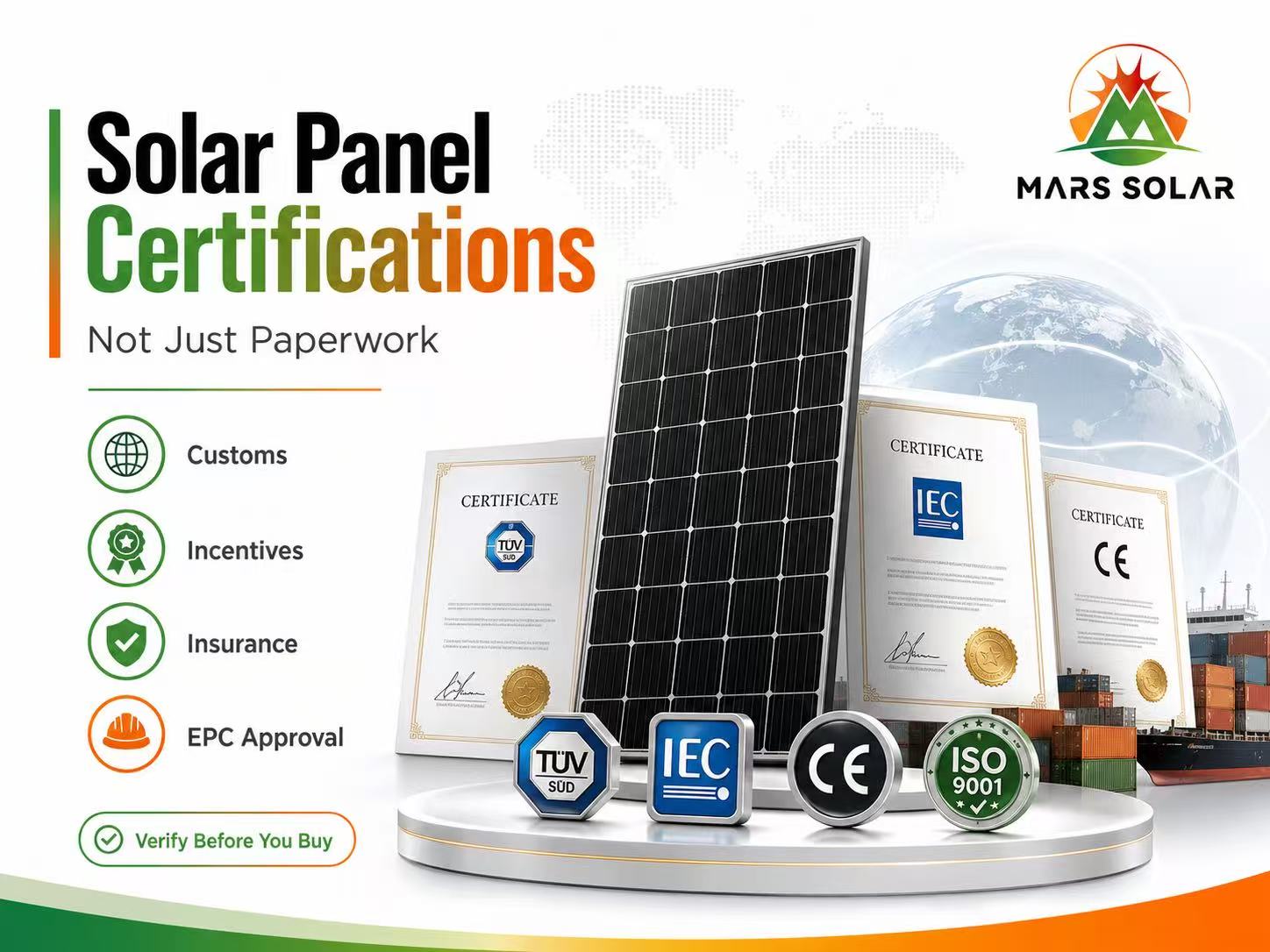 Solar Panel Certifications Explained: IEC, UL, TÜV, CE, ISO — The 2026 GuideA solar panel without proper certifications is unsellable in 90% of international markets. This 2026 guide explains every major certification — IEC 61215, IEC 61730, UL 61730, TÜV, CE, ISO 9001/14001/45001 — what it tests, who issues it, which markets req
Do you like ?0
Read more -
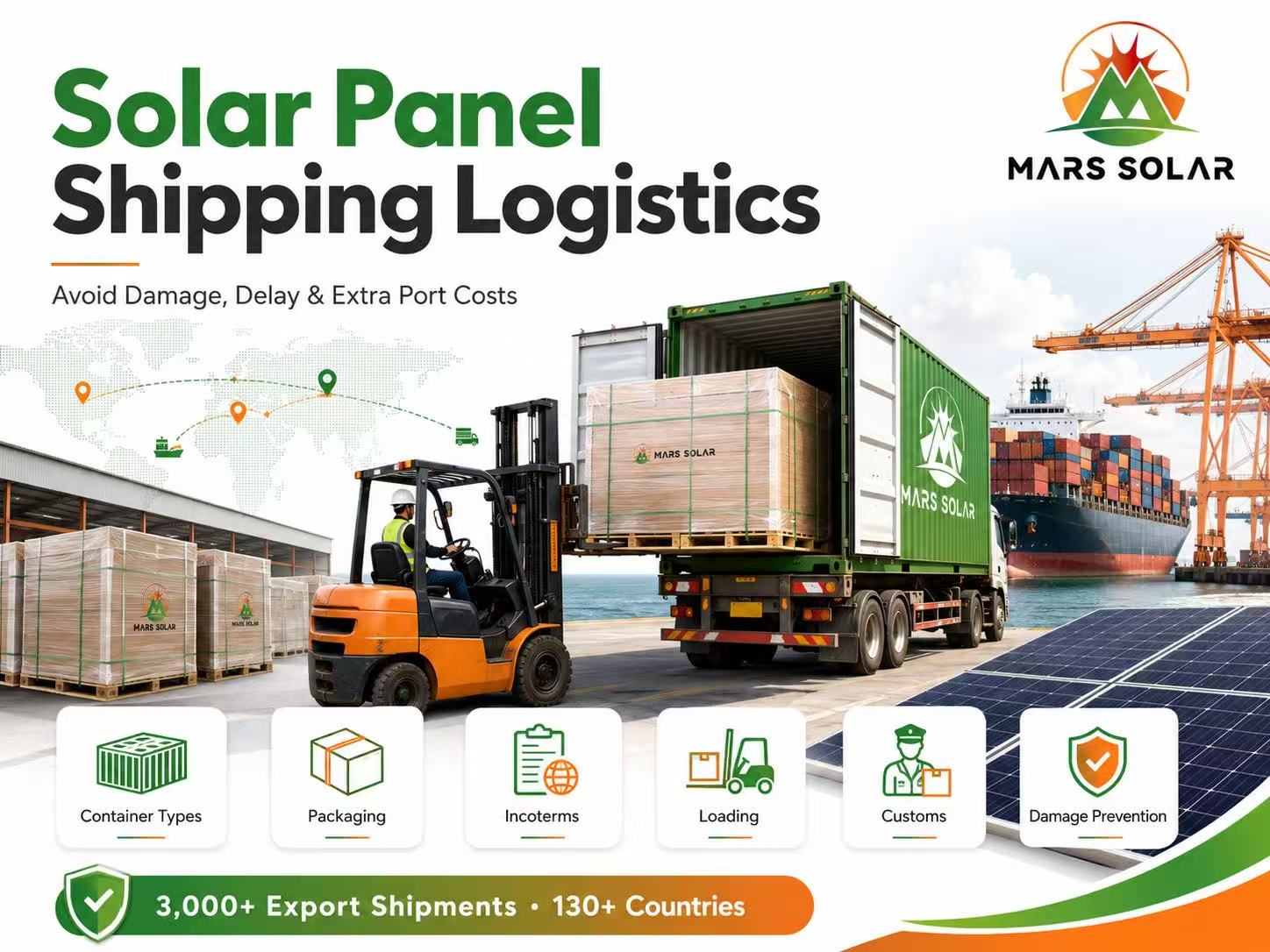 Solar Panel Shipping & Container Loading: The 2026 Complete GuideThe solar panels leaving the factory are perfect. By the time they arrive at your warehouse, 3–7% might be damaged, delivery could be 2 weeks late, and demurrage at the destination port could wipe out your margin. This 2026 guide covers container types (2
Do you like ?0
Read more