How Much Does Solar Cost in Nigeria?
2026 Real Pricing Guide
Real kW-by-kW pricing, ₦-per-kWh comparisons, and what Nigerian buyers actually pay in 2026 — straight from factory-direct quotations.
Last updated: August 2026 | By the Solar Power Manufacturer Editorial Team
The Cost Question Every Nigerian Buyer Asks First
Ask any business owner in Lagos, Abuja, or Kano what stops them from going solar, and you will hear two answers: “how much does it cost?” and “will it really pay back?” Both questions deserve a serious, data-backed answer — not a sales pitch.
This 2026 guide is built on real factory-direct quotations delivered to Nigerian commercial buyers over the last 12 months. It is not a marketing number designed to make solar look cheap. It is the same pricing a procurement manager in Apapa or a hotel GM in Victoria Island would receive this month if they sent a serious request to a qualified manufacturer.
You will see exact ₦ and USD figures by system size, a side-by-side comparison against diesel and grid power, the hidden costs most buyers forget, and a payback calculator you can run on your own numbers. If you are new to system sizing, start with our quick system configuration guide — then come back here for the money conversation.
Solar Cost in Nigeria 2026 — Quick Answer
Before the detail, the headlines. All prices below are factory-direct landed quotations in Lagos or Port Harcourt, including panels, hybrid inverter, lithium battery bank, mounting, BOS, installation and commissioning. Excludes building modifications and import duty adjustments.
|
System Size |
Typical Load (Nigeria) |
Hybrid System Range |
Off-Grid System Range |
|
5 kW |
1 home, small shop |
₦4.5M – ₦6.5M ($3,000 – $4,300) |
₦5.5M – ₦8M ($3,700 – $5,300) |
|
10 kW |
Small office, clinic |
₦8M – ₦12M ($5,300 – $8,000) |
₦10M – ₦15M ($6,700 – $10,000) |
|
20 kW |
Supermarket, guest house |
₦16M – ₦24M ($10,700 – $16,000) |
₦20M – ₦30M ($13,300 – $20,000) |
|
50 kW |
Mid-size business, cold storage |
₦42M – ₦62M ($28,000 – $41,300) |
₦55M – ₦80M ($36,700 – $53,300) |
|
100 kW |
Hotel, hospital, factory |
₦85M – ₦125M ($56,700 – $83,300) |
₦110M – ₦165M ($73,300 – $110,000) |
|
250 kW |
Industrial, large hotel |
₦210M – ₦310M ($140,000 – $206,700) |
₦275M – ₦420M ($183,300 – $280,000) |
Exchange rate used: ₦1,500 / USD (Aug 2026 indicative). On-grid (battery-less) systems run roughly 25–35% cheaper than hybrid, but only suit sites with reliable grid — see our comparison of off-grid vs hybrid vs on-grid solar for the full picture.
What Drives Solar Pricing in Nigeria
Two buyers with the same load list can receive quotes that differ by 40%. Here is why.
1. System size and architecture
Obviously the biggest driver — a 100kW system costs roughly 5× a 20kW system, with mild economies of scale. Architecture matters too: a hybrid system with batteries costs 25–35% more than a pure on-grid system with the same panel count.
2. Battery storage (the single largest cost driver)
Lithium battery pricing in 2026 sits around $95–110 per kWh wholesale. A 100kW hybrid system with 200kWh of battery storage carries roughly 35–40% of the total system cost in batteries alone. The kWh you specify directly drives the invoice. See our energy storage systems lineup for capacity options.
3. Equipment tier
Tier-1 panels (Jinko, JA, Trina) cost ~15% more than unbranded OEM panels but come with bankable warranties and better long-term yield. Same logic applies to hybrid inverters. If a quote is dramatically below market, the brand question is the first place to dig.
4. Brand vs OEM components
OEM panels from a verified Chinese factory deliver 90–95% of the performance of tier-1 brands at 40–50% of the cost — when the factory is real, audited, and export-ready. That is why we publish a 7-step factory audit guide and a breakdown of MOQ, lead time and payment terms — so buyers can verify substance, not just price.
5. Installation complexity
A flat rooftop with easy access installs faster than a multi-storey building with restricted roof space, or a ground-mount on soft soil. Structural mounting, cable runs, and switchgear can swing a quote by 10–20% on otherwise identical equipment lists.
6. Shipping, clearing, and import duty
FOB China to Lagos or Onne Port adds 8–15% to equipment cost depending on volume and route. Nigerian import duty on solar equipment ranges 5–7% depending on classification; VAT is 7.5%. Our cargo container loading guide shows exactly how systems are packed and shipped.
7. Naira / USD exchange rate
Most solar components are priced in USD at the factory. When the naira moves 10% against the dollar, the naira price of your system moves with it. Lock the exchange rate at the time of contract — not at the time of payment — to avoid nasty surprises.
Real 2026 Pricing by System Size
What follows is a kW-by-kW breakdown for the most common commercial sizes in Nigeria. Each section includes the equipment list, the realistic quote range, and the type of business it suits. All figures assume hybrid architecture (solar + battery + grid fallback), tier-1 or verified-OEM components, factory-direct supply, professional installation.
5 kW Hybrid Solar System — ₦4.5M to ₦6.5M
Powers: a 3-bedroom home, a small retail shop, or a 5–10 person office.
Component snapshot: ~10 × 550W bifacial panels, 5kW hybrid inverter, 10kWh lithium battery bank, roof mounting, full BOS, installation.
Cost range: ₦4,500,000 – ₦6,500,000 (US$3,000 – $4,300). Off-grid variant: ₦5.5M – ₦8M.
Typical payback: 18–28 months for homes currently running a small generator 4–6 hours daily.
10 kW Hybrid Solar System — ₦8M to ₦12M
Powers: a small clinic, an office of 15–25 staff, a guest house, or a medium shop with refrigeration.
Component snapshot: ~18 × 550W panels, 10kW hybrid inverter, 20kWh lithium battery bank, roof mounting, full BOS.
Cost range: ₦8,000,000 – ₦12,000,000 (US$5,300 – $8,000). Off-grid variant: ₦10M – ₦15M.
Typical payback: 10–18 months for any business burning 15–25 litres of diesel daily.
20 kW Hybrid Solar System — ₦16M to ₦24M
Powers: a supermarket, a 10–15 room guest house, or a small cold-storage facility.
Component snapshot: ~36 × 550W panels, 20kW hybrid inverter, 40kWh lithium battery bank, mounting structure.
Cost range: ₦16,000,000 – ₦24,000,000 (US$10,700 – $16,000). Off-grid variant: ₦20M – ₦30M.
Typical payback: 10–16 months. This is the size where solar becomes a no-brainer for most Nigerian SMEs.
50 kW Hybrid Solar System — ₦42M to ₦62M
Powers: mid-size manufacturing, a 20-room hotel, cold-chain logistics, or a hospital wing.
Component snapshot: ~90 × 550W panels, 50kW hybrid inverter, 100kWh lithium battery bank, ground or rooftop array.
Cost range: ₦42,000,000 – ₦62,000,000 (US$28,000 – $41,300). Off-grid variant: ₦55M – ₦80M.
Typical payback: 8–14 months for any business replacing significant diesel runtime.
100 kW Hybrid Solar System — ₦85M to ₦125M
Powers: a 30–50 room hotel, a mid-size factory, a hospital, or a large commercial building.
Component snapshot: ~180 × 550W panels, 100kW hybrid inverter, 200kWh lithium battery bank, switchgear, monitoring.
Cost range: ₦85,000,000 – ₦125,000,000 (US$56,700 – $83,300). Off-grid variant: ₦110M – ₦165M.
Field reference: our 100kW Nigerian hotel installation paid back in 8–12 months and continues to save ₦2,000,000 ($1,460) per month versus diesel-and-grid. Similar pattern in our 250kW Ghana hotel case study (60% electricity cost reduction).
250 kW Hybrid Solar System — ₦210M to ₦310M
Powers: a 100+ room hotel, a large industrial site, or a manufacturing facility with significant daytime load.
Component snapshot: ~455 × 550W panels, 250kW hybrid inverter, 500kWh lithium battery bank, MV switchgear, full monitoring.
Cost range: ₦210,000,000 – ₦310,000,000 (US$140,000 – $206,700). Off-grid variant: ₦275M – ₦420M.
Typical payback: 14–22 months at current diesel prices. Industrial-scale projects can also qualify for concessional financing under Nigerian renewable-energy programs.
Solar vs Diesel vs Grid — Cost per kWh in Nigeria
The real comparison is not the sticker price. It is what each kWh actually costs you over 5 years — and whether it is even there when you need it. Here is the honest 2026 picture.
|
Power Source |
₦ per kWh |
Reliability |
Initial Cost |
5-Year Cost (100kW site, indicative) |
|
National Grid (Disco) |
₦90–110 |
Very low (8–12 outages/day) |
None (connection only) |
₦180M – ₦220M (incl. diesel + spoiled goods + downtime) |
|
Diesel Generator |
₦350–450 |
High (subject to fuel) |
₦15M – ₦25M (genset + tank) |
₦420M – ₦540M (fuel + maintenance + downtime) |
|
Hybrid Solar (this guide) |
₦55–80 (levelized) |
High (auto-switch) |
₦85M – ₦125M |
₦95M – ₦140M (system + minimal maintenance) |
|
Off-Grid Solar |
₦80–110 (levelized) |
Highest (no grid dependency) |
₦110M – ₦165M |
₦125M – ₦185M |
Note: "5-year cost" for grid and diesel includes estimated business losses from downtime (spoiled inventory, idle staff, lost production). That line is often invisible in a quote — but it is the most expensive part of staying on grid + diesel.
What Should Be in a Proper Solar Quote
A real quotation is not a one-line price per watt. It is a bill of materials. If your quote is missing half of these line items, it is not a quote — it is a guess.
- PV modules — quantity, wattage per panel, brand, model, IEC certification status (see our certification guide for the certificates that matter in Nigeria)
- Hybrid inverter — brand, model, kW rating, grid-tie capability, off-grid capability, warranty
- Lithium battery bank — brand, kWh capacity, cycle life, BMS specifications, warranty
- Mounting structure — roof-mount or ground-mount, aluminium or galvanised steel, tilt angle
- DC and AC cabling — solar-grade DC cable, AC distribution, conduit and trunking
- Combiner boxes and protection — DC isolators, AC breakers, surge protection, fuses
- Monitoring system — remote monitoring app, data logging, alert thresholds
- Installation labor — site survey, mounting, wiring, commissioning, testing
- Engineering and design — load audit, system sizing, single-line diagram, BoM
- Logistics — shipping terms (FOB / CIF), insurance, clearing, local delivery
- Warranty and after-sales — panel warranty, inverter warranty, battery warranty, response commitment
If a quote lumps everything into "solar system — ₦X", ask for the breakdown. A transparent supplier will provide it without hesitation.
Hidden Costs Most Nigerian Buyers Forget
The headline price is rarely the final price. Budget for these line items or they will eat into your savings.
Import duty and VAT
Solar equipment imported into Nigeria attracts 5–7% import duty depending on HS code classification, plus 7.5% VAT. Confirm the rate with your clearing agent before signing a contract — re-classification mid-shipment is expensive.
Shipping and clearing
FOB China to Lagos or Onne Port typically adds 8–15% to equipment cost depending on container size and route. CIF terms bundle this into the supplier quote but cost more upfront. Our cargo container loading guide shows how the equipment is packed and what to expect.
Local transportation and rigging
Port to site, especially for sites outside Lagos or Port Harcourt, can run ₦500,000 – ₦2,000,000 depending on distance and equipment size. Includes crane hire for large systems.
Permits and inspections
NERC registration for grid-tied systems above 100kW. Local government permits vary by state. Factor in ₦200,000 – ₦800,000 for paperwork and inspections on a commercial project.
Insurance
All-risk cover on a ₦100M solar system runs roughly ₦400,000 – ₦700,000 per year. It is not optional for financed projects.
Maintenance reserve
Budget 1–2% of system cost per year for routine maintenance, panel cleaning, and consumables. Lithium batteries in Nigeria typically last 8–12 years; inverters 10–15 years; panels 25+ years.
Spare parts buffer
Keep a small reserve of fuses, surge protectors, and a spare inverter fan. Lead time from China is 30–45 days — being down for that long during peak season is not acceptable for most businesses.
How to Calculate Your Own Payback Period
Forget generic "solar pays back in X years" claims. Run your own number in four steps. Takes 5 minutes.
Step 1: Your monthly power bill
Pull your last 3 months of electricity bills and your last 3 months of diesel purchase receipts. Total them. That is your true current monthly power cost.
Step 2: Solar coverage estimate
A well-designed hybrid system typically covers 70–85% of a commercial site’s annual kWh consumption. The remainder still comes from grid or diesel during low-sun periods and peak demand events.
Step 3: Monthly savings
Multiply your current monthly cost by 0.75 to get a realistic monthly savings figure. Be conservative — under-promising and over-delivering is better than the reverse.
Step 4: Payback months
Divide your system quote by your monthly savings. That is your payback period in months. Most well-designed Nigerian commercial hybrid systems land between 8 and 18 months.
Worked example: a Lagos hotel currently spends ₦4,000,000/month on diesel + grid. A 100kW hybrid system costs ₦110,000,000. Estimated monthly savings = ₦4M × 0.75 = ₦3M. Payback = ₦110M ÷ ₦3M = ~37 months. Wait — that looks slow. Check the math: at ₦4M/month diesel + grid and 75% coverage, you save ₦3M/month. The system pays back in ~37 months, then produces near-free electricity for 23+ more years. Compare that lifetime picture against continuing to spend ₦4M every month forever.
Financing Solar in Nigeria — Real Options
Upfront cash is one path. Not the only one. Here is what is actually available to Nigerian commercial buyers in 2026.
|
Option |
How It Works |
Typical Terms (2026) |
|
Cash upfront |
Pay 50–100% on order, balance on delivery |
Best total cost; no financing charge |
|
Bank loan (commercial) |
Standard commercial facility |
18–28% interest, 24–60 month tenor |
|
CBN renewable energy intervention |
Concessional facility for renewable energy projects |
9–12% interest, longer tenor (subject to CBN program availability) |
|
Vendor / supplier financing |
Manufacturer-financed portion of the order |
15–22% interest, 12–36 month tenor |
|
Lease-to-own |
Third party owns the system, you pay monthly |
Monthly OPEX-style payment; system transfers at end of term |
|
Crowdfunding / cooperative |
Pooled capital from investors or a buying group |
Terms negotiated by the group |
The cheapest financing is not the lowest interest rate — it is the path that gets you to operational savings the fastest. A higher-interest loan you start using today is cheaper than a low-interest loan that takes 6 months to disburse. Our MOQ, lead time and payment terms guide explains the typical supplier payment structure.
How to Get an Accurate Solar Quote (the Proper Way)
Most buyers get bad quotes because they request quotes the wrong way. Five steps to fix that:
- 1. Audit your loads. List every appliance, its wattage, quantity, and hours of use per day. Include air-conditioners, freezers, security systems — everything. A vague "we run a hotel" wastes everyone’s time.
- 2. Document your power history. Grid outage frequency, longest outage in the past year, monthly diesel spend. This drives the battery sizing more than the panel sizing.
- 3. Request a site-specific design, not a price list. Any factory that quotes without asking about your load profile is selling a product, not designing a system. Use our system configuration guide to put together a credible request.
- 4. Compare 3 quotations — apples to apples. Same equipment tier, same battery kWh, same scope of installation. The lowest quote often has the smallest battery — that is the most common trap.
- 5. Verify the supplier before paying. Factory audit, IEC certifications, export track record, references in your region. Our factory audit checklist walks through the seven steps. Top solar panel manufacturers in China is a useful starting shortlist.
5 Mistakes That Quietly Inflate Solar Costs
- Buying on price per watt alone. The cheapest quote usually means undersized batteries, no engineering, no installation support, no spare parts. The real cost of a solar system is its performance over 25 years — not the invoice.
- Choosing on-grid to save money — then discovering blackouts still stop the business. On-grid is 25–35% cheaper upfront but useless during an outage. If your site has unreliable power, you need hybrid. Read our comparison of off-grid vs hybrid vs on-grid before deciding.
- Under-sizing the battery. The most common engineering error. Buyers size batteries for daytime and end up with a system that dies at 9pm. Battery capacity must be calculated against your evening and overnight load profile.
- Skipping engineering and going straight to a quote. The same load list can produce quotes that differ by 30–40% — not because one supplier is "cheaper," but because the systems are engineered differently. Engineering is not an upsell; it is the design.
- Importing without proper certification. Customs can hold uncertified equipment for months. Insurers refuse claims on non-IEC-certified panels. Disco disconnects unapproved grid-tie inverters. Confirm certifications before shipping — our certification guide explains which ones matter.
Frequently Asked Questions
How much does a 5kW solar system cost in Nigeria in 2026?
A 5kW hybrid system (solar + battery + grid fallback) costs ₦4.5M – ₦6.5M including installation. Off-grid variant: ₦5.5M – ₦8M. On-grid (no battery): ₦3.2M – ₦4.5M.
How much does a 100kW solar system cost in Nigeria?
A 100kW hybrid system with 200kWh of battery storage costs ₦85M – ₦125M. Off-grid variant: ₦110M – ₦165M. Our 100kW hotel case study shows a real installation at this scale.
Is solar cheaper than a diesel generator in Nigeria?
Yes. At ₦1,400/litre and a typical genset consuming 0.4 L/kWh, diesel costs ₦350–450 per kWh. A hybrid solar system delivers electricity at ₦55–80 per kWh levelized over 20 years — roughly 5× cheaper.
What is the payback period for a hybrid solar system?
For Nigerian commercial sites replacing significant diesel runtime, payback is typically 8–18 months. See the worked example in our 250kW Ghana hotel case study and 100kW Abuja rice mill project for field-verified numbers.
Can I pay for solar in installments in Nigeria?
Yes. Options include commercial bank loans (18–28% interest), CBN renewable energy intervention funds (9–12% interest, subject to program availability), vendor financing from the manufacturer (15–22%), and lease-to-own arrangements.
Does solar work during Nigeria’s rainy season?
Yes — but with reduced output. A properly designed system accounts for the lowest-yield months (typically July–September in southern Nigeria). The battery bank and grid fallback carry the load during cloudy weeks. Off-grid systems in remote areas often pair with a small backup generator for extended cloud cover.
Why is solar more expensive in Nigeria than in South Africa?
Three reasons. Import duties add 5–7%. Shipping and clearing add 8–15%. And the FX rate means every USD-denominated component costs more naira. Factory-direct supply short-circuits most of this — that is why our China factory-direct component line matters.
What certifications do my solar panels need for Nigeria?
At minimum: IEC 61215 (panel performance), IEC 61730 (panel safety), and IEC 62109 (inverter safety). For grid-tied systems above 100kW, NERC registration is also required. Our certification guide covers the full list.
Get a 2026 Factory-Direct Quote for Your Site
Send us your load list (appliances, quantities, run-hours), your last 3 months of grid and diesel bills, and your site location. Our engineers will design the right hybrid or off-grid system for your loads and grid pattern, and send a factory-direct quotation in 24 hours — typically 25–40% below what local integrators quote because we manufacture every component ourselves. Request your free design →
Already running a solar system and looking to expand? We support hybrid retrofits, battery additions, and OEM/ODM supply for distributors across Nigeria, Ghana, Sudan, and West Africa. Contact our factory with your target market and current setup — we will respond within one business day.
-
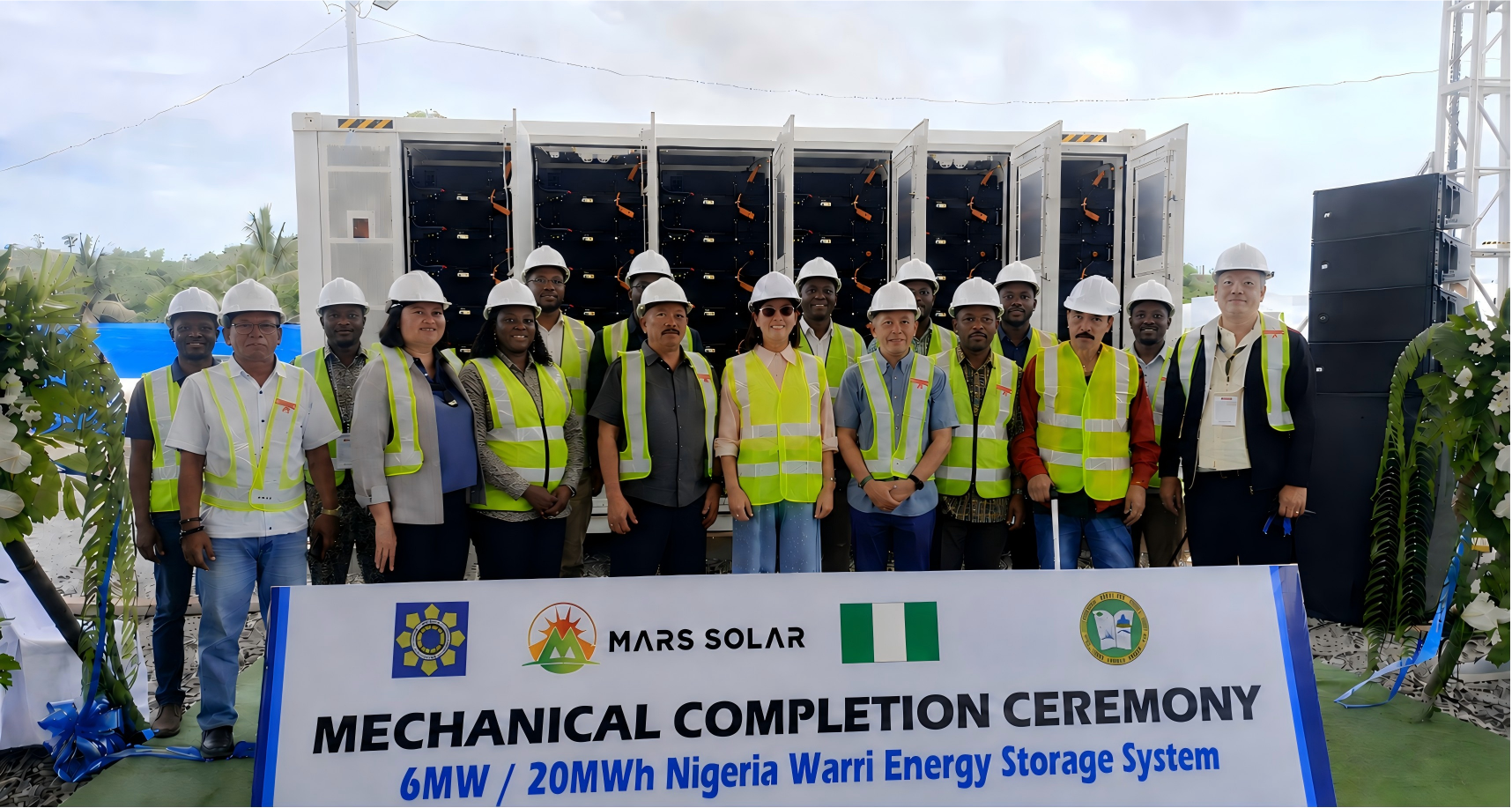 6MW 20MWh Solar Storage in Nigeria Factory + Farm + Residential Case StudyA 6MW solar PV + 20MWh LFP battery storage system in Nigeria powers an integrated factory, farm, and residential complex. The system delivers $108,000+ in monthly electricity savings, reaches payback in approximately 24 months, and provides 25 years of renewable power. This case study covers the engineering configuration, financial model, and operational performance of one of West Africa's most ambitious factory + farm + residential solar deployments.
Do you like ?0
Read more -
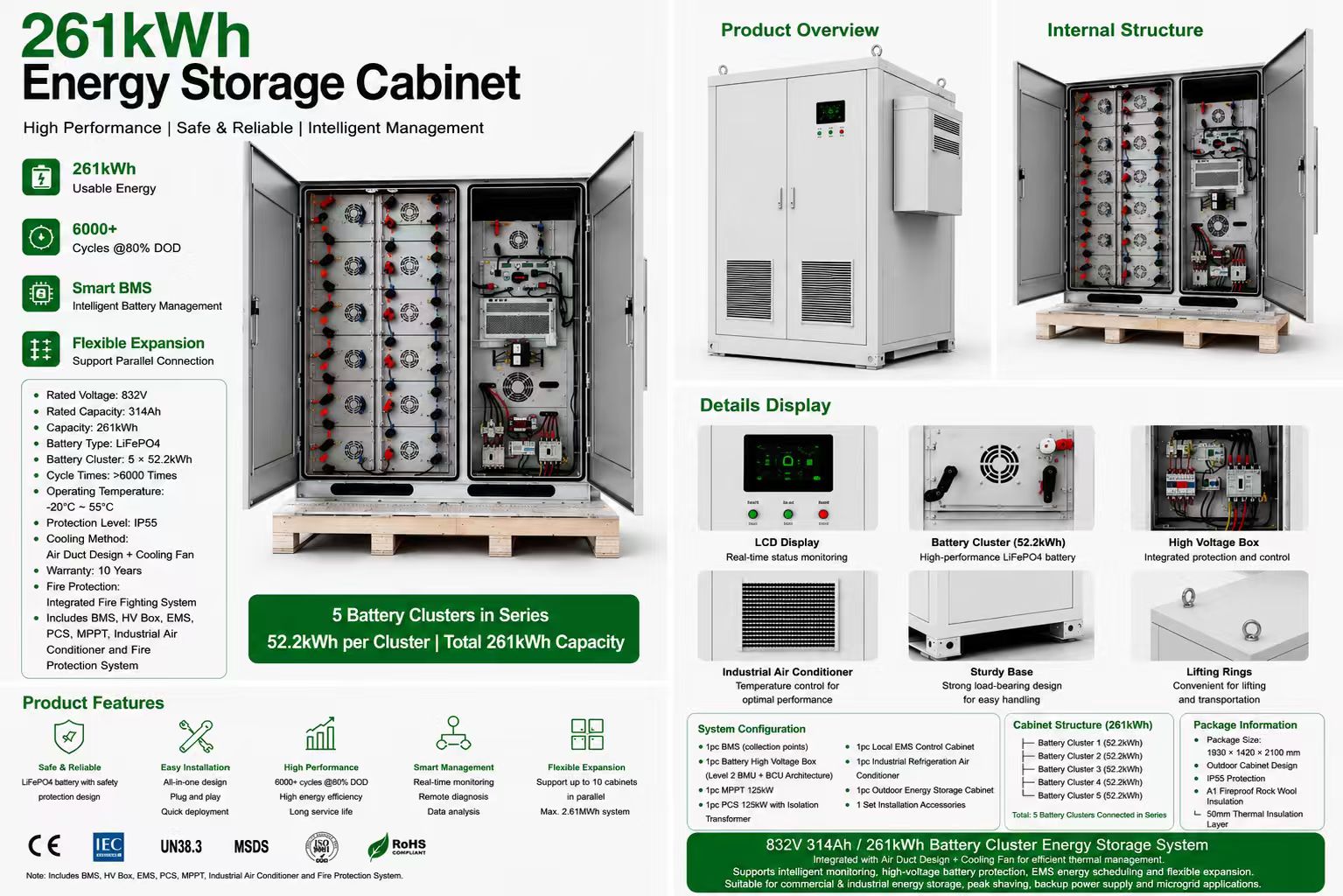 BESS in Nigeria 2026: Battery Energy Storage Cost, Diesel Payback & Import GuideBESS in Nigeria: 2026 pricing, diesel payback, SONCAP, China import guide. Save 60%+ vs diesel. Factory-direct LFP from Mars Solar.
Do you like ?0
Read more -
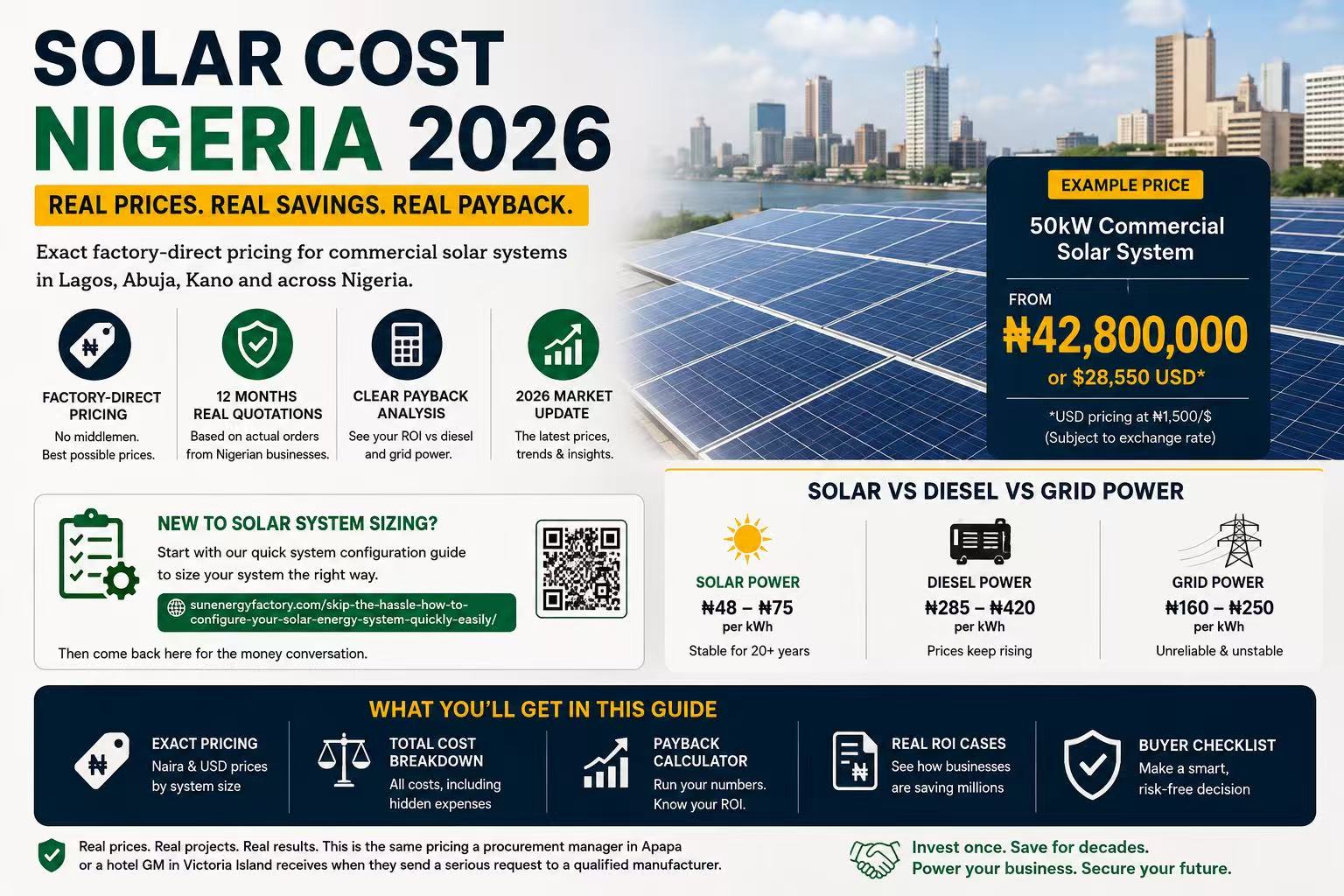 How Much Does Solar Cost in Nigeria? 2026 Real Pricing GuideSolar cost in Nigeria for 5kW to 250kW systems, in Naira and USD. Compare solar vs diesel vs grid, calculate payback, and explore financing options.
Do you like ?0
Read more -
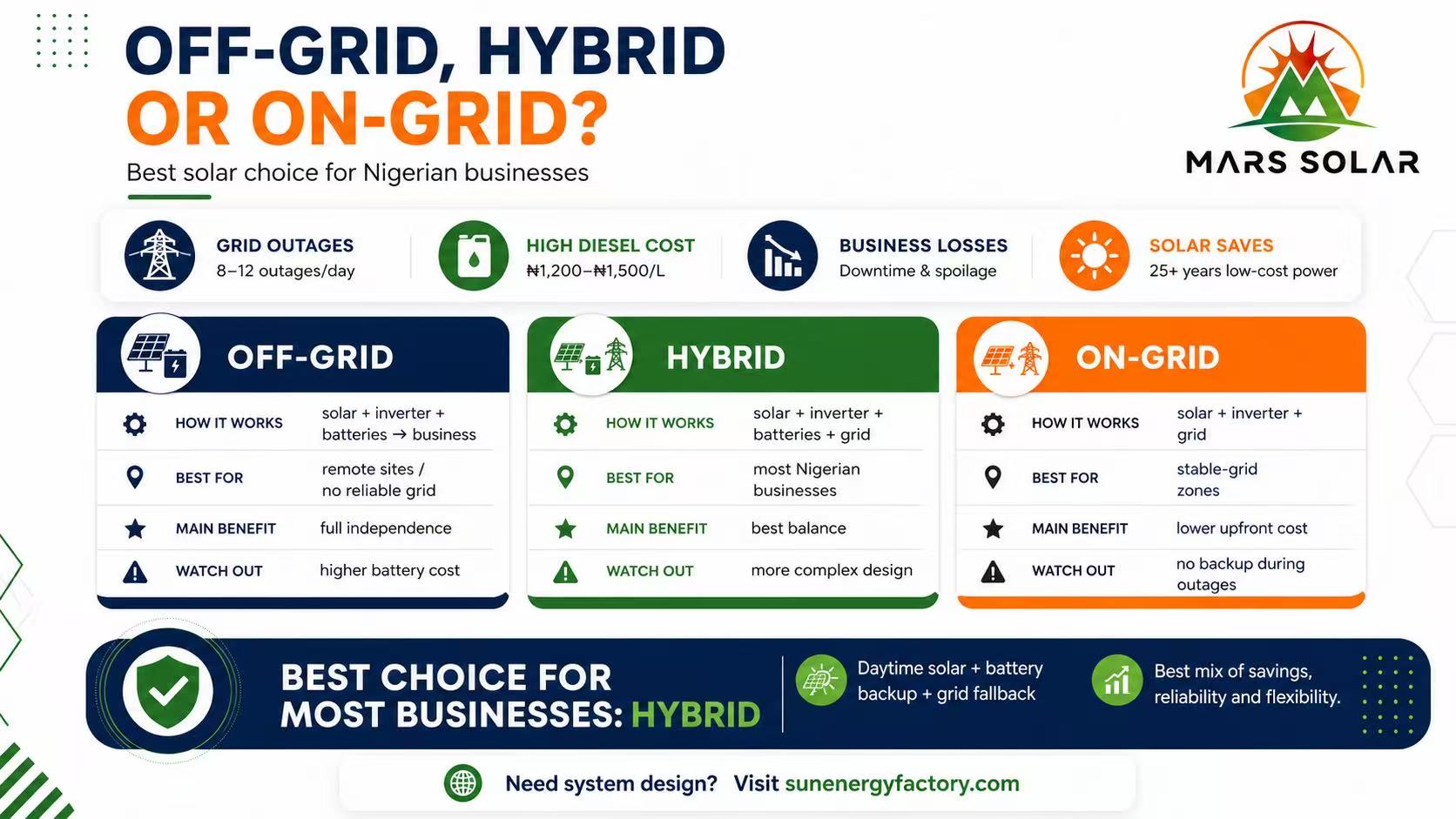 Solar Power Nigeria 2026: Off-Grid vs Hybrid vs On-GridNigeria’s unreliable grid and soaring diesel costs are forcing business owners to take solar seriously. But the biggest question remains: which system — off-grid, hybrid, or on-grid? This 2026 guide breaks down all three solar architectures for Nigeria
Do you like ?0
Read more -
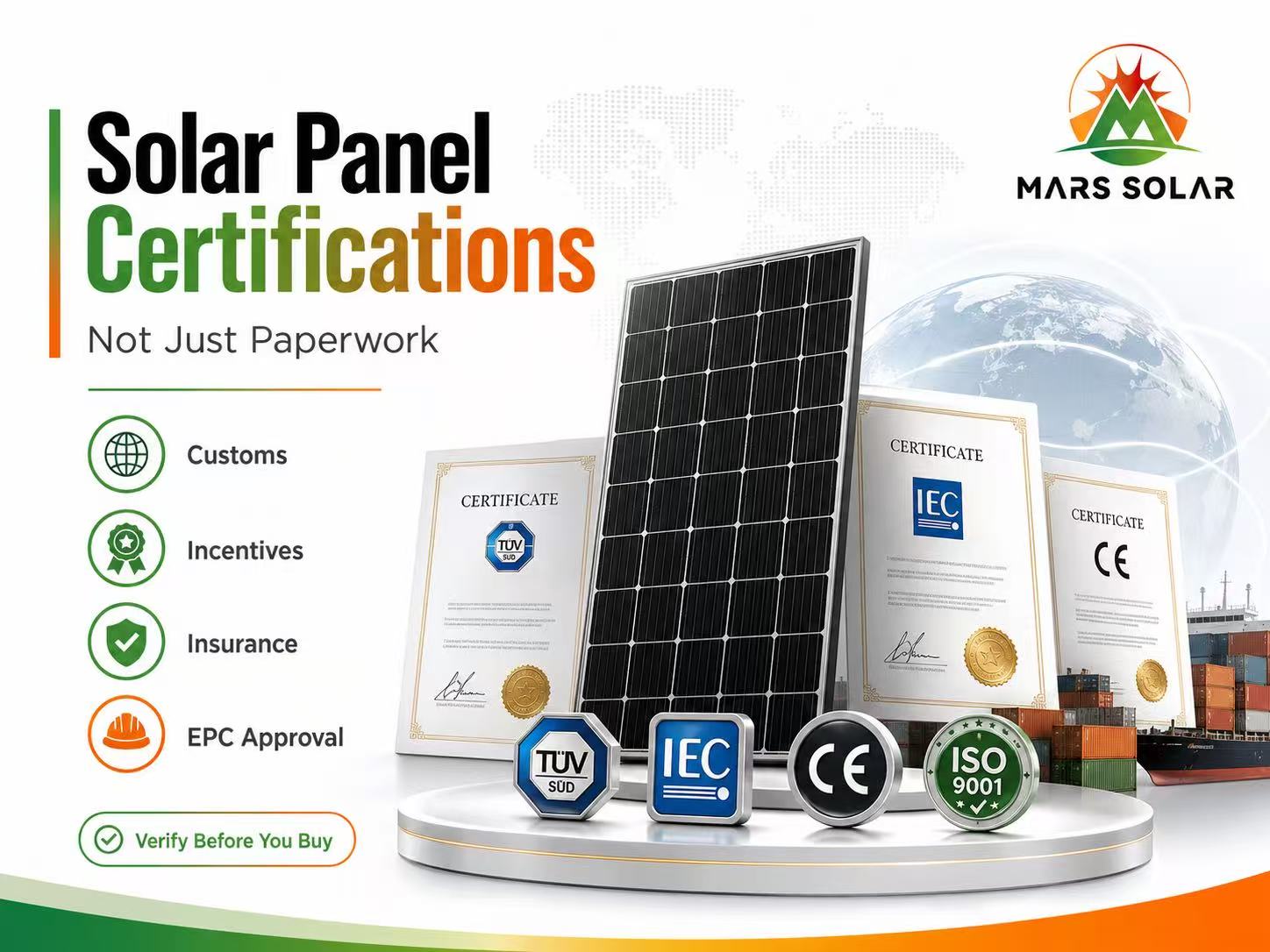 Solar Panel Certifications Explained: IEC, UL, TÜV, CE, ISO — The 2026 GuideA solar panel without proper certifications is unsellable in 90% of international markets. This 2026 guide explains every major certification — IEC 61215, IEC 61730, UL 61730, TÜV, CE, ISO 9001/14001/45001 — what it tests, who issues it, which markets req
Do you like ?0
Read more -
 Solar Panel Shipping & Container Loading: The 2026 Complete GuideThe solar panels leaving the factory are perfect. By the time they arrive at your warehouse, 3–7% might be damaged, delivery could be 2 weeks late, and demurrage at the destination port could wipe out your margin. This 2026 guide covers container types (2
Do you like ?0
Read more