Solar Panel Certifications Explained: IEC, UL, TÜV, CE, ISO — The 2026 Guide
Solar Panel Certifications Explained: IEC, UL, TÜV, CE, ISO — The 2026 Guide
Every major solar certification covered — what it tests, who issues it, which markets require it, and how to verify it's real
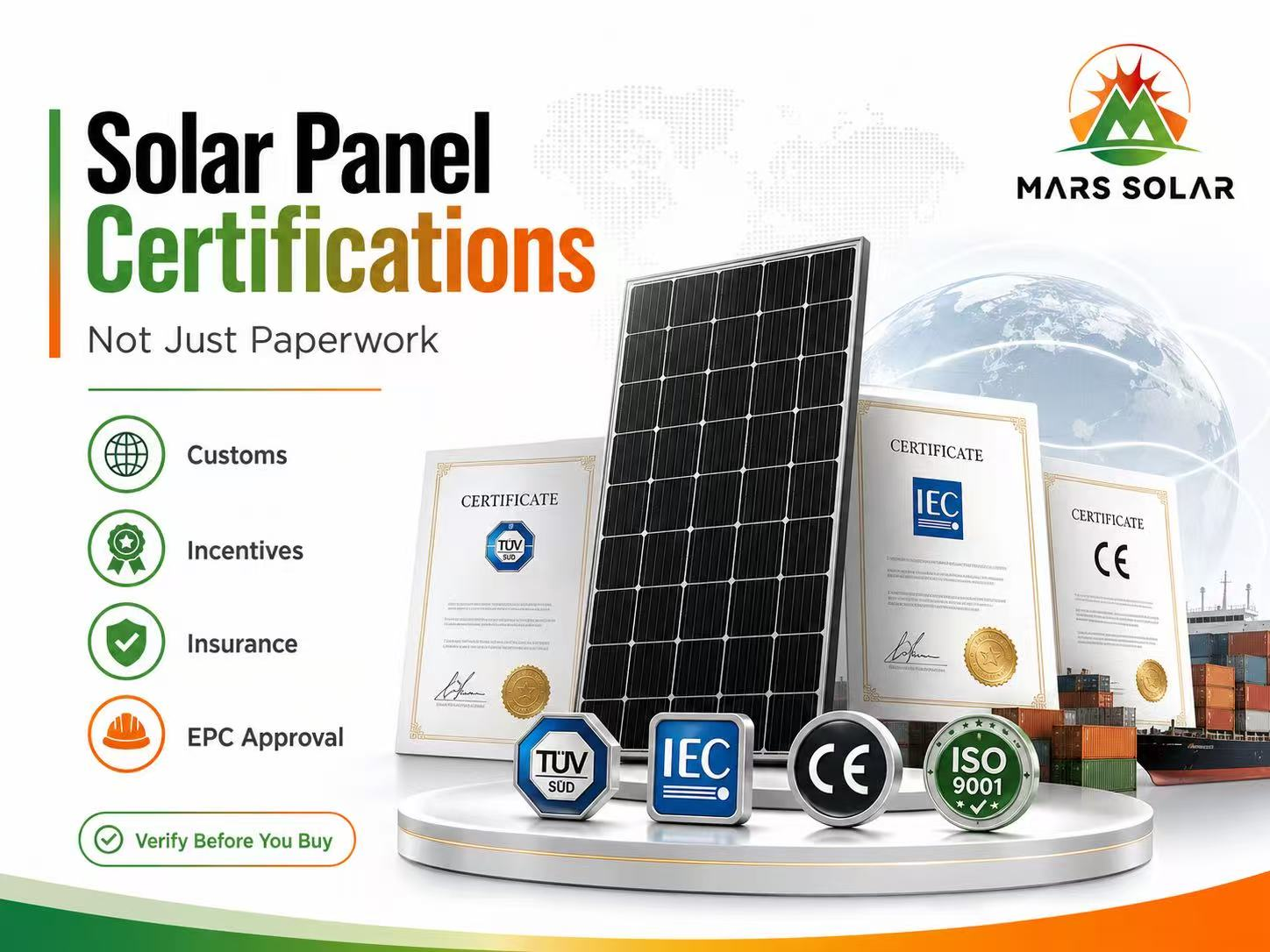
A solar panel without proper certifications is unsellable in 90% of international markets. It won't pass customs in the EU, won't qualify for incentives in the US, won't get insurance in Australia, and won't be installed by any licensed EPC.
Yet many first-time solar buyers don't understand which certifications they actually need, how to verify them, or how to tell a real certificate from a photoshopped one.
This guide explains every major solar certification — what it covers, who issues it, which markets require it, and how to verify it's real. By the end, you'll read a datasheet like a quality manager and spot fake certificates from a mile away.
What You'll Learn
- The 4 Tiers of Solar Certifications
- IEC 61215 & IEC 61730 — the global baseline
- UL 61730 — US & Canada standard
- TÜV, CE & CEC — Europe and Australia
- ISO 9001, 14001, 45001 — the quality trio
- Market-Specific Requirements — what your country actually needs
- How to Verify a Certification Is Real
- 5 Risks of Buying Uncertified Panels
- Mars Solar's Certification Coverage
I. The 4 Tiers of Solar Certifications
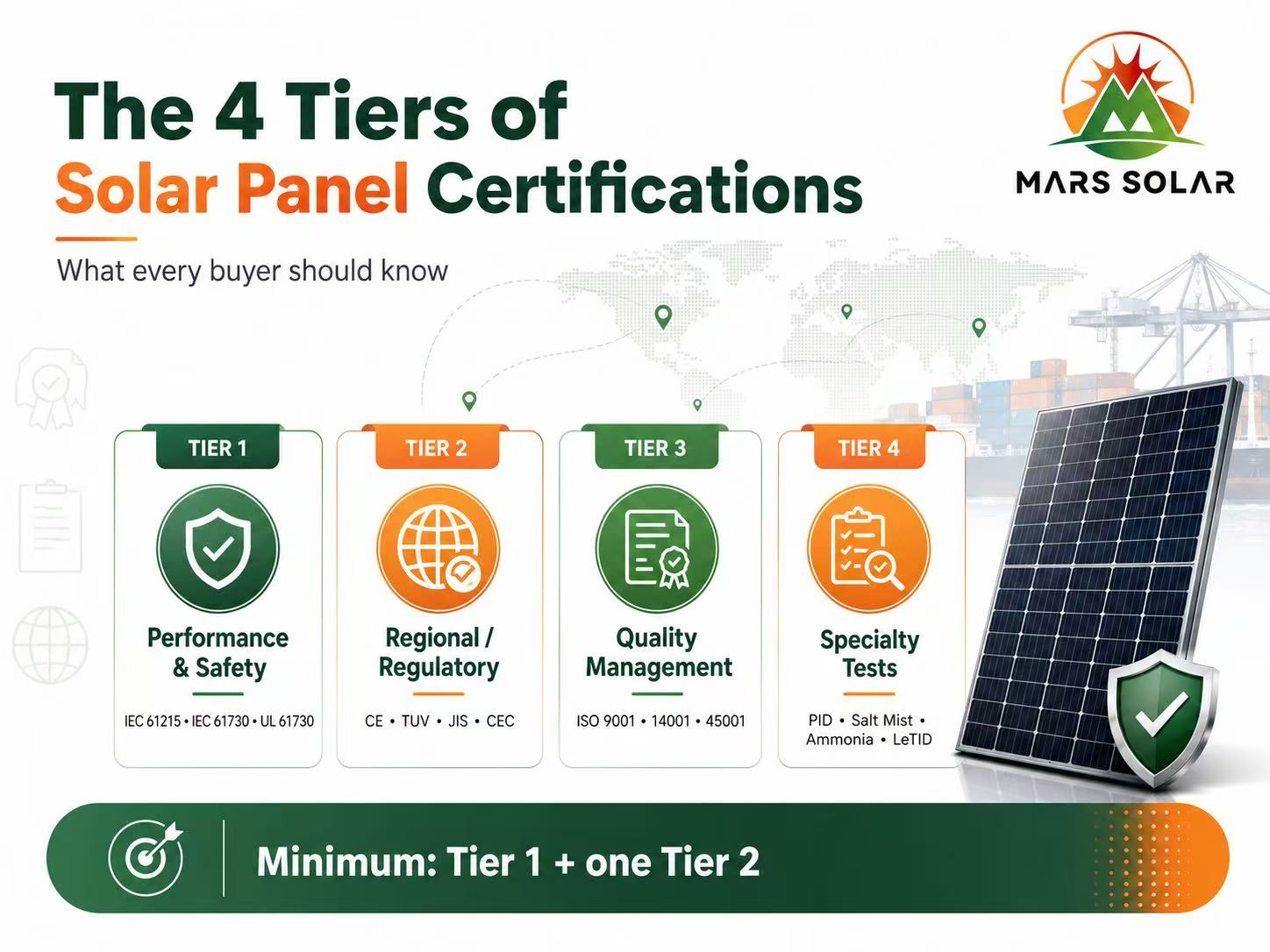
Solar certifications fall into 4 functional tiers. Understanding the tier helps you know which is non-negotiable for your market:
|
Tier |
Function |
Key Certifications |
Mandatory? |
|
Tier 1 |
Performance & Safety |
IEC 61215 (performance), IEC 61730 (safety), UL 61730 (US safety) |
Yes — no serious buyer touches panels without these |
|
Tier 2 |
Regional / Regulatory |
CE (EU), UL listing, TÜV (DE), JIS (JP), CEC (AU), INMETRO (BR), BIS (IN) |
Required for legal import or grid connection |
|
Tier 3 |
Quality Management |
ISO 9001, ISO 14001, ISO 45001 |
Required by large buyers / government tenders |
|
Tier 4 |
Specialty (climate-specific) |
PID resistance, salt mist (IEC 61701), ammonia (IEC 62716), LeTID |
Important for coastal / tropical / agricultural sites |
Rule of thumb: a serious manufacturer should have Tier 1 + at least one Tier 2 covering your target market. Tier 3 and 4 are bonuses.
II. IEC 61215 & IEC 61730: The Global Performance & Safety Baseline
IEC 61215 — Design Qualification
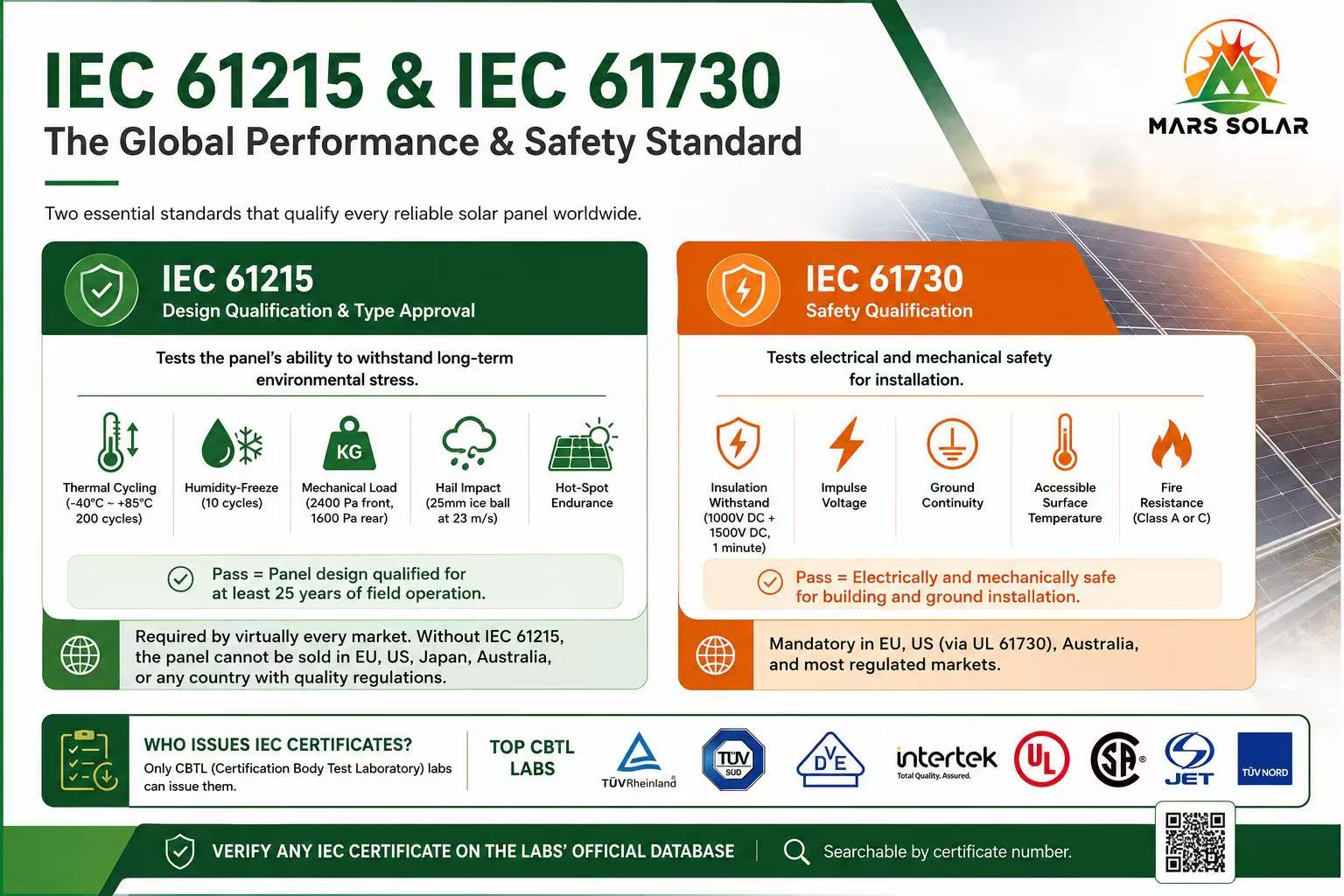
Tests the panel's ability to withstand long-term environmental stress:
- Thermal cycling — 200 cycles between -40°C and +85°C
- Humidity-freeze — 10 cycles
- Mechanical load — 2,400 Pa front / 1,600 Pa rear
- Hail impact — 25 mm ice ball at 23 m/s
- Hot-spot endurance
Pass = the panel design is qualified for at least 25 years of field operation under standard conditions. Required by virtually every market.
IEC 61730 — Safety Qualification
Tests electrical and mechanical safety: insulation withstand (1,000 V DC + 1,500 V DC for 1 min), impulse voltage, ground continuity, accessible surface temperature, fire resistance (Class A or C). Mandatory in EU, US (via UL 61730), Australia, and most regulated markets.
Who Issues IEC Certificates
- Only CBTL (Certification Body Test Laboratory) labs can issue them
- Top labs: TÜV Rheinland, TÜV SÜD, VDE (Germany), Intertek, UL, CSA, JET (Japan), TÜV NORD
- Verify any IEC certificate on the lab's official database (searchable by certificate number)
III. UL 61730: The US & Canada Standard
UL (Underwriters Laboratories) is the dominant safety certification body in North America. UL 61730 is the North American equivalent of IEC 61730, with additional US-specific fire and mechanical tests.
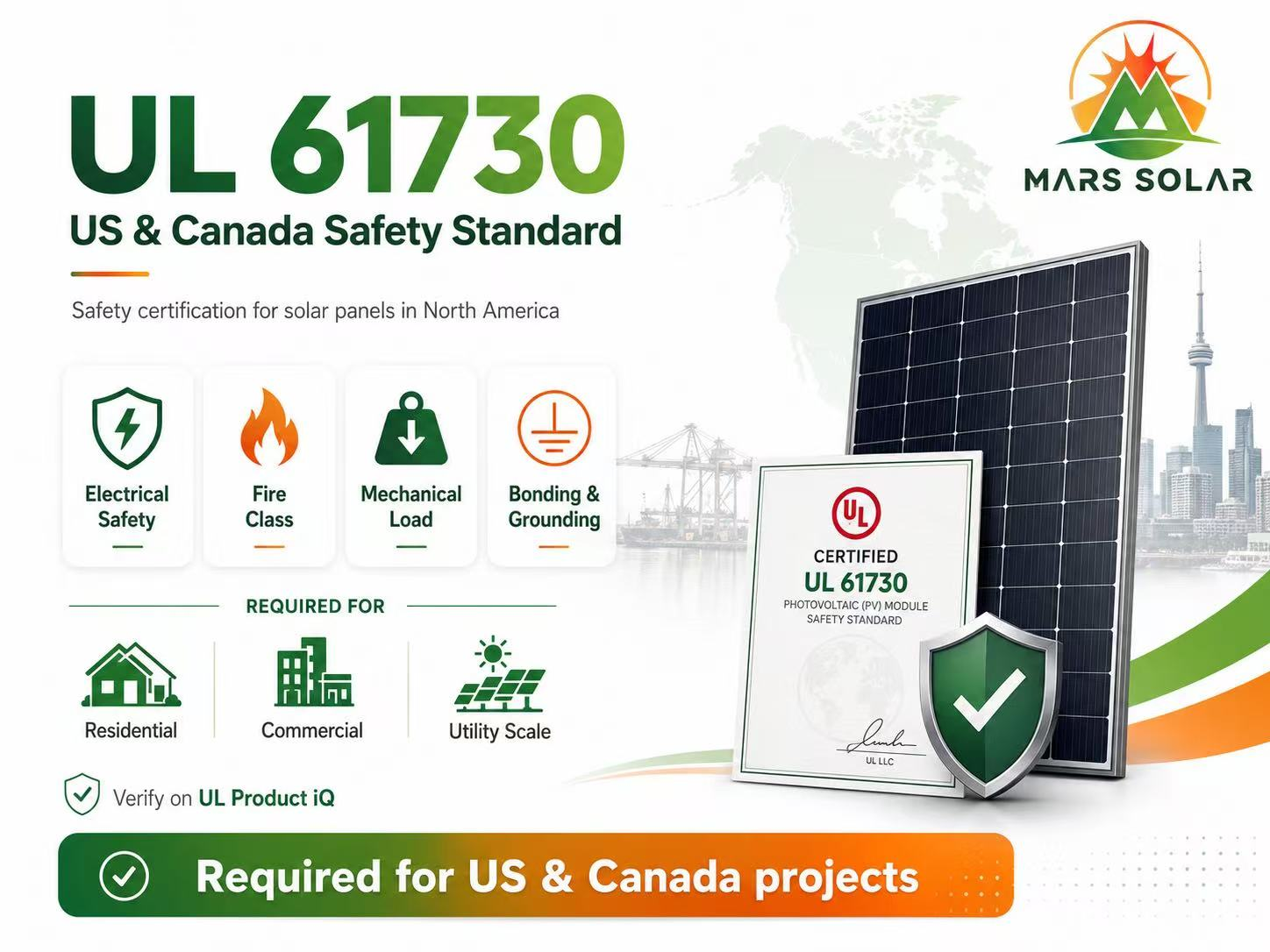
What UL 61730 Covers
- Electrical safety — insulation, ground continuity, accessible parts
- Fire performance — Class A, B, or C rating (required for US rooftop installations)
- Mechanical load — higher wind/snow requirements than IEC 61730 in some cases
- Bonding & grounding — specific to US National Electrical Code
Who Needs UL 61730
- Any panel installed in the US or Canada — residential, commercial, or utility-scale
- Required for NEC 690 compliance (residential rooftop)
- Required for fire class A/B (commercial rooftop)
- Required by investors and EPCs (utility-scale)
- Required for US ITC incentive eligibility
How to verify: look up the certificate on UL's Product iQ database at iq.ul.com. The certificate must list the specific panel model, factory location, and be currently valid (UL audits annually).
IV. TÜV, CE & CEC: Europe and Australia
TÜV Certification
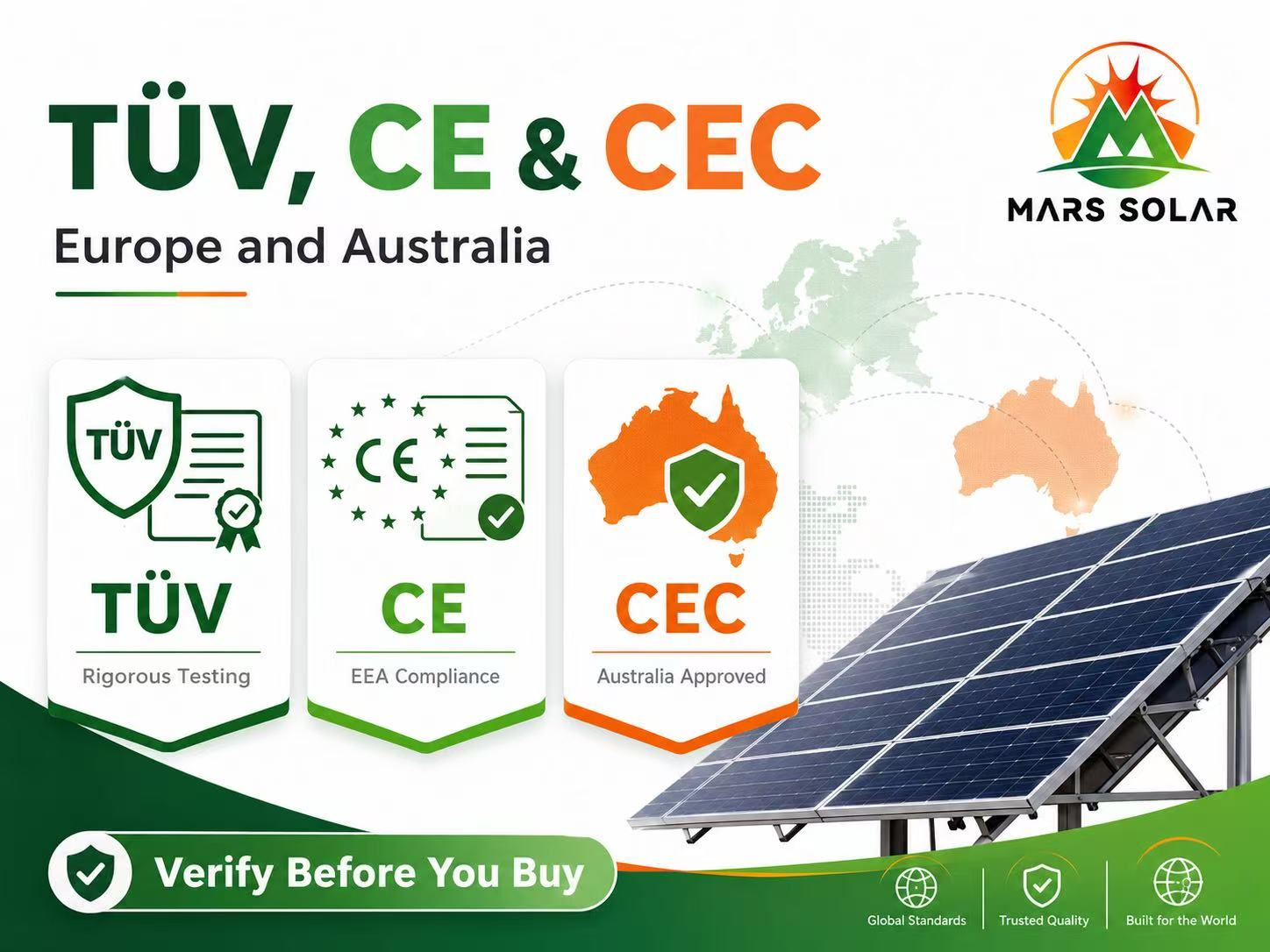
- Issued by TÜV Rheinland, TÜV SÜD, TÜV NORD, or TÜV Austria (each independent)
- Tests: IEC 61215 + IEC 61730 + TÜV-specific "two PfG" protocols (e.g., 2 PfG 2380/01.19 for bifacial)
- More rigorous than CE alone — Germany and many EU countries require TÜV for grid connection
- Verify on certipedia.com (TÜV Rheinland) or tuvsud.com (TÜV SÜD)
CE Marking
- Required for any product sold in the European Economic Area (EEA)
- Self-declared by the manufacturer based on compliance with EU directives (LVD 2014/35/EU, EMC 2014/30/EU)
- Requires a Declaration of Conformity (DoC) signed by the manufacturer or authorized EU representative
A "CE" sticker on the datasheet alone is NOT enough — a complete DoC and technical file must exist.
CEC Listing (Australia)
- Australian market requires CEC-approved panels for STC (Small-scale Technology Certificate) rebates
- CEC list maintained at solaraccreditation.com.au
- Approved models listed by brand, model number, and manufacturer
V. ISO 9001, 14001, 45001: The Quality Management Trio
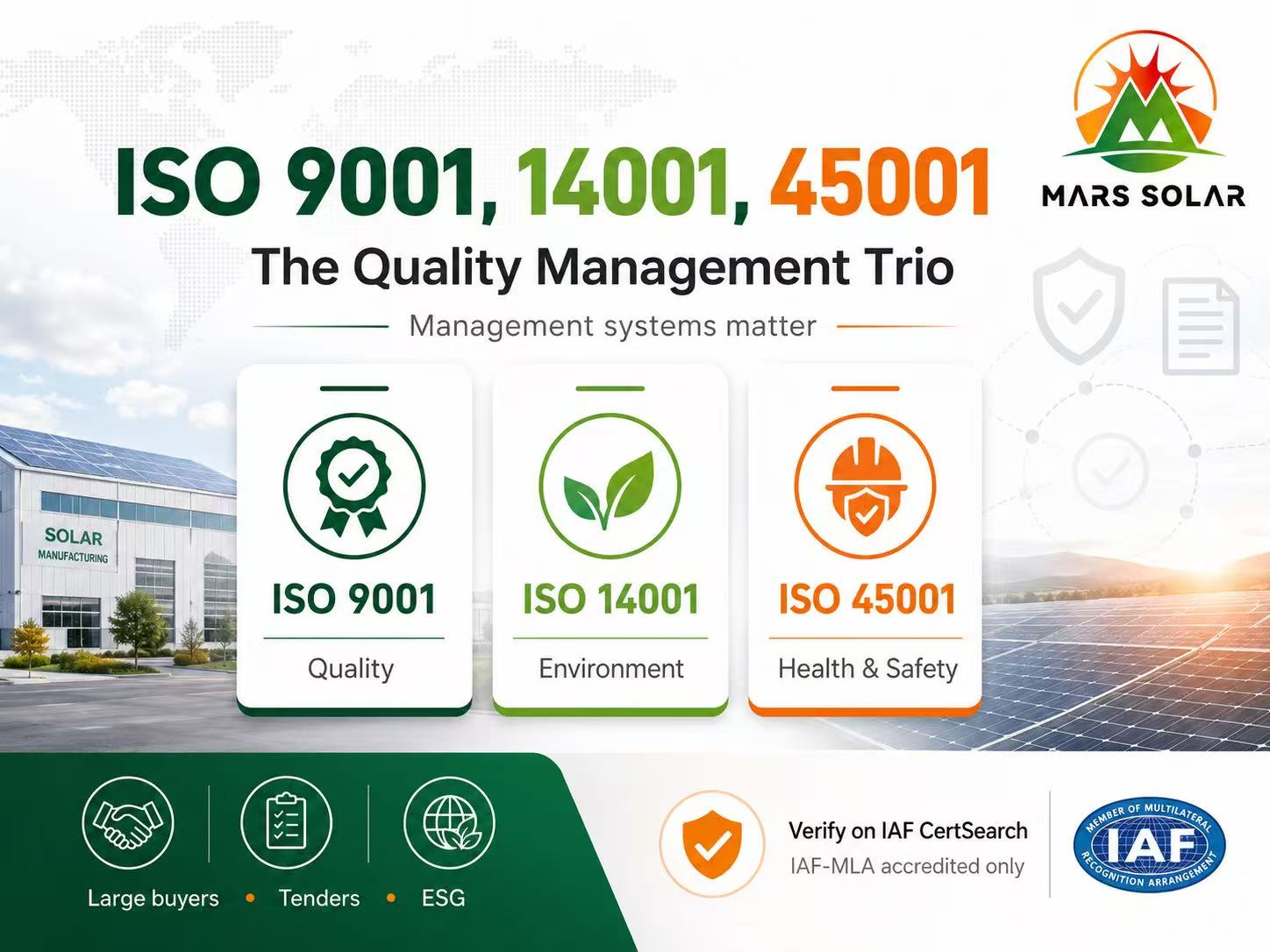
ISO certifications don't test the product — they test the factory's management systems. Required by most large buyers and government tenders.
|
Standard |
Coverage |
Required By |
|
ISO 9001:2015 |
Quality management — production, QC, supplier mgmt, complaints |
Tier-1 buyers, EPC companies |
|
ISO 14001:2015 |
Environmental management — waste, emissions, energy use |
EU buyers, ESG-focused investors |
|
ISO 45001:2018 |
Occupational health & safety — hazard ID, incident reporting |
Multinationals with strict supplier codes |
Who Issues ISO Certificates
- Accredited bodies: DNV, Bureau Veritas, SGS, TÜV, LRQA, BSI, Intertek
- Certificate must be issued by an IAF-MLA accredited body — verify on the IAF CertSearch database at iafcertsearch.org
Common red flag: "ISO 9001" certificate issued by an unknown body not in the IAF database. Many "ISO certificates" from Chinese agencies are self-issued and have no real value.
VI. Market-Specific Requirements: What Your Country Actually Needs
|
Market |
Required |
Strongly Preferred |
Notes |
|
USA & Canada |
UL 61730 |
IEC 61215, ISO 9001 |
Some states need California CEC listing |
|
EU (DE, FR, IT, ES, NL) |
IEC 61215/61730 + CE |
TÜV, ISO 9001/14001 |
Germany requires TÜV for grid connection |
|
UK |
Same as EU + UKCA |
TÜV |
UKCA transition until 2027 |
|
Australia |
IEC 61215/61730 + CEC listing |
ISO 9001 |
CEC listing required for STC rebates |
|
Japan |
IEC 61215/61730 + JIS listing |
|
|
|
Brazil |
IEC 61215/61730 + INMETRO |
|
|
|
India |
IEC 61215/61730 + BIS |
ALMM listing for utility-scale |
|
|
Middle East |
IEC 61215/61730 + SASO/ESMA |
TÜV |
Country-specific (UAE/SA) |
|
Africa |
IEC 61215/61730 |
TÜV |
South Africa requires NRCS / LOA |
|
Southeast Asia |
IEC 61215/61730 |
Local utility tests |
No country-specific registration |
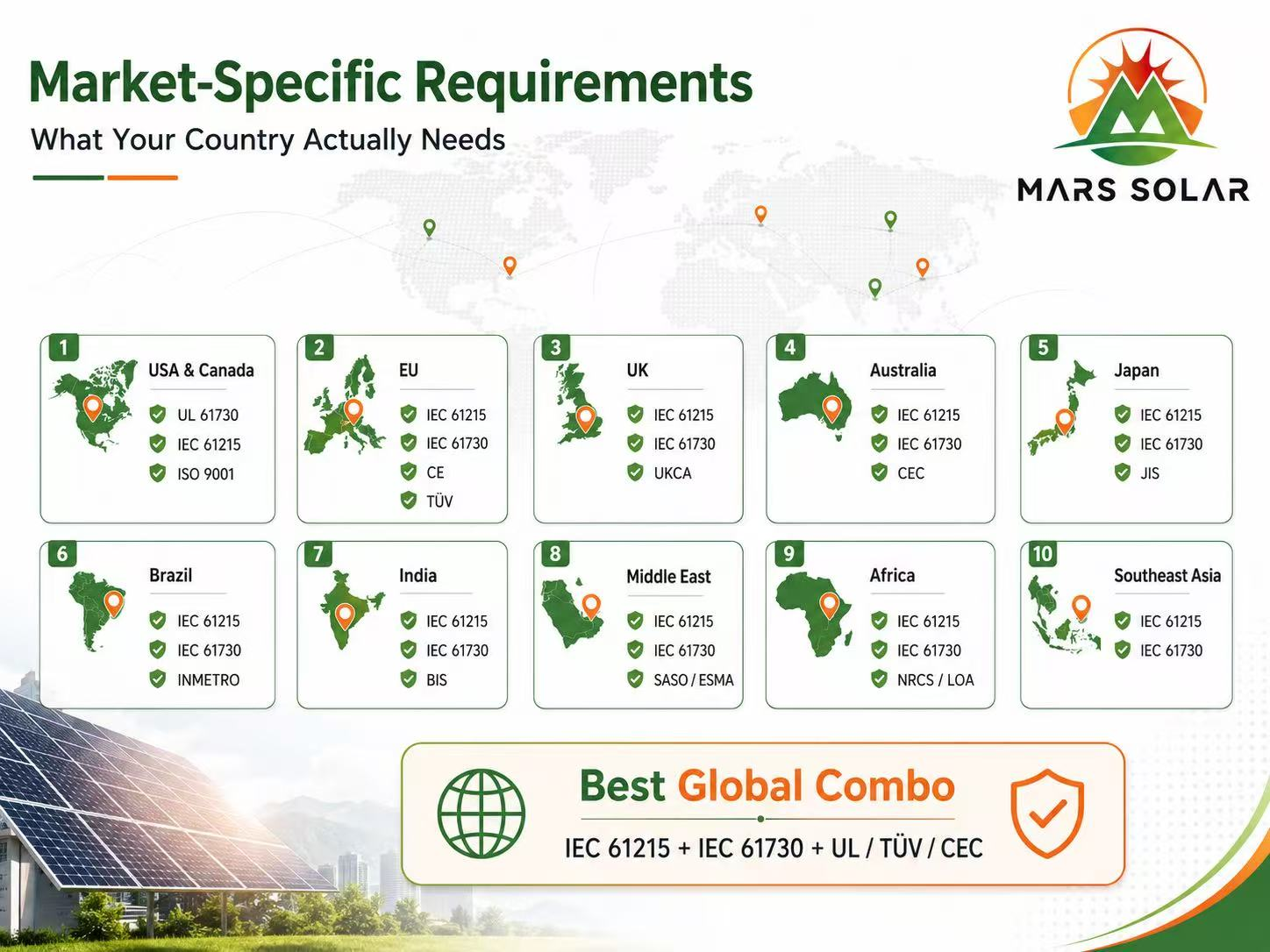
Quick decision: for the broadest market access, ensure your panels have IEC 61215 + IEC 61730 + at least one of (UL 61730 for US, TÜV for EU, CEC for Australia). This covers 90% of global demand.
VII. How to Verify a Certification Is Real
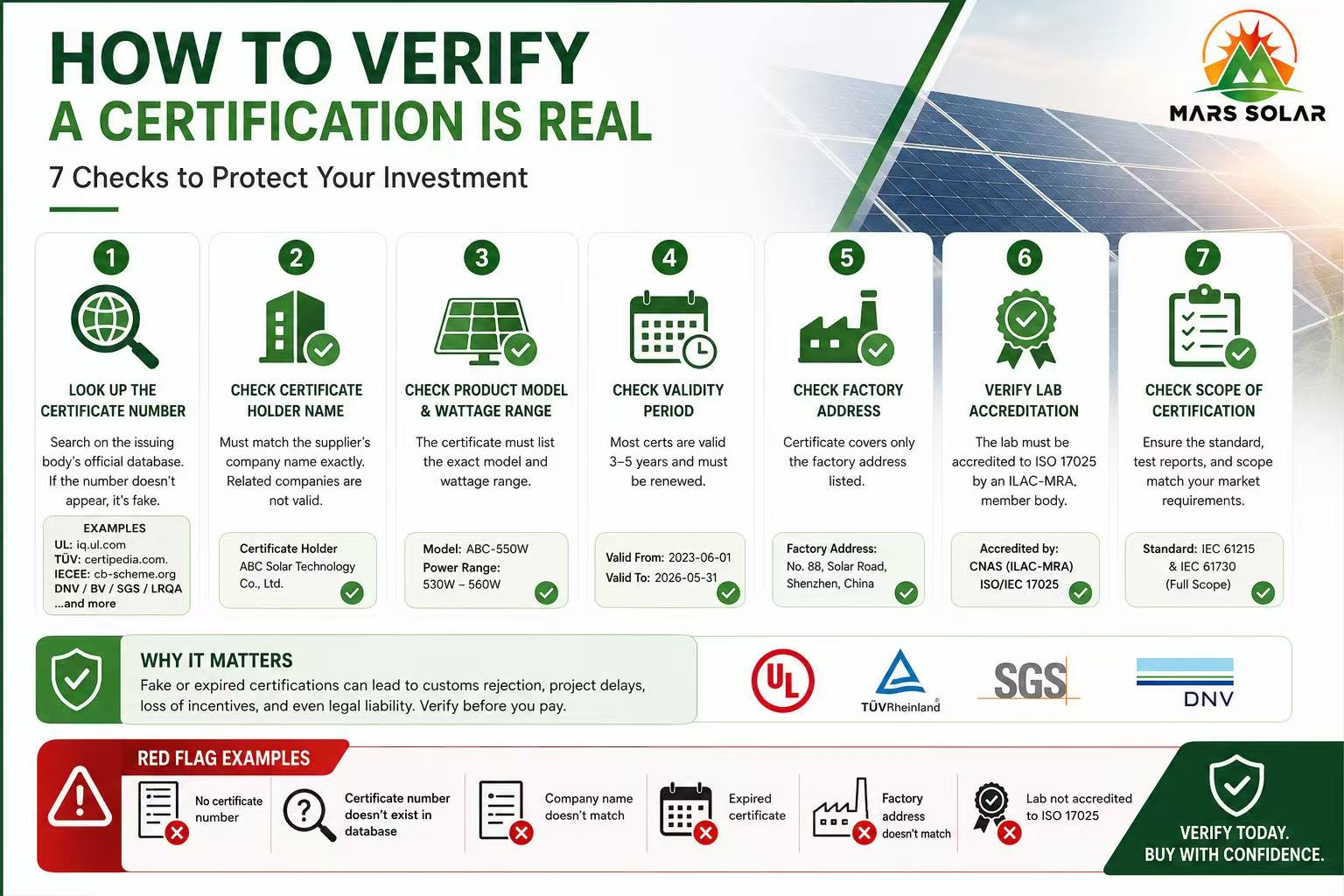
Fake or expired certifications are a multi-million dollar problem. Six checks:
- Look up the certificate number on the issuing body's database — UL Product iQ, TÜV Certipedia, IECEE CB Scheme, DNV, BV, SGS, LRQA. If the number doesn't appear, the certificate is fake.
- Check the certificate holder name matches the supplier's company name exactly
- Check the product model and wattage range match — a certificate for "ABC-450W" doesn't cover "ABC-550W"
- Check the certificate validity period — most certifications valid 3–5 years
- Check the factory address matches the certificate — a Shenzhen factory certificate doesn't cover Vietnam production unless explicitly stated
- Verify the lab's ISO 17025 accreditation by an ILAC-MRA member body (A2LA, UKAS, DAkkS, NABL, CNAS)
Red flag sample: supplier sends a "TÜV certificate" with no certificate number, or a number that doesn't exist in the TÜV database. Always verify before paying.
VIII. 5 Risks of Buying Uncertified Solar Panels
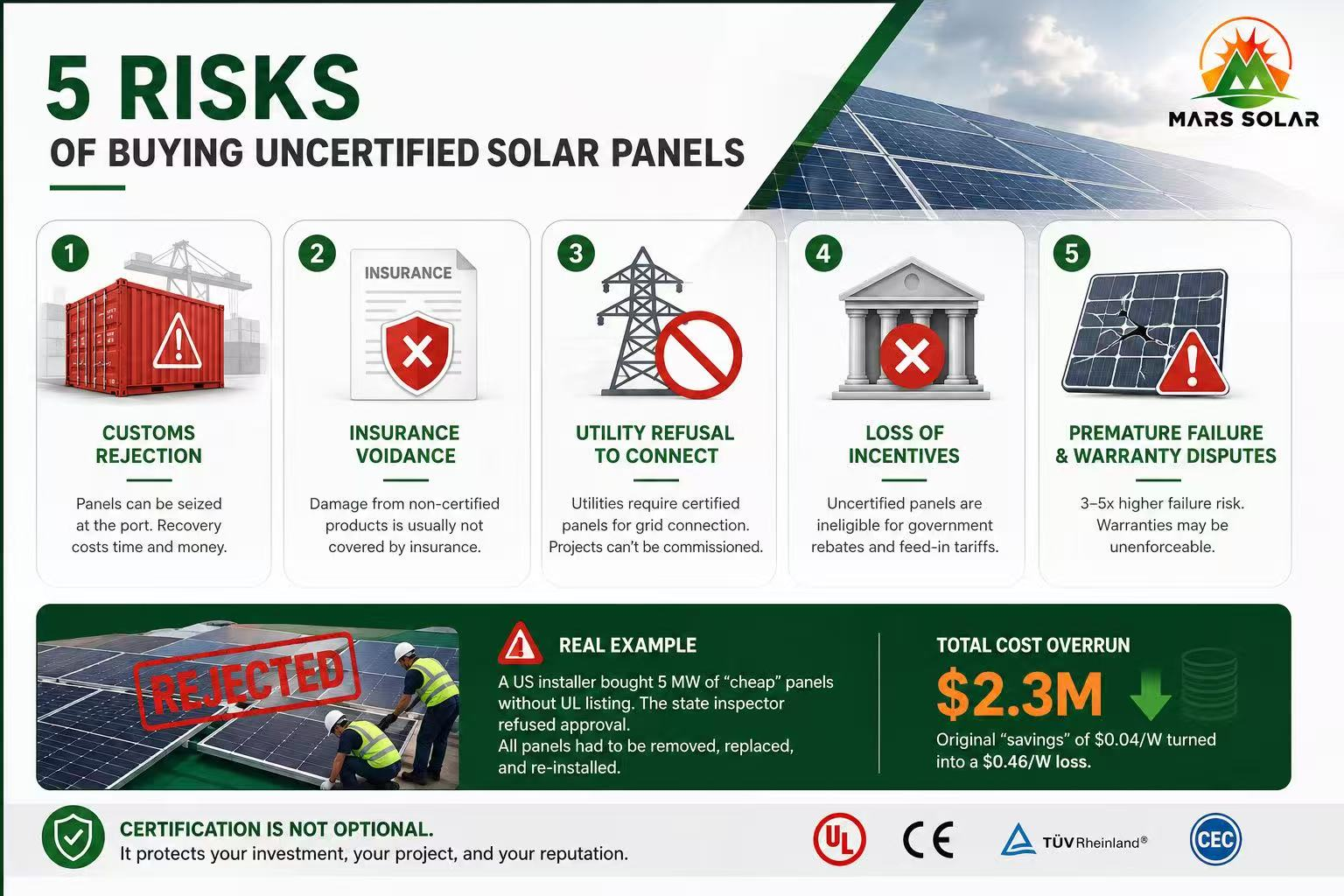
Why this matters — uncertified panels create real, expensive problems:
- Customs rejection — panels without CE, UL, or country marks can be seized at the port. Recovery requires re-export or destruction, plus legal fees.
- Insurance voidance — most building/equipment policies exclude damage from non-certified products. A roof fire = no payout.
- Utility refusal to connect — EU, US, AU, JP utilities require certified panels for grid connection. Project cannot be commissioned.
- Loss of government incentives — US ITC, EU feed-in tariffs, AU STC rebates, JP FIT all require certified panels.
- Premature failure — uncertified panels are 3–5x more likely to fail in the first 5 years; warranty often unenforceable abroad.
Real example: a US solar installer bought 5 MW of "cheap" panels from a new Chinese supplier without UL listing. The state inspector refused approval. The installer had to remove all panels, source UL-listed replacements, and re-install. Total cost overrun: $2.3M. The original "savings" of $0.04/W turned into a $0.46/W loss.
IX. Mars Solar's Certification Coverage
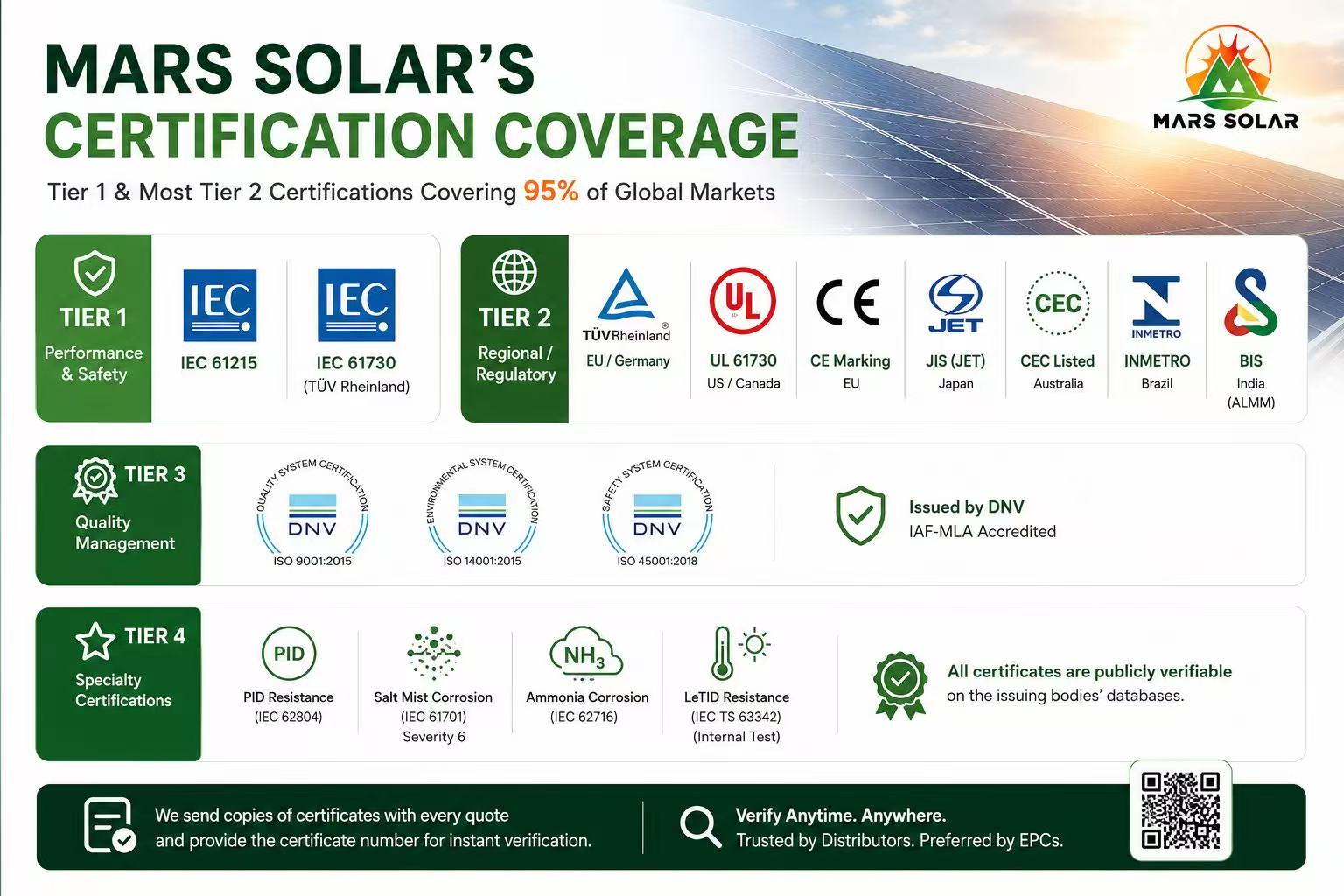
Mars Solar holds all Tier 1 and most Tier 2 certifications, covering 95% of global markets:
Tier 1 — Performance & Safety
- IEC 61215 (TÜV Rheinland)
- IEC 61730 (TÜV Rheinland)
Tier 2 — Regional / Regulatory
- TÜV Rheinland (EU / Germany)
- UL 61730 (US / Canada) — verified on UL Product iQ
- CE Marking + Declaration of Conformity (EU)
- JIS / JET certification (Japan)
- CEC listing (Australia) — verified on solaraccreditation.com.au
- INMETRO (Brazil)
- BIS (India) — ALMM listed
Tier 3 — Quality Management
- ISO 9001:2015, ISO 14001:2015, ISO 45001:2018 — all issued by DNV (IAF-MLA accredited)
Tier 4 — Specialty
- PID resistance (IEC 62804)
- Salt mist corrosion (IEC 61701) — severity 6
- Ammonia corrosion (IEC 62716)
- LeTID resistance (internal test based on IEC TS 63342)
All certificates are publicly verifiable on the issuing bodies' databases. We send copies with every quote and provide the certificate number for instant verification.
X. Frequently Asked Questions
What's the difference between IEC 61215 and UL 61730?
IEC 61215 is performance and type approval (25-year design life under standard conditions). UL 61730 is electrical and fire safety for the US market. They overlap in some tests but serve different purposes.
Are CE and TÜV the same?
No. CE is self-declared by the manufacturer; TÜV is third-party tested. CE alone is the minimum for EU sale; TÜV is required by Germany, Austria, and most large EU EPCs.
Do I need IEC certification if I only sell in my country?
Almost certainly yes. Even China, India, and Brazil require IEC-equivalent standards. Only a handful of unregulated markets (some African countries) accept uncertified panels — and the cost savings are usually offset by insurance and resale problems.
How much does it cost to get IEC 61215 and IEC 61730?
For a new panel model: $50,000–150,000 for the full test sequence at TÜV or VDE, plus 3–6 months of testing. This is why established manufacturers with 50+ certified models have a significant advantage over newcomers.
Can a certificate issued for one factory cover another factory?
Only if explicitly stated in the certificate. Multi-site certifications exist, but the certificate must list both sites.
What's the difference between "TÜV approved" and "TÜV certified"?
"TÜV approved" can mean anything — it's not a regulated term. "TÜV certified" or "TÜV Rheinland certificate number XXXX" means there's a real, verifiable certificate.
Do older IEC standards (e.g., IEC 61215:2005) still apply?
New panel designs must be tested to the current standard (IEC 61215:2021). Older certificates may still be valid for existing models, but new buyers typically require the latest standard.
Related Articles
- Top 10 Solar Panel Manufacturers in China (2026 List) — Which factories have the best export logistics and certification coverage.
- Bifacial vs Monofacial Solar Panels: Honest Comparison — How panel type affects shipping weight, volume, and damage risk.
- Solar Panel Factory Verification: The 7-Step Due Diligence Guide — Verify your supplier before shipping 40HQ containers.
- Solar Panel MOQ, Lead Time & Payment Terms: Complete 2026 Guide — Once shipping is planned, here are the commercial terms to expect.
Get a Quote With Shipping Included
Mars Solar ships 50,000+ panels monthly to 130+ countries via Shanghai, Ningbo, Shenzhen, and Qingdao ports. We provide FOB, CIF, and DDP terms with full pre-shipment inspection and customs documentation.
-
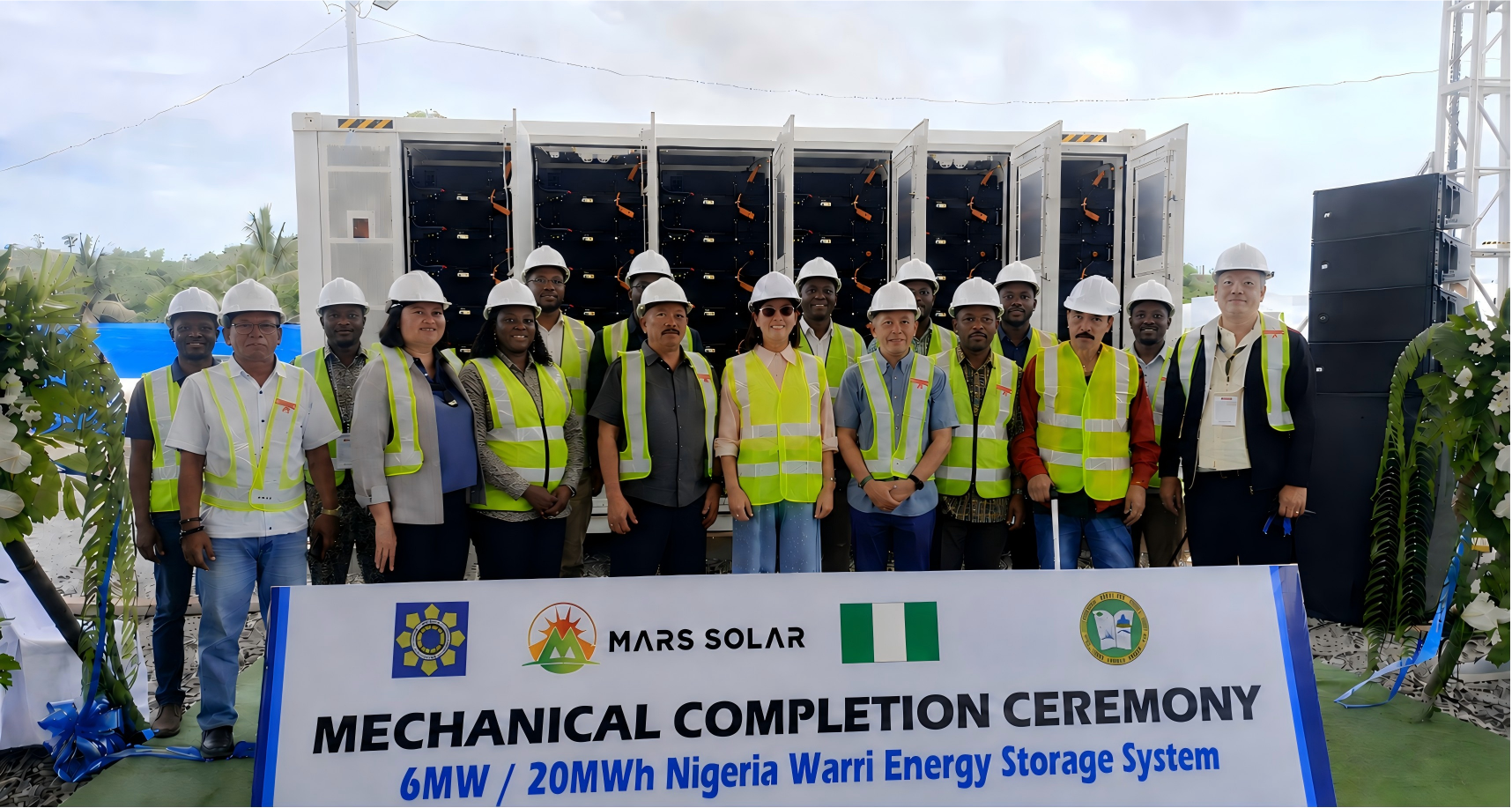 6MW 20MWh Solar Storage in Nigeria Factory + Farm + Residential Case StudyA 6MW solar PV + 20MWh LFP battery storage system in Nigeria powers an integrated factory, farm, and residential complex. The system delivers $108,000+ in monthly electricity savings, reaches payback in approximately 24 months, and provides 25 years of renewable power. This case study covers the engineering configuration, financial model, and operational performance of one of West Africa's most ambitious factory + farm + residential solar deployments.
Do you like ?0
Read more -
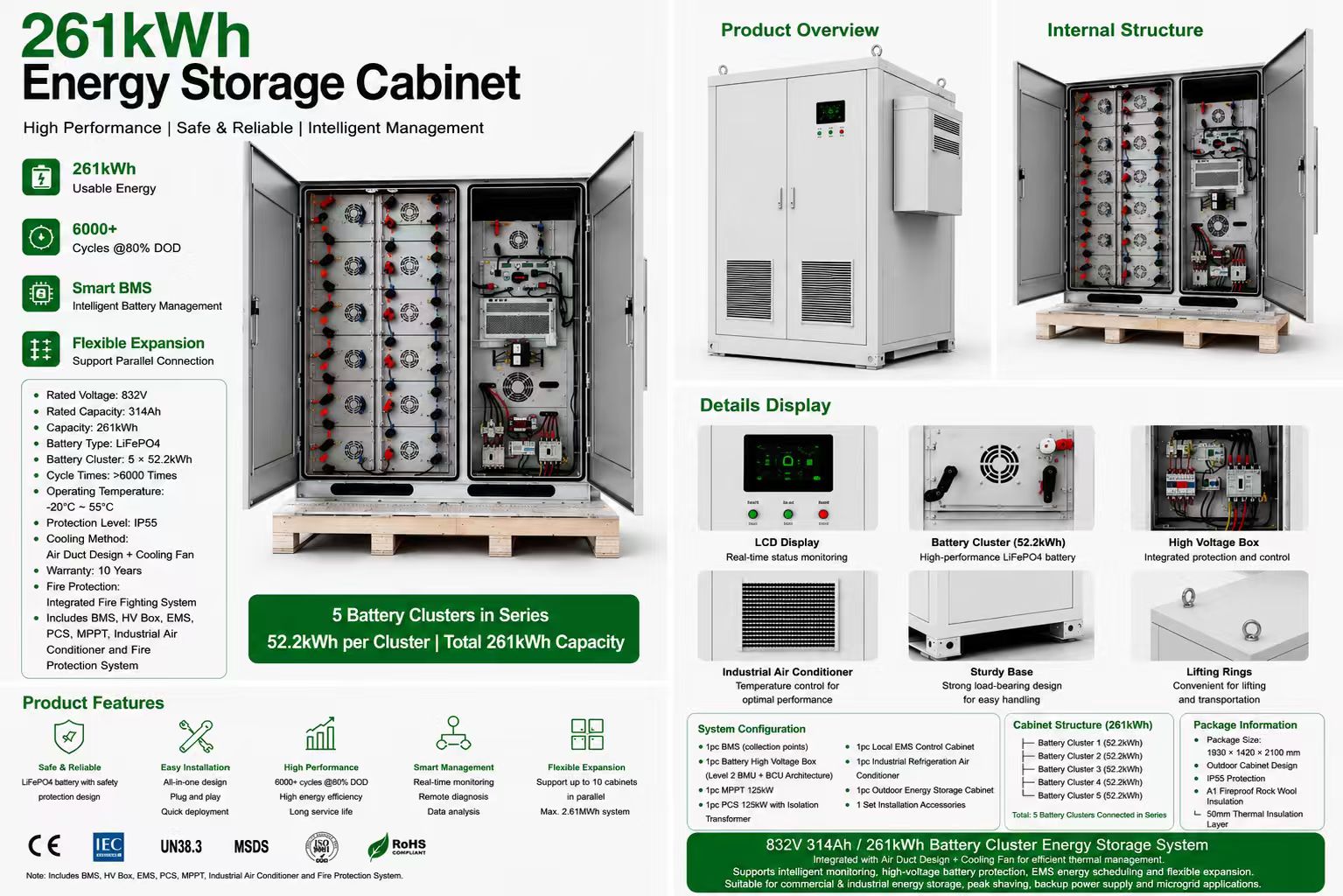 BESS in Nigeria 2026: Battery Energy Storage Cost, Diesel Payback & Import GuideBESS in Nigeria: 2026 pricing, diesel payback, SONCAP, China import guide. Save 60%+ vs diesel. Factory-direct LFP from Mars Solar.
Do you like ?0
Read more -
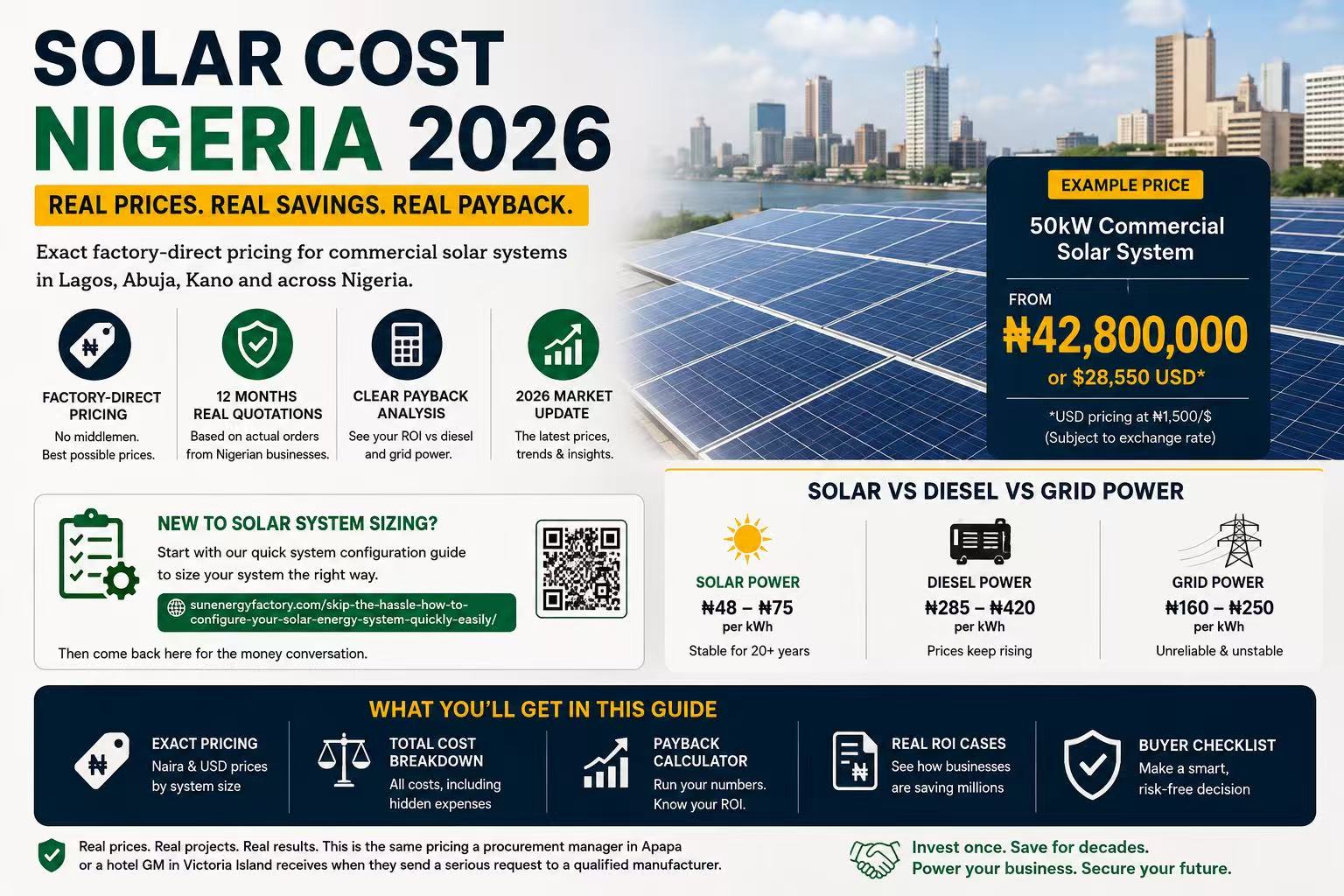 How Much Does Solar Cost in Nigeria? 2026 Real Pricing GuideSolar cost in Nigeria for 5kW to 250kW systems, in Naira and USD. Compare solar vs diesel vs grid, calculate payback, and explore financing options.
Do you like ?0
Read more -
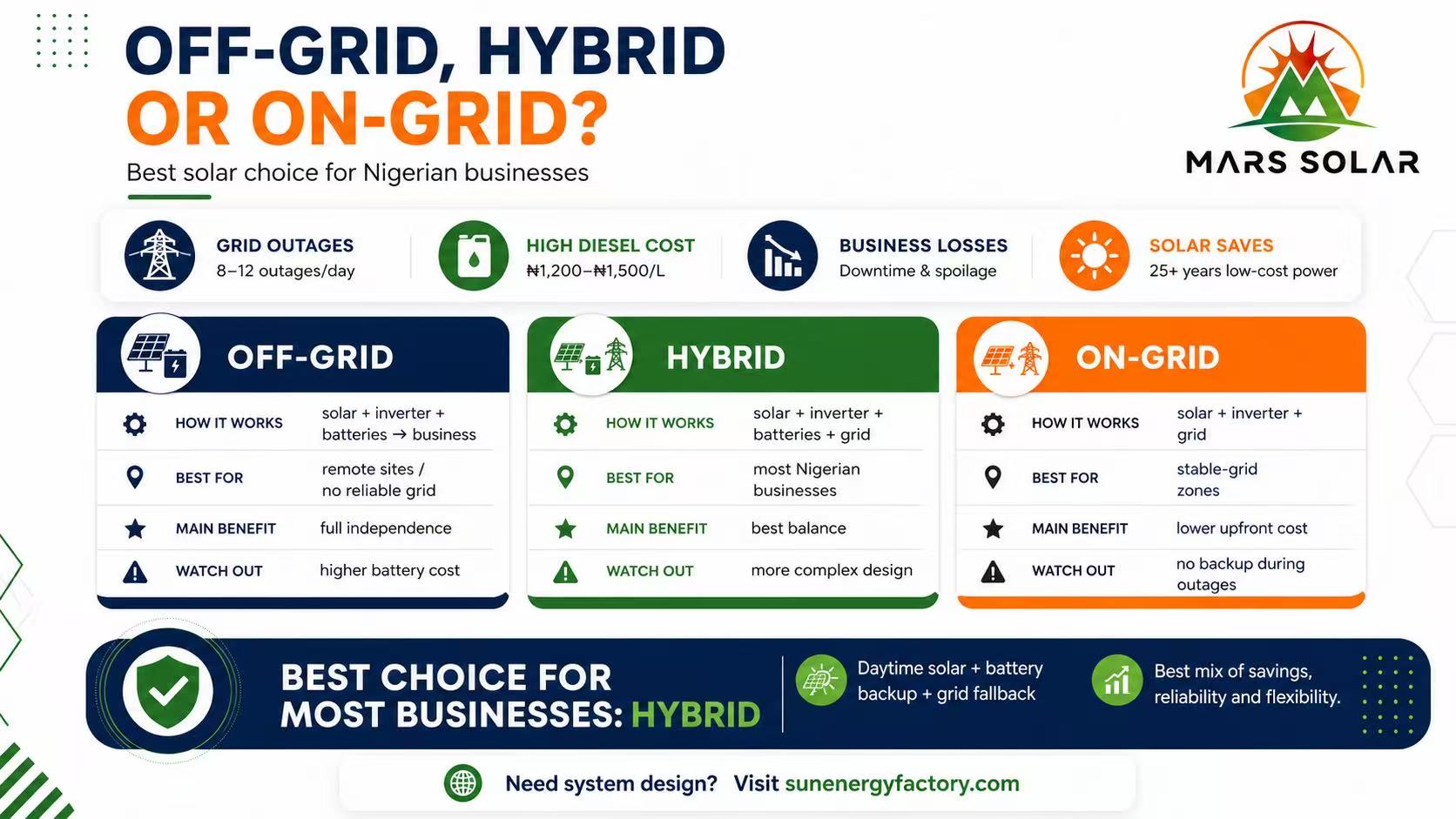 Solar Power Nigeria 2026: Off-Grid vs Hybrid vs On-GridNigeria’s unreliable grid and soaring diesel costs are forcing business owners to take solar seriously. But the biggest question remains: which system — off-grid, hybrid, or on-grid? This 2026 guide breaks down all three solar architectures for Nigeria
Do you like ?0
Read more -
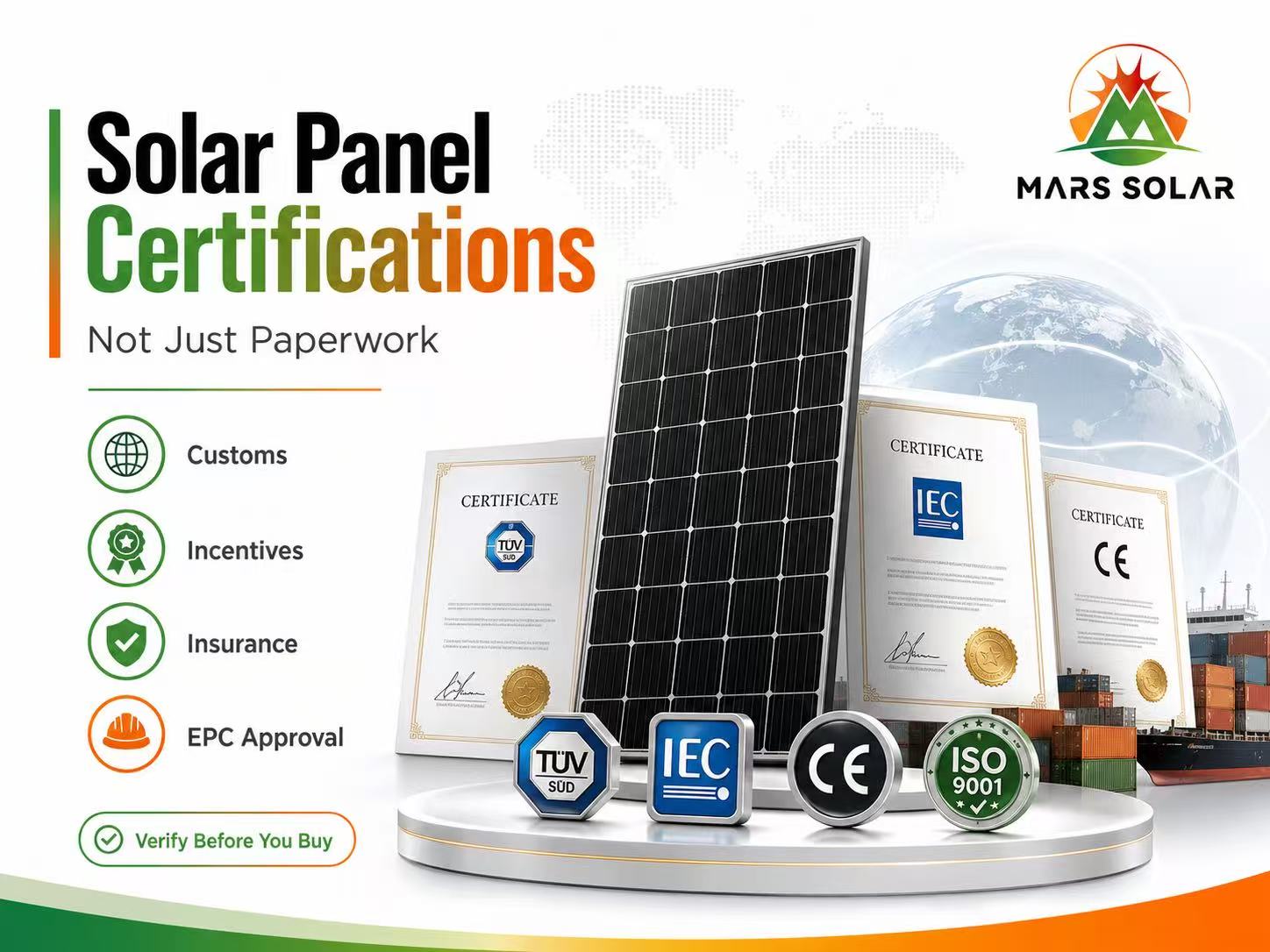 Solar Panel Certifications Explained: IEC, UL, TÜV, CE, ISO — The 2026 GuideA solar panel without proper certifications is unsellable in 90% of international markets. This 2026 guide explains every major certification — IEC 61215, IEC 61730, UL 61730, TÜV, CE, ISO 9001/14001/45001 — what it tests, who issues it, which markets req
Do you like ?0
Read more -
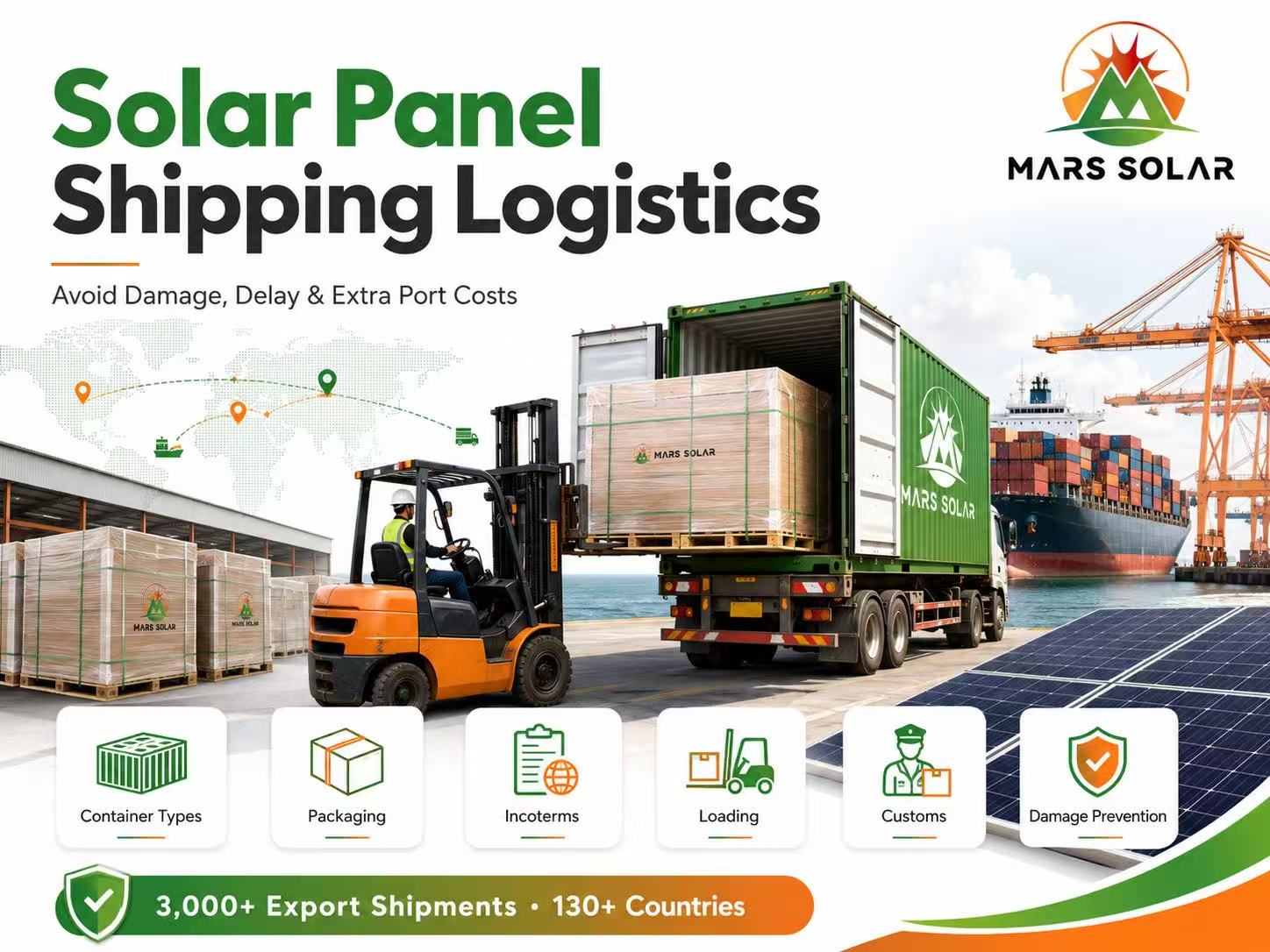 Solar Panel Shipping & Container Loading: The 2026 Complete GuideThe solar panels leaving the factory are perfect. By the time they arrive at your warehouse, 3–7% might be damaged, delivery could be 2 weeks late, and demurrage at the destination port could wipe out your margin. This 2026 guide covers container types (2
Do you like ?0
Read more