Solar Panel Factory Verification: The 7-Step Due Diligence Guide
Avoid scams with this 7-step factory verification process — business license, capacity, certifications, references, visit, samples, and banking
Every year, international solar buyers lose millions of dollars to fraudulent suppliers.
Panels that don't match spec. "Factories" that are really trading companies. Certifications that are photoshopped. Production lines that exist only in a brochure. Factory verification is the single most important step before you wire any money — yet most first-time importers skip it because they trust what a supplier says in an email.
This guide gives you a 7-step verification process based on Mars Solar's experience with 3,000+ export projects across 130+ countries. These are the exact steps we use to qualify our own partners — and what smart buyers use to qualify us.
What You'll Learn
- Step 1 — Verify the business license & legal entity
- Step 2 — Confirm real production capacity
- Step 3 — Authenticate certifications
- Step 4 — Audit real customer references
- Step 5 — Visit the factory (or hire a 3rd-party inspector)
- Step 6 — Independent sample testing
- Step 7 — Verify banking & trade references
- 5 red flags that mean walk away
- FAQ
Step 1 — Verify the Business License & Legal Entity
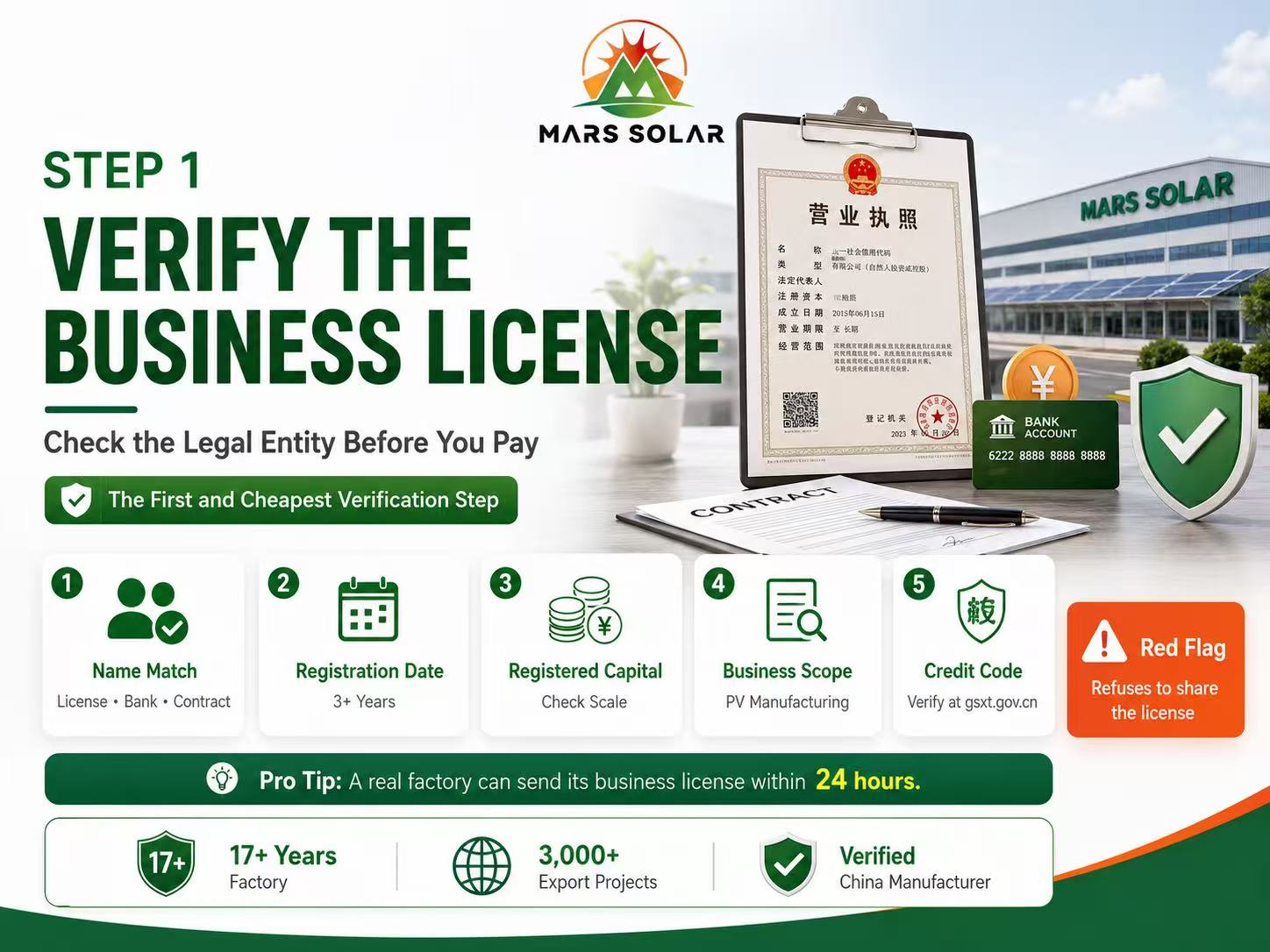
The cheapest verification step — and the most often skipped. A real Chinese solar factory must hold a registered business license (营业执照) issued by the State Administration for Market Regulation (SAMR).
What to check
- Company name must match exactly across the business license, bank account, and contract.
- Registration date — anything less than 3 years old is a red flag for a manufacturer claiming 17 years of experience.
- Registered capital — under ¥5M for a panel factory is suspicious; under ¥1M is almost certainly a trading company.
- Business scope (经营范围) must include PV module manufacturing (光伏组件制造) or solar cell modules (太阳能电池组件).
- Unified Social Credit Code (统一社会信用代码) — verify on the National Enterprise Credit Information Publicity System at gsxt.gov.cn.
Pro tip: If a supplier refuses to send the business license "for confidentiality reasons," walk away. Legitimate factories send it within 24 hours.
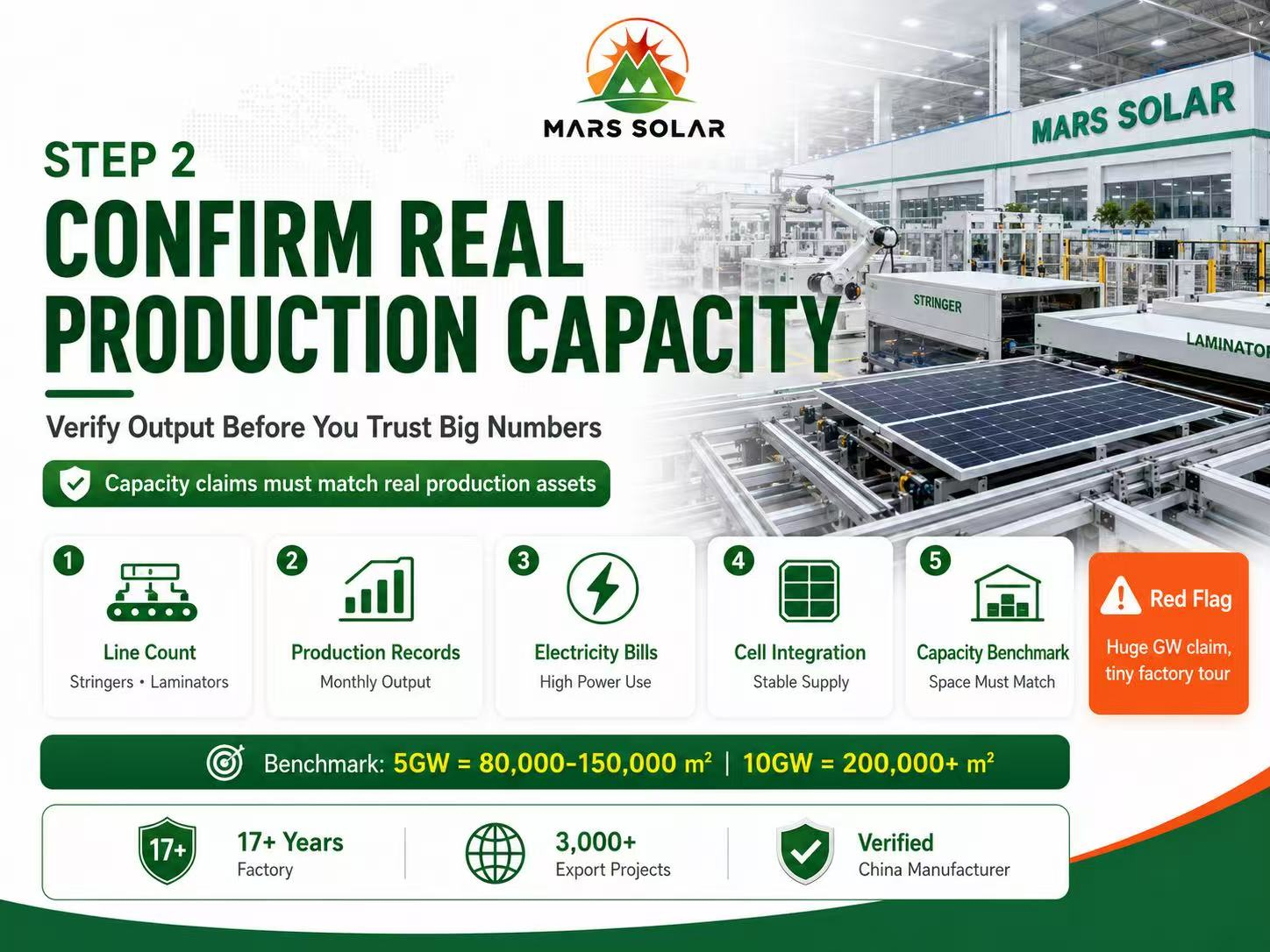
Step 2 — Confirm Real Production Capacity
Production capacity claims are the most inflated number in the solar industry. A factory claiming "20 GW annual capacity" might actually have 2 GW — and still quote you on the 20 GW figure.
How to verify
- Ask for production line count and cell-to-module integration. A real 5 GW factory needs 4–6 stringer machines, 8–10 laminators, and matching capacity at every step. If the line count doesn't add up, the capacity is fake.
- Request recent production records — monthly output reports, electricity bills (5 GW factories spend $1–3M/month on power), or shipment manifests for the last 3–6 months.
- Cross-check BloombergNEF, Wood Mackenzie, or InfoLink Tier-1 manufacturer lists for an independent capacity benchmark.
- Confirm vertically integrated cell production. Pure module assemblers who buy cells from third parties are exposed to cell-supply risk — a major threat to delivery schedules.
- Benchmark: a real 5 GW factory occupies 80,000–150,000 m². A 10 GW factory needs 200,000+ m². If they claim huge capacity but only show you a small building, the numbers are wrong.
Step 3 — Verify Certifications Authentically
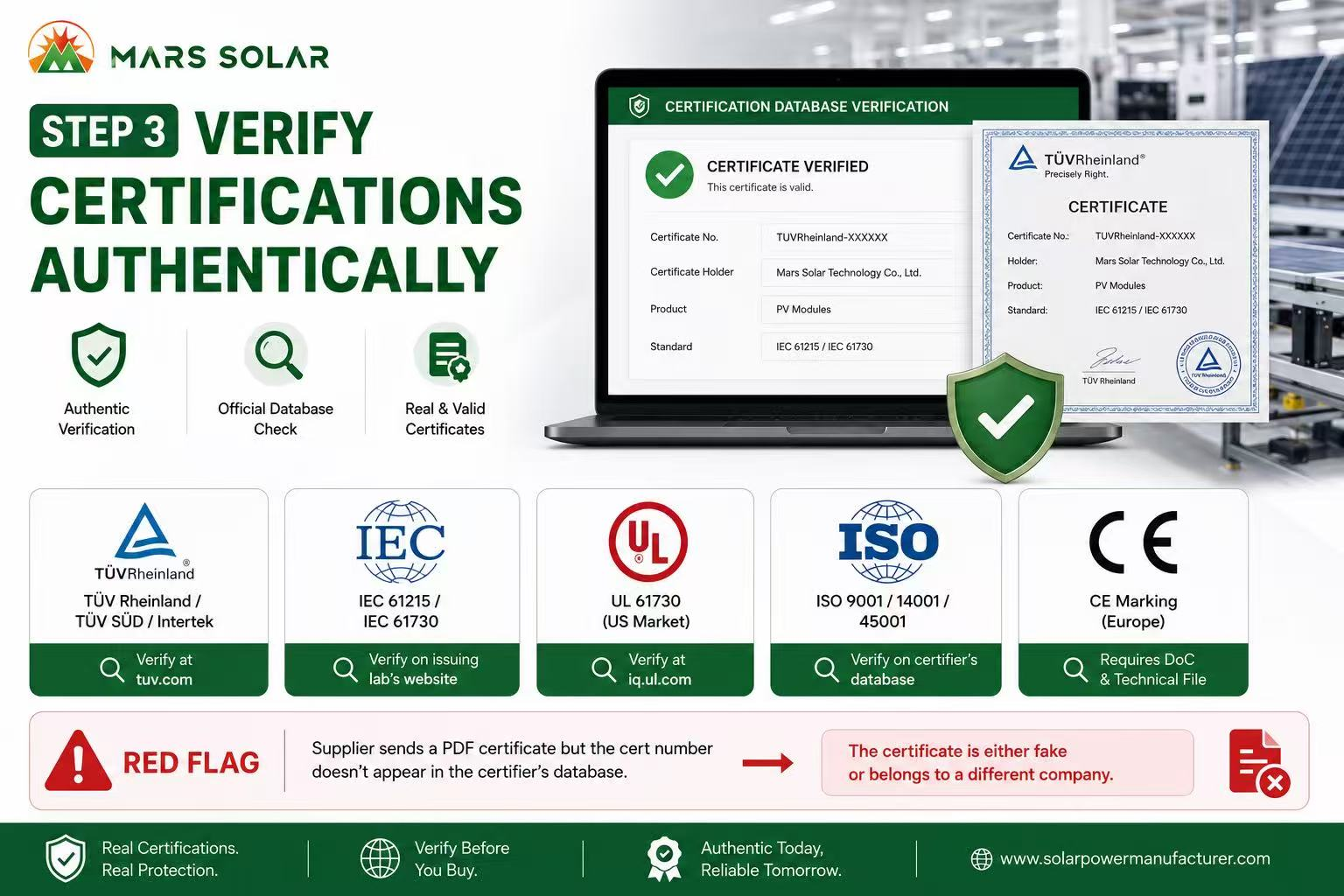
Certifications are easy to fake on a supplier's own website, harder to fake on the certifier's official database. Every major certification has a searchable public database.
Authenticity checklist
- TÜV Rheinland / TÜV SÜD / Intertek — verify on tuv.com or intertek.com. Holder name and product model must match exactly.
- IEC 61215 / IEC 61730 — issued by TÜV, VDE, or other CBTL labs. Check the issuing lab's website.
- UL 61730 (US market) — verify on UL's Product iQ database at iq.ul.com.
- ISO 9001 / 14001 / 45001 — issued by DNV, TÜV, SGS, BV, or LRQA. Verify on the certifier's database.
- CE marking (Europe) — requires a Declaration of Conformity and technical file. A CE logo on a datasheet alone is not enough.
Red flag: A supplier sends a PDF certificate but the cert number doesn't appear in the certifier's database. That means the certificate is either fake or belongs to a different company.
Step 4 — Audit Real Customer References
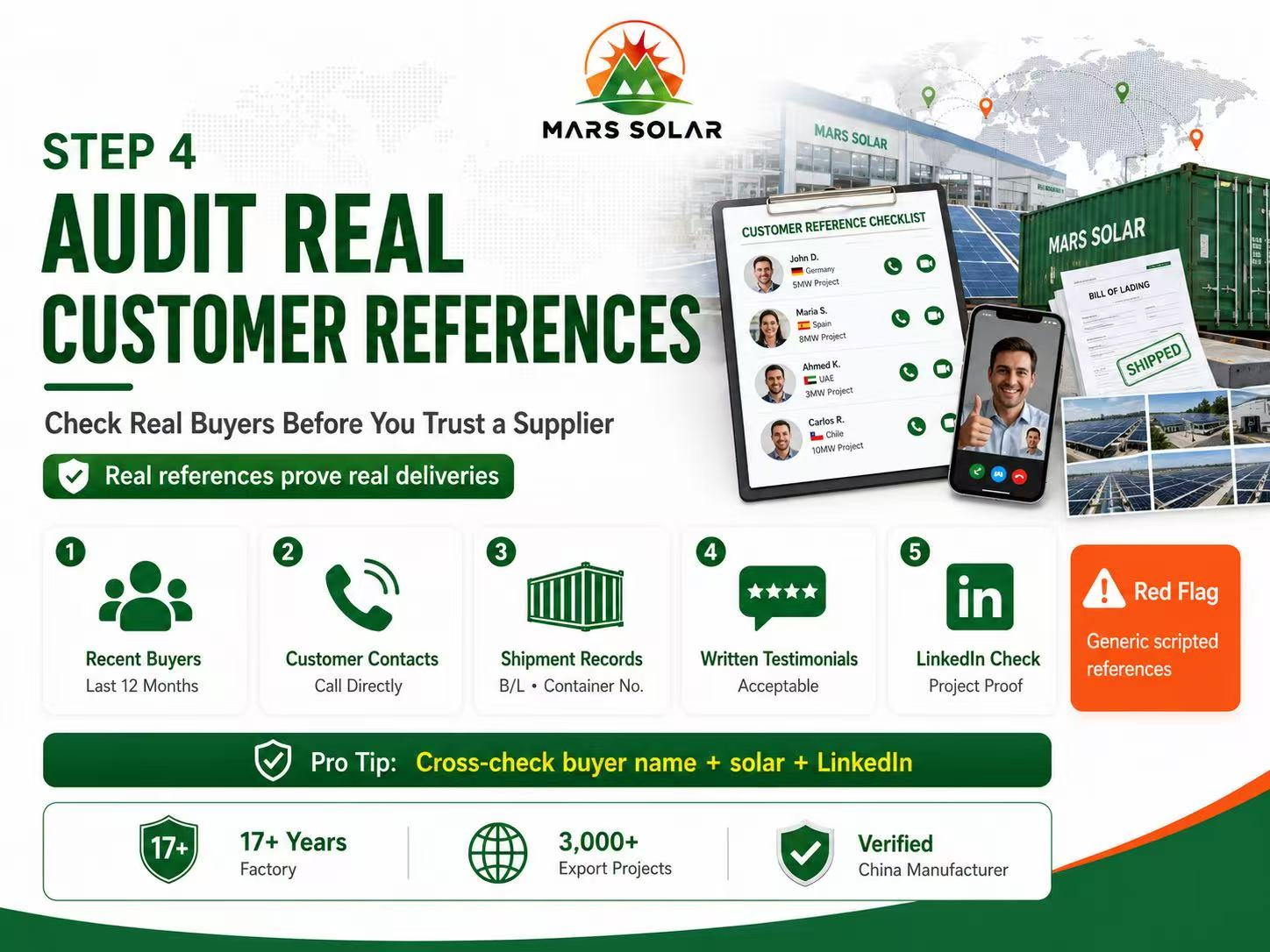
Every serious factory has shipped to dozens of countries and can name 5–10 real buyers who will confirm. If a supplier can't provide references, they're either new (high risk) or hiding something (higher risk).
What to ask
- 3–5 customer contacts in your country or region who bought within the last 12 months.
- Specific shipment records — container numbers, B/L dates, panel model, quantity.
- Whether you can call these references directly (best) or get written testimonials (acceptable).
How to spot fake references: Generic scripts ("very good quality, fast delivery"), or email signatures matching the supplier's own domain. Real references can describe specific problems and how the supplier resolved them.
Cross-check: Search the buyer's company name + "solar" on LinkedIn. Real references have visible solar projects in their portfolio.
Step 5 — Visit the Factory (or Hire a Third-Party Inspector)
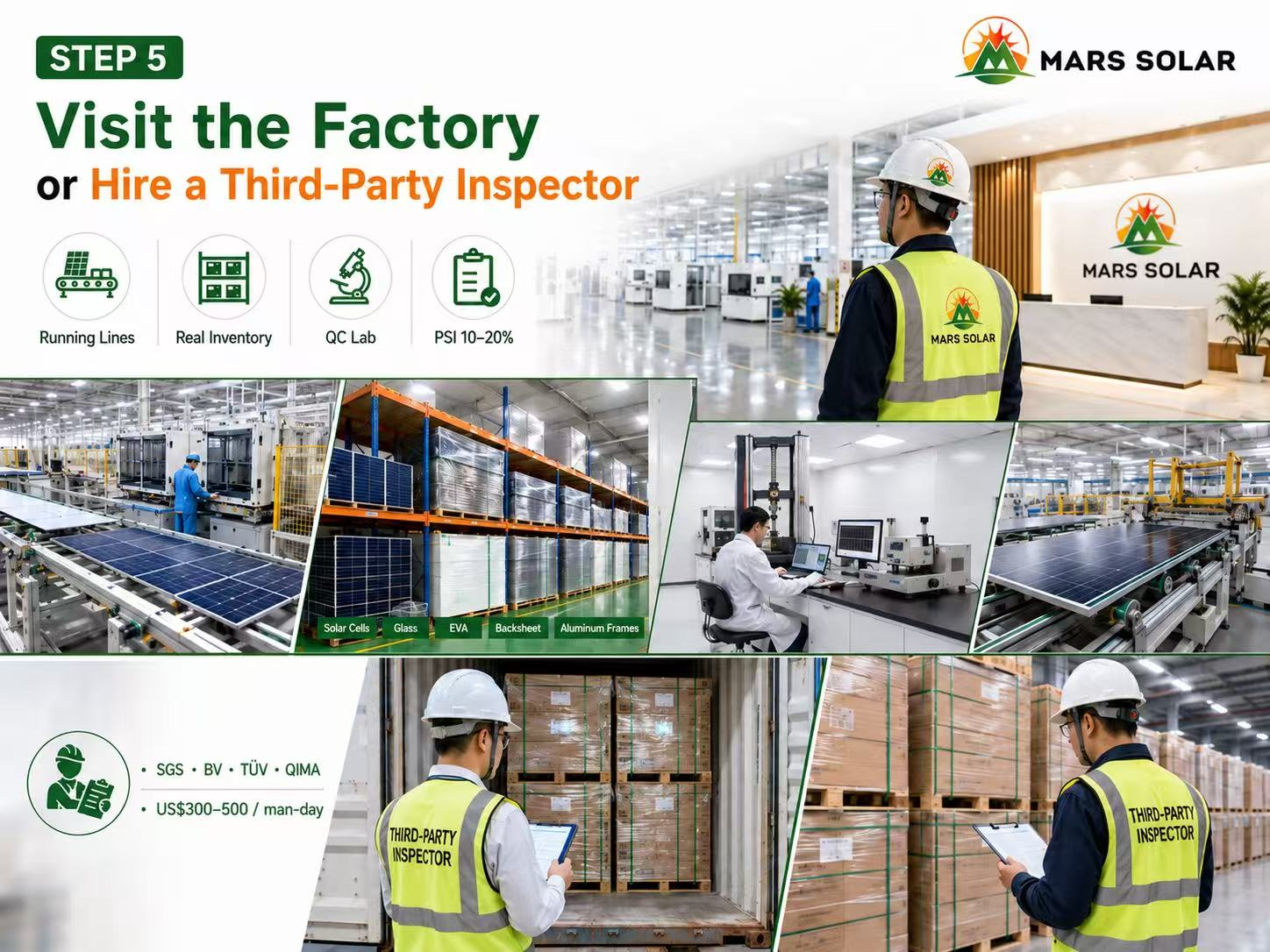
The best verification is a physical visit. A real factory has a reception, a production floor you can walk through, real employees, real inventory, and a quality control lab you can inspect.
What to look for during the visit
- Production lines running during your visit (not just staged the day before).
- Real inventory of cells, glass, EVA, backsheet, aluminum frames — not empty shelves.
- A working QC lab with at least: flash tester, EL tester, insulation tester, mechanical load tester, and a calibrated reference cell.
- Workforce present — 200–500+ employees for a Tier-2 factory, 1,000+ for Tier-1.
- Office staff — if engineering, R&D, and export teams all sit in one room with 3 people, it's a trading company.
Can't visit? Hire a third-party inspection service — SGS, Bureau Veritas, TÜV, AsiaInspection, or QIMA. Cost: $300–500 per man-day in China. Order a pre-shipment inspection (PSI) on at least 10–20% of containers, randomly selected.
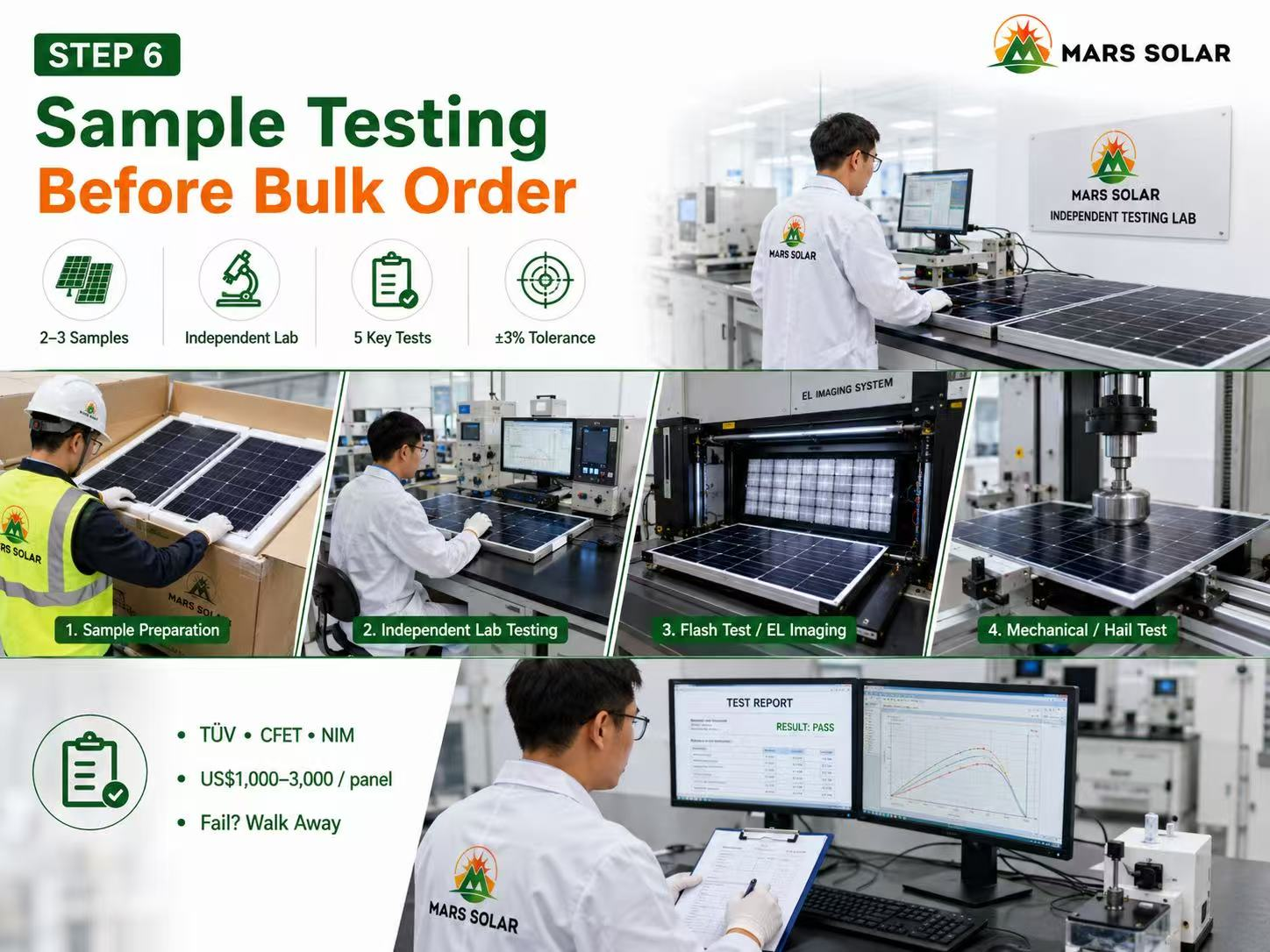
Step 6 — Sample Testing Before Bulk Order
Never place a bulk order without samples tested by an independent lab. A factory's own test reports are not enough — they come from a lab the factory controls.
Sample testing protocol
- Order 2–3 sample panels of the exact model you plan to bulk-order (same cell type, power rating, bill of materials).
- Test at an independent lab — TÜV Rheinland Shanghai, CFET (China Photovoltaic Engineering Test Center), or NIM (National Institute of Metrology, China).
- Required tests ($1,000–3,000 per panel): flash test (verify actual max power vs. datasheet), EL imaging (microcracks, broken cells), insulation withstand (1,000V + 1,500V DC for 1 min), mechanical load (2,400 Pa front / 1,600 Pa rear, IEC standard), hail impact (25mm ice ball at 23 m/s).
- Tolerance: all panels must measure within ±3% of rated power. Positive tolerance preferred; ±3% is the industry standard.
What to do with results: If samples fail, walk away — the factory is either cutting corners or has a quality problem that will affect every panel in your bulk order.
Step 7 — Verify Banking & Trade References
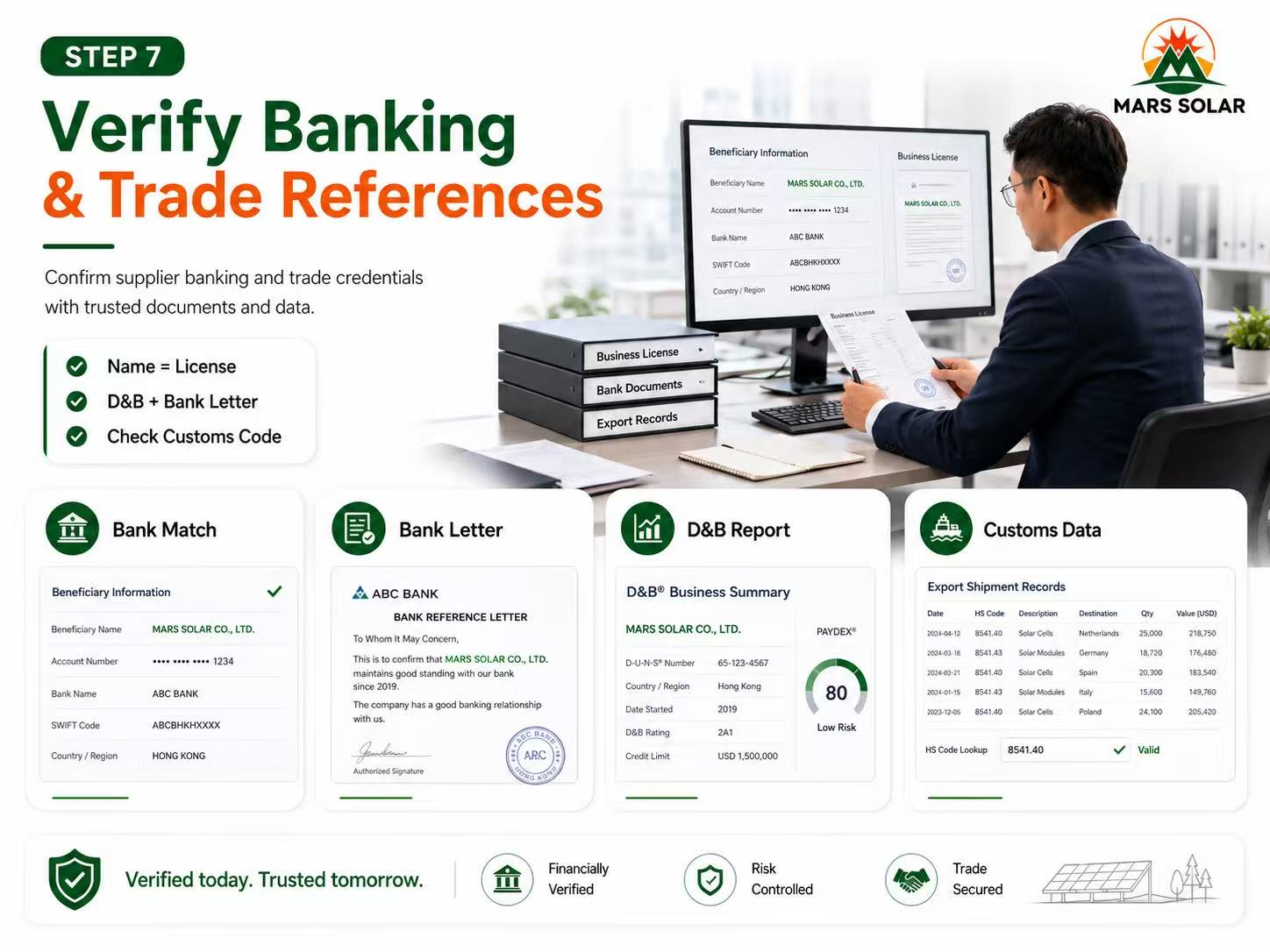
The final step is financial verification. A real factory has a corporate bank account, a real USD/EUR receiving account, and a clean trade record.
What to check
- Beneficiary name on the bank account must match the business license exactly.
- Bank location — should be in the same city as the factory, not a tax haven.
- Bank reference letter — most factories can provide one showing relationship length and credit status.
- Dun & Bradstreet report ($50–200) — credit rating, payment history, legal filings.
- China customs export data — via Panjiva, ImportGenius, or 52WMB. Shows real shipment history by HS code (8541.40 solar cells, 8541.43 solar modules).
Critical check: Ask for the supplier's customs registration code and look up their export record. A factory claiming $50M annual exports but showing only $3M in customs data is lying.
5 Red Flags That Should Make You Walk Away
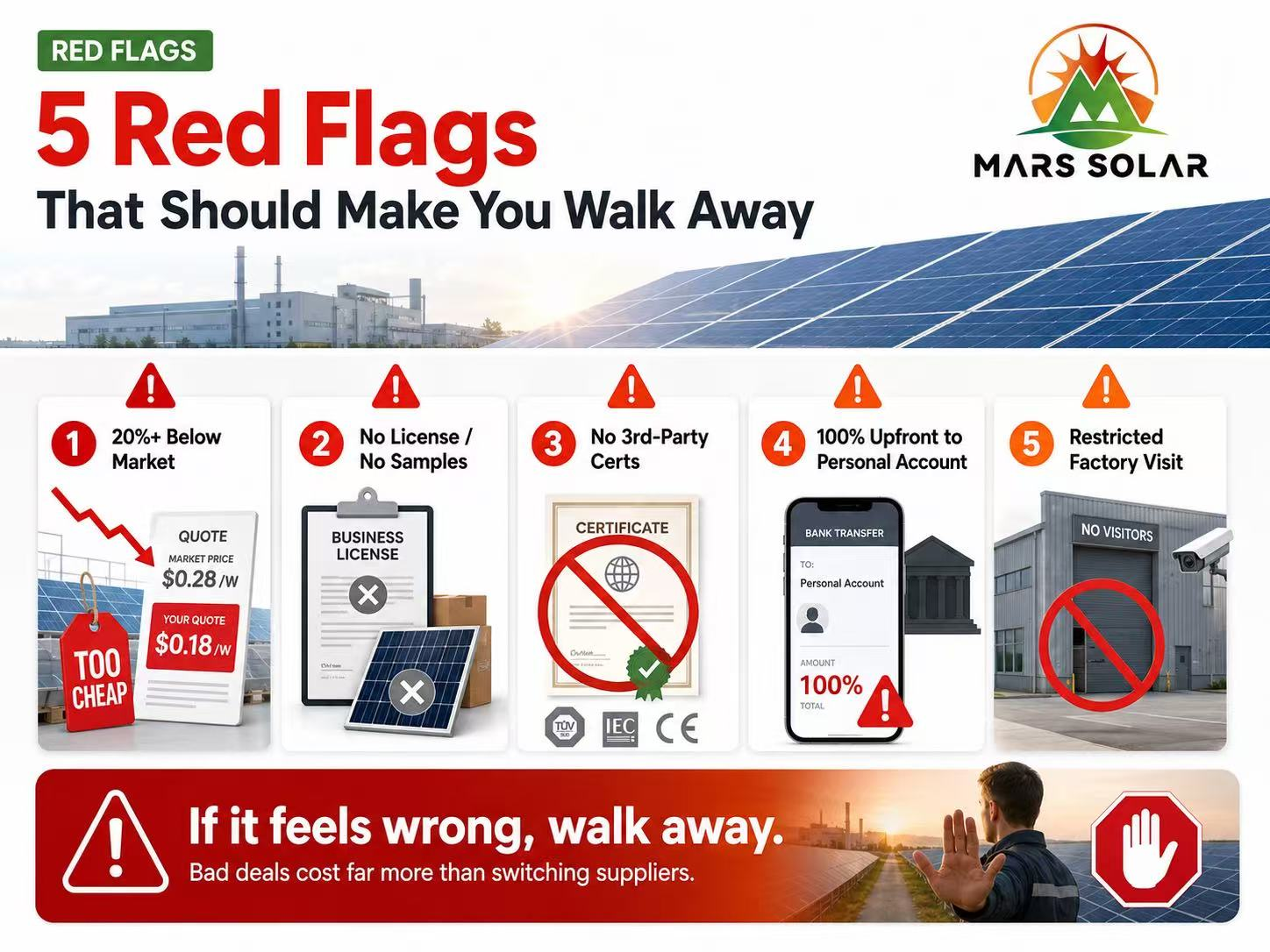
- Price 20%+ below market. If everyone quotes $0.13/W and one quotes $0.09/W, there's a reason — usually B-grade cells, outdated lines, or fraud.
- Refuses to provide a business license or samples. Legitimate factories have nothing to hide.
- No third-party certifications — only "factory test reports" or a CE logo without a notified-body number.
- Pressure to pay 100% upfront via wire transfer to an individual account or to a different country than the factory's registration.
- Factory visit only allowed on certain days with "no photos" rules, or the visit is to a different building than the actual production.
Remember: If anything feels wrong, trust your gut. The cost of a bad solar panel deal is 10–100x the cost of walking away and finding another supplier.
Mars Solar's Verification Record
For transparency, here's how Mars Solar stands up to each of the 7 steps:
- ✅ Step 1 (Business License): Registered 2008, Foshan, Guangdong. Verified at gsxt.gov.cn. Registration capital ¥80M+.
- ✅ Step 2 (Production Capacity): Integrated solar system manufacturing since 2008 — panels, inverters, batteries, mounting. Stock of standard configurations for fast turnaround.
- ✅ Step 3 (Certifications): IEC 61215, IEC 61730, TÜV, SGS, ISO 9001. All verifiable on issuing bodies' databases.
- ✅ Step 4 (References): 3,000+ projects in 130+ countries. Customer references available on request — name, country, project size, contact.
- ✅ Step 5 (Factory Visits): Welcome any time, any day. Walk the floor, see the lab, meet the engineers. No advance notice required.
- ✅ Step 6 (Samples): 2–3 sample panels shipped within 7 days at cost (~$150–300 per panel including DHL). Independent test reports from TÜV available.
- ✅ Step 7 (Banking): USD, EUR, RMB receiving accounts at Bank of China and HSBC. D&B credit rating available on request.
Frequently Asked Questions
Q: How long does the full 7-step verification take?
A: 2–4 weeks if systematic. Steps 1–3 and 7 can be done remotely in 3–5 days. Steps 4–6 require supplier cooperation and take 1–3 weeks.
Q: Is a third-party factory audit worth the cost?
A: Yes, for any order above $50,000. A $500 audit can prevent a $500,000 loss. SGS and TÜV audits also give you a written report you can use in your own sales materials.
Q: Can I skip the factory visit if I have good references?
A: Not recommended. References can be fake. Combine remote verification (steps 1–4, 7) with a third-party inspector (step 5 alternative) for orders above $100,000.
Q: What's the minimum order that justifies full 7-step verification?
A: Any order above $10,000. Below that, at minimum do steps 1, 3, and 7. Verification cost is always less than the cost of a bad order.
Q: What if the supplier passes all 7 steps but panels still have quality issues?
A: Always use a Letter of Credit (L/C) with quality inspection clauses, and require a pre-shipment inspection (PSI) by SGS or TÜV. Never pay 100% before goods pass PSI.
Related Articles
- Top 10 Solar Panel Manufacturers in China (2026 List) — see which factories meet the 7-step standard.
- Bifacial vs Monofacial Solar Panels: Honest Comparison — after verifying the factory, choose the right panel type.
- Solar Panel MOQ, Lead Time & Payment Terms — once verified, here's what to expect on commercial terms.
Get a Verified Quote
Mars Solar is a verified China solar panel manufacturer with 17+ years of experience, 3,000+ export projects across 130+ countries, and certifications verifiable on issuing bodies' databases. We welcome factory visits, sample testing, and third-party inspections.
-
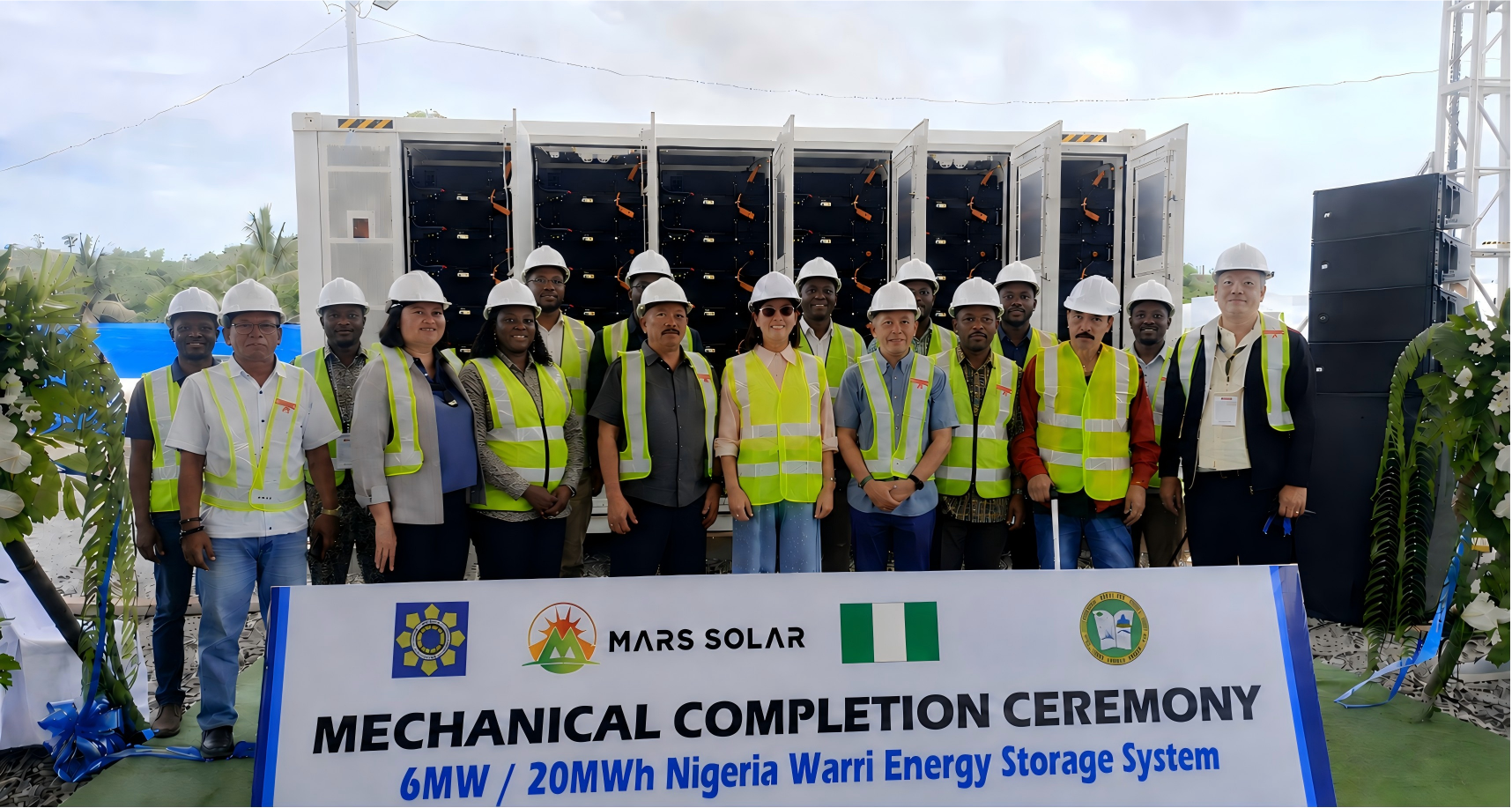 6MW 20MWh Solar Storage in Nigeria Factory + Farm + Residential Case StudyA 6MW solar PV + 20MWh LFP battery storage system in Nigeria powers an integrated factory, farm, and residential complex. The system delivers $108,000+ in monthly electricity savings, reaches payback in approximately 24 months, and provides 25 years of renewable power. This case study covers the engineering configuration, financial model, and operational performance of one of West Africa's most ambitious factory + farm + residential solar deployments.
Do you like ?0
Read more -
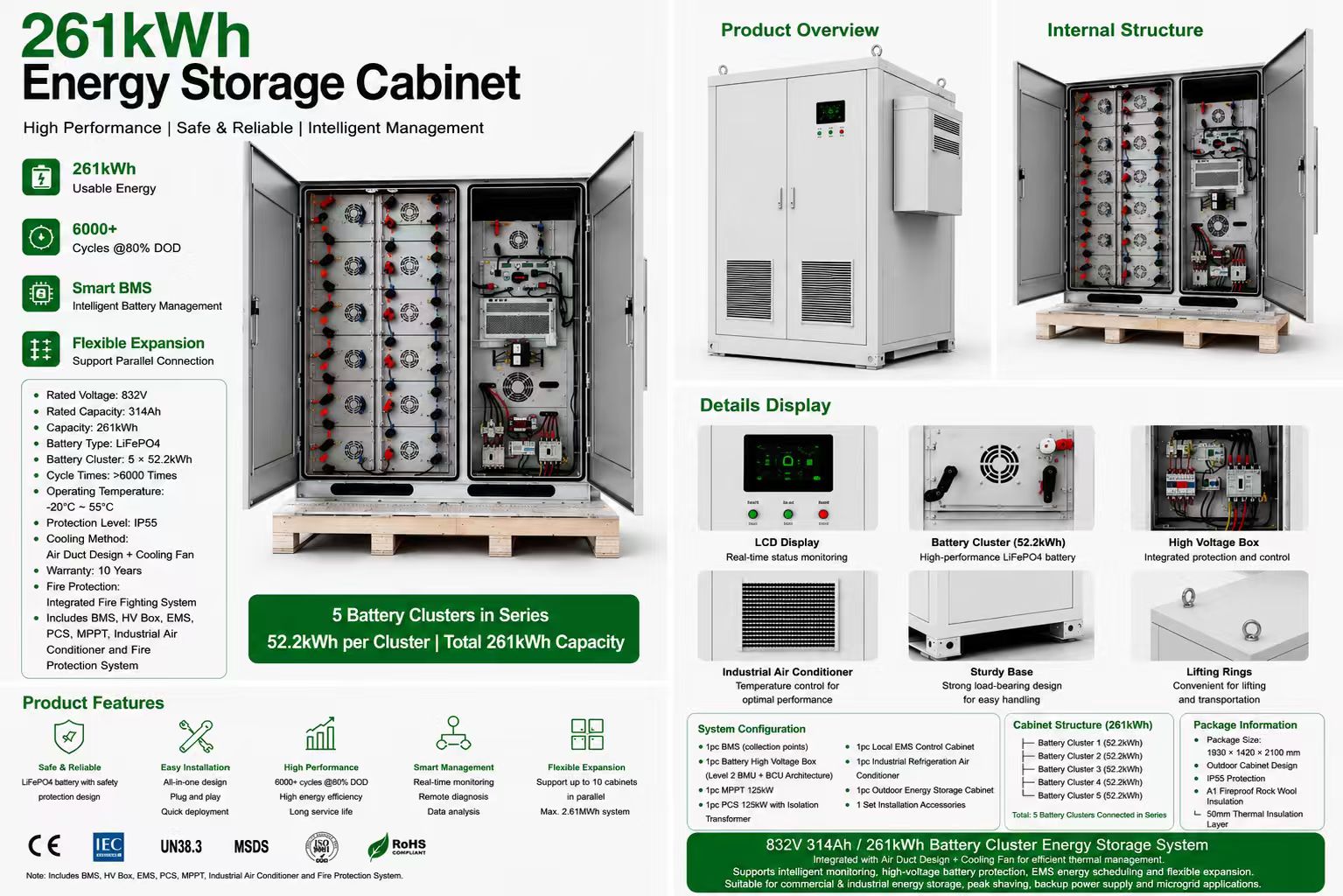 BESS in Nigeria 2026: Battery Energy Storage Cost, Diesel Payback & Import GuideBESS in Nigeria: 2026 pricing, diesel payback, SONCAP, China import guide. Save 60%+ vs diesel. Factory-direct LFP from Mars Solar.
Do you like ?0
Read more -
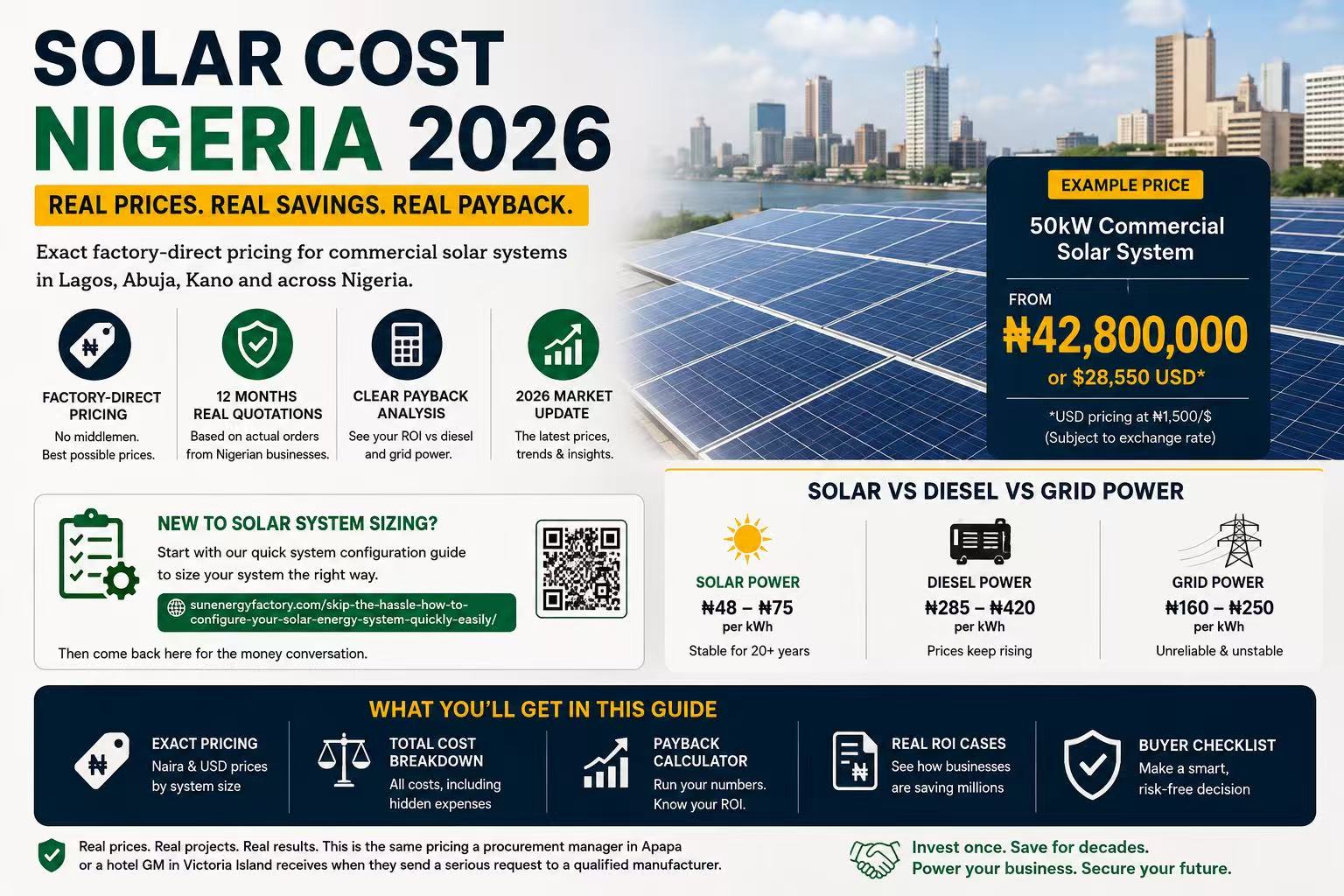 How Much Does Solar Cost in Nigeria? 2026 Real Pricing GuideSolar cost in Nigeria for 5kW to 250kW systems, in Naira and USD. Compare solar vs diesel vs grid, calculate payback, and explore financing options.
Do you like ?0
Read more -
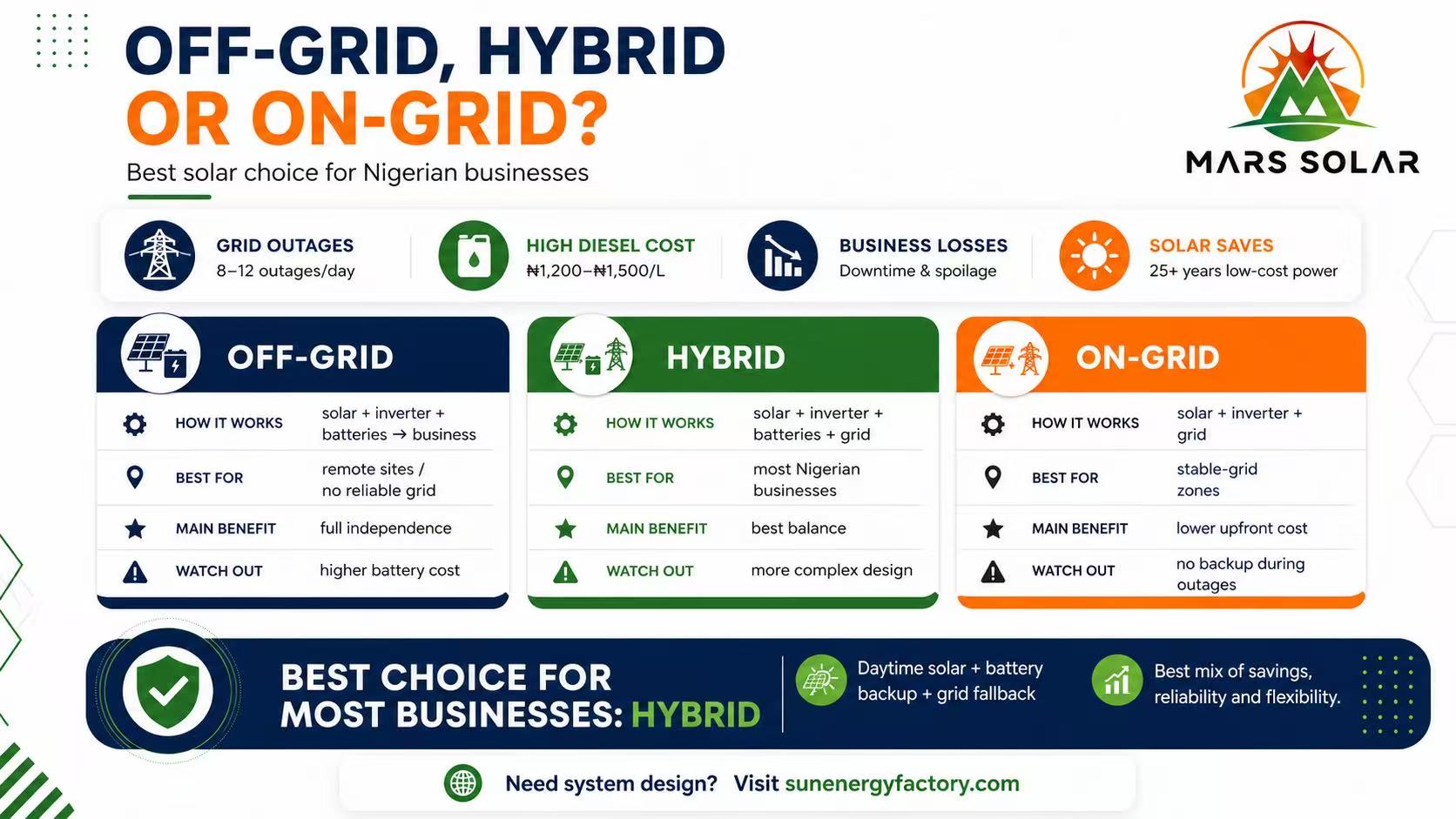 Solar Power Nigeria 2026: Off-Grid vs Hybrid vs On-GridNigeria’s unreliable grid and soaring diesel costs are forcing business owners to take solar seriously. But the biggest question remains: which system — off-grid, hybrid, or on-grid? This 2026 guide breaks down all three solar architectures for Nigeria
Do you like ?0
Read more -
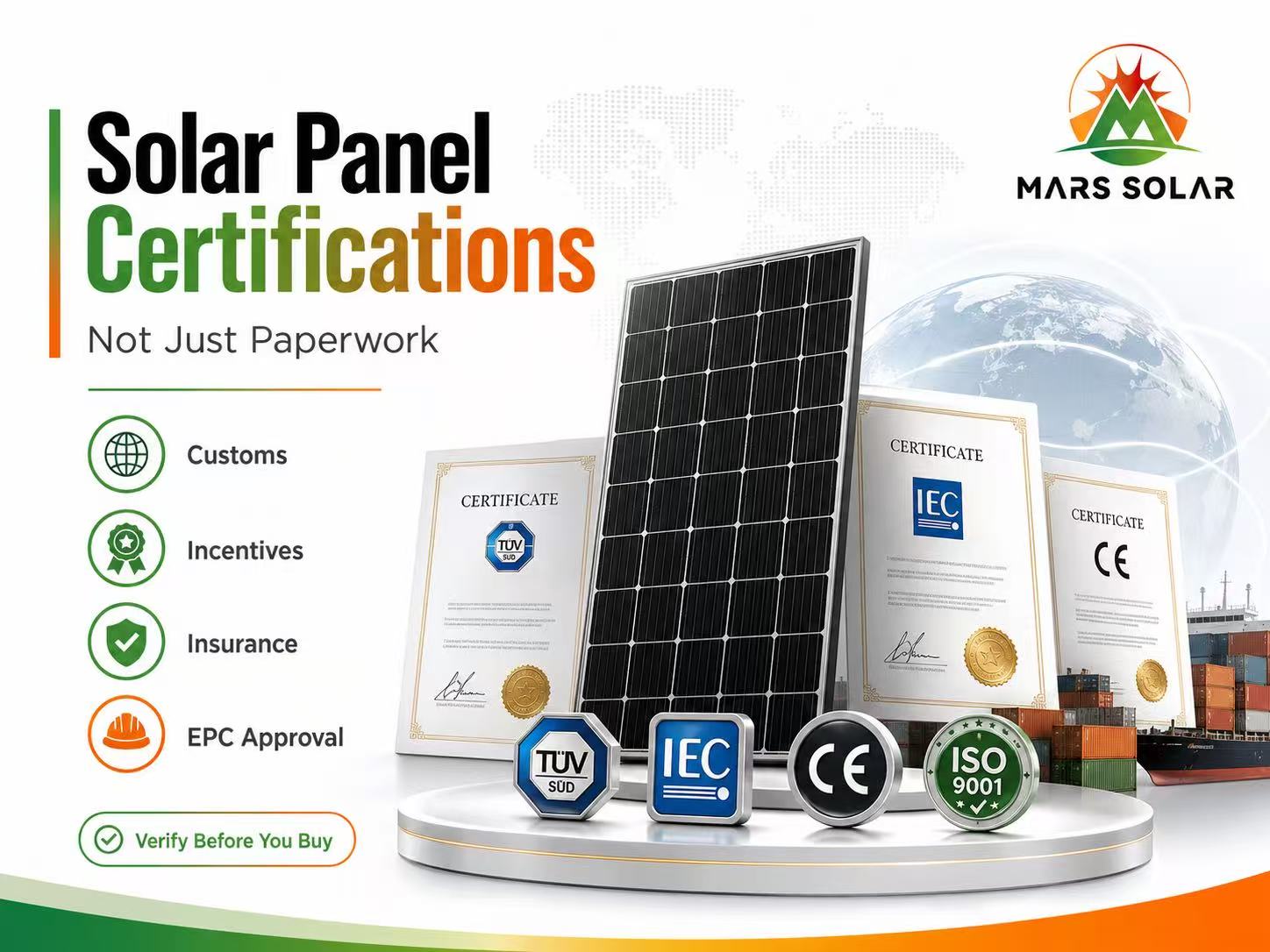 Solar Panel Certifications Explained: IEC, UL, TÜV, CE, ISO — The 2026 GuideA solar panel without proper certifications is unsellable in 90% of international markets. This 2026 guide explains every major certification — IEC 61215, IEC 61730, UL 61730, TÜV, CE, ISO 9001/14001/45001 — what it tests, who issues it, which markets req
Do you like ?0
Read more -
 Solar Panel Shipping & Container Loading: The 2026 Complete GuideThe solar panels leaving the factory are perfect. By the time they arrive at your warehouse, 3–7% might be damaged, delivery could be 2 weeks late, and demurrage at the destination port could wipe out your margin. This 2026 guide covers container types (2
Do you like ?0
Read more