How to Audit a Solar Factory in China 2026: Real Checks Before You Sign
A European EPC once asked us to look at a Chinese supplier offering Tier-1 modules at 22 percent below spot, backed by what looked like a credible deck showing a 15 GW plant in Jiangsu. They wanted a second opinion before wiring a 30 percent deposit. We pulled the company's registry record.
Paid-in capital was RMB 1 million, roughly US$140,000. Twelve employees on social insurance. The registered address was a shared office in a trading complex. The 15 GW factory belonged to a different company with no equity link to the seller. That plant was real, and it had nothing to do with them.
This guide is the checklist we run before signing anything, written for people buying from China who cannot drop in for a week. It covers what to ask, what the answers should look like, and which responses should end the conversation.
Why generic supplier checks miss the solar-specific risks
A standard factory audit confirms three things: the company exists, it has a workshop, and it fulfils orders. For solar that is not enough.
Two factories can hold the same IEC certificate and ship modules that degrade at very different rates. One loses 0.4 percent output a year, another loses more than one percent. Over a 25-year life that gap is tens of percent of total generation, and no certificate in the world distinguishes between them. The three things that actually separate them are specific to photovoltaics:
Certification that covers your exact model, not a sister SKU in the same product family.
Physical proof of your batch through electroluminescence imaging and flash test data.
Warranty that is bankable, meaning someone with money stands behind it rather than a company that can disappear.
There is also an industry-wide misconception worth clearing up early. "Tier 1" is a financial bankability ranking published by BloombergNEF. It is not a quality grade. A factory can sit on that list and still ship you a defective batch, just as a factory off that list can ship excellent product.
The eight checks, in order
1. Pull the registry record before anything else
The most authoritative starting point for verifying any Chinese company is the National Enterprise Credit Information Publicity System record, which is in Chinese and requires real-name authentication to access. If you do not read Chinese or do not have someone who does, this is the single step worth paying someone to do properly.
It shows you:
- Unified Social Credit Code, plus registration date and current operating status. Look specifically for abnormal operation flags or judgment-debtor tags.
- Registered capital versus paid-in capital. Registered capital is often subscribed rather than actually contributed. The gap between the two numbers is where inflated suppliers live.
- Business scope. This is the line that separates a manufacturer from a trading company. If the registered scope says trading or wholesale rather than manufacturing, no amount of factory photography changes that.
- Legal representative, which you cross-check against the name on the bank account you are asked to send money to.
A real factory will send you its business licence within 24 hours. A supplier who refuses to provide one for confidentiality reasons has told you everything you need to know.
2. Verify what they actually produce
Capacity claims are the most inflated numbers in this industry. A factory described as 20 GW may run 2 GW, and will still quote you as though it runs all twenty.
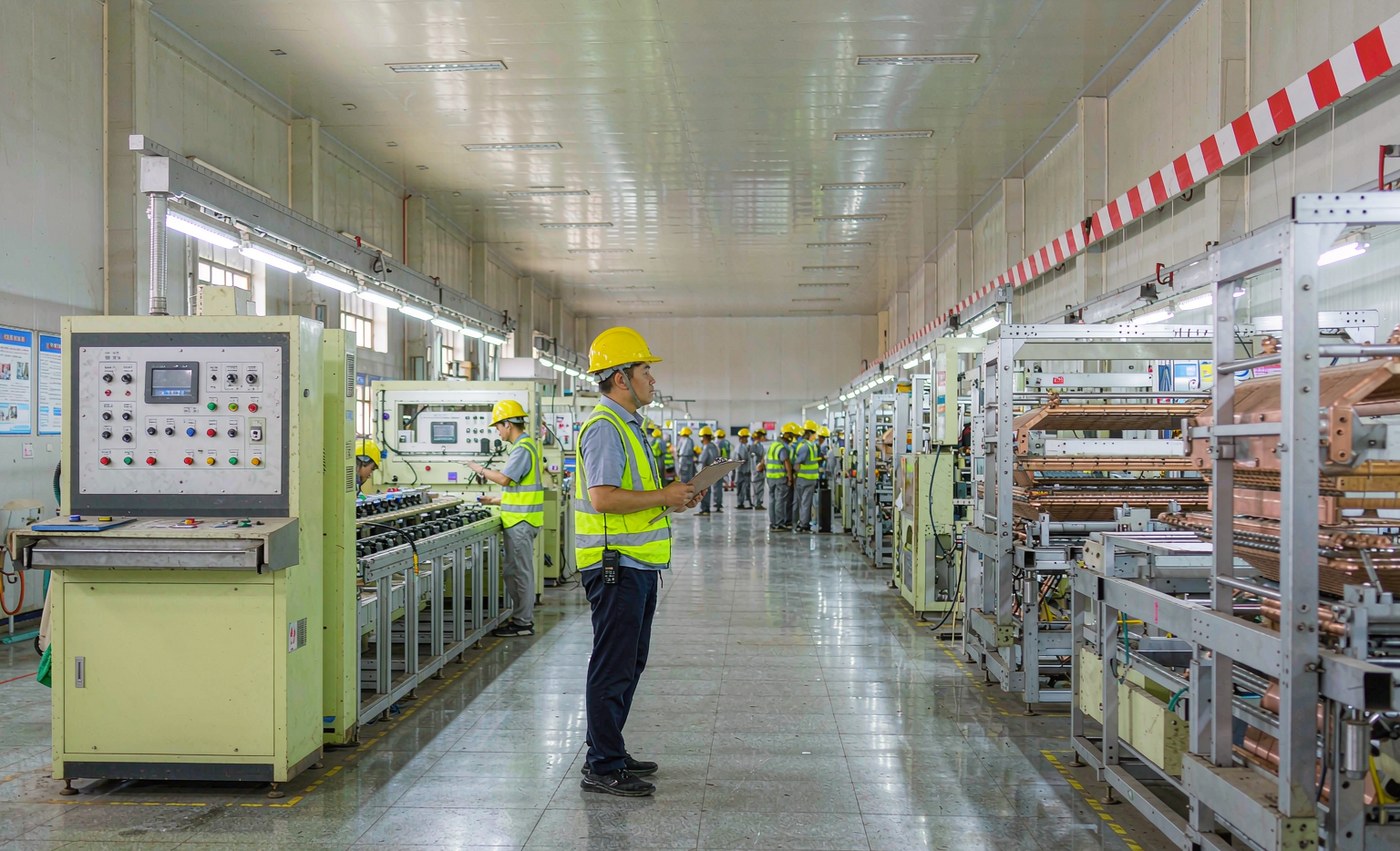
Ask for line counts and check them against equipment reality. Something approaching 5 GW of genuine module capacity needs at least four to six stringers and eight to ten laminators, with matched capacity at every step in between. A genuine 5 GW plant occupies somewhere in the range of 80,000 to 150,000 m² of production space. Ifthey claim enormous capacity and offer to show you around one small building, the numbers do not add up.
Two more requests that are hard to fake:
Monthly output records and utility bills. Power is a major production cost, and electricity consumption tracks actual throughput closely. A facility genuinely running at volume has a substantial power bill, and being shown one is a good sign.
A live video walk-through, not a produced video. Ask them to point the camera at whatever you name: the laminator, the EL tester, the finished goods store, the goods-in bay. Request video at a specific time rather than accepting a file.
Independent benchmarks also exist. Cross-check claimed capacity against the tier lists published by BloombergNEF, Wood Mackenzie or InfoLink, and against shipment data where it is public.
3. Check certificates against the issuing body's database
Certificates are easy to fake as PDFs. They are much harder to fake in the database of the body that issued them.
| Standard | What it covers | Where to verify |
|---|---|---|
| IEC 61215 | Module design qualification and reliability | Issuing lab or CBTL database |
| IEC 61730 | Module safety, shock and fire | Same certificate as above, both parts |
| IEC 62804 | PID resistance | Test report, important for humid climates |
| UL 61730 / UL 1703 | US market requirement | UL Product iQ database |
| ISO 9001 / 14001 / 45001 | Management systems | Certification body database (DNV, TÜV, SGS, BV, LRQA) |
Three checks that most buyers skip:
The certificate holder name must match the entity on your contract exactly, and the model covered must be the one you are buying. Family certification permits extension to related models, so confirm your SKU is genuinely in scope rather than adjacent to it.
Enter the certificate number into the issuing body's own database. A forged PDF will not be found there. TÜV Rheinland, TÜV SÜD, UL and SGS all maintain online searchable registers.
Check the date. Certificates are not routinely re-audited after issue. An old certificate is not evidence of current quality, only of quality at some point in the past.
For the panel-specific walkthrough, our detailed guide to solar panel certification in 2026 covers each standard and what it does and does not prove. There is also a broader treatment in our certification system explainer.

4. Get physical proof of your batch
A certificate describes a sample built at some point in the past. It says nothing about what is being loaded into your container.
Electroluminescence imaging reveals micro-cracks, inactive cell areas and broken interconnect ribbons that are invisible to the eye. In a typical production lot, somewhere around 5 to 10 percent of modules show EL anomalies significant enough to accelerate field degradation. You cannot see them without the image, and you cannot fix them after installation. Request EL images either for every module or for a statistically meaningful sample.
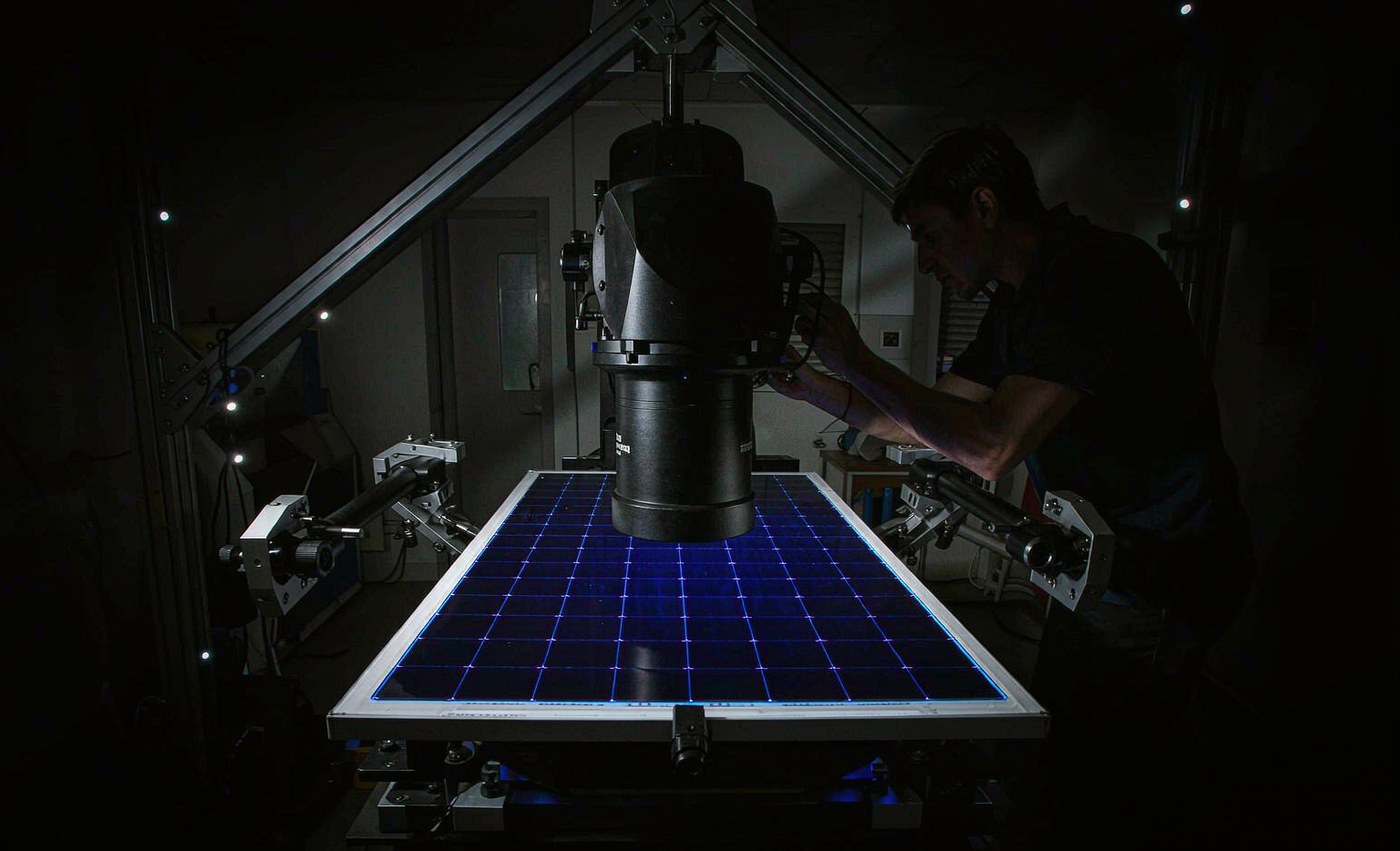
Flash test and I-V curve data confirm measured power against nameplate. Per IEC 61215 the tolerance is typically ±3 percent. Check specifically that you were not down-binned: paying for 560 W and receiving 545 W modules is a common and quiet way to lose several percent of a project's output.
Use an independent inspector, not only the factory's own report. The factory's data is useful as reference, but the decision should rest on independent measurement. A third-party inspection costs a small fraction of one container and shifts every problem it catches back onto the seller while the seller still has an incentive to fix it.
5. Establish that the warranty is worth something
A 25-year promise is worth exactly as much as whoever is standing behind it.
Ask directly:
- Is this a manufacturer warranty or an insured warranty? Insured warranties involve a third party with capital at risk, and they cost vendors money, which is precisely why they mean something.
- Who pays freight on a warranty return? Shipping a failed module or a 200kg battery pack back to China can exceed the value of the item. This single clause decides whether a warranty is usable in practice.
- Is there local stock or a regional service partner? A warranty requiring international freight for every claim is a warranty you will not use.
- What happens if they stop trading? Get it in writing, because the honest answer is usually that nothing happens, which is why the answer matters.
6. Screen for financial stability
You need to know whether the company will still exist when you file a claim in year eight. For listed manufacturers this is public. For private ones — which includes most suppliers you will meet — you have to reconstruct it.
Request three years of financials for large orders, plus a bank reference. Useful indicators include the current ratio (comfortably above 1.2), debt-to-equity (below about 2.0 for stability), and days payable outstanding. One genuinely useful proxy for real production scale, which we picked up from due diligence work in this sector: compare revenue trend against the number of employees enrolled in social insurance. Headcount and revenue should move together. When they diverge sharply, one of them is fictional.
Also search China Judgments Online and the National Enforcement Information Platform for disputes. Pay particular attention to bill of exchange disputes and sales contract cases, which tend to be leading indicators of cashflow stress.
7. Check export compliance and traceability
This has become material rather than administrative, and it affects whether your cargo clears port.
Screen the company, its parent, its subsidiaries and its key raw-material suppliers against the relevant lists for your destination. For the United States this includes the UFLPA Entity List and the BIS Entity List, and for the European Union the forced labour regulation frameworks. Polysilicon origin is the most commonly scrutinised link in the solar chain.
Request a bill-of-materials traceability report covering polysilicon, wafers and metallurgical-grade silicon. A manufacturer with genuine vertical control can produce this. A trader cannot, and will usually send something vague and reassuring instead.
If your destination has its own conformity requirements — SONCAP in Nigeria, ICC and PS marks in the Philippines, PVoC programmes in Kenya — confirm who obtains them and confirm it before shipment, not after arrival. The Philippines import guide covers what catches first-time importers there.
8. Confirm what actually goes in the container
The last check happens at the loading bay, and skipping it is how substitutions reach site.
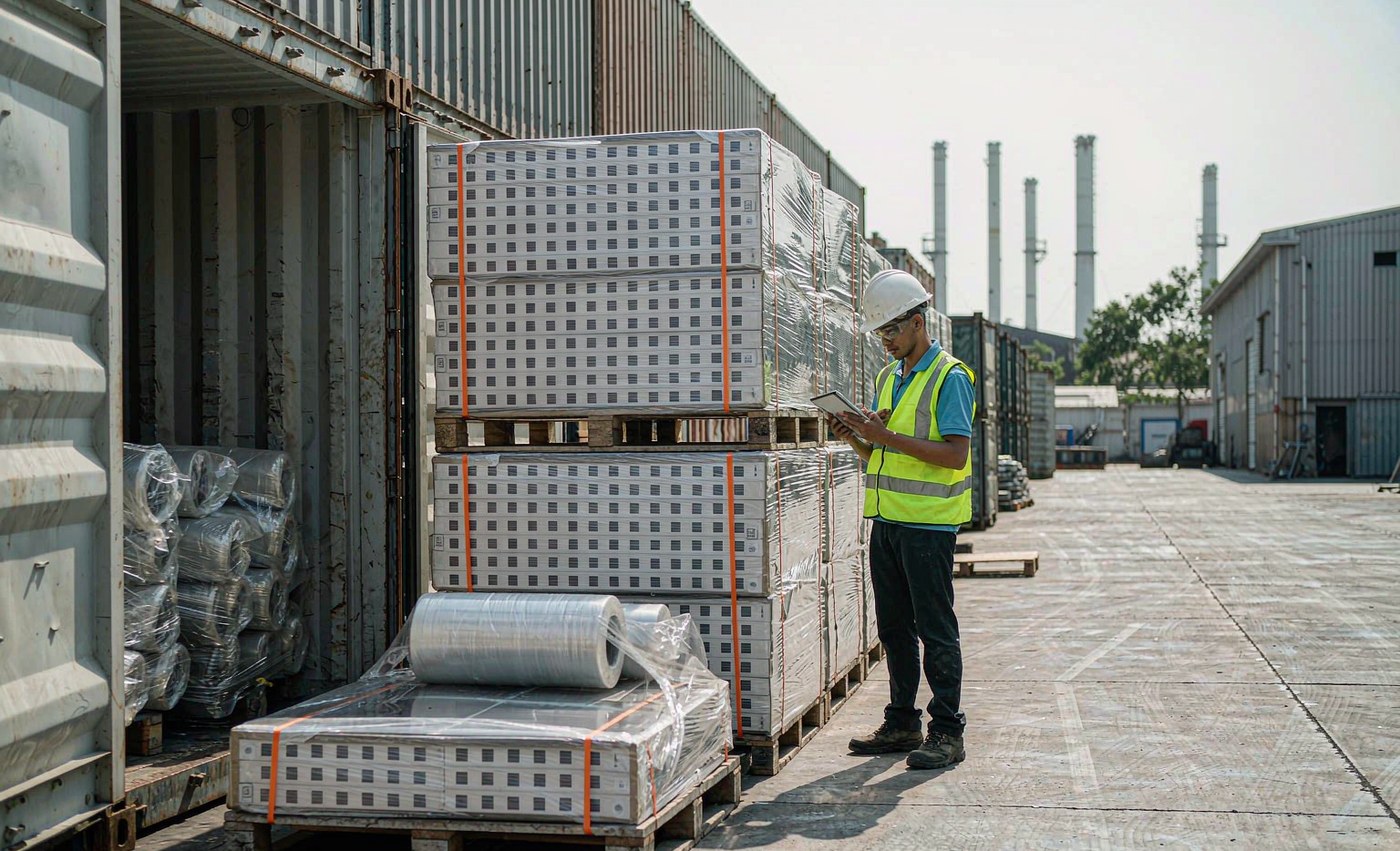
Inspect before loading: cartons unopened and batch numbers matching your order; pallet and wrapping condition for sea freight; serial numbers recorded against your packing list; quantity counted, not taken on trust.
For how many modules realistically fit and how they should be stacked, see our container loading guide.
Eight answers that should end the conversation
These are not subtle warnings. Each one is reason enough to stop.
- Refusing to provide the business licence. Every legitimate factory provides this immediately.
- A quote 20 percent below market with no clear explanation. The usual explanations are old inventory, lower-grade cells, missing certifications, or a supplier who will not exist when you claim.
- Reluctance about factory access. Live video should be routine. "Confidentiality" as a reason for refusing is not confidentiality.
- Certificates that will not verify in the issuing database, or that cover a different model or a different company name.
- No customer references at all, or references that turn out to be affiliates.
- Requesting full payment upfront. Standard terms involve a deposit and balance. There is no version of this that ends well without an established relationship.
- Bank details in a name that does not match the contract entity. This one sometimes looks like an administrative detail. It is not.
- Slow or unclear communication before you pay. Whatever the pre-sales experience is like, the post-sales experience will be worse, because you have already given them the money.
What a real audit costs and how long it takes
A standard third-party factory audit runs roughly two to five days and covers somewhere between 150 and 400 checkpoints depending on depth. Agencies including SGS, Intertek, TÜV Rheinland and Bureau Veritas all do this work, as do smaller specialist firms, which are often better value for solar because they know what to look for.
During those days, a competent auditor checks equipment maintenance logs rather than just equipment presence, real throughput rates rather than nameplate rates, and environmental controls in the production area. Production areas should hold temperature within about ±3°C and humidity between 40 and 60 percent for module lamination. It is worth asking about utilisation specifically: somewhere around 50 to 75 percent suggests healthy operations with room for your order, below 50 percent may indicate trouble, and above 80 percent suggeststhat a custom or urgent order will struggle for a slot.
If you cannot afford a full audit, spend the money selectively. Priority order, in our experience:
- Registry and ownership verification — cheapest, highest information per dollar.
- Certificate database checks — you can do these yourself for free.
- Pre-shipment inspection with EL testing — catches most substitution risk.
- Full factory audit — worth it at repeat-order volumes.
Frequently asked questions
Can I audit remotely?
Partly. Live video, registry records, certificate databases and third-party inspection all work remotely and together cover most of the risk. What you cannot fully replace is walking the floor and seeing condition, housekeeping and whether the lines are actually running. Remote is adequate for a first order; consider an in-person visit before committing to regular volume.
How much does a factory audit cost?
A basic third-party audit typically starts in the low hundreds of US dollars per auditor-day and rises with depth and duration. Against a container order it is usually a rounding error, and against a container of substandard modules it is the cheapest insurance available.
What if they refuse an audit?
Treat refusal as the finding. Legitimate manufacturers are used to this and often prefer it, because a clean audit saves everyone time later.
Should I trust Alibaba or Made-in-China verification badges?
Use them as a starting signal, nothing more. Those checks confirm that a business registration exists, not that there is a factory, and certainly not that the factory is the one you will buy from.
How do I tell a real factory from a trading company?
The business scope line in the registry record is the most direct evidence. If it says trading, it is a trading company, even if they own some equipment. Traders are not dishonest by default — many are excellent at consolidation and logistics — but you should know which you are dealing with, because the price structure and accountability differ.
Do I need different certificates for different markets?
Yes. IEC 61215 and 61730 are broadly the baseline. North America generally wants UL. Various markets add local conformity marks. Always confirm requirements for your specific port of entry, because the answers change.
What is EL testing and why does it matter?
Electroluminescence imaging passes a current through the module and photographs the near-infrared emission, revealing cracks and inactive regions invisible in daylight. It is the strongest single filter against refurbished and substandard product, and it is cheap relative to what it catches.
Who should pay for inspection?
Usually you do, sometimes split. Working out who pays is far less important than ensuring the inspector reports to you rather than to the supplier.
How do I verify a battery manufacturer specifically?
Everything above applies, plus cell-specific items: cycle-life test conditions in writing, IEC 62619 or UL 1973 as applicable, UL 9540A thermal propagation data for installations where it is required, and clear identification of who manufactured the cells separately from who assembled the pack. Our seven-step factory audit guide covers the battery-specific additions.
What should be in the contract?
Model-specific specifications rather than family descriptions, batch-level EL and flash test requirements, inspection rights before shipment, defined warranty terms including who pays return freight, delivery milestones with realistic lead times, and payment terms that keep some money in your hands until you have inspected. Our guide to MOQ, lead time and payment terms goes through each of these.
Is it safer to buy through a sourcing agent?
Sometimes, particularly for first-time importers in a new market. A good agent adds verification, communication and logistics value. A bad one adds a margin and a layer you cannot see through. Either way you should do the registry and certificate checks yourself rather than delegating them entirely.
How long should due diligence take?
The essential checks (registry, certificates, references) take a few days. Full verification with a site visit can take several weeks. Against a container purchase, none of that is slow. Rushing it is what costs money.
If you would rather buy from someone who expects to be checked
Everything in this guide is what we get asked to produce, and producing it is not a burden. If you are evaluating us, we will send the business licence, model-specific certificates with numbers you can look up, configuration sheets with real component specs, and batch EL and flash test data before shipment.
We are a Foshan-based assembler and system integrator rather than a cell manufacturer, and our spec sheets say which part of the chain each component comes from. Buyers deserve to know that, and it is not something we hedge on.
Start wherever is most useful: browse our energy storage range or the complete product line, read how we handled a Nigerian factory installation or a Ghana hotel project, or compare us against larger suppliers honestly in our top 10 battery manufacturers ranking.
If you have a specification and a site, send them over along with whatever due diligence documents you need. More project detail is in our case studies.
-
 6MW 20MWh Solar Storage in Nigeria Factory + Farm + Residential Case StudyA 6MW solar PV + 20MWh LFP battery storage system in Nigeria powers an integrated factory, farm, and residential complex. The system delivers $108,000+ in monthly electricity savings, reaches payback in approximately 24 months, and provides 25 years of renewable power. This case study covers the engineering configuration, financial model, and operational performance of one of West Africa's most ambitious factory + farm + residential solar deployments.
Do you like ?0
Read more -
 Solar Panel Shipping & Container Loading: The 2026 Complete GuideThe solar panels leaving the factory are perfect. By the time they arrive at your warehouse, 3–7% might be damaged, delivery could be 2 weeks late, and demurrage at the destination port could wipe out your margin. This 2026 guide covers container types (2
Do you like ?0
Read more -
 Solar Panel Factory Verification: The 7-Step Due Diligence GuideEvery year, international solar buyers lose millions to fraudulent suppliers — fake certificates, empty factories, and panels that don't match spec. This 7-step verification guide shows you exactly how to qualify any China solar factory before you wire mo
Do you like ?0
Read more -
 Solar Panel MOQ, Lead Time & Payment Terms: The Complete 2026 Buyer's GuideMOQ, lead time, and payment terms are the 3 questions every solar buyer asks — and the 3 answers most suppliers hide behind vague emails. This guide gives you complete, honest answers from a verified China factory with 17+ years and 3,000+ export projects
Do you like ?0
Read more -
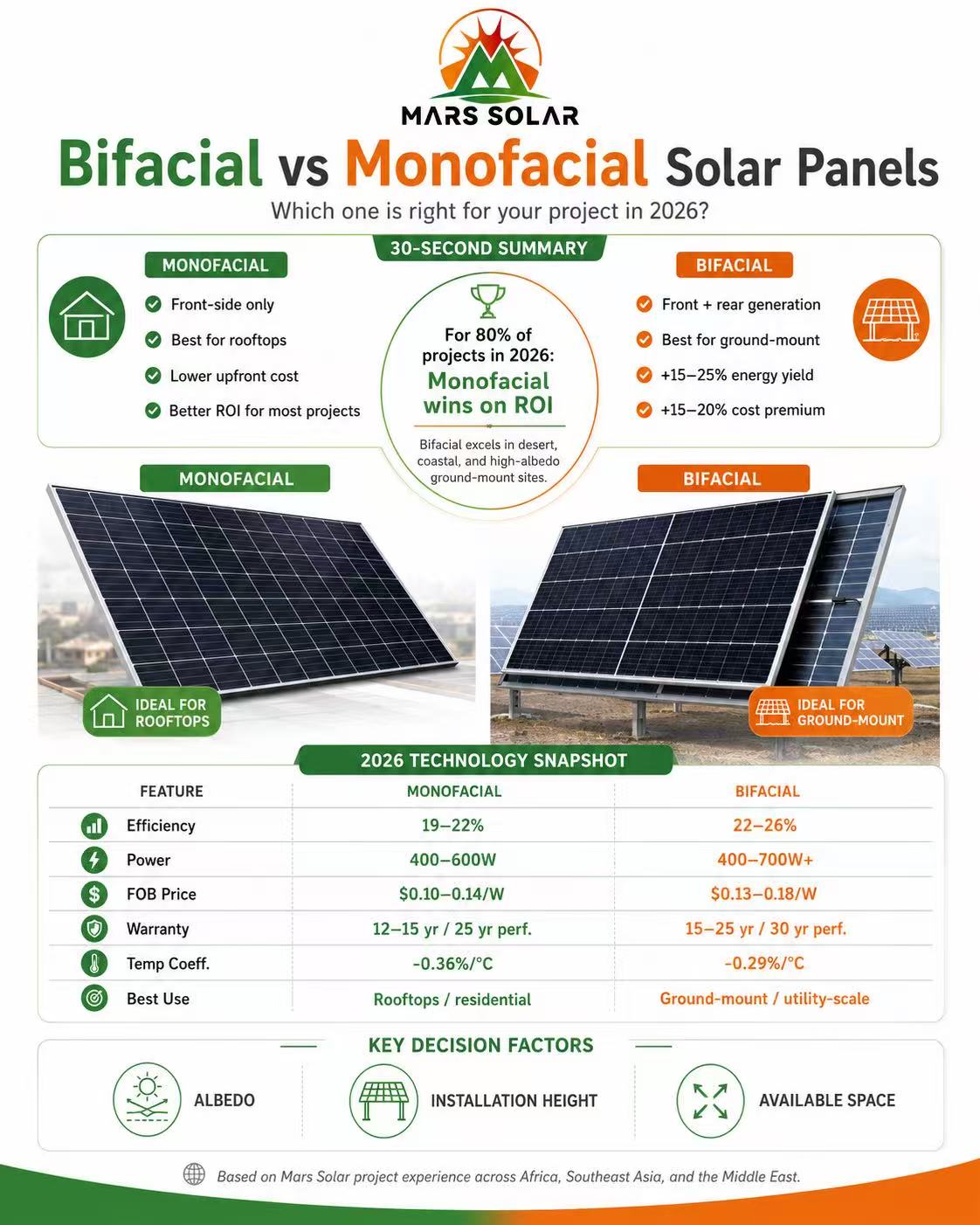 Solar Panel Selection Guide: Monofacial vs. Bifacial — 2026 EditionMonofacial and bifacial solar panels look identical but deliver 15-25% output difference. This 2026 guide compares 15 technical parameters, analyzes 5 real project ROI cases (Nigeria, Philippines, Ghana, Kenya, DRC), and gives you 3 decision frameworks to
Do you like ?0
Read more -
 Top 10 Solar Panel Manufacturers China 2026 | Best BrandsDiscover the top 10 solar panel manufacturers China 2026. Compare Jinko, LONGi, Trina & more. Find Tier 1 suppliers.
Do you like ?0
Read more