India's solar manufacturing capacity is expected to increase by 20GW
Quick answer: A 10KW solar system of this configuration produces about 63KWH per day from 30x350W monocrystalline panels. Built by Mars Solar (factory since 2008), CE/ROHS certified, 25-year panel life, shipped factory-direct to 130+ countries.
Electricity Minister RK Singh revealed that Indian manufacturers intend to develop more panel solar system production lines even without considering the incentive plan being developed by the government.
Recently, Indian Electricity Minister RK Singh stated that the ministry has received a letter of intent, expressing its intention to build another 20 GW of solar module and battery manufacturing capacity in the country. The minister stated that the industry’s interest in building new factories has nothing to do with the “interest subsidy” program planned by the Ministry of New Energy and Renewable Energy (MNRE) to subsidize capital loan interest rates. Singh made this speech at the “2020 India Photovoltaic Frontier” online event organized by government think tanks NITI Aayog, MNRE and Invest India this week.
This set of interventions that MNRE plans to take to offset high borrowing costs will reduce capital expenditures related to solar cell and silicon wafer production, as well as working capital, technology upgrades within the three-year factory life cycle, and interest on energy costs. The plan will be implemented together with tariffs applicable to solar imports.
Incentives "Manufacturers who adopt advanced or future-oriented technologies will enjoy additional incentives," the minister said on Tuesday. "We will incorporate this into the interest subsidy program."
NITI Aayog also proposed a production-linked Indian solar module export incentive plan. According to MNRE joint secretary Amitesh Kumar Sinha, the program will reward products with high efficiency and low heat loss, as well as encourage local production.
India is still 64 gigawatts away from achieving its 2022 solar power generation target. Therefore, there is a huge demand for polysilicon, silicon wafers, cells and modules, at least some of which can be met by local production.
India’s annual solar module manufacturing capacity is currently about 16 GW, of which about 9.5 to 10 GW are currently in operation. But India’s annual solar cell production capacity is only 2.5 GW.
-
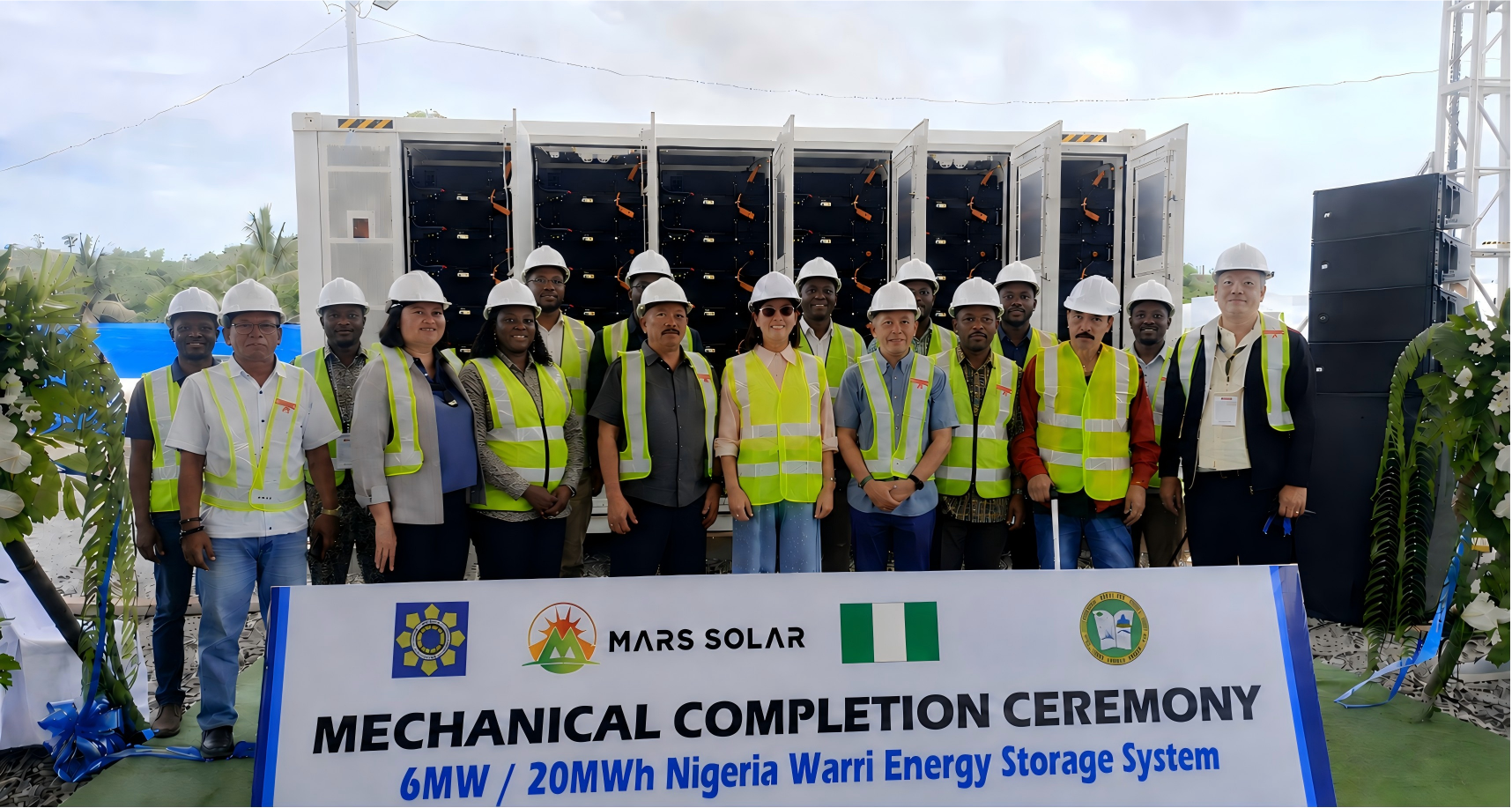 6MW 20MWh Solar Storage in Nigeria Factory + Farm + Residential Case StudyA 6MW solar PV + 20MWh LFP battery storage system in Nigeria powers an integrated factory, farm, and residential complex. The system delivers $108,000+ in monthly electricity savings, reaches payback in approximately 24 months, and provides 25 years of renewable power. This case study covers the engineering configuration, financial model, and operational performance of one of West Africa's most ambitious factory + farm + residential solar deployments.
Do you like ?0
Read more -
 Solar Panel Shipping & Container Loading: The 2026 Complete GuideThe solar panels leaving the factory are perfect. By the time they arrive at your warehouse, 3–7% might be damaged, delivery could be 2 weeks late, and demurrage at the destination port could wipe out your margin. This 2026 guide covers container types (2
Do you like ?0
Read more -
 Solar Panel Factory Verification: The 7-Step Due Diligence GuideEvery year, international solar buyers lose millions to fraudulent suppliers — fake certificates, empty factories, and panels that don't match spec. This 7-step verification guide shows you exactly how to qualify any China solar factory before you wire mo
Do you like ?0
Read more -
 Solar Panel MOQ, Lead Time & Payment Terms: The Complete 2026 Buyer's GuideMOQ, lead time, and payment terms are the 3 questions every solar buyer asks — and the 3 answers most suppliers hide behind vague emails. This guide gives you complete, honest answers from a verified China factory with 17+ years and 3,000+ export projects
Do you like ?0
Read more -
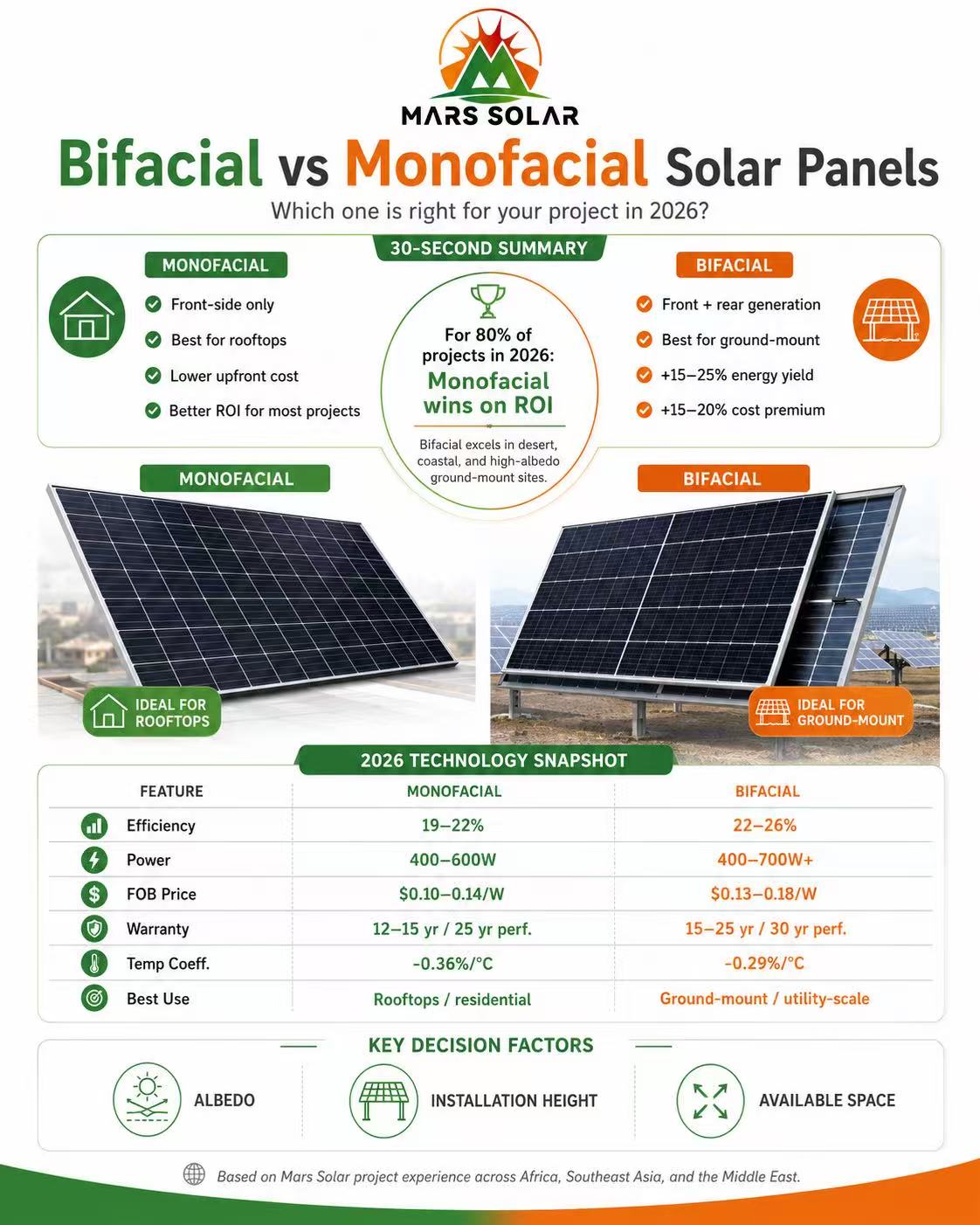 Solar Panel Selection Guide: Monofacial vs. Bifacial — 2026 EditionMonofacial and bifacial solar panels look identical but deliver 15-25% output difference. This 2026 guide compares 15 technical parameters, analyzes 5 real project ROI cases (Nigeria, Philippines, Ghana, Kenya, DRC), and gives you 3 decision frameworks to
Do you like ?0
Read more -
 Top 10 Solar Panel Manufacturers China 2026 | Best BrandsDiscover the top 10 solar panel manufacturers China 2026. Compare Jinko, LONGi, Trina & more. Find Tier 1 suppliers.
Do you like ?0
Read more