Quick answer: how to size a commercial BESS
To size a commercial BESS you need three numbers in this order: the load profile (peak kW and daily kWh), the autonomy you want (hours or days), and the battery voltage architecture that lets the inverter deliver that peak. Our real 40kW/96kWh, 50kW/112kWh and 80kW/193kWh configurations differ almost entirely on the first two.
On this page
- What "sizing" actually means in a commercial BESS quote
- The load profile comes before any hardware
- Three real configurations, line by line
- Battery chemistry: why the cycle figure is the number that matters
- Voltage architecture: 358.4V versus 614.4V
- Four sizing mistakes we see most often
- What to send a supplier when you ask for a quote
- Frequently asked questions
- The short version
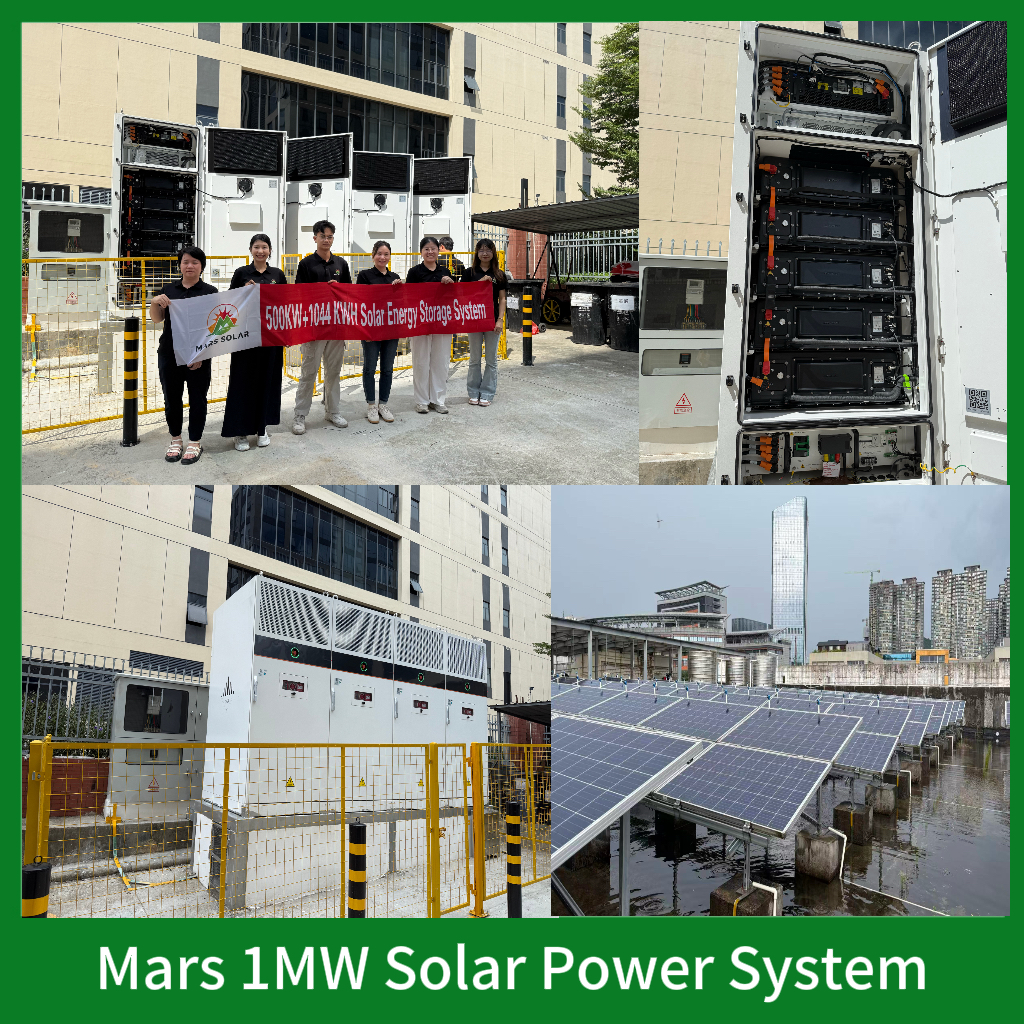
Sizing a commercial BESS starts with three numbers, not one: how much power you draw at any instant (kW), how much energy you use between charges (kWh), and how much array you need to refill the battery daily (kWp). Most quotes you will receive are built around a configuration sheet that fixes all three — and the fastest way to judge whether a quote is honest is to check whether those three numbers actually fit your load profile, or whether someone just picked the nearest standard cabinet.
This guide walks through what real configurations include, using our own 40kW/96kWh, 50kW/112kWh and 80kW/193kWh solar-plus-BESS sheets as the reference. No estimated prices — just what each box contains, why it is sized that way, and where buyers most often get talked into the wrong number.
What "sizing" actually means in a commercial BESS quote
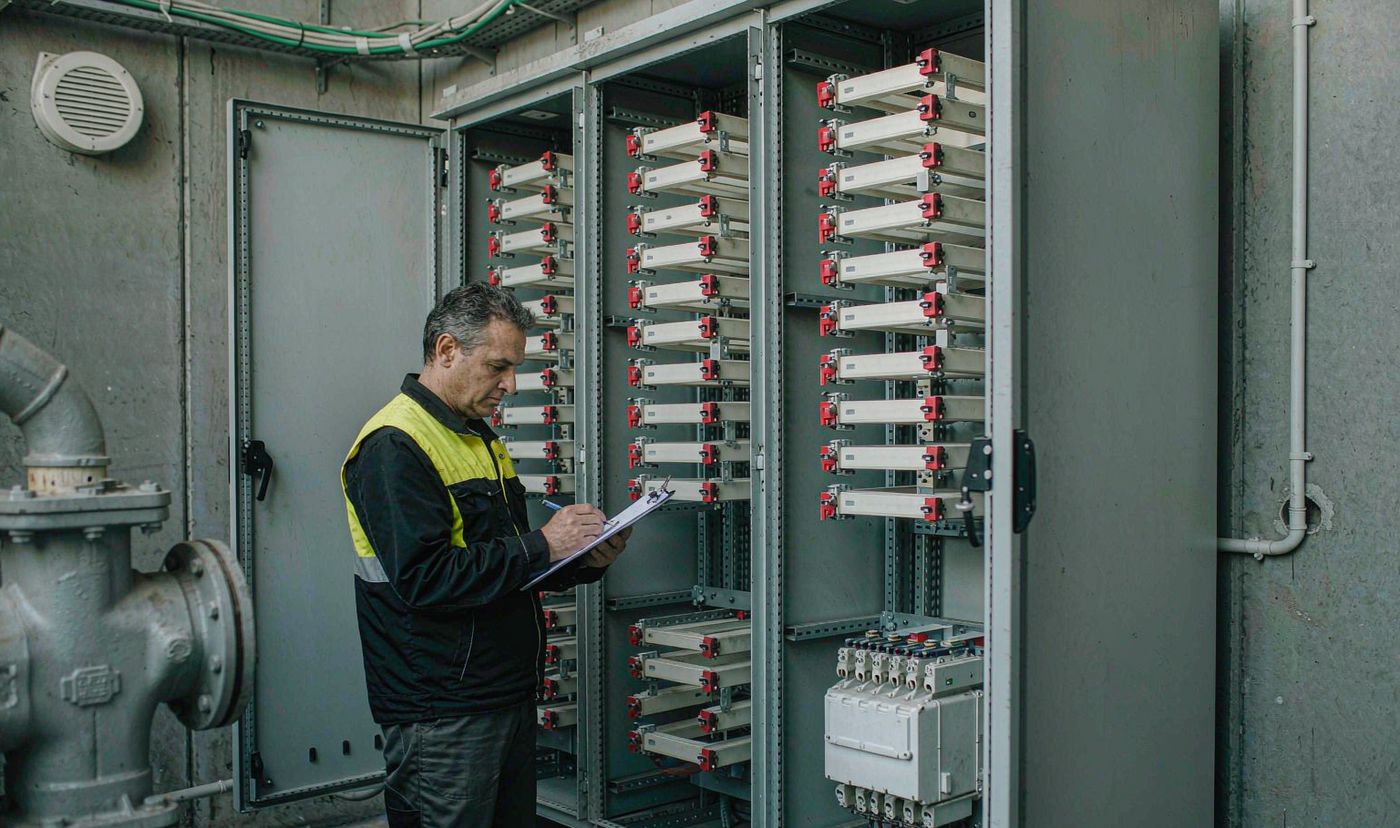
A BESS quote that only lists "50kW" is incomplete. Three separate ratings matter, and they constrain each other:
Power rating (kW) is what the inverter can push at any moment. It decides whether your air conditioners, pumps and compressors can all run together.
Energy capacity (kWh) is what the battery can deliver between recharges. It decides how long you run after sunset or through an outage.
Array size (kWp) is what refills the battery each day. If the array is too small relative to the battery, you never fully recharge, and the system quietly under-delivers every cloudy day.
The ratio between them is the real design decision. Our 50kW/112kWh configuration pairs with a 49.56kWp array — roughly 1 kWh of storage per 0.44 kWp of panel. The 80kW/193kWh configuration pairs 83.2kWp with 193kWh, almost exactly the same ratio. That is not a coincidence: the array has to reliably refill the battery in one solar day, with headroom for a bad-weather day.
If a supplier offers you 193kWh of storage behind a 40kW array, ask them to explain the recharge math. Either the array is undersized, or they are assuming the grid will do the refilling — which changes what the system is actually for.
The load profile comes before any hardware
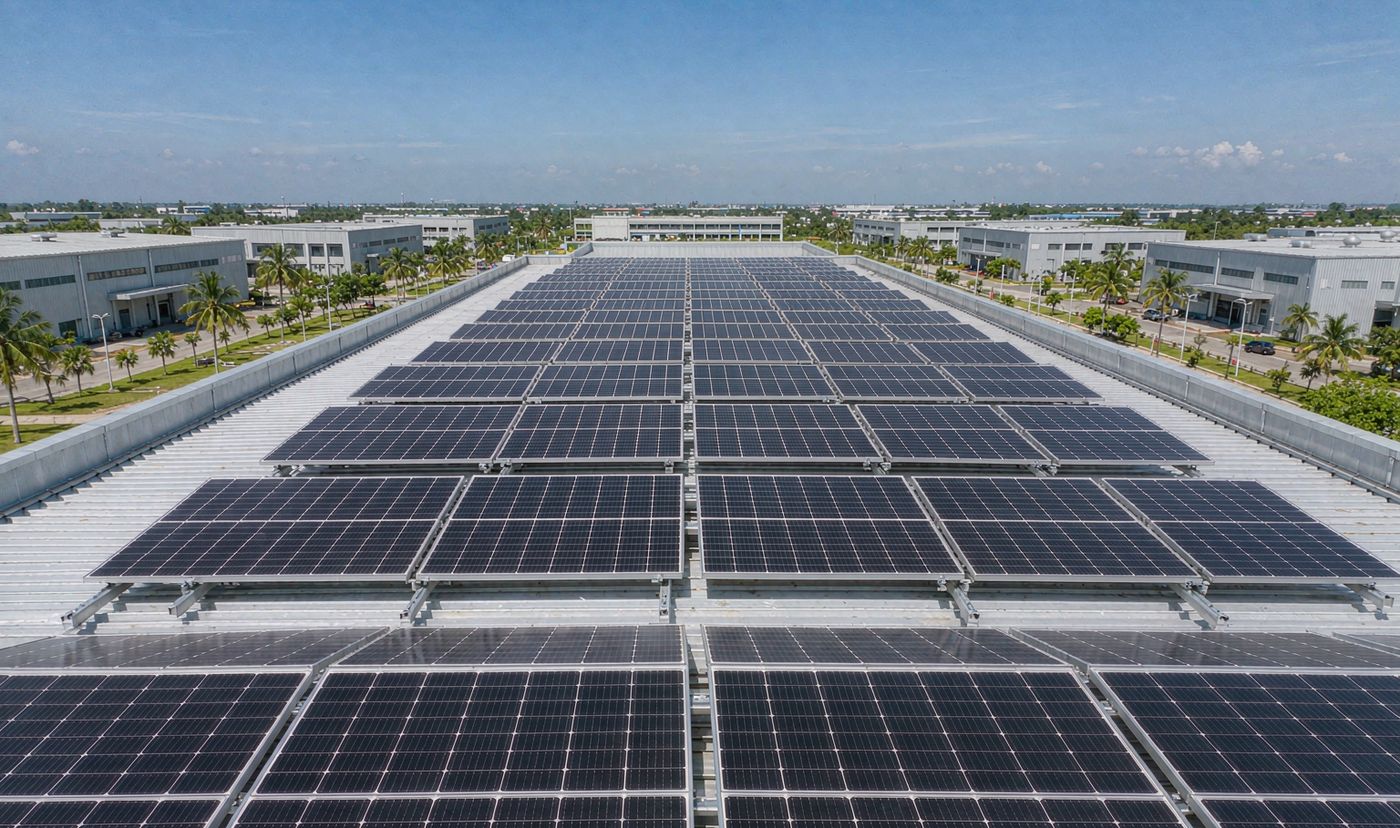
Before the three numbers, there is one question: what does your site actually draw, hour by hour?
A cold storage facility that runs compressors 24/7 has a flat profile — its problem is total energy, and it will lean on the battery every night. A hotel with peak demand in the evening and mid-morning lull has a spiky profile — its problem is power, and the battery mostly covers the peak, not the average. A factory with a few large motors has a third problem entirely: starting current.
Three things to measure before you accept any configuration:
- Your largest single motor load. A compressor or pump can pull three to seven times its running current at start-up. The inverter's surge rating — not its continuous rating — decides whether it survives.
- Your evening consumption. For most commercial sites in tropical markets, the load between 6pm and 10pm is what drains the battery. Size the bank to that window, not to the daily average.
- Your grid condition. A site with reliable power uses the BESS for peak shaving. A site with daily outages uses it as the primary supply. Same hardware, completely different sizing logic.
On our own site surveys, the second question we ask after "what is your monthly bill" is always "what trips first when the grid drops". The answer usually reshapes the configuration more than the bill does.
Three real configurations, line by line
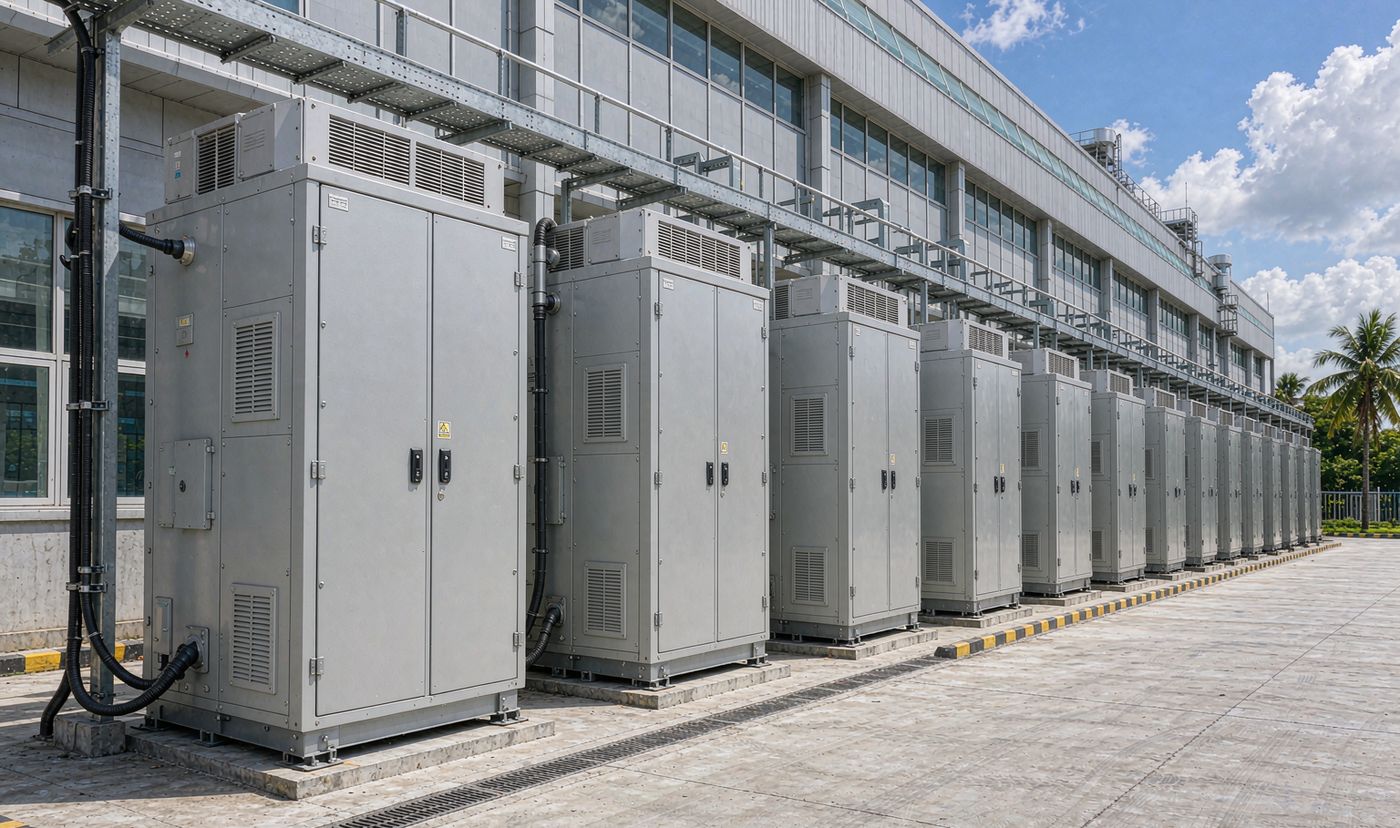
Here is what each of our standard configurations actually contains. These are manufacturer sheets, not estimates.
| Component | 40kW / 96kWh | 50kW / 112kWh | 80kW / 193kWh |
|---|---|---|---|
| Solar array | 84 × 590W TOPCon (49.56kWp) | 84 × 590W TOPCon (49.56kWp) | 126 × 650W TOPCon (83.2kWp) |
| Inverter | On/off-grid hybrid, 40kW | On/off-grid hybrid, 50kW | On/off-grid hybrid, 80kW |
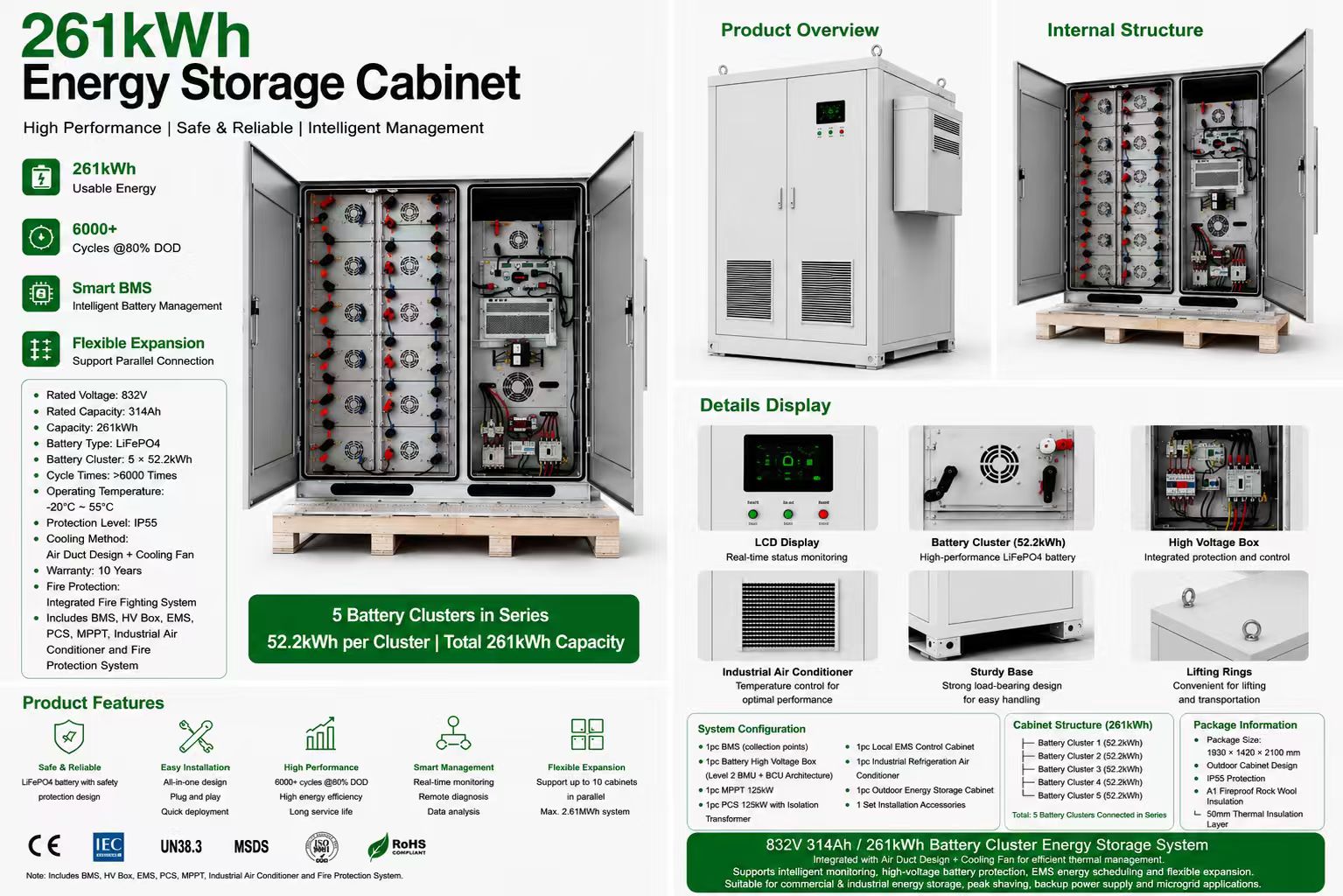
| Battery cabinet | 96kWh outdoor lithium | 358.4V / 314Ah, 112kWh | 614.4V / 314Ah, 193kWh |
| Cycle life | >6000 cycles | >6000 cycles | >6000 cycles |
| Fire protection | Integrated cabinet | Fire suppression + A/C | Smoke detector, aerosol suppression, A/C |
| Panel warranty | 25 years | 25 years | 25 years |
| Battery/inverter warranty | 10 years / 5 years | 10 years / 5 years | 10 years / 5 years |
The 50kW/112kWh configuration in detail
This is the workhorse for a mid-size commercial site — a cold room, a small factory, a large retail floor.
The array is 84 pieces of 590W N-type TOPCon half-cell mono panels, 23% efficiency, totalling 49.56kWp. N-type TOPCon matters here: its lower temperature coefficient means the array loses less output in the 35°C-plus ambient temperatures where these systems usually get installed, and its better low-light response extends the productive window at both ends of the day.
The inverter is a single 50kW on/off-grid hybrid unit rated 160–800V battery voltage, 230/400V three-phase output. One unit, not a parallel bank — which matters for serviceability, because there is exactly one box to diagnose when something goes wrong.
The battery cabinet is rated 358.4V / 314Ah — 112kWh of lithium in an outdoor-rated enclosure with integrated fire suppression and air conditioning. The A/C is not a luxury item. Lithium cycle life degrades sharply in sustained heat, and in the markets where these cabinets get deployed, an unconditioned container can sit above 45°C in the afternoon.
The 80kW/193kWh configuration: what changes as you scale
Scaling from 50kW to 80kW is not just "a bigger version of the same". Three things change structurally:
The array moves to 650W panels. 126 × 650W reaches 83.2kWp on fewer strings than would be needed at 590W, which means less roof rack, less cabling and fewer MC4 connections — and MC4 connections are where field failures concentrate.
The battery cabinet steps up to 614.4V / 314Ah. Higher bus voltage, same amp-hours, nearly double the energy (193kWh). Higher voltage means lower current for the same power, which means thinner DC cabling and less heat in the connections.
The cabinet gains layered protection. Smoke detection, aerosol fire suppression and dedicated air conditioning, all inside the cabinet. At 193kWh you are storing enough energy that thermal management stops being a comfort feature and becomes a safety requirement.
Both configurations include mounting and the full cable kit — PV cable, battery cable, DC and AC breakers, connectors, earthing — as standard items rather than add-ons. Ask any supplier who prices those separately what the "complete" number really is.
Battery chemistry: why the cycle figure is the number that matters
Both cabinets are specified at more than 6000 cycles. Put that next to the flooded or gel lead-acid alternative — typically 300–500 cycles at 50% depth of discharge — and the economics stop being close.
The honest comparison is cost per delivered kilowatt-hour, not cost per nameplate kilowatt-hour. A lead-acid bank that you only discharge to 50% gives you half its nameplate every cycle, and replaces itself every few years in a hot climate. A LiFePO4 bank at 80–90% depth of discharge and 6000 cycles delivers several times the energy over its service life before anyone discusses replacement.
Two caveats worth stating plainly. First, the 6000-cycle figure assumes the manufacturer's temperature and discharge-rate conditions; sustained heat will shorten it, which is why the air-conditioned cabinet is not optional equipment. Second, cycle life is measured to 80% of original capacity, not to zero — a bank that has "finished" its cycle life still works, just with less runtime than it had on day one.
Voltage architecture: 358.4V versus 614.4V
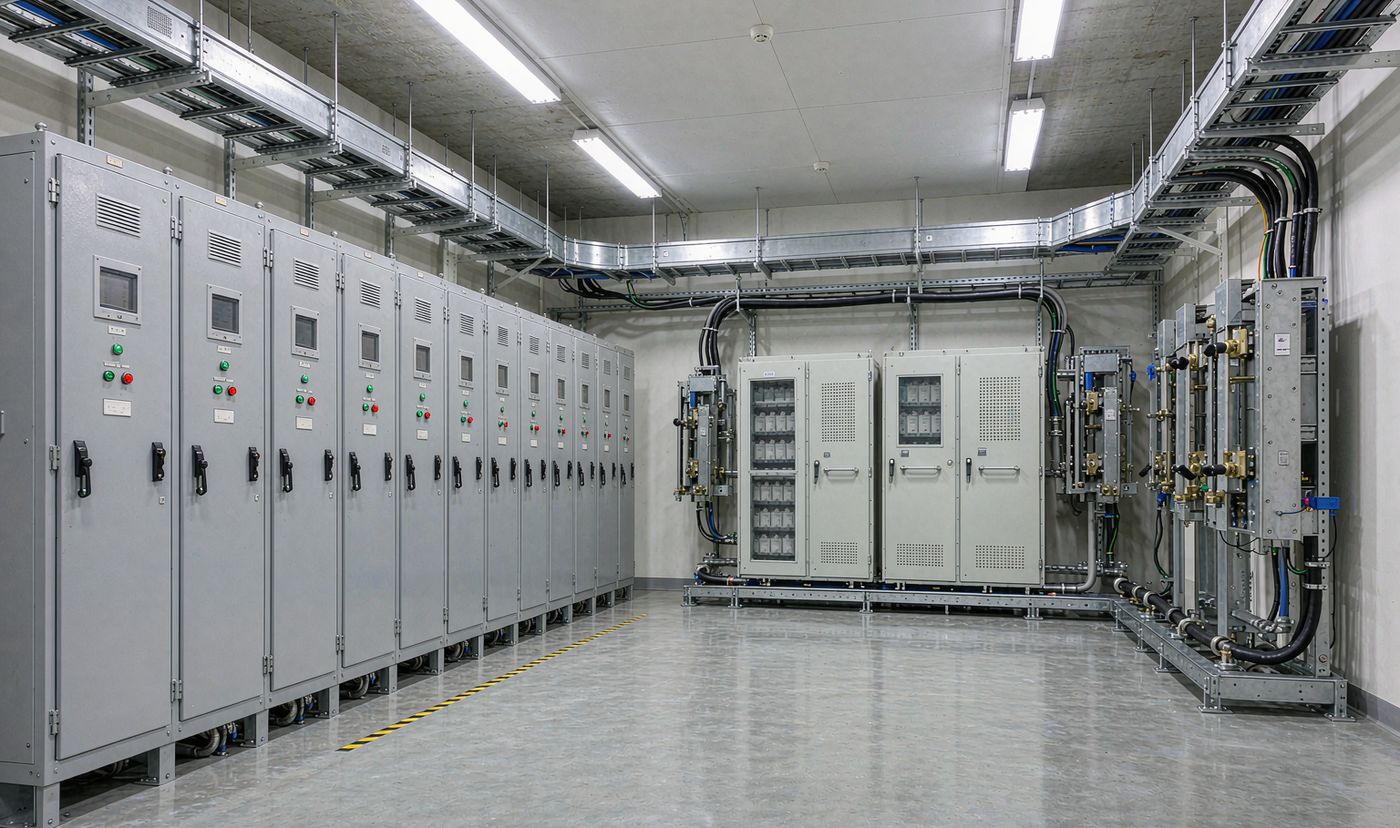
The two battery cabinets run different bus voltages — 358.4V on the 112kWh unit, 614.4V on the 193kWh unit. This is not a spec-sheet detail; it decides your DC cabling and your expansion path.
Higher voltage means lower current for the same power output. Lower current means less resistive loss in the DC run between battery and inverter, thinner cable for the same voltage drop, and cooler terminals. On a 80kW system pushing full load, the difference between 358V and 614V architecture is the difference between comfortable and marginal cable sizing.
It also decides how you expand. Adding a second cabinet in series or parallel depends on the inverter's voltage window and the BMS's tolerance for stacked packs. If there is any chance you will double the battery in two years, settle the voltage architecture question before you buy the first cabinet — retrofitting a different bus voltage is not a swap, it is a rebuild.
Four sizing mistakes we see most often
Sizing the battery to the daily average instead of the evening window. The average does not drain the battery; the 6pm–10pm peak does. A site that averages 300kWh a day but draws 90kWh in four evening hours needs the bank sized to that window plus inverter headroom, or it will brown out every night while sitting on a nominally adequate average.
Forgetting the motor starts. Every compressor, pump and machine tool on the site surges at start-up. Three to seven times running current, for one to two seconds. If the inverter's surge rating is not documented — with the duration — assume it will trip on exactly the load you bought the system to carry.
Under-sizing the array relative to the battery. Covered above, but it is the most common structural error in cheap quotes: generous storage behind a thin array, which quietly converts your "off-grid system" into a grid-charging system with solar decoration.
Ignoring the three-phase question. This one is worth its own paragraph because it has bitten real installations. In the Philippines, most commercial supplies are three-phase three-wire; many anti-backflow meters and hybrid inverters expect three-phase four-wire. Connect a four-wire device to a three-wire supply and you get meter faults that look like hardware failures. Confirm the site's wiring scheme — and the exact meter type — before the order, not during commissioning.
What to send a supplier when you ask for a quote
The fastest way to a configuration that fits is to skip the back-and-forth and send five things:
- Twelve months of electricity bills (the kWh column, not just the amount)
- Your largest single motor load, with its rated power
- The site's supply type: single or three-phase, and three-wire or four-wire
- How many hours of grid outage you actually experience on a typical week
- Roof or ground area available for the array, and whether it shades during the day
With those, a real manufacturer can point at one of the standard cabinets — or tell you honestly that you need something custom — and show you the recharge math behind it. Without them, every quote you receive is a guess wearing a spreadsheet.
Frequently asked questions
Is a 50kW system big enough for a small factory?
If the factory's peak simultaneous demand sits under 50kW and its evening consumption is within what 112kWh can carry, yes. Sites with large compressors or welding loads usually need the 80kW class, not because of daily energy but because of motor starting.
How long will a 112kWh cabinet run a cold room overnight?
A cold room whose compressors average 14kW draws roughly 56kWh across four hours of evening operation — half the cabinet's capacity, leaving margin for the morning warm-up. The honest answer always starts from the compressor duty cycle, not from the cabinet size.
Can the system expand later?
The cabinets are designed to stack, but the inverter's voltage window and the BMS topology decide how. Confirm the expansion path — series or parallel, same voltage architecture — before the first purchase.
What does the 10-year battery warranty actually cover?
Capacity retention, not replacement of failed parts. Read the warranted capacity percentage and the cycle condition; a warranty that guarantees 70% at 6000 cycles is a different promise from one that guarantees 80% at 3000.
Do the cabinets need a separate fire suppression system?
Both configurations include fire protection in the cabinet — integrated suppression on the 112kWh unit, smoke detection with aerosol suppression on the 193kWh. What they do not replace is clearances, ventilation and the site's own fire compliance, which are the installer's scope, not the cabinet's.
The short version
Sizing a commercial BESS is three numbers held in balance: inverter power against your instantaneous demand, battery energy against your evening window, array size against one day of recharge. The 40kW/96kWh, 50kW/112kWh and 80kW/193kWh configurations above hold that balance for sites up to a small factory — and every line item in them, from the 650W TOPCon array to the aerosol suppression in the cabinet, exists because of a specific field failure or a specific site condition.
Send the load profile, not the budget, and the configuration selects itself.
Built and shipped by Mars Solar commercial storage range, a solar and storage manufacturer supplying commercial projects across Africa, Southeast Asia and the Caribbean.
-
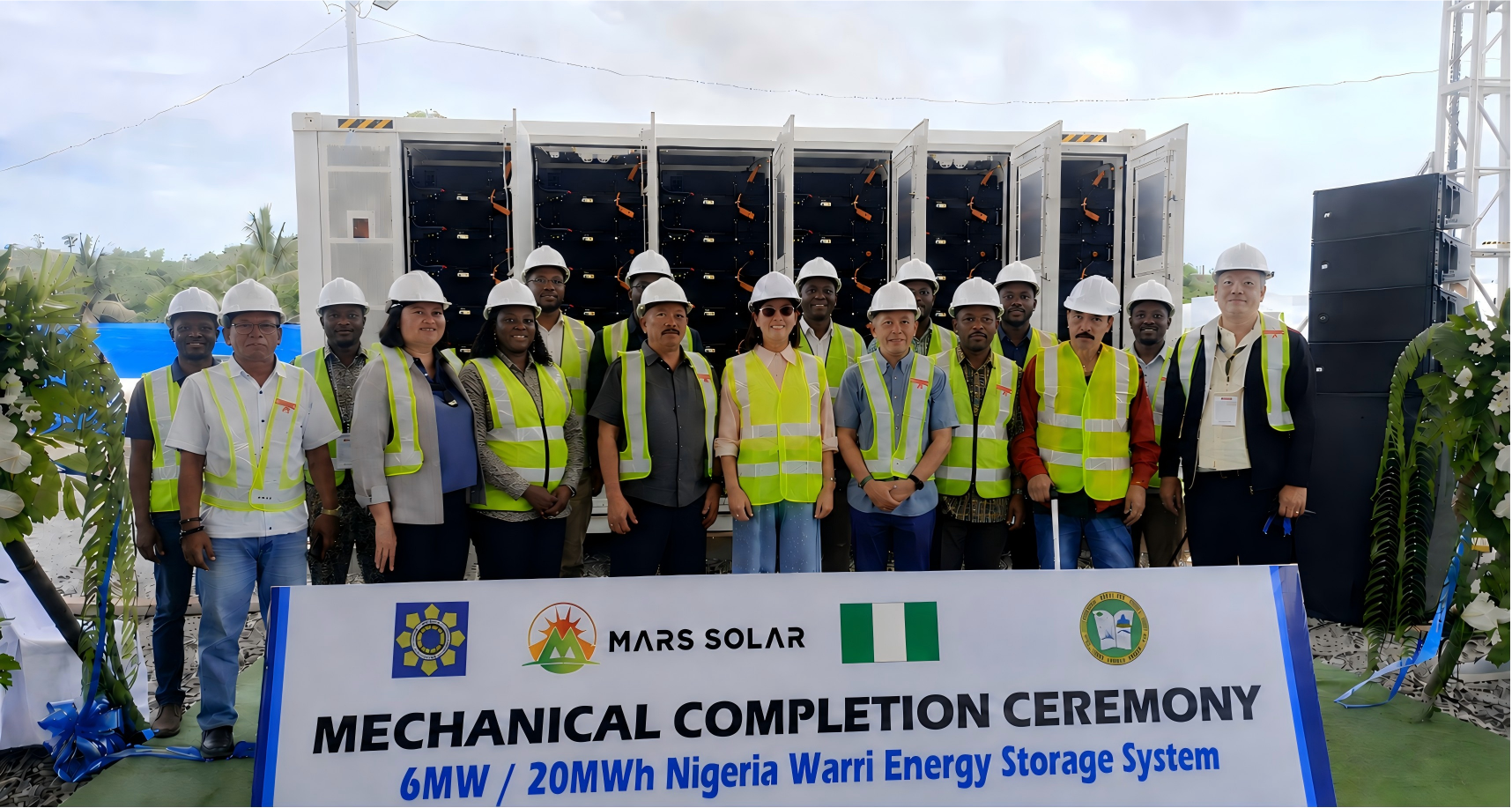 6MW 20MWh Solar Storage in Nigeria Factory + Farm + Residential Case StudyA 6MW solar PV + 20MWh LFP battery storage system in Nigeria powers an integrated factory, farm, and residential complex. The system delivers $108,000+ in monthly electricity savings, reaches payback in approximately 24 months, and provides 25 years of renewable power. This case study covers the engineering configuration, financial model, and operational performance of one of West Africa's most ambitious factory + farm + residential solar deployments.
Do you like ?0
Read more -
 BESS in Nigeria 2026: Battery Energy Storage Cost, Diesel Payback & Import GuideBESS in Nigeria: 2026 pricing, diesel payback, SONCAP, China import guide. Save 60%+ vs diesel. Factory-direct LFP from Mars Solar.
Do you like ?0
Read more -
 How Much Does Solar Cost in Nigeria? 2026 Real Pricing GuideSolar cost in Nigeria for 5kW to 250kW systems, in Naira and USD. Compare solar vs diesel vs grid, calculate payback, and explore financing options.
Do you like ?0
Read more -
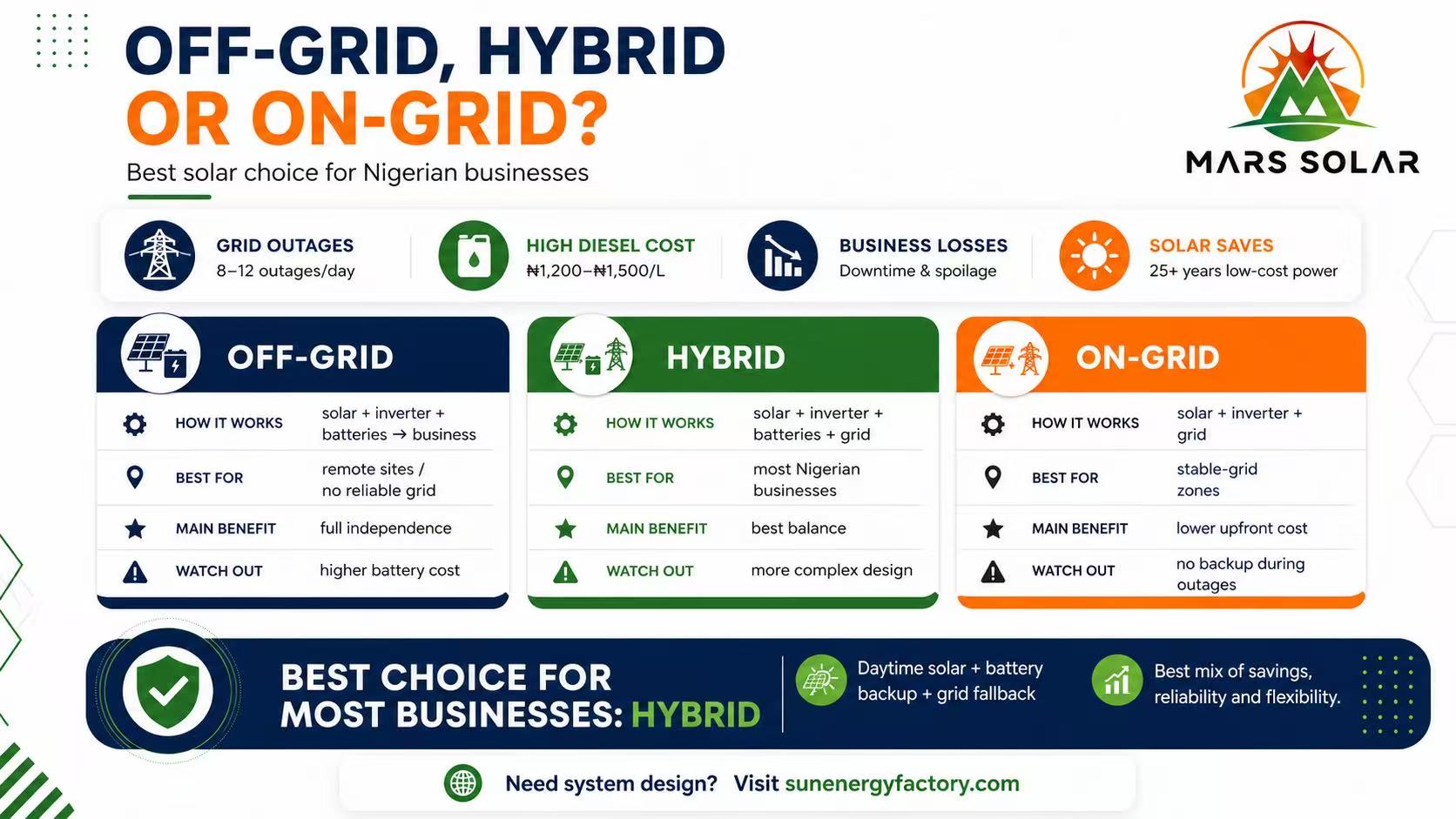 Solar Power Nigeria 2026: Off-Grid vs Hybrid vs On-GridNigeria’s unreliable grid and soaring diesel costs are forcing business owners to take solar seriously. But the biggest question remains: which system — off-grid, hybrid, or on-grid? This 2026 guide breaks down all three solar architectures for Nigeria
Do you like ?0
Read more -
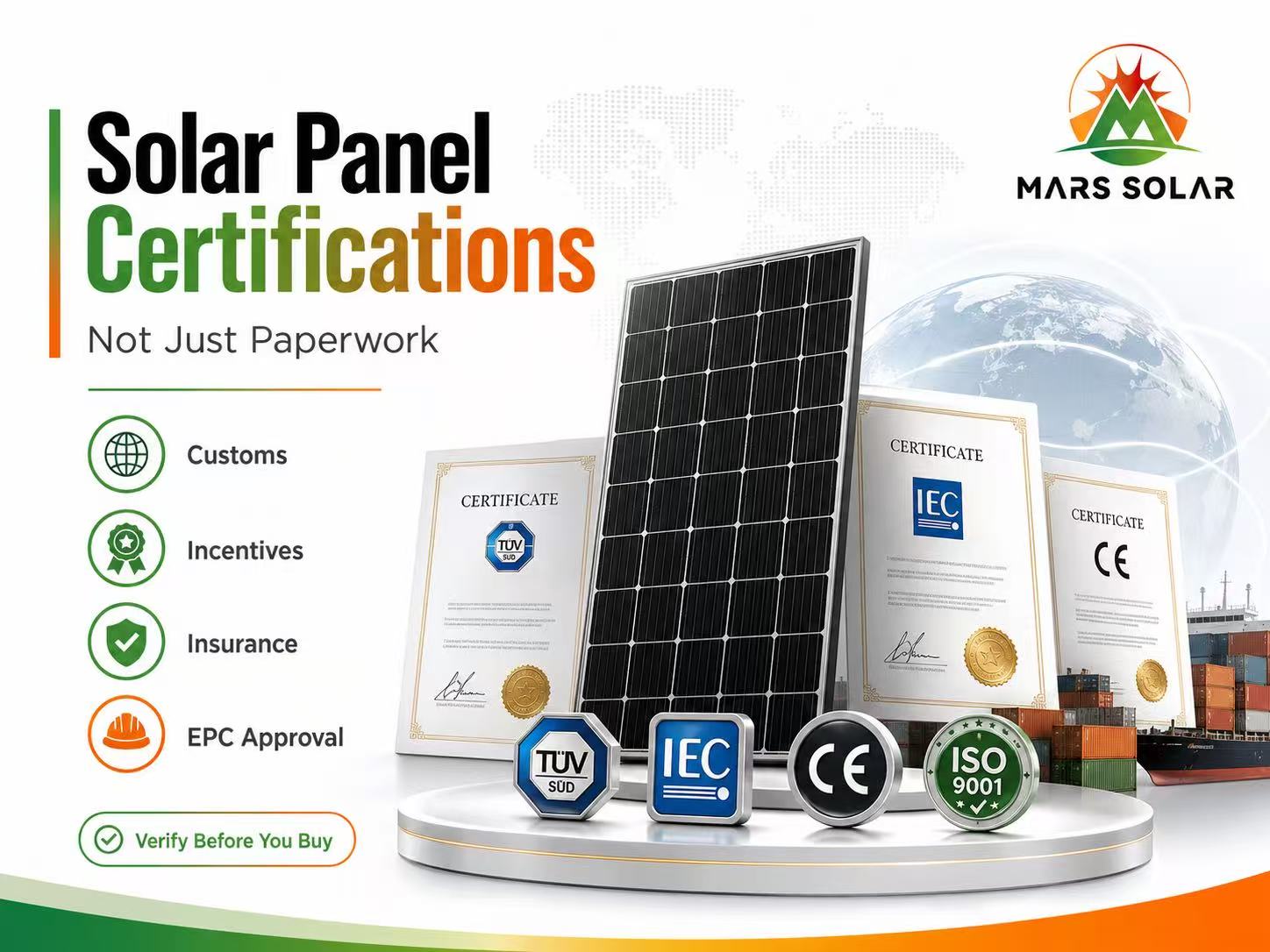 Solar Panel Certifications Explained: IEC, UL, TÜV, CE, ISO — The 2026 GuideA solar panel without proper certifications is unsellable in 90% of international markets. This 2026 guide explains every major certification — IEC 61215, IEC 61730, UL 61730, TÜV, CE, ISO 9001/14001/45001 — what it tests, who issues it, which markets req
Do you like ?0
Read more -
 Solar Panel Shipping & Container Loading: The 2026 Complete GuideThe solar panels leaving the factory are perfect. By the time they arrive at your warehouse, 3–7% might be damaged, delivery could be 2 weeks late, and demurrage at the destination port could wipe out your margin. This 2026 guide covers container types (2
Do you like ?0
Read more