Quick answer: off grid vs hybrid vs on grid solar
Choosing between off grid, hybrid and on grid solar comes down to three questions: how unreliable is your grid, will the utility pay you for export, and do you have motor loads that need surge capacity. Price per watt is the least useful number in the decision.
On this page
- The three architectures in one paragraph each
- Decision factor 1: how reliable is your grid, really
- Decision factor 2: does your utility allow export, and on what terms
- Decision factor 3: what your motors do at start-up
- Where the "all-in-one" fits — and where it doesn't
- The battery sizing note that belongs to every architecture
- Frequently asked questions
- The short version
Off grid vs hybrid vs on grid solar system — the three architectures get compared on price per watt so often that the actual decision factors get skipped. The right choice is not a preference and rarely a budget question; it falls out of three site facts: how reliable your grid is, whether your utility allows export, and what kind of motors you run. Get those three right and the architecture picks itself. Get them wrong and no amount of panel discount fixes it.
The three architectures in one paragraph each
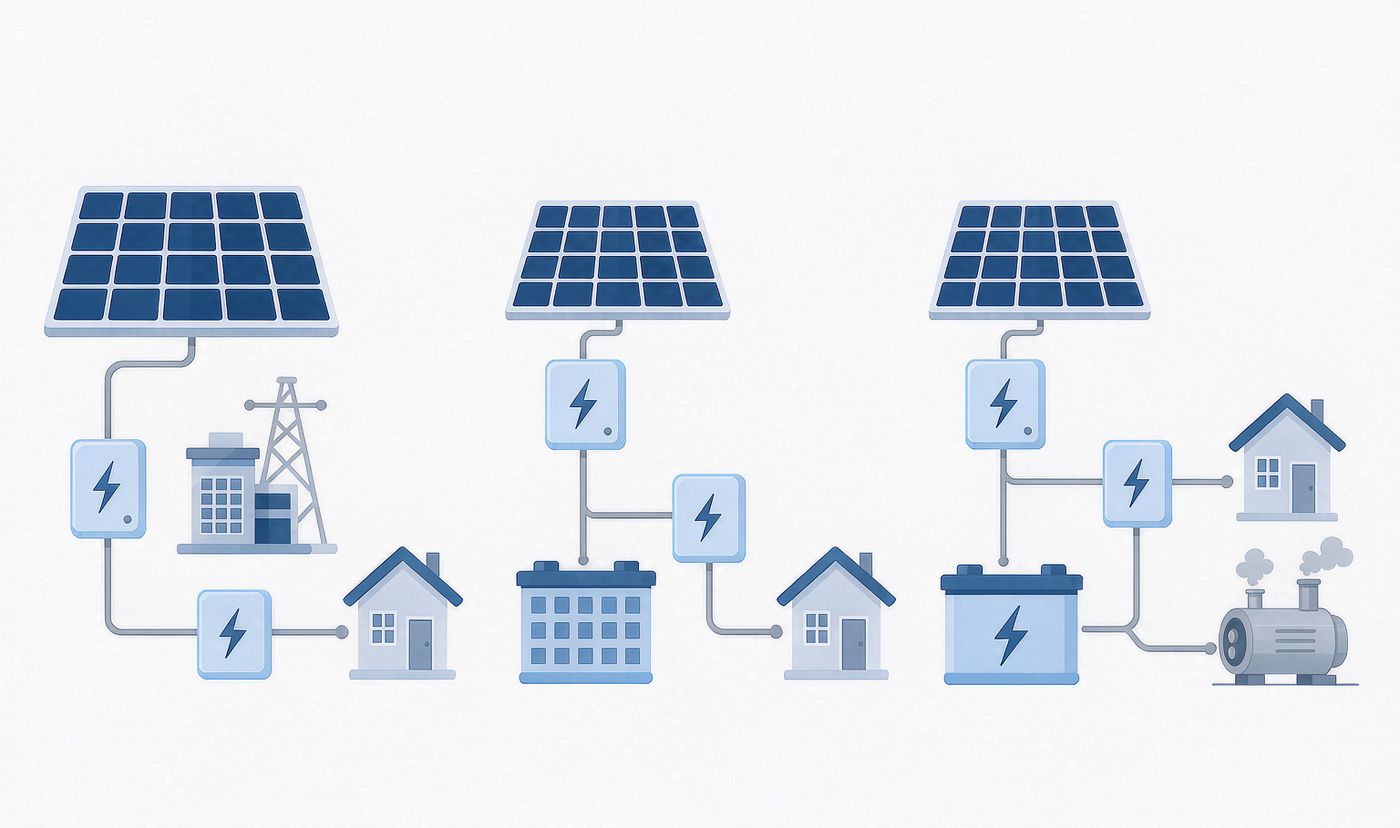
Grid-tied (on-grid) feeds solar straight into your loads and exports the surplus. No battery. Cheapest per watt, simplest to expand — and dead during an outage, because anti-islanding protection shuts the inverter off to protect utility workers. Its economics live or die on the utility's export rules.
Off-grid runs your site with no utility connection at all. Everything — daytime loads, evening loads, rainy days — comes from array plus battery. Sized by its worst day, not its average one, which makes the battery bank large and the design conservative.
Hybrid is grid-tied plus a battery plus the brains to switch between them: solar first, battery second, grid last. It keeps the site alive through outages, and it is the architecture that quietly replaces a diesel generator rather than merely supplementing a bill.
Decision factor 1: how reliable is your grid, really
The honest question is not "does the grid exist" but "how many hours a week is it down, and does it come back on its own".
Three regimes, three answers:
Power is reliable and outages are rare. Grid-tied without batteries is the honest answer if the utility allows it. Batteries here would be an insurance policy you never claim on.
Outages are frequent but predictable. Hybrid. The battery rides through the daily outage window; the array recharges it between failures. This is the regime across much of West Africa and the Caribbean, and it is where hybrid systems earn their premium over grid-tied within the first year of avoided generator hours.
No grid, or a connection years away. Off-grid, sized for the worst week of the year. The design conversation changes completely: autonomy days replace export tariffs as the central number, and the array gets sized for monsoon-season sun, not annual average sun.
The expensive mistake is buying a grid-tied system for a site with daily outages because its per-watt price looked better. During every outage it produces nothing, and the diesel generator it was supposed to displace keeps running exactly as before.
Decision factor 2: does your utility allow export, and on what terms
Grid-tied and hybrid systems both push surplus to the grid, and that surplus is worth whatever the utility says it is — feed-in tariff, net metering credit, or nothing at all with export actively blocked.
Three things to confirm in writing, before ordering hardware:
- Is export permitted, and is it credited? Some markets allow connection but meter the export at a rate that makes it worthless; others prohibit it outright.
- Which grid code must the inverter meet? Certification requirements differ by country and sometimes by distributor.
- Which anti-backflow meter matches your wiring? This is the detail that stops real installations. In the Philippines, most commercial supplies are three-phase three-wire, while many export-limit metering kits expect three-phase four-wire. Connect the wrong pairing and the meter reports faults that mimic inverter failure. The fix is a meter swap — but only if you find out before commissioning week.
Decision factor 3: what your motors do at start-up
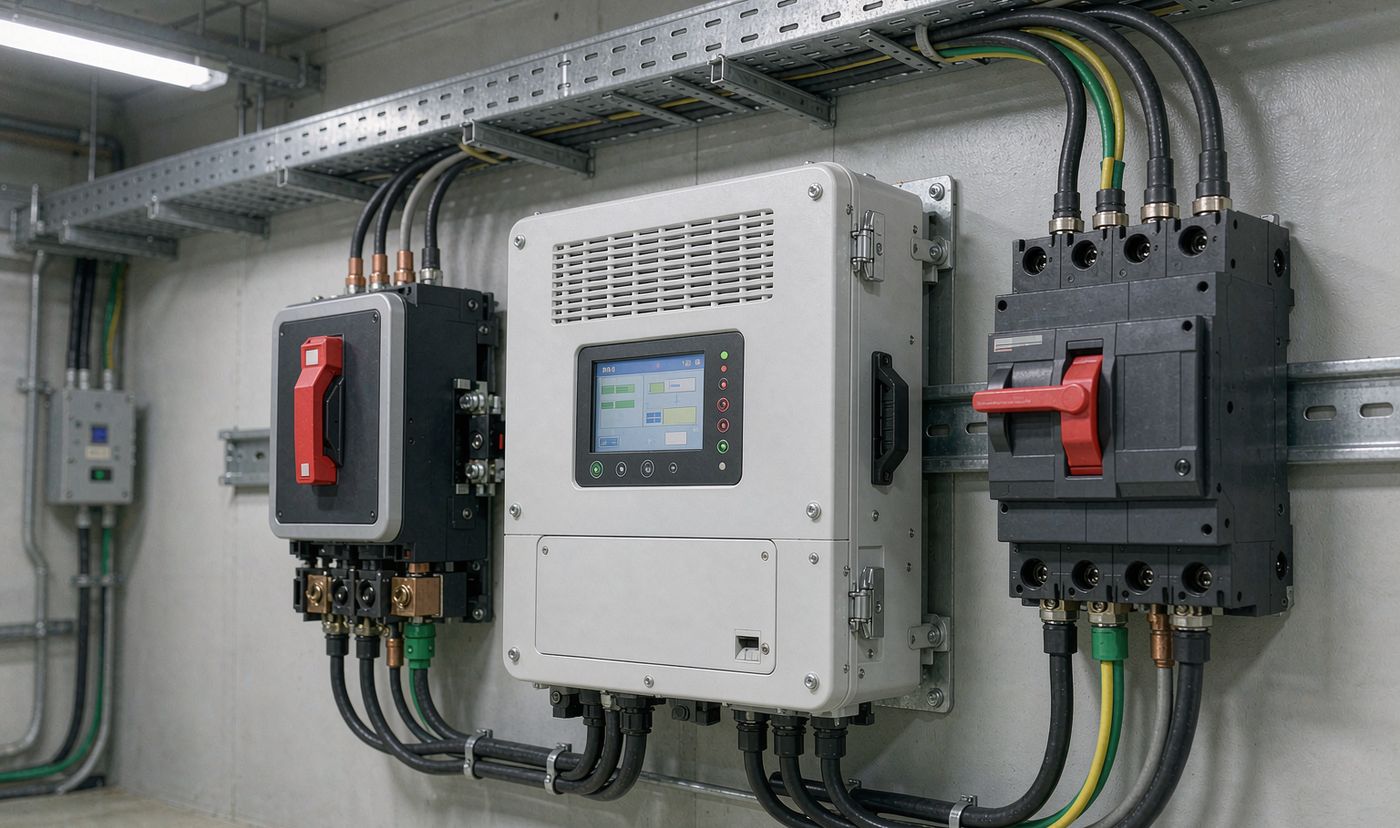
Every architecture decision above can be overturned by one number: the starting current of your largest motor.
Compressors, pumps and machine tools pull three to seven times their running current for one to two seconds at start. This is a power problem, not an energy problem, which is why it gets missed: a site can average modest consumption all day and still need an 80kW-class inverter because its chiller starts while everything else is running.
Three practical consequences:
- The inverter is sized by surge, not by average load. Ask for the surge rating and its duration in writing; an undocumented surge figure is a trip waiting to happen.
- Hybrid and off-grid systems feel this harder than grid-tied. On grid-tied, the grid absorbs the start. On battery, the inverter alone must supply the surge, and the battery's BMS must allow it.
- Stagger the starts where you can. A site that sequences its motor starts can often run a smaller inverter than one that slams everything on at once — a free design decision that saves real money.
Where the "all-in-one" fits — and where it doesn't
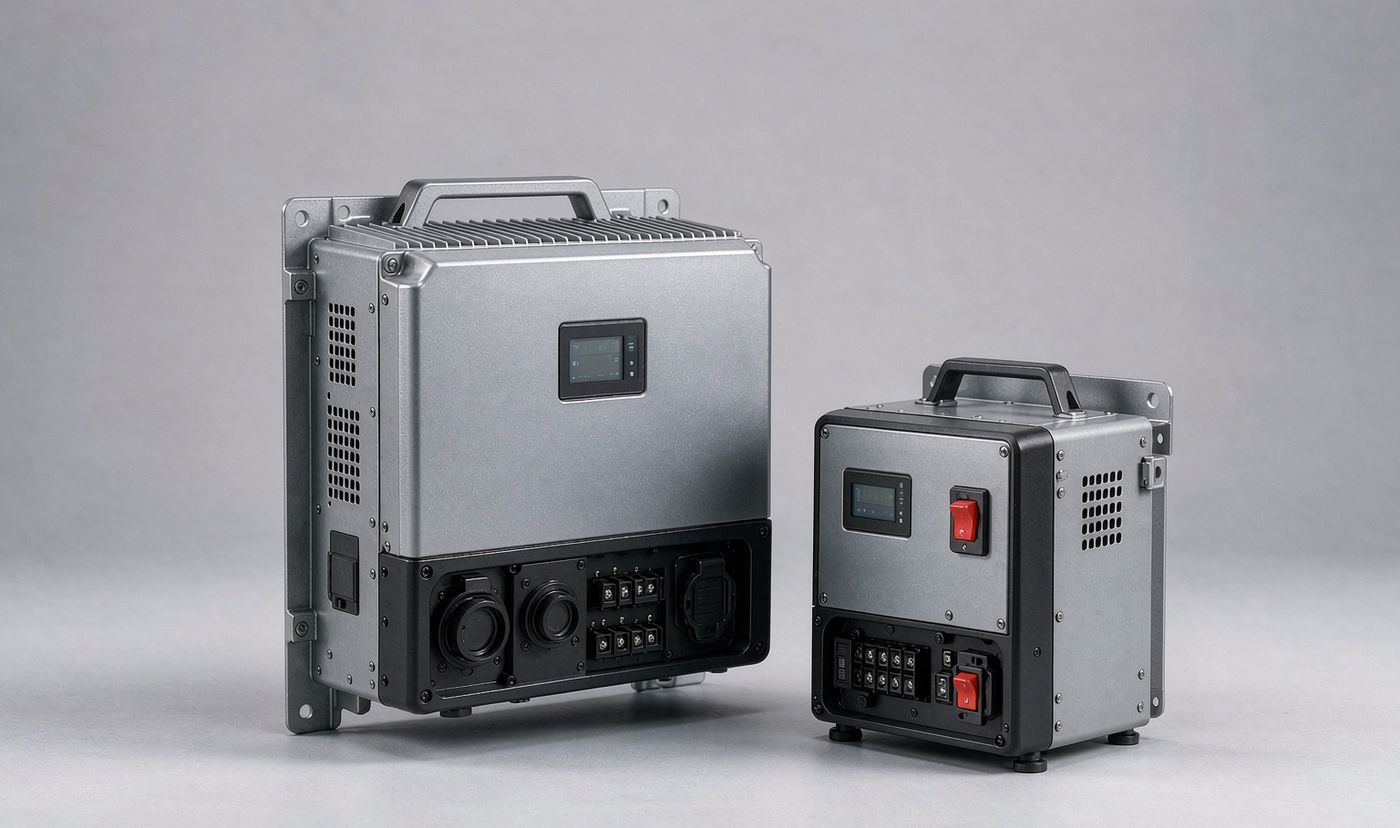
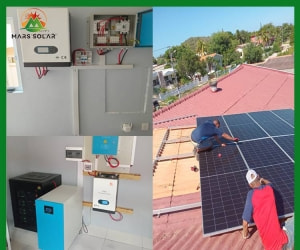
Integrated units that combine MPPT charge control, inverter and transfer switching in one box (the 3–11kW class shown above) are the right answer for homes, small shops and remote sites: one box to install, one wiring diagram, one thing to service.
The line where integration stops making sense is roughly where three-phase loads and parallel operation begin. Above that, a modular architecture — separate MPPT banks, battery cabinets, a correctly-rated hybrid inverter — scales cleanly, while stacked all-in-ones turn into a commissioning exercise in firmware sync and current sharing.
The battery sizing note that belongs to every architecture
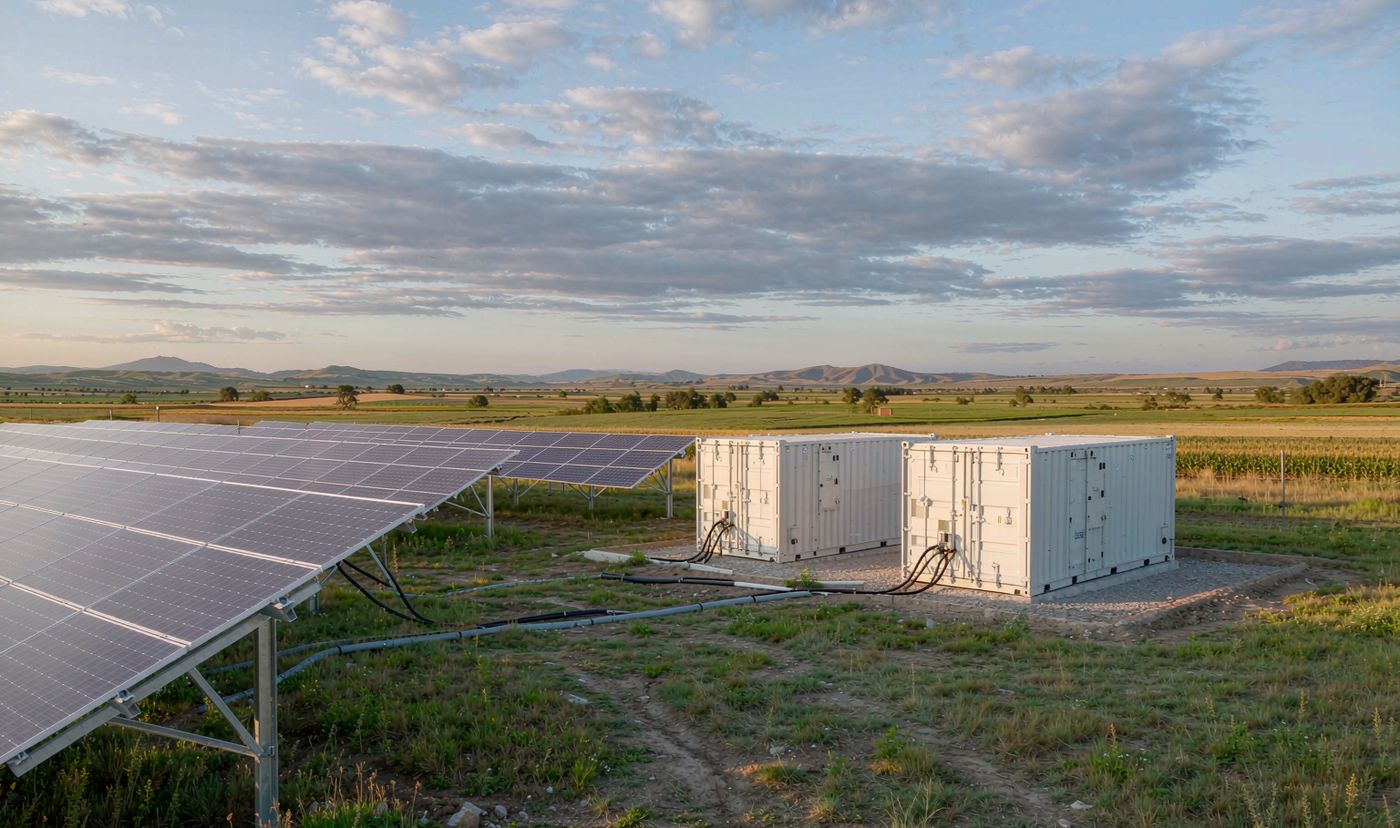
Whichever architecture you choose, the battery is sized to the evening window, not the daily average. A site that draws 300kWh a day but puts 90kWh into four evening hours needs a bank sized to that window plus inverter headroom. Sized to the average, it browns out nightly while looking adequate on paper.
And the array is sized to refill that bank in one solar day, with headroom for the bad-weather day. Roughly 0.4–0.5 kWh of storage per kWp of array is where our commercial configurations land; much more storage behind a thin array converts the system into a grid-charging buffer with solar decoration.
Frequently asked questions
Can I start grid-tied and add batteries later?
Sometimes, and only if the first inverter was chosen with that path in mind. Not every grid-tied inverter accepts a battery retrofit — confirm the upgrade path before the first purchase, or you may be replacing the inverter to add storage.
Is hybrid always more expensive than grid-tied?
The hardware is. The system cost isn't, once you subtract the generator it replaces — fuel, servicing, and the fuel-logistics tail in island and bush sites. In frequent-outage markets the hybrid premium typically pays back inside the first year or two of avoided generator hours.
Why did my off-grid inverter trip when the compressor started?
Surge. The inverter's continuous rating was fine and its surge tolerance was not, or the battery's BMS limited the discharge. Both are spec-sheet questions worth asking before the order, because neither is fixable in the field.
Which architecture is best for a cold storage facility?
Cold storage usually runs its compressors through daylight, which makes a grid-tied or hybrid system the natural fit — the heavy load aligns with production. The evening recovery window is what sizes the battery if one is fitted at all.
The short version
Choose by site facts, not by price per watt: reliable grid and export-friendly — grid-tied; frequent outages — hybrid; no grid — off-grid sized for the worst week. Then size the inverter by your largest motor start, the battery by your evening window, and the array by one day of recharge. Every wrong architecture in the field is one of those four questions answered by a catalogue instead of by the site.
Built and shipped by Mars Solar system design team, a solar and storage manufacturer supplying commercial projects across Africa, Southeast Asia and the Caribbean.
-
 6MW 20MWh Solar Storage in Nigeria Factory + Farm + Residential Case StudyA 6MW solar PV + 20MWh LFP battery storage system in Nigeria powers an integrated factory, farm, and residential complex. The system delivers $108,000+ in monthly electricity savings, reaches payback in approximately 24 months, and provides 25 years of renewable power. This case study covers the engineering configuration, financial model, and operational performance of one of West Africa's most ambitious factory + farm + residential solar deployments.
Do you like ?0
Read more -
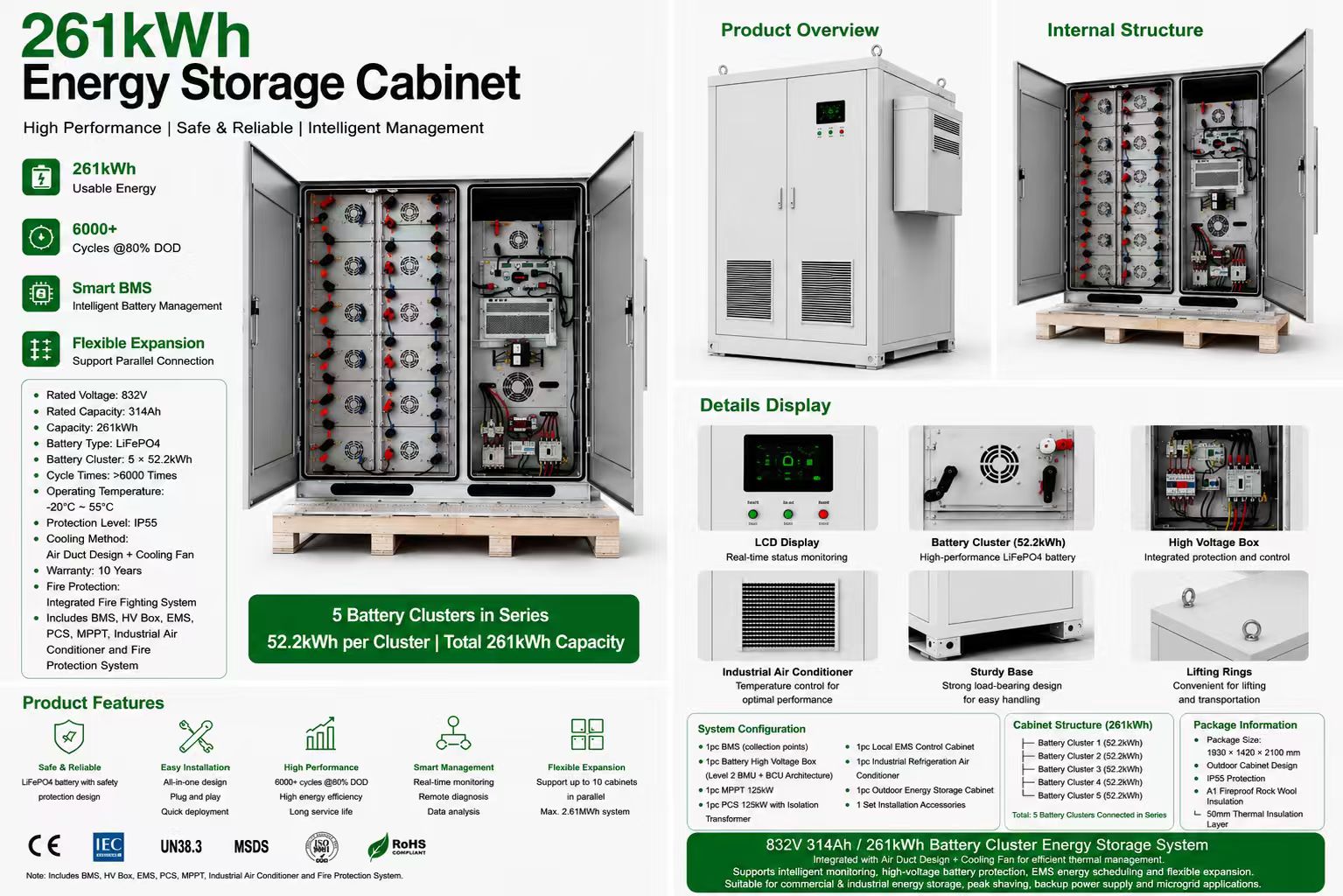 BESS in Nigeria 2026: Battery Energy Storage Cost, Diesel Payback & Import GuideBESS in Nigeria: 2026 pricing, diesel payback, SONCAP, China import guide. Save 60%+ vs diesel. Factory-direct LFP from Mars Solar.
Do you like ?0
Read more -
 How Much Does Solar Cost in Nigeria? 2026 Real Pricing GuideSolar cost in Nigeria for 5kW to 250kW systems, in Naira and USD. Compare solar vs diesel vs grid, calculate payback, and explore financing options.
Do you like ?0
Read more -
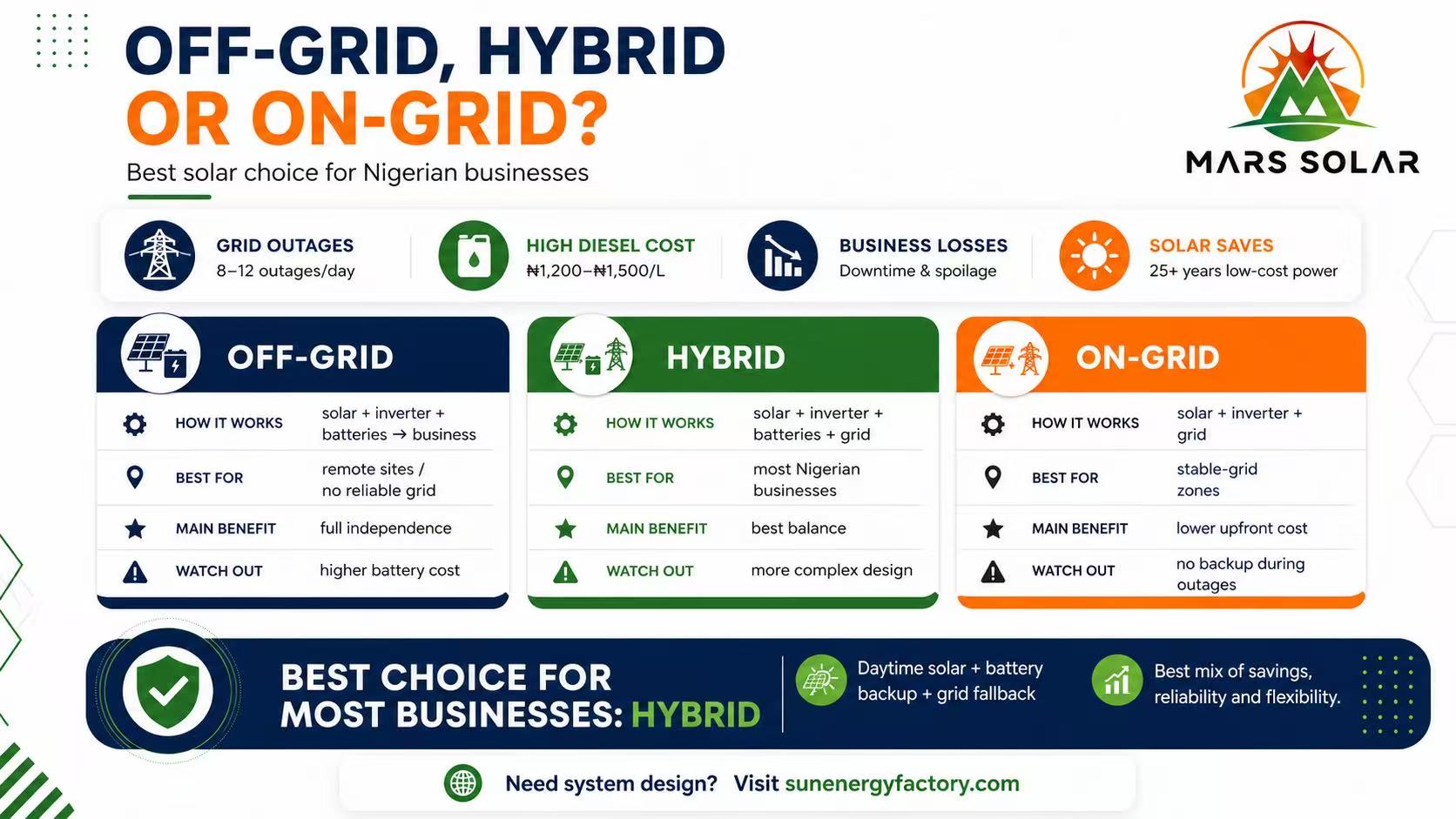 Solar Power Nigeria 2026: Off-Grid vs Hybrid vs On-GridNigeria’s unreliable grid and soaring diesel costs are forcing business owners to take solar seriously. But the biggest question remains: which system — off-grid, hybrid, or on-grid? This 2026 guide breaks down all three solar architectures for Nigeria
Do you like ?0
Read more -
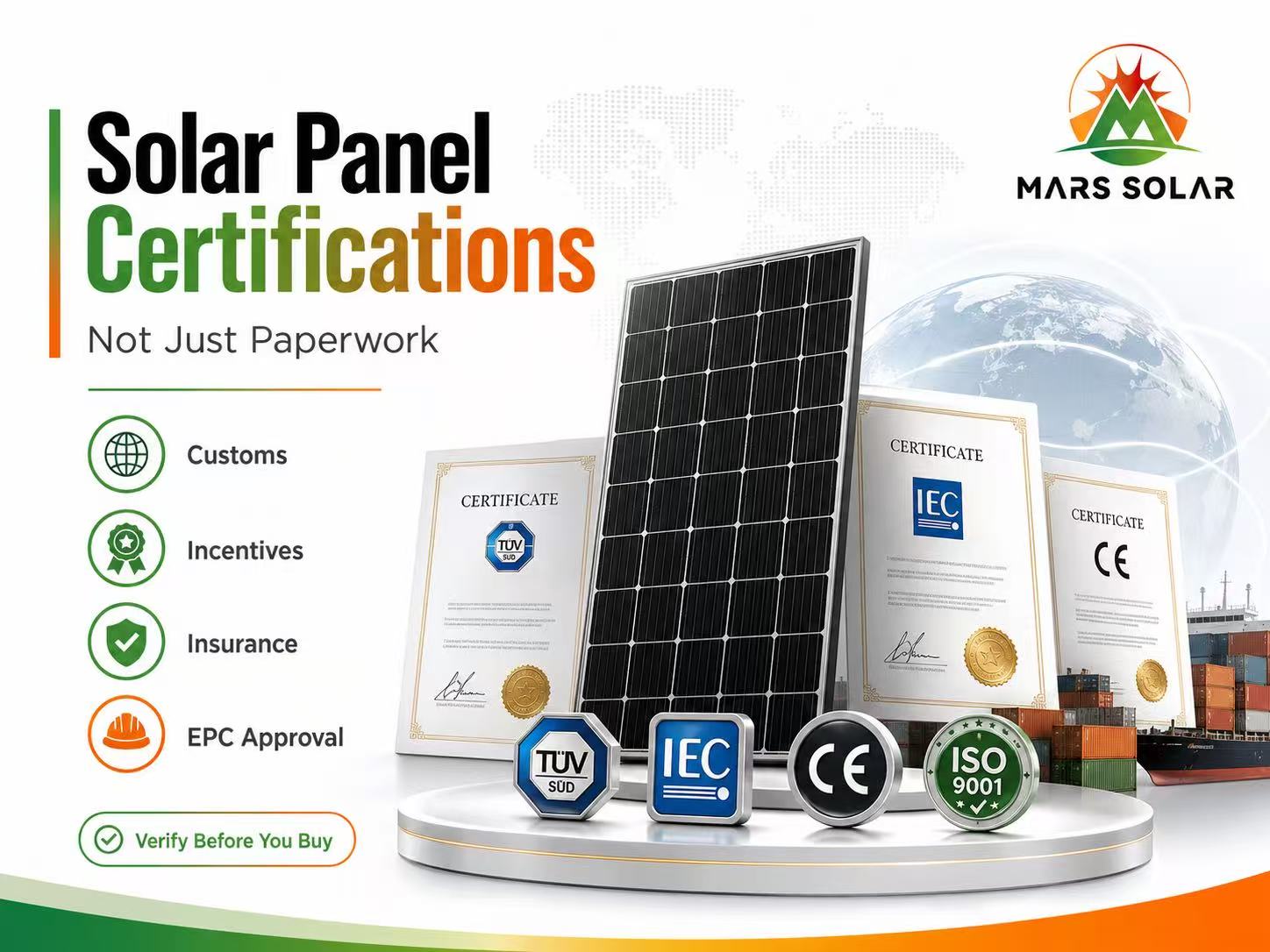 Solar Panel Certifications Explained: IEC, UL, TÜV, CE, ISO — The 2026 GuideA solar panel without proper certifications is unsellable in 90% of international markets. This 2026 guide explains every major certification — IEC 61215, IEC 61730, UL 61730, TÜV, CE, ISO 9001/14001/45001 — what it tests, who issues it, which markets req
Do you like ?0
Read more -
 Solar Panel Shipping & Container Loading: The 2026 Complete GuideThe solar panels leaving the factory are perfect. By the time they arrive at your warehouse, 3–7% might be damaged, delivery could be 2 weeks late, and demurrage at the destination port could wipe out your margin. This 2026 guide covers container types (2
Do you like ?0
Read more