Quick answer: commercial BESS cost
A commercial BESS quote has five line items: the solar array, the hybrid inverter, the battery cabinet, balance of system (mounting, cables, breakers, earthing) and landing cost (freight, duty, installation). Most of the price gap between two quotes sits in the last two, not in the battery.
On this page
- The five line items in every commercial BESS quote
- Line 1: The solar array — 84 × 590W TOPCon
- Line 2: The hybrid inverter — one 50kW unit
- Line 3: The battery cabinet — where most of the budget lives
- Line 4: Balance of system — the line items cheap quotes drop
- Line 5: Landing cost — the number that decides whether the quote was real
- The three questions that expose a bad quote
- Frequently asked questions
- The short version
Commercial BESS cost is quoted as a single number far too often. A "50kW system" price can mean five different things depending on what the supplier quietly left out — the mounting, the cable kit, the fire suppression inside the cabinet, the freight, or the import duty. The only reliable way to compare quotes is line by line, and the line items below come from an actual 50kW/112kWh solar-plus-storage configuration sheet, not from a category average.
The five line items in every commercial BESS quote
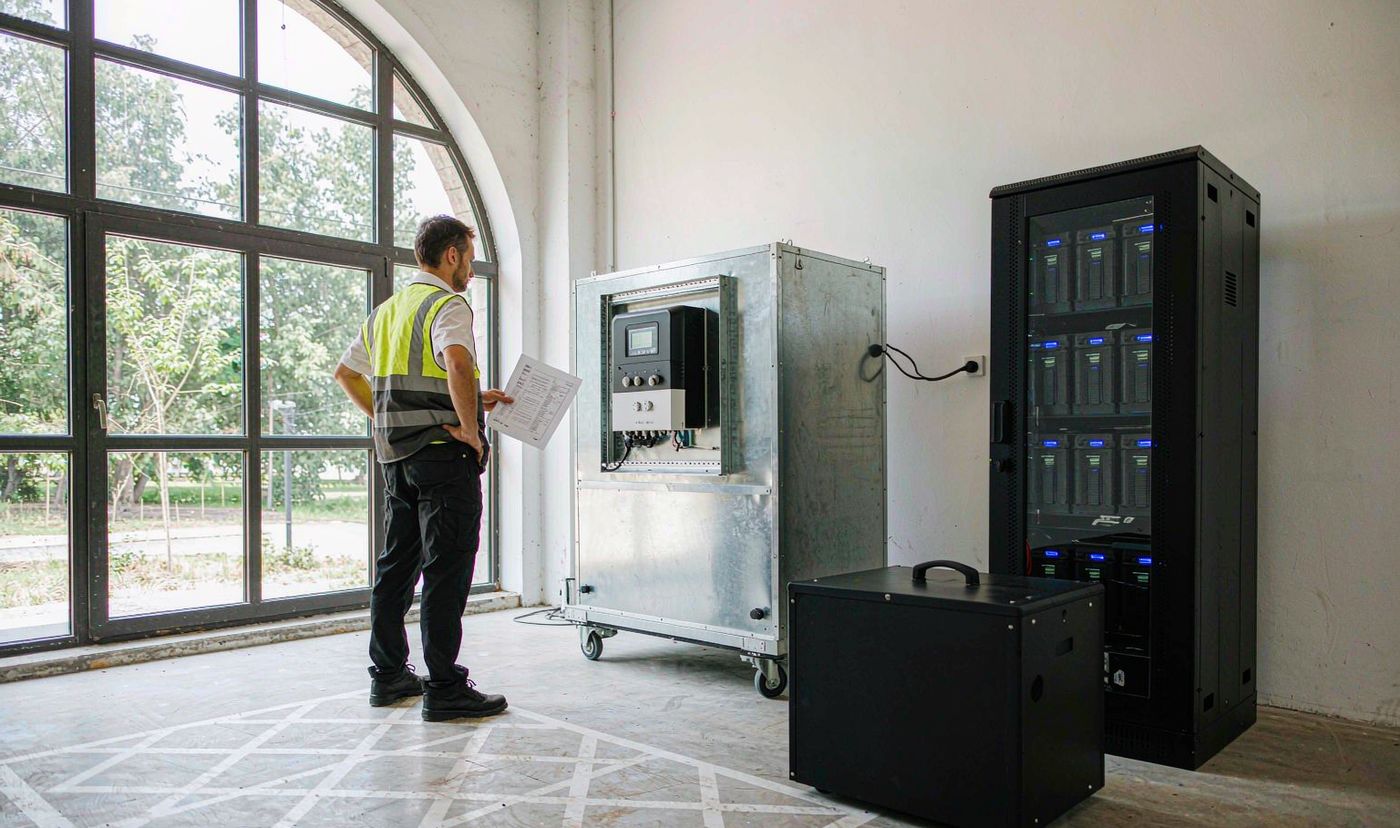
Strip any honest quote down and you will find the same five blocks:
- The solar array — panels, and everything that decides how many of them you need
- The hybrid inverter — the box that decides what you can run and when
- The battery cabinet — cells, BMS, enclosure, thermal management, fire protection
- Balance of system — mounting structure, PV and battery cabling, DC/AC breakers, connectors, earthing
- Landing cost — freight, insurance, import duty, clearing, and local installation
The cabinet gets most of the attention, but the ratio between blocks is what separates a workable system from a discounted one. A configuration that saves money by shrinking the array will quietly turn your storage into an expensive grid-charging buffer.
Line 1: The solar array — 84 × 590W TOPCon
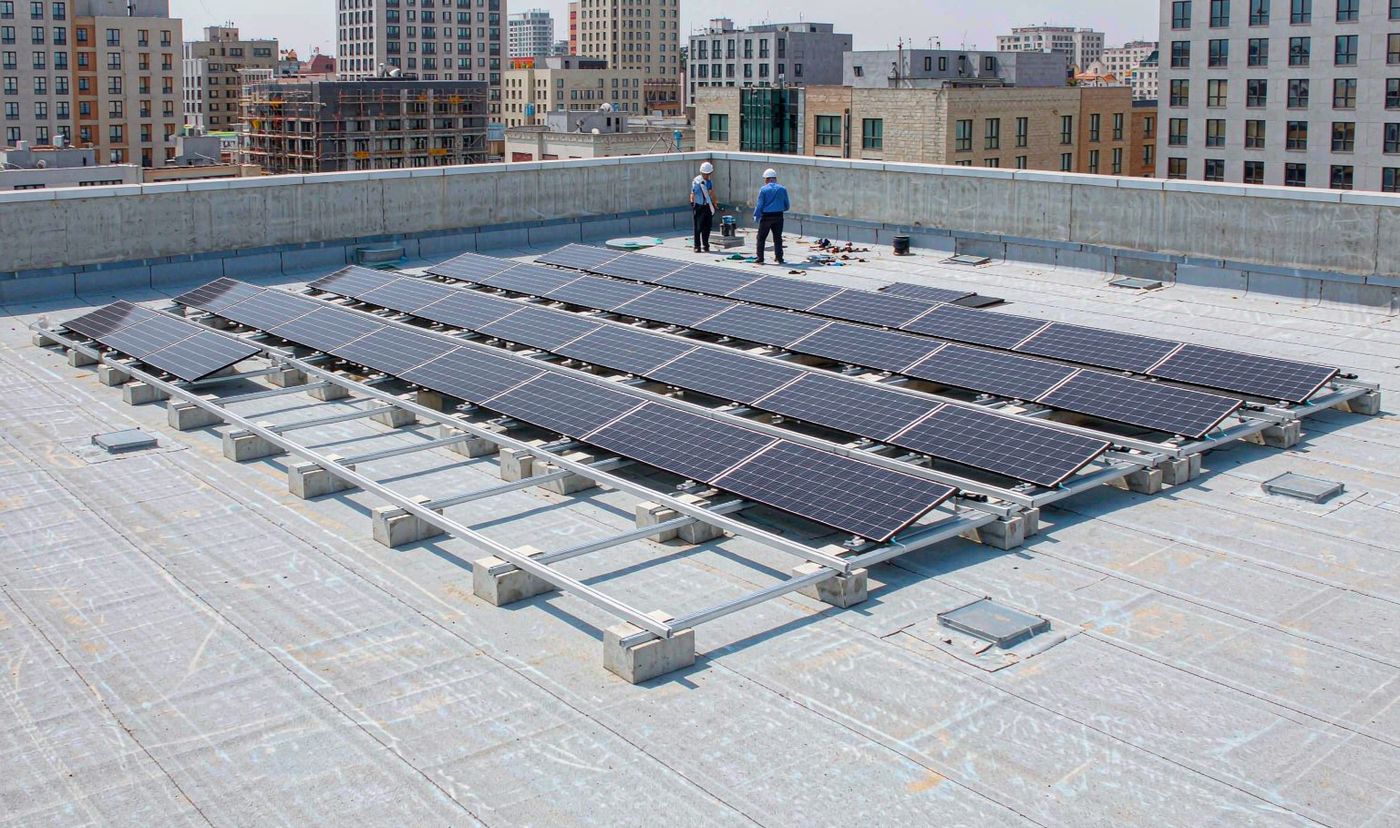
The reference 50kW/112kWh configuration carries 84 pieces of 590W N-type TOPCon half-cell mono panels — 49.56kWp at 23% efficiency, with a 25-year output warranty.
Two cost-relevant details hide in that line. N-type TOPCon costs slightly more per watt than older p-type PERC, but its lower temperature coefficient means more real output in the 35°C-plus ambients where these systems actually operate — so the cost per delivered kilowatt-hour, not per nameplate watt, is what favors it. And the half-cell layout reduces internal resistance losses, which matters more at 84 modules than it does on a 10-module roof.
What varies between quotes is rarely the panel itself. It is whether the array was sized to refill the battery in one solar day. 49.56kWp behind 112kWh is roughly a 0.44:1 ratio of storage to array; hold that ratio against any alternative quote and the thin-array versions will identify themselves immediately.
Line 2: The hybrid inverter — one 50kW unit
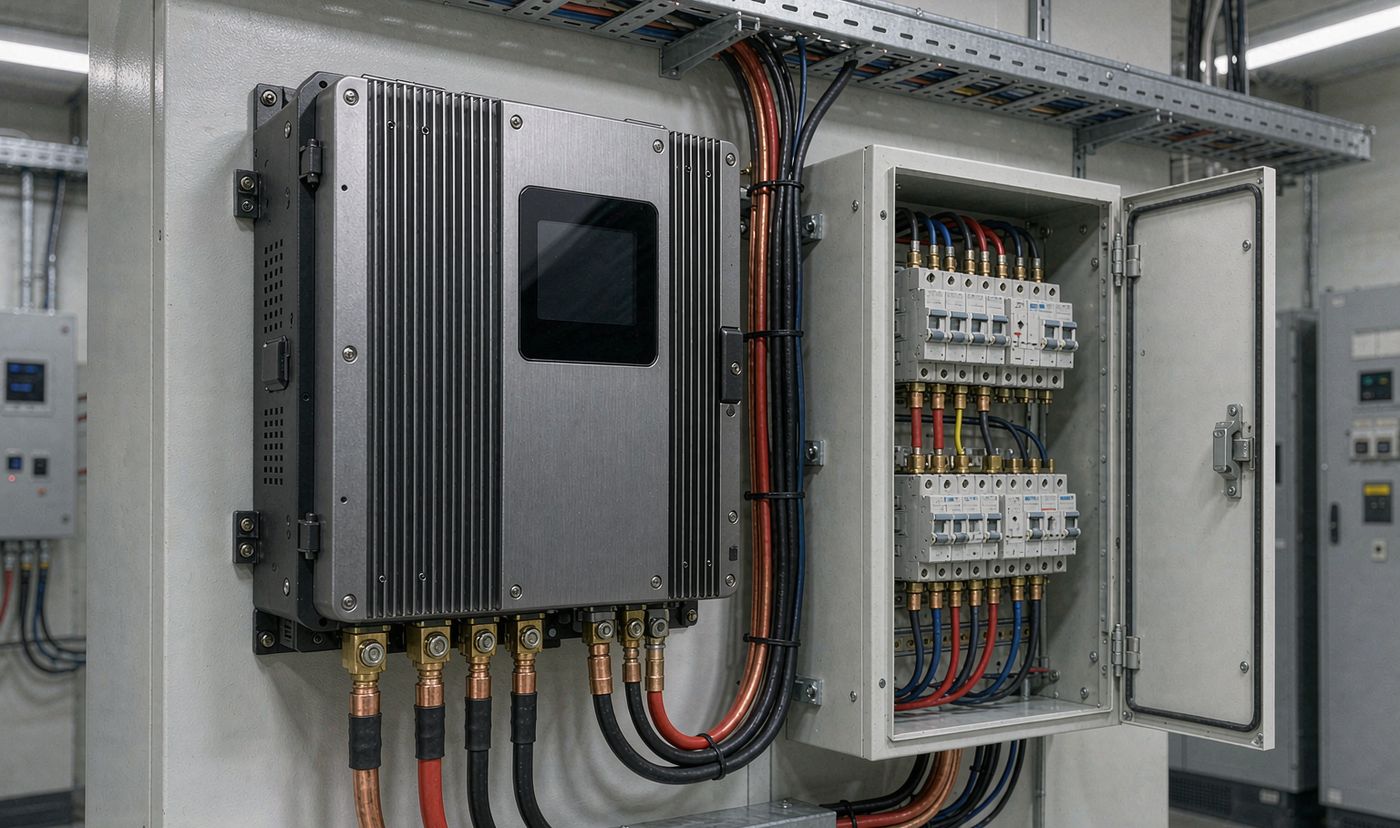
The configuration uses a single 50kW on/off-grid hybrid inverter: 160–800V battery window, 230/400V three-phase output, built-in LCD, 5-year warranty.
Cost pressure here pushes buyers toward parallel banks of smaller units. The saving is real on the invoice and usually reversed in the field: more units means more parallel connections, more firmware to keep in sync, more failure points during commissioning, and a longer diagnostic session when something trips. A single correctly-rated inverter costs more per kilowatt and less per year.
The spec to read carefully is the surge rating with its duration. Motor loads — compressors, pumps, machine tools — pull three to seven times running current for a second or two at start. An inverter whose surge tolerance is not documented will trip on exactly the loads the system was bought to protect.
Line 3: The battery cabinet — where most of the budget lives
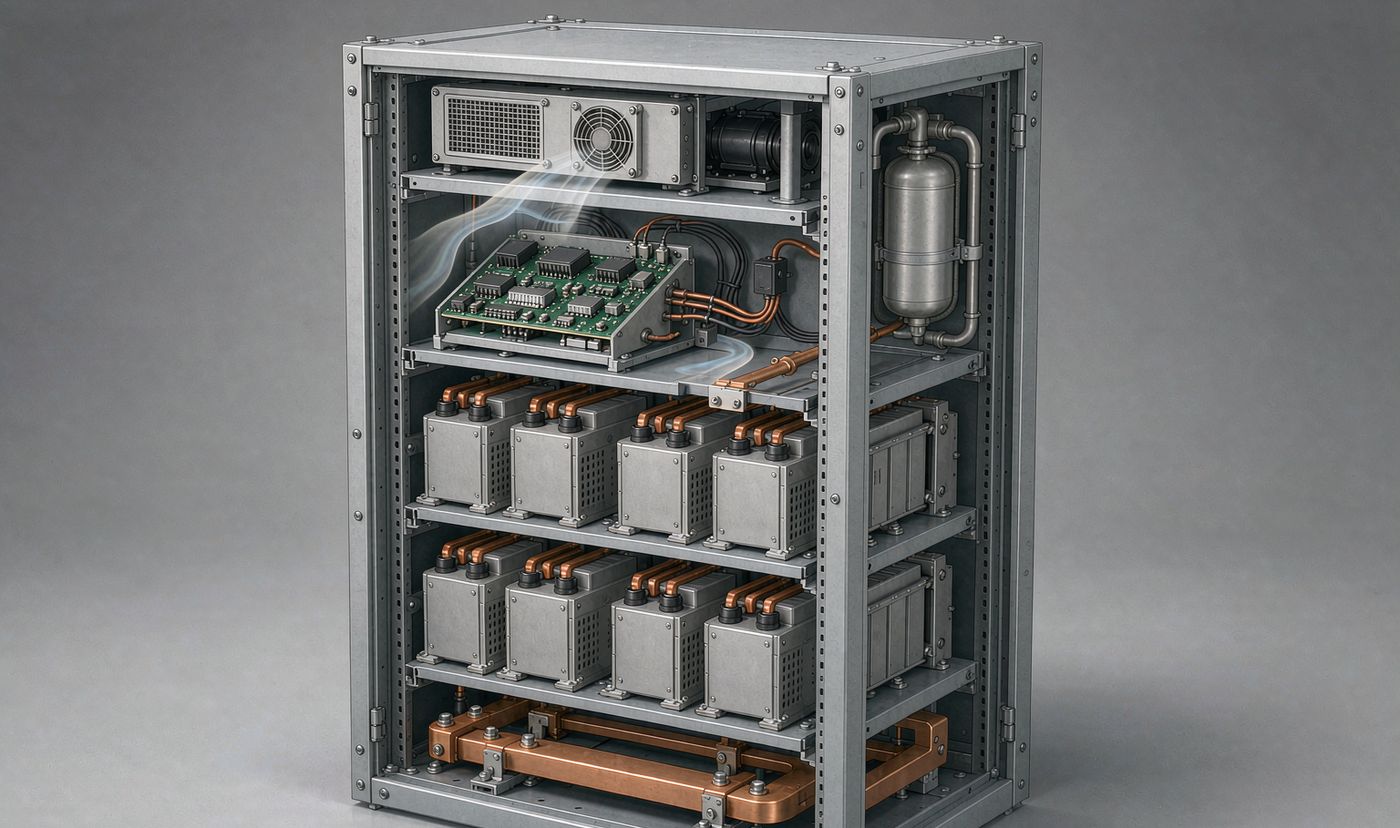
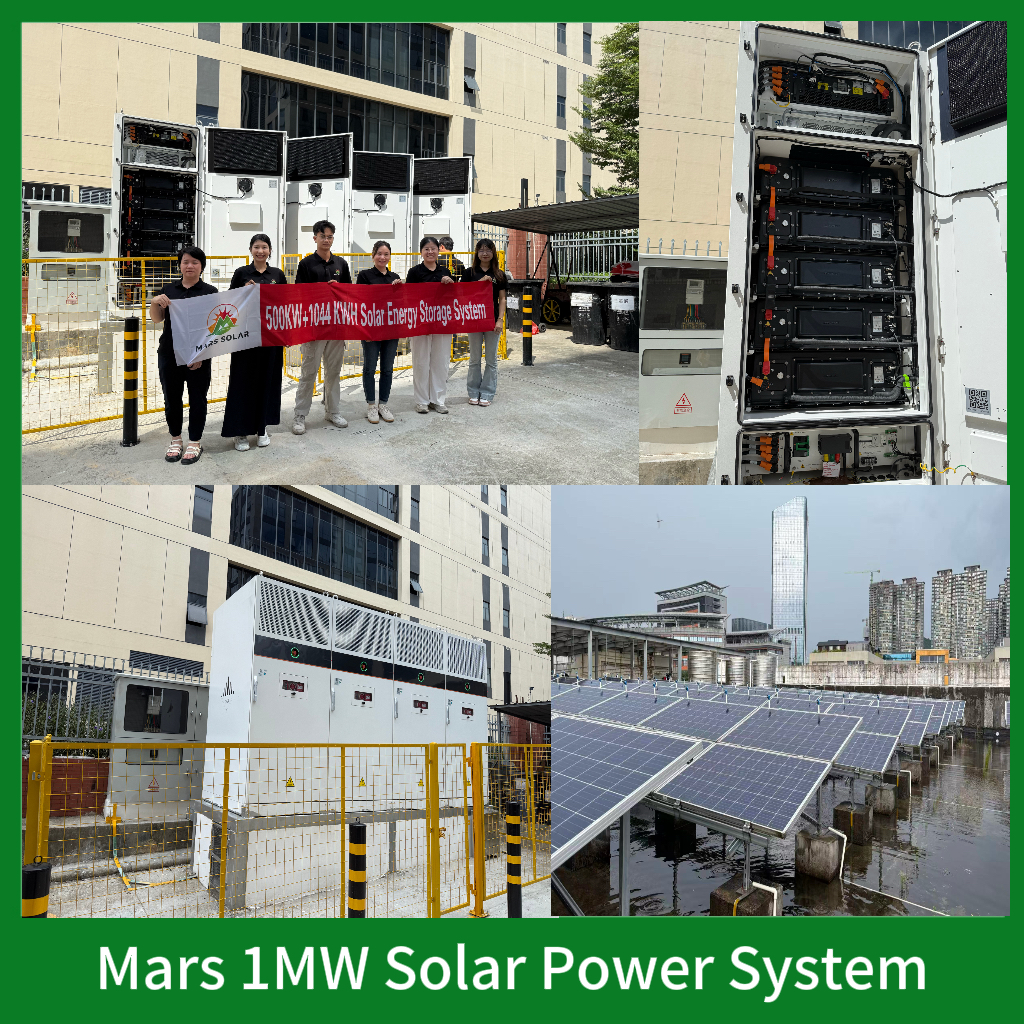
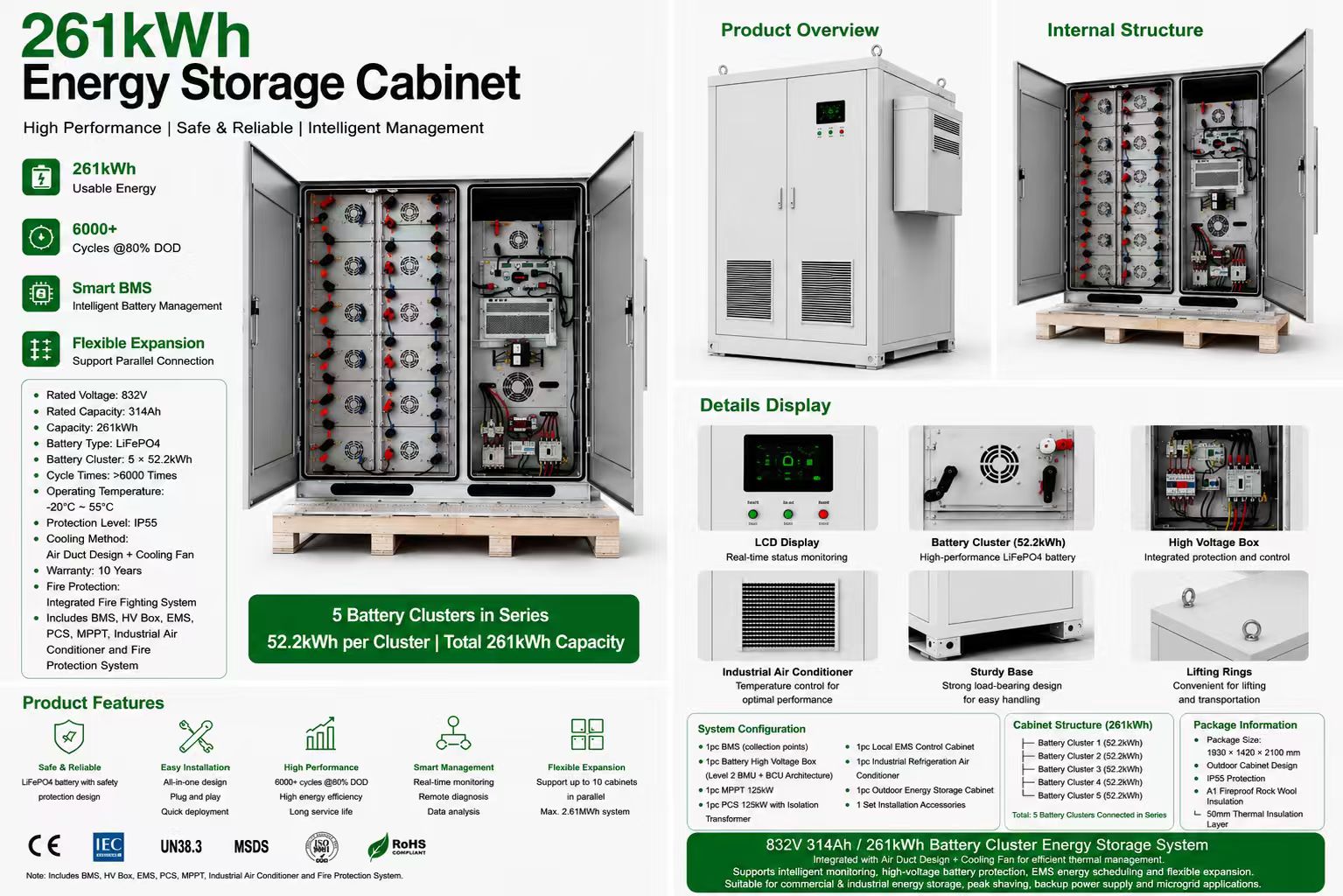
The cabinet in this configuration is rated 358.4V / 314Ah — 112kWh of LiFePO4 in an outdoor enclosure, rated above 6000 cycles, 10-year warranty, with integrated fire suppression and air conditioning.
Industry-wide, the battery block is typically the largest single line in a storage-weighted system — commonly in the region of a third to nearly half of hardware cost depending on how many days of autonomy you specify. That share is exactly why cabinet-level details get quietly value-engineered out of cheap quotes, and why the checklist below is worth running on every offer:
- Cycle rating at what conditions? ">6000 cycles" means 6000 at the manufacturer's temperature and discharge profile. Sustained heat cuts it; ask what the rating assumes.
- Fire protection: integrated or absent? Aerosol suppression and smoke detection inside the cabinet are engineered items. Omitting them saves a little and insures against a lot.
- Air conditioning included? In an unconditioned outdoor cabinet in a tropical market, afternoon internal temperatures shorten lithium life faster than any cycling does.
- Enclosure rating. Outdoor-rated means dust, rain and sun load. Indoor-rated hardware parked outdoors is a warranty argument waiting to happen.
Line 4: Balance of system — the line items cheap quotes drop
The reference sheet includes, as standard: rooftop/ground mounting with custom design, PV cable and battery cable, DC and AC breakers, connectors, and earthing — each warrantied for 10 years.
None of it is glamorous, and all of it is where the "complete system" price gets manufactured. When a quote prices the array, inverter and cabinet but lists mounting and cables as "site-dependent", the comparison number is fiction until those items are quoted. On commercial sites the mounting alone — engineering, materials and roof penetrations or ground works — moves the total by a meaningful margin.
Line 5: Landing cost — the number that decides whether the quote was real
Ex-works hardware is not a landed system. Freight for a cabinet that weighs several hundred kilograms, insurance, import duty, clearing and local installation all stack on top, and they vary more between destinations than the hardware does.
Two specifics worth naming. Duty treatment differs by tariff code and by market, and it changes — so the number that matters is the one your clearing agent confirms for the current period, not the one a sales deck quotes. And installation is genuinely variable: the same 50kW system that bolts to a prepared metal roof on a flat site is a different job from the same hardware on a concrete structure requiring a crane.
The three questions that expose a bad quote
What is the storage-to-array ratio? Below roughly 0.5 kWh per kWp, either the grid is expected to do the recharging or the array is undersized. Both are legitimate designs; only one is being sold honestly.
What is inside the cabinet? Fire suppression, smoke detection, air conditioning — present and specified, or absent and unmentioned.
What does the warranty actually warrant? A 10-year battery warranty guarantees a capacity percentage at a cycle count. Seventy percent at 6000 cycles and eighty percent at 3000 are different promises with different economics behind them.
Frequently asked questions
How much does a 50kW/112kWh system cost?
It depends on the destination market's duty and freight and on the site's mounting requirements, so quoting a global figure would be guessing. What we can put on paper is the configuration above; the landed number follows from your port and your roof, which is what a quote request with a real load profile gets answered with.
Is it cheaper to buy the battery separately later?
Usually no. The inverter's voltage window and the cabinet's BMS topology decide what can stack later, and a mismatched second cabinet can mean replacing the inverter to add storage. Buy the expansion path before the first cabinet, not after.
Which costs more, lead-acid or lithium?
Lead-acid is cheaper per nameplate kilowatt-hour and more expensive per delivered one. At 50% usable depth of discharge and a few hundred cycles, the lead-acid bank replaces itself within the service life of one LiFePO4 cabinet rated above 6000 cycles.
What pushes a project from 50kW to 80kW? Motor starting is the usual trigger. A site whose compressor bank starts while other loads run will exceed 50kW inrush long before it exceeds 50kWh of daily energy.
The short version
A commercial BESS quote is five line items, and the one that gets discounted first — cabinet protection, balance of system, landing cost — is the one that shows up later as a field problem. Compare configuration sheets against configuration sheets, hold the storage-to-array ratio up to the light, and ask what the cycle rating assumes. The 50kW/112kWh reference above is what a complete answer looks like; any quote you receive should be able to match it line for line, or explain why it differs.
Built and shipped by Mars Solar, a solar and storage manufacturer supplying commercial projects across Africa, Southeast Asia and the Caribbean.
-
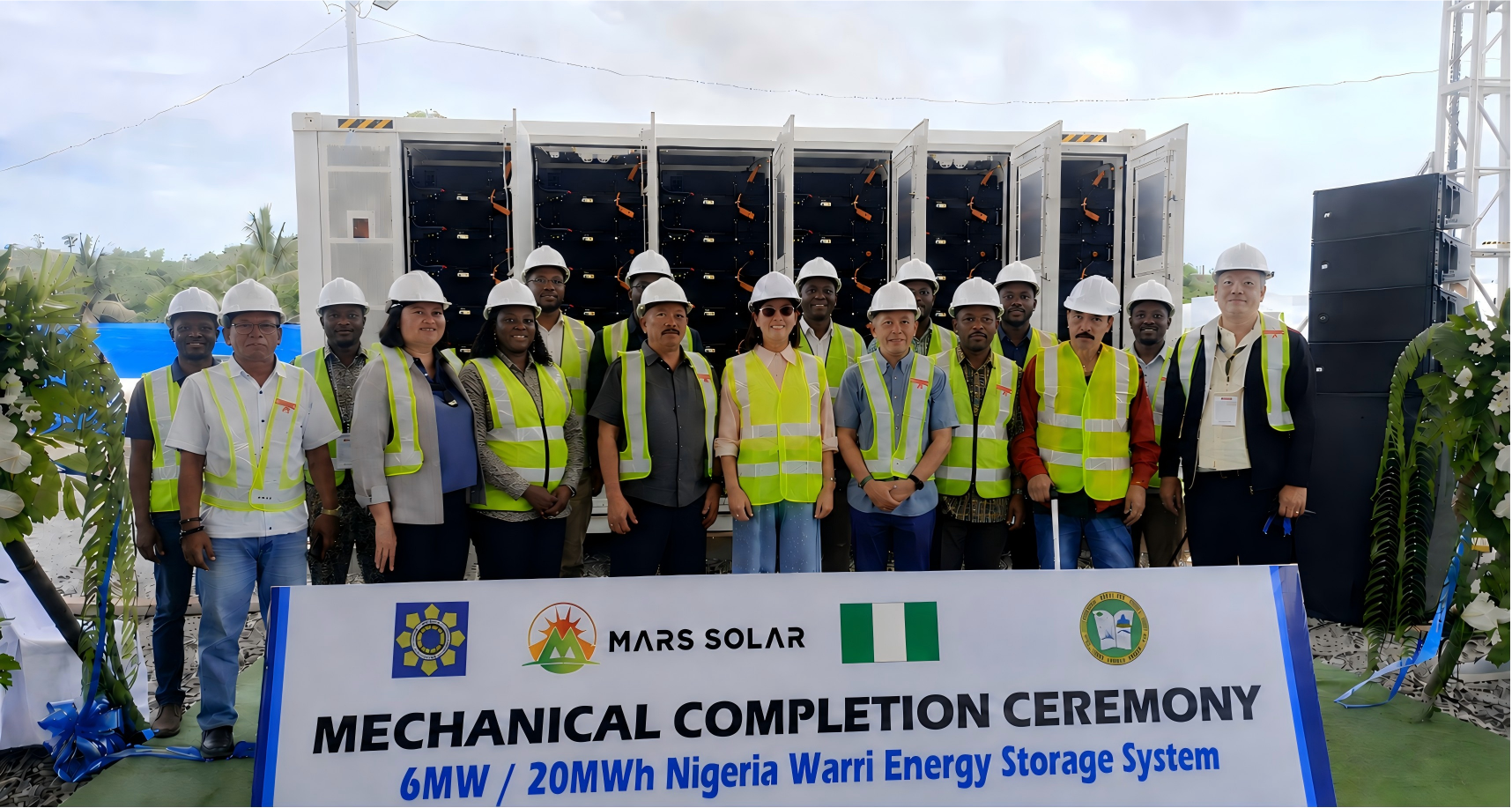 6MW 20MWh Solar Storage in Nigeria Factory + Farm + Residential Case StudyA 6MW solar PV + 20MWh LFP battery storage system in Nigeria powers an integrated factory, farm, and residential complex. The system delivers $108,000+ in monthly electricity savings, reaches payback in approximately 24 months, and provides 25 years of renewable power. This case study covers the engineering configuration, financial model, and operational performance of one of West Africa's most ambitious factory + farm + residential solar deployments.
Do you like ?0
Read more -
 BESS in Nigeria 2026: Battery Energy Storage Cost, Diesel Payback & Import GuideBESS in Nigeria: 2026 pricing, diesel payback, SONCAP, China import guide. Save 60%+ vs diesel. Factory-direct LFP from Mars Solar.
Do you like ?0
Read more -
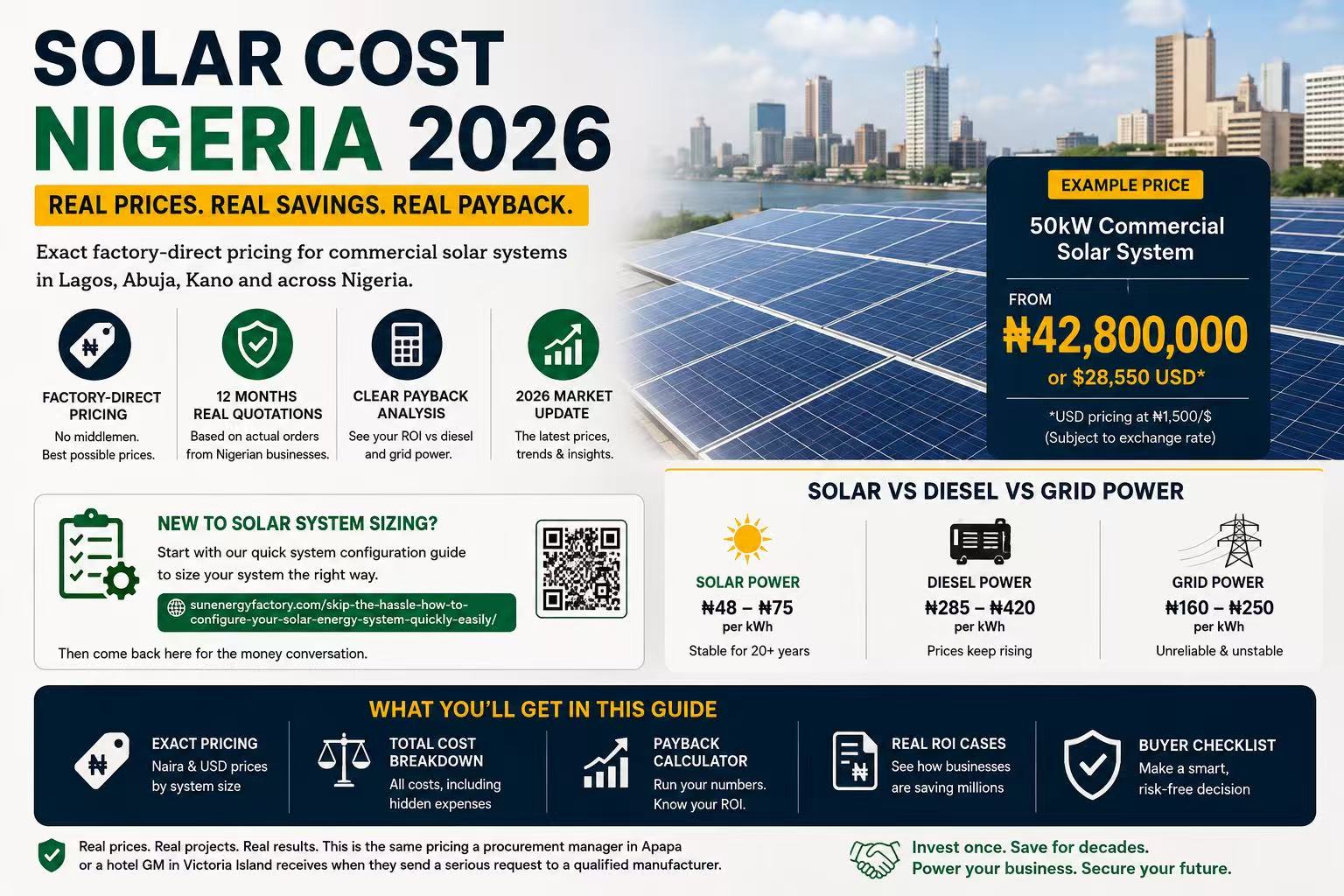 How Much Does Solar Cost in Nigeria? 2026 Real Pricing GuideSolar cost in Nigeria for 5kW to 250kW systems, in Naira and USD. Compare solar vs diesel vs grid, calculate payback, and explore financing options.
Do you like ?0
Read more -
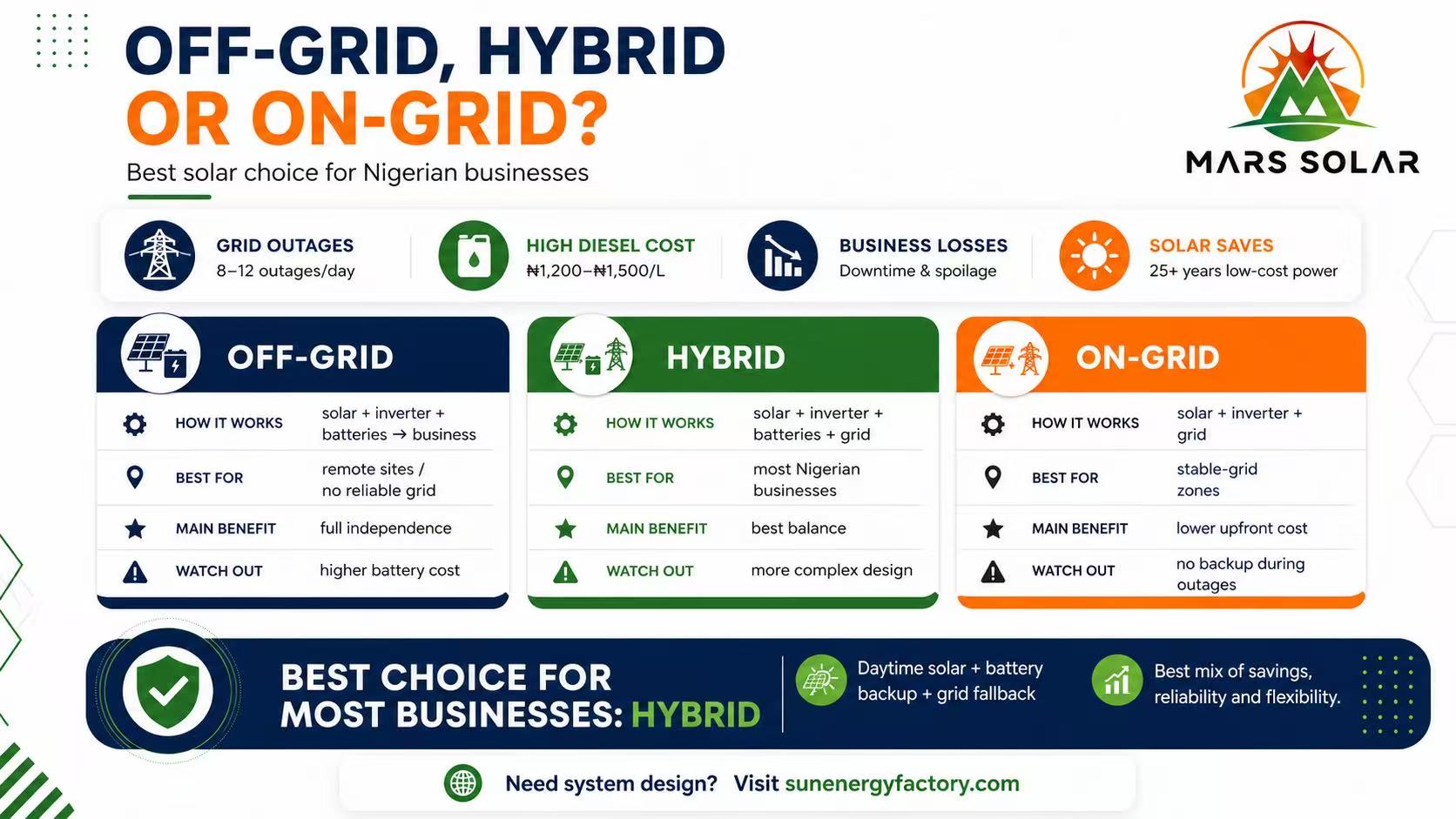 Solar Power Nigeria 2026: Off-Grid vs Hybrid vs On-GridNigeria’s unreliable grid and soaring diesel costs are forcing business owners to take solar seriously. But the biggest question remains: which system — off-grid, hybrid, or on-grid? This 2026 guide breaks down all three solar architectures for Nigeria
Do you like ?0
Read more -
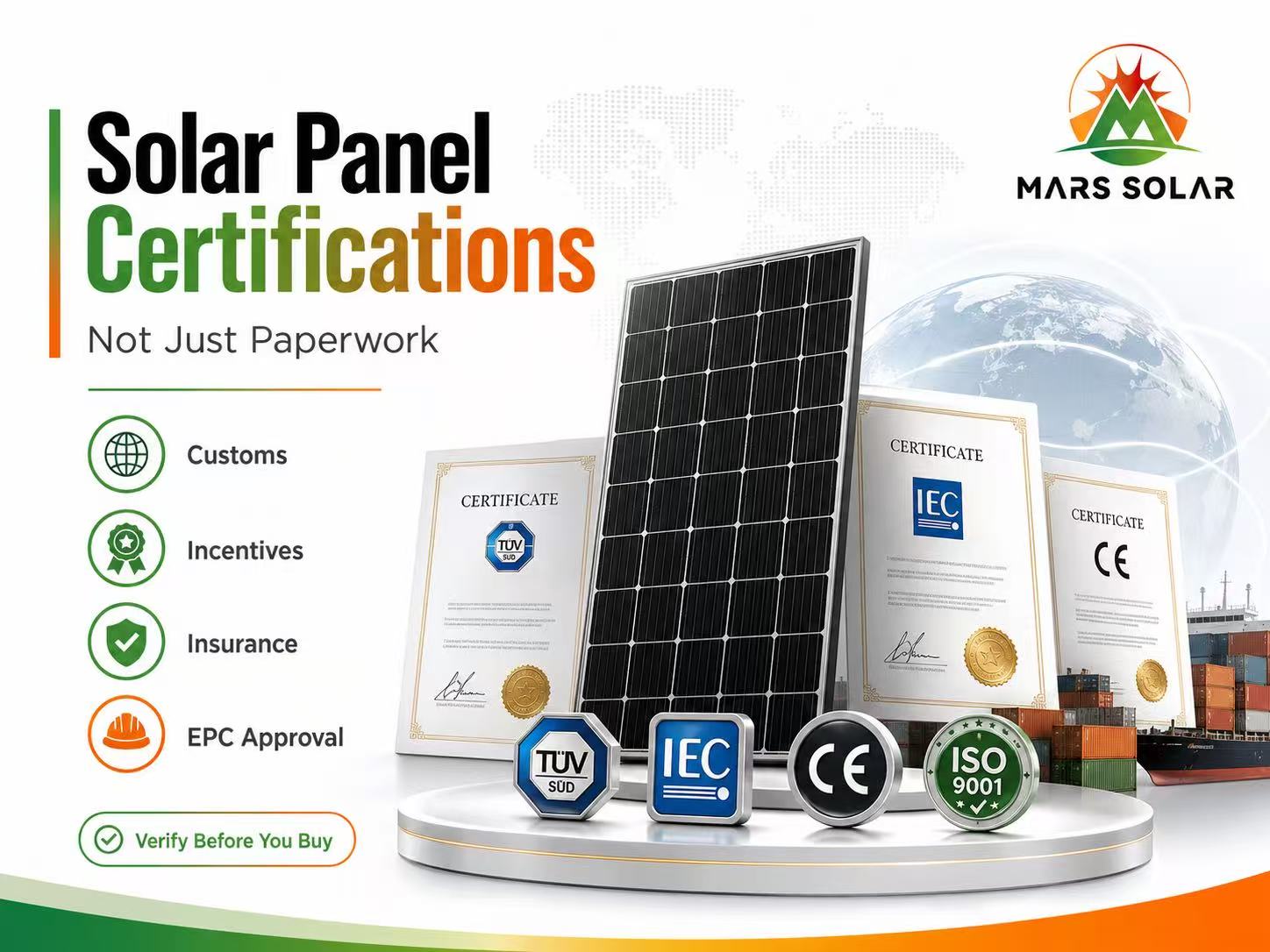 Solar Panel Certifications Explained: IEC, UL, TÜV, CE, ISO — The 2026 GuideA solar panel without proper certifications is unsellable in 90% of international markets. This 2026 guide explains every major certification — IEC 61215, IEC 61730, UL 61730, TÜV, CE, ISO 9001/14001/45001 — what it tests, who issues it, which markets req
Do you like ?0
Read more -
 Solar Panel Shipping & Container Loading: The 2026 Complete GuideThe solar panels leaving the factory are perfect. By the time they arrive at your warehouse, 3–7% might be damaged, delivery could be 2 weeks late, and demurrage at the destination port could wipe out your margin. This 2026 guide covers container types (2
Do you like ?0
Read more