Lithium vs Lead-Acid vs LFP | Battery Storage Technologies for C&I Solar Systems
Lithium vs Lead-Acid vs LFP
Battery Storage Technologies for C&I Solar Systems
A Technical Comparison for Commercial & Industrial Buyers in 2026
By Mars Solar Technical Content Team | June 2026
1. Why Battery Chemistry Matters for Your Solar System
Battery storage represents 30–50% of the total cost of an off-grid or hybrid solar system. Choosing the right chemistry is the single most consequential technical decision in a C&I solar-storage project.
In 2026, three battery technologies dominate the C&I solar market: Lithium Iron Phosphate (LFP), Nickel Manganese Cobalt (NMC), and Lead-Acid. Each has distinct performance characteristics, cost profiles, and suitability for different applications.
This guide provides a direct technical comparison across 12 performance dimensions, cost-of-ownership analysis over 10 and 20 years, and a decision framework to help you choose the right battery for your specific project.
2. Technology Overview
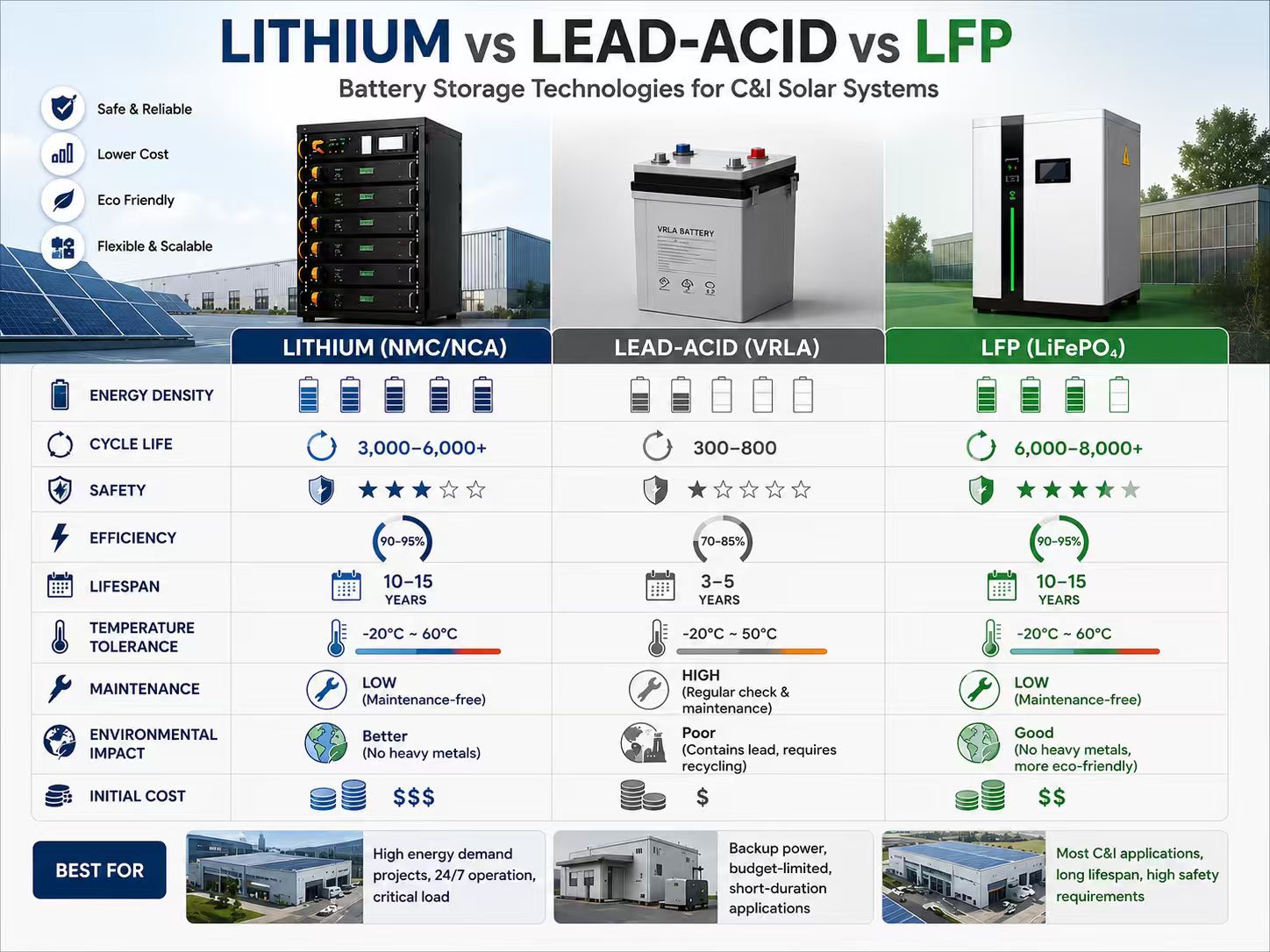
2.1 Lithium Iron Phosphate (LiFePO4 / LFP) — Recommended for C&I
LFP batteries use lithium iron phosphate as the cathode material. They have become the dominant choice for C&I solar-storage applications globally, driven by superior cycle life, thermal safety, and declining costs.
- Cathode: Lithium Iron Phosphate (LiFePO4)
- Nominal voltage: 3.2V per cell (48V, 51.2V, 128V module configurations)
- Thermal stability: Stable to 270°C — no thermal runaway under normal conditions
- Cycle life: 4,000–6,000 cycles at 80% depth of discharge (DOD)
- Round-trip efficiency: 92–96%
- Self-discharge: < 3% per month
- Industry leaders: CATL, BYD, EVE Energy, Pylontech
2.2 Nickel Manganese Cobalt (NMC)
NMC batteries use a nickel-manganese-cobalt cathode. They offer high energy density and have been the dominant chemistry in consumer electronics and EVs. In stationary storage, they are being displaced by LFP due to safety and cost concerns.
- Cathode: Nickel Manganese Cobalt (LiNiMnCoO2)
- Energy density: Higher than LFP (150–200 Wh/kg vs. 120–160 Wh/kg)
- Cycle life: 2,000–3,000 cycles at 80% DOD
- Thermal stability: Lower — thermal runaway risk above 210°C
- Round-trip efficiency: 88–94%
- Cost trend: Being equalized by LFP at C&I scale
2.3 Lead-Acid
Lead-acid batteries are the oldest rechargeable battery technology, with over 150 years of commercial use. They remain relevant for budget-sensitive or infrequently cycled applications but have been largely superseded by lithium for daily cycling in solar-storage systems.
- Cathode: Lead dioxide; Anode: Sponge lead
- Two subtypes: Flooded (FLA) and Valve-Regulated Lead-Acid (VRLA / AGM / Gel)
- Energy density: Low (60–90 Wh/kg) — requires more physical space
- Cycle life: 800–1,500 cycles at 50% DOD
- Round-trip efficiency: 75–85%
- Major brands: Rolls, Hoppecke, East Penn
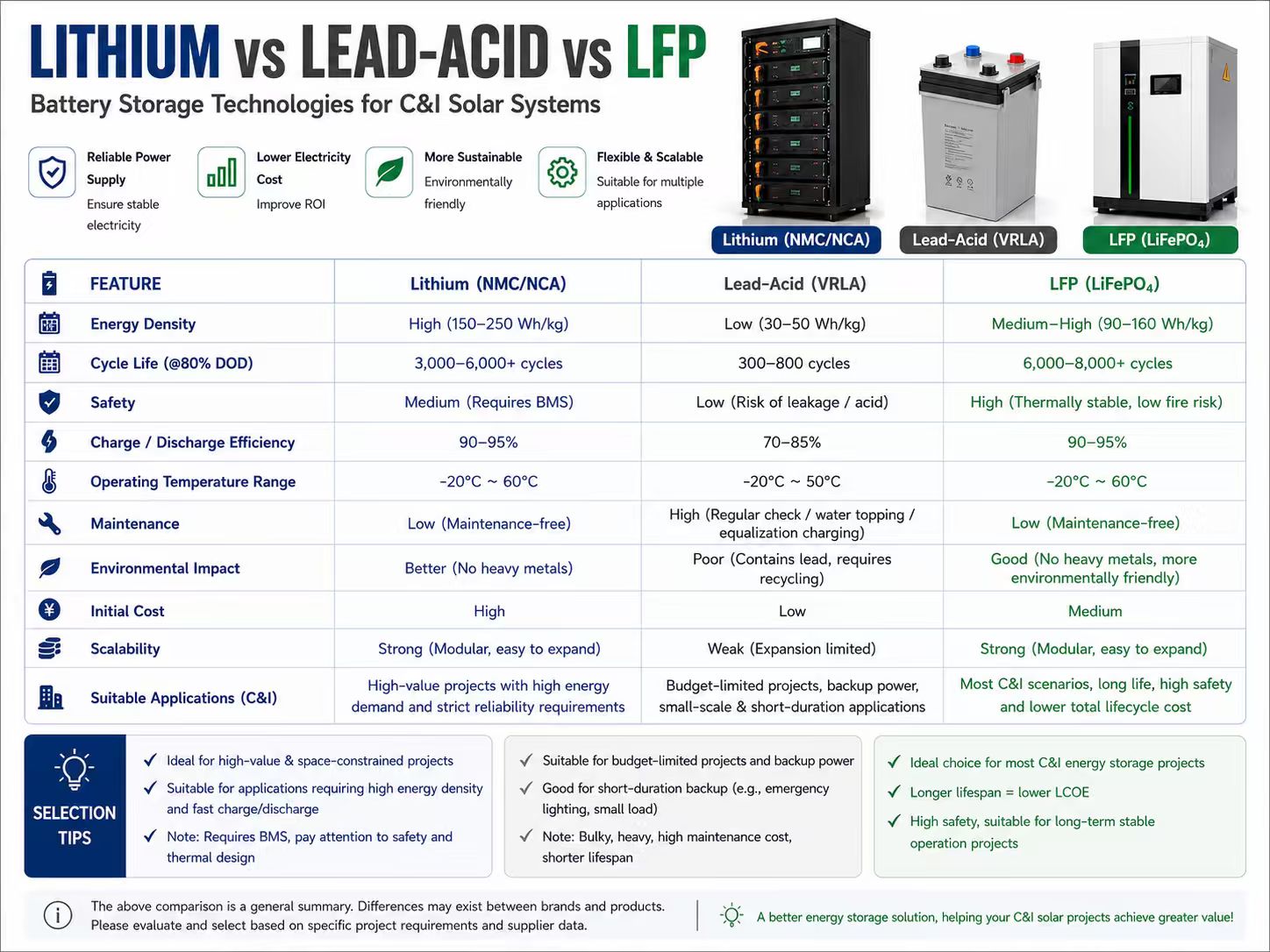
3. Head-to-Head Technical Comparison
|
Performance Parameter |
LFP (LiFePO4) |
NMC |
Lead-Acid (VRLA) |
|
Energy Density (Wh/kg) |
120–160 |
150–200 |
60–90 |
|
Volume Efficiency (kWh/m³) |
280–350 |
350–450 |
100–150 |
|
Cycle Life @ 80% DOD |
4,000–6,000 cycles |
2,000–3,000 cycles |
800–1,500 cycles |
|
Round-Trip Efficiency |
92–96% |
88–94% |
75–85% |
|
Depth of Discharge (usable) |
80–100% |
70–80% |
50% recommended |
|
Thermal Safety |
Excellent (stable to 270°C) |
Moderate (210°C) |
Good (no thermal runaway) |
|
Self-Discharge / Month |
< 3% |
2–5% |
3–5% |
|
Charge Rate (C-rating) |
0.5C–1C |
1C–2C |
0.1C–0.3C |
|
Operating Temperature |
-20°C to +60°C |
-20°C to +55°C |
-20°C to +45°C |
|
Memory Effect |
None |
Minimal |
Moderate (FLA) |
|
Maintenance Required |
None (sealed) |
None (sealed) |
FLA: regular; VRLA: minimal |
|
Weight per kWh |
8–12 kg/kWh |
6–10 kg/kWh |
25–40 kg/kWh |
4. Total Cost of Ownership Analysis
Battery cost cannot be evaluated in isolation. The true measure is total cost per kWh delivered over the battery’s lifetime. This section provides a 10-year and 20-year TCO comparison for a 100kWh battery bank.
4.1 Initial Cost Comparison (100kWh Bank, 2026)
|
Technology |
Cost per kWh |
100kWh System Cost |
Installation Complexity |
|
LFP (CATL/Pylontech) |
$280–$400/kWh |
$28,000–$40,000 |
Moderate — modular rack mount |
|
NMC |
$300–$500/kWh |
$30,000–$50,000 |
Moderate — requires thermal management |
|
Lead-Acid VRLA |
$150–$250/kWh |
$15,000–$25,000 |
High — heavy, requires ventilation |
4.2 10-Year TCO for Daily Cycling (100kWh Bank)
Assumptions: Daily cycling at 80% DOD, electricity cost $0.15/kWh, replacement cost inflation 2%/year.
|
Cost Item |
LFP |
NMC |
Lead-Acid VRLA |
|
Initial CAPEX |
$34,000 |
$40,000 |
$20,000 |
|
Replacement Cost (Year 10) |
$0 (warranty) |
$18,000 (80% degraded) |
$20,000 (2 full replacements) |
|
Efficiency Losses (10yr, 95% eff) |
$2,850 |
$4,750 |
$9,500 |
|
Maintenance Cost (10yr) |
$500 |
$1,000 |
$8,000 |
|
Total 10-Year Cost of Ownership |
$37,350 |
$63,750 |
$57,500 |
|
Cost per kWh Delivered (10yr) |
$0.102/kWh |
$0.175/kWh |
$0.158/kWh |
|
Verdict |
LOWEST TCO |
Avoid for daily cycling |
Only for infrequent use |
4.3 20-Year TCO Projection
Over 20 years, LFP’s superior cycle life becomes even more decisive. A quality LFP bank lasts 15–20 years with moderate degradation; lead-acid requires 3–4 full replacements.
|
Cost Item |
LFP (1 bank) |
NMC (2 replacements) |
Lead-Acid (4 replacements) |
|
Total CAPEX (20yr) |
$38,000 |
$80,000 |
$80,000 |
|
Total Replacement Cost |
$0 |
$36,000 |
$80,000 |
|
Efficiency Losses (20yr) |
$5,700 |
$9,500 |
$19,000 |
|
Maintenance (20yr) |
$1,000 |
$2,000 |
$16,000 |
|
Total 20-Year TCO |
$44,700 |
$127,500 |
$195,000 |
|
20yr Cost per kWh |
$0.061/kWh |
$0.175/kWh |
$0.267/kWh |
Verdict: LFP is 4.4x cheaper per kWh delivered over 20 years compared to lead-acid, and 2.9x cheaper than NMC. For daily-cycling C&I solar-storage applications, the economics of lead-acid and NMC simply do not hold.
5. Application Suitability Matrix
|
Application Type |
Recommended Battery |
Rationale |
|
Daily-cycling C&I hybrid/off-grid (factory, hotel, cold storage) |
LFP — mandatory |
Daily cycling demands 4,000+ cycle life; LFP is the only economically viable choice |
|
Telecom tower backup (daily gen-set cycling) |
LFP |
High cycle count; thermal stability critical for tower environments |
|
Remote agricultural site (weekly full discharge) |
LFP |
Even with irregular cycling, LFP’s lifespan advantage applies |
|
Emergency backup only (grid outage ~50 days/yr) |
LFP (lower cycle unit) or VRLA |
Low cycle count; if capital is severely constrained, VRLA is acceptable but LFP preferred |
|
Residential-scale daily cycling |
LFP |
Same rationale as C&I; 10-year warranty aligns with residential use |
|
Portable / mobile solar (camping, construction site) |
NMC |
Higher energy density matters for weight-constrained mobile applications |
|
UPS / server room backup (<30 min autonomy) |
VRLA acceptable |
Short discharge; infrequent cycling; cost-sensitive applications justify lead-acid |
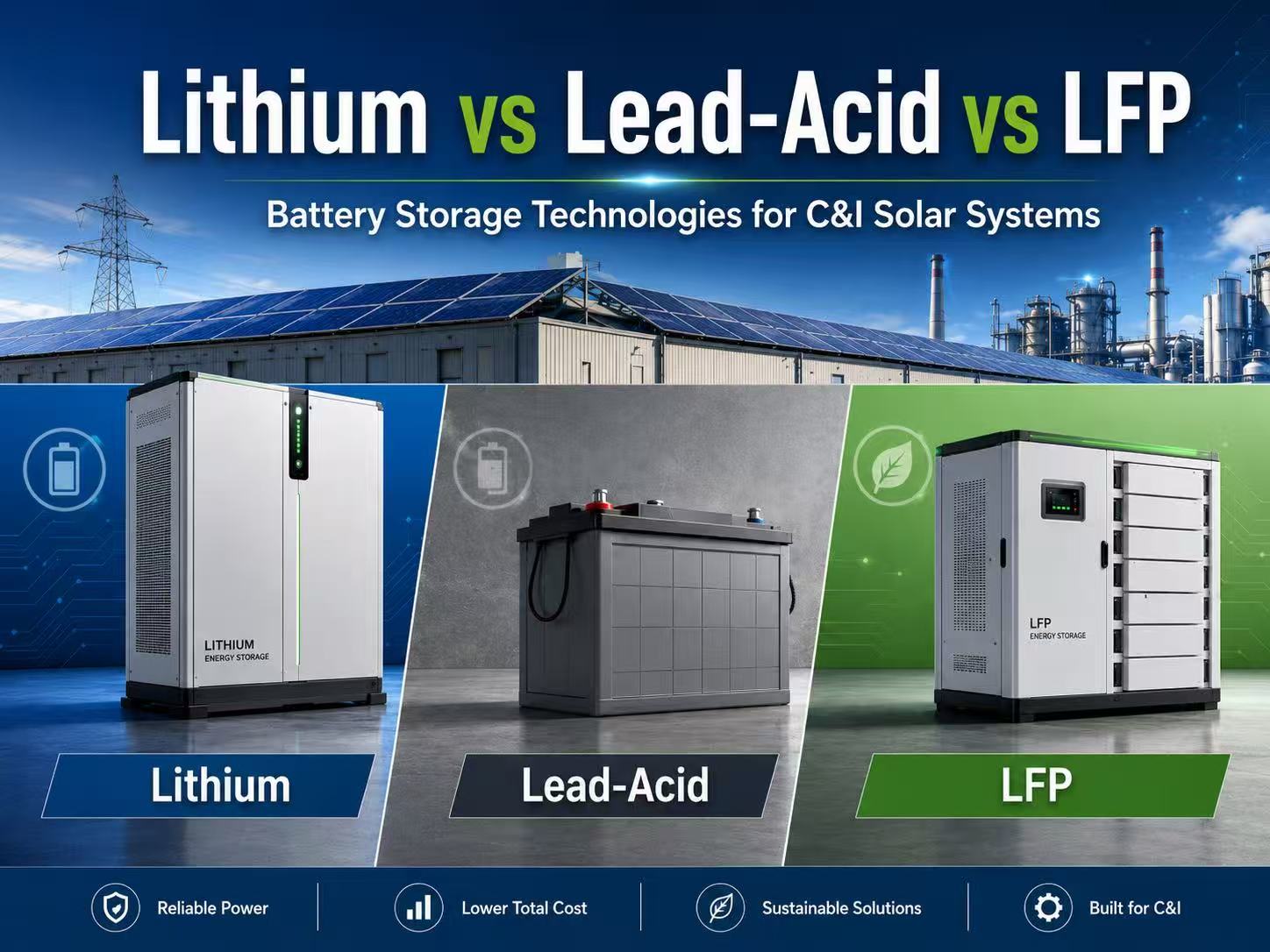
6. Mars Solar’s C&I BESS Range
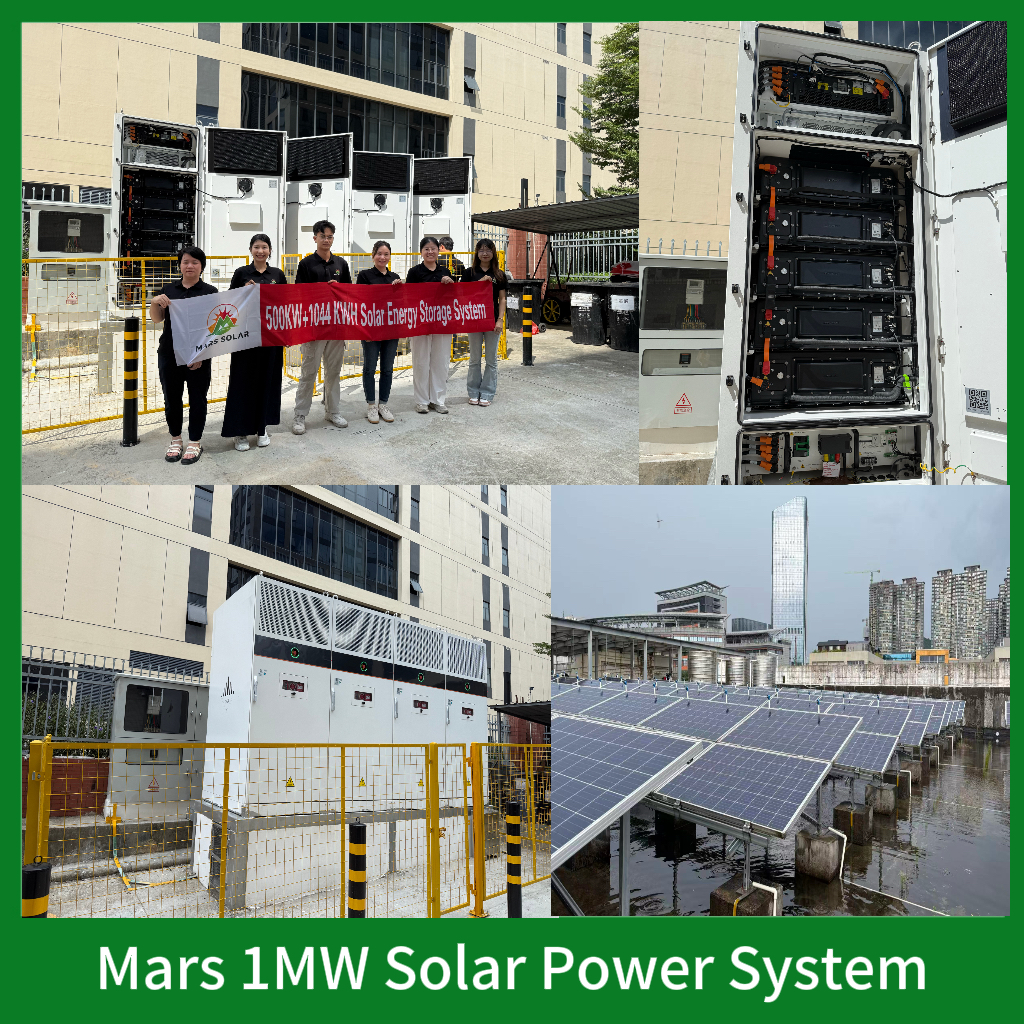
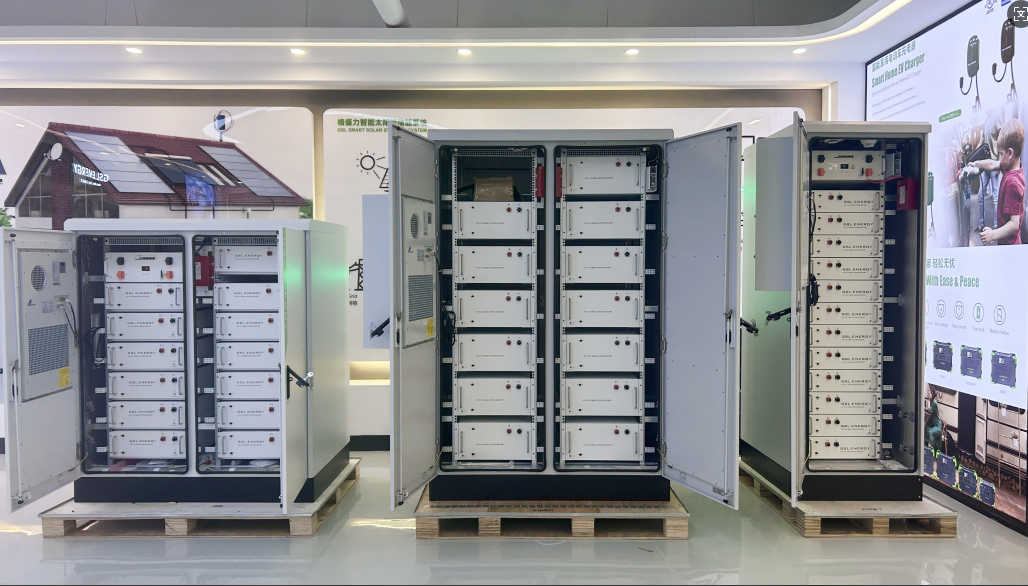
Mars Solar exclusively uses LFP chemistry for its C&I battery energy storage systems. Our BESS products cover the full range of commercial and industrial applications from 100kWh to 2MWh:
|
Product Series |
Capacity |
Configuration |
Application |
|
Mars Rack-BESS (R-Series) |
100–500kWh |
Rack-mounted, 19-inch cabinet, IP54 |
Factories, hotels, commercial buildings |
|
Mars Container BESS (C-Series) |
1MWh–2MWh |
20ft / 40ft container, IP55, integrated HVAC |
Large factories, mines, microgrids |
|
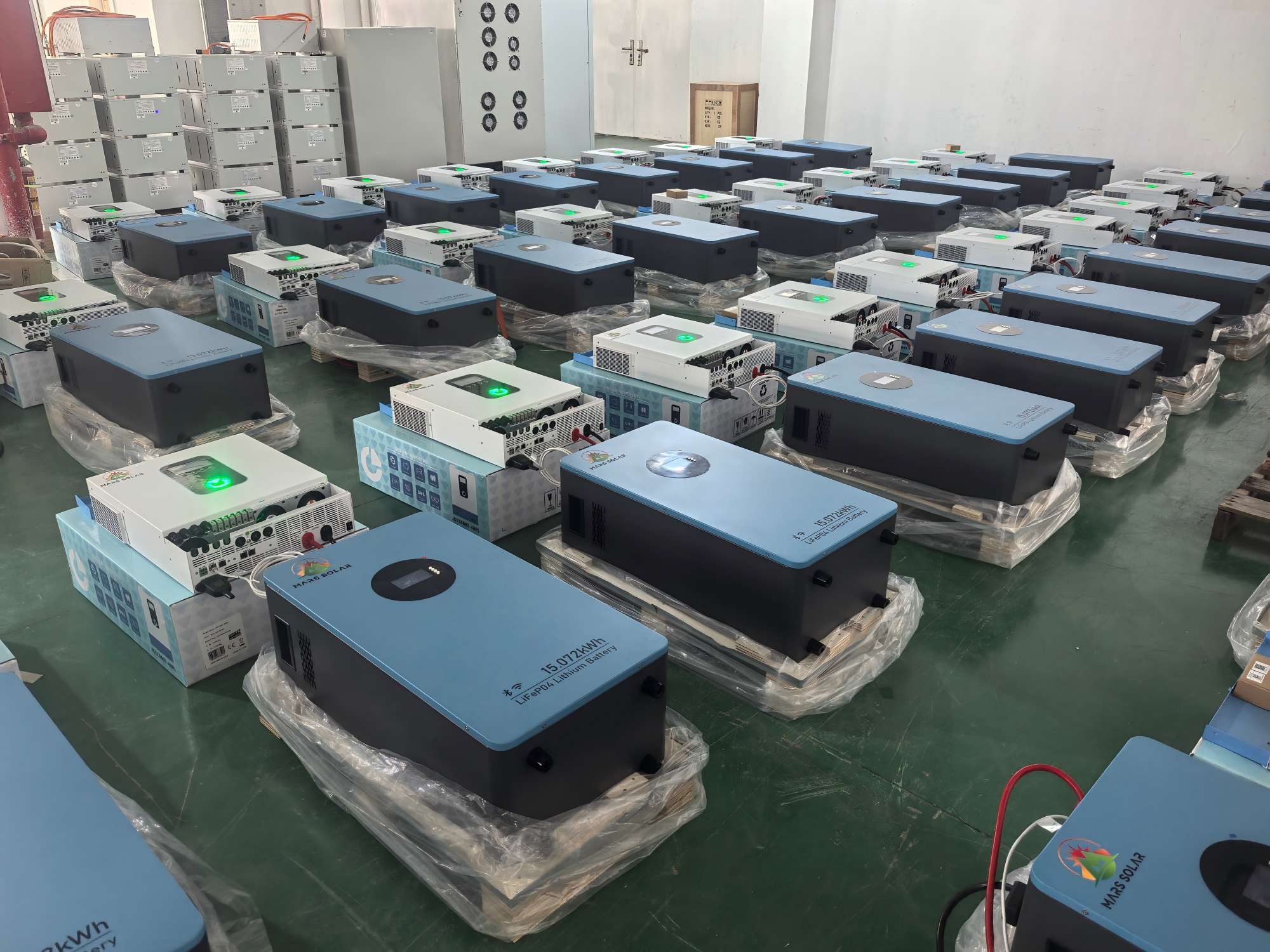
Mars Hybrid Inverter + BESS |
50–500kW hybrid |
All-in-one hybrid inverter + battery management |
Hybrid on-grid/off-grid systems |
|
Mars Portable BESS |
2–10kWh |
Portable, wheeled, LiFePO4 |
Construction sites, events, temporary power |
All Mars Solar BESS units feature:
- CATL or BYD LFP cells (Tier-1 manufacturer, 6,000+ cycle certification)
- Integrated Battery Management System (BMS) with cell balancing
- Remote monitoring via cloud platform (real-time SOC, cycle count, fault alerts)
- 10-year warranty at 80% DOD — the most competitive warranty in the C&I market
- UN38.3, IEC 62619, and CE certifications — accepted globally for customs and insurance
7. Decision Framework: Which Battery Should You Choose?
Use this 4-question framework to make your decision:
|
Question |
If Yes |
If No |
|
Q1: Will the battery cycle daily? |
Choose LFP only |
Continue to Q2 |
|
Q2: Is space or weight at a premium? |
Choose LFP or NMC (LFP preferred) |
Continue to Q3 |
|
Q3: Is initial CAPEX critically constrained and cycling infrequent (<100 cycles/yr)? |
VRLA acceptable as transitional; plan for LFP upgrade |
Choose LFP |
|
Q4: Is thermal safety in a confined space a concern? |
Choose LFP only (no thermal runaway risk) |
LFP still recommended for all other reasons |
Bottom line: For virtually all C&I solar-storage applications with daily cycling, LFP is the only rational choice in 2026. The TCO advantage is decisive, the safety profile is superior, and the 10-year warranty de-risks the investment significantly.
8. Frequently Asked Questions
Q1: Can LFP batteries be used in series and parallel to reach higher voltages?
Yes. Mars Solar’s rack BESS supports both series (for higher system voltage) and parallel (for higher capacity) configurations. The BMS manages cell balancing across the entire bank. However, all modules in a parallel bank must be the same model, voltage, and age to ensure proper balancing.
Q2: What happens to an LFP battery at the end of its life?
LFP batteries at 80% rated capacity are considered end-of-life for daily cycling applications. However, they retain ~80% capacity and can be repurposed for lower-demand stationary applications (remote monitoring, street lighting) — a practice known as second-life battery use. Mars Solar offers take-back and recycling programs through certified partners in major markets.
Q3: How do extreme temperatures affect LFP performance?
LFP operates well from -20°C to +60°C, but optimal performance is 15°C–35°C. Below 0°C, charging must be done at reduced current to prevent lithium plating. Mars Solar’s C-Series container BESS includes heating and cooling (HVAC) to maintain optimal cell temperature in extreme climates, critical for deployments in Sudan, UAE, and Central Asia.
Q4: Is LFP more prone to fires than lead-acid?
No. This is a common misconception. LFP’s thermal stability (stable to 270°C) means it does not experience thermal runaway under normal operating conditions. Lead-acid batteries release hydrogen gas during charging, creating explosion risk in enclosed spaces. NMC has higher thermal runaway risk than LFP. LFP is the safest chemistry for indoor C&I deployments.
Q5: Can I mix old and new battery modules?
No. Mixing batteries of different ages, brands, or capacities in a bank causes imbalance, reduces usable capacity, and can damage the BMS. Always replace entire banks at once with matched modules. Mars Solar recommends replacing the full battery bank rather than individual modules to ensure consistent state of health across the system.
9. Get a Battery Storage Proposal from Mars Solar
Mars Solar’s engineering team provides free battery sizing and system configuration proposals for C&I projects from 50kWh to 2MWh. We model multiple battery chemistries against your actual load profile and provide a transparent TCO comparison.
To request a proposal, contact:
- Website: solarpowermanufacturer.com
- Email: [email protected]
- Phone / WhatsApp: +86 153 0296 6051
Mars Solar has been manufacturing solar power systems and BESS since 2008, serving 120+ countries with ISO9001-certified production and in-house R&D. All products carry CE, IEC, and UN38.3 certifications.
-
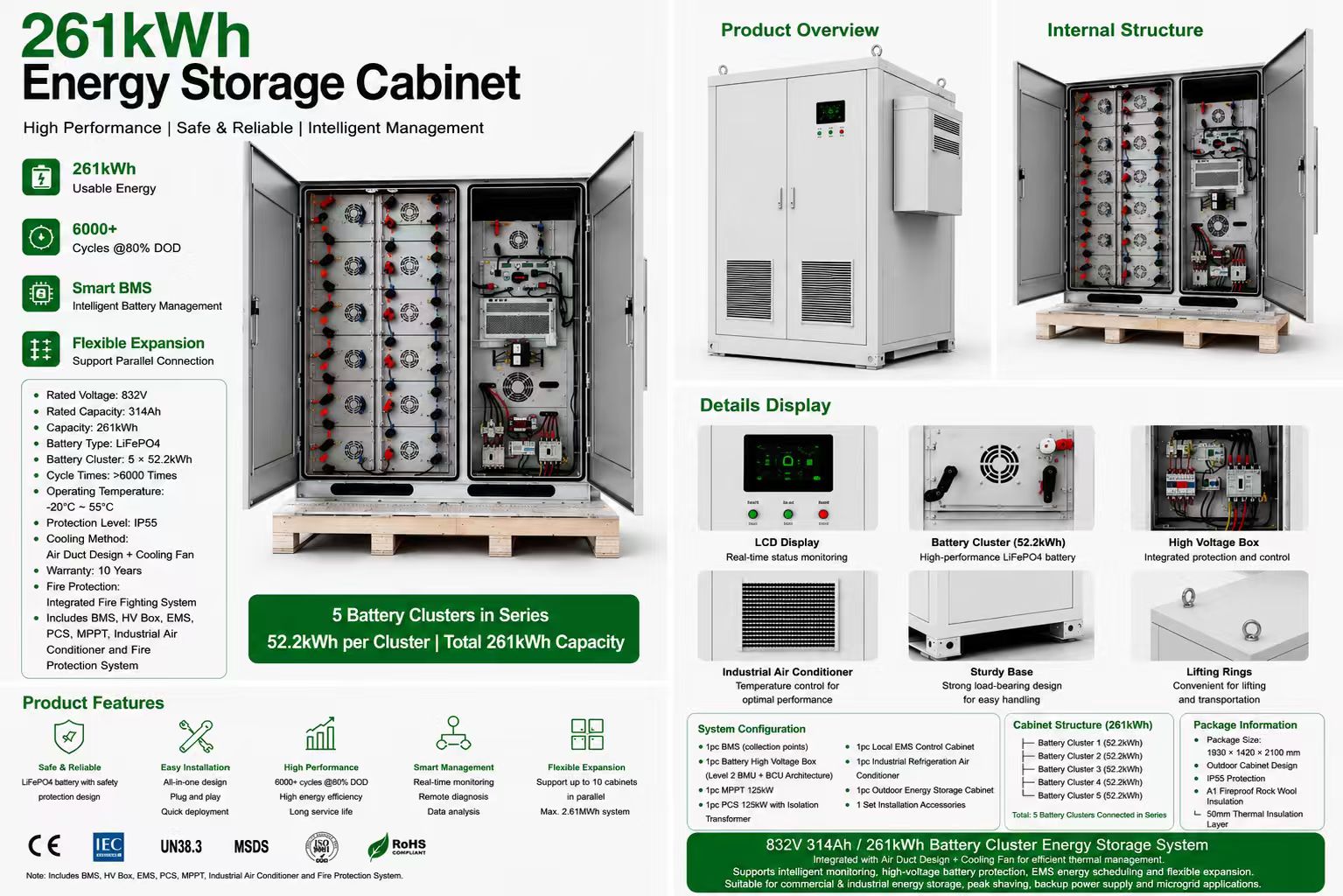 BESS in Nigeria 2026: Battery Energy Storage Cost, Diesel Payback & Import GuideBESS in Nigeria: 2026 pricing, diesel payback, SONCAP, China import guide. Save 60%+ vs diesel. Factory-direct LFP from Mars Solar.
Do you like ?0
Read more -
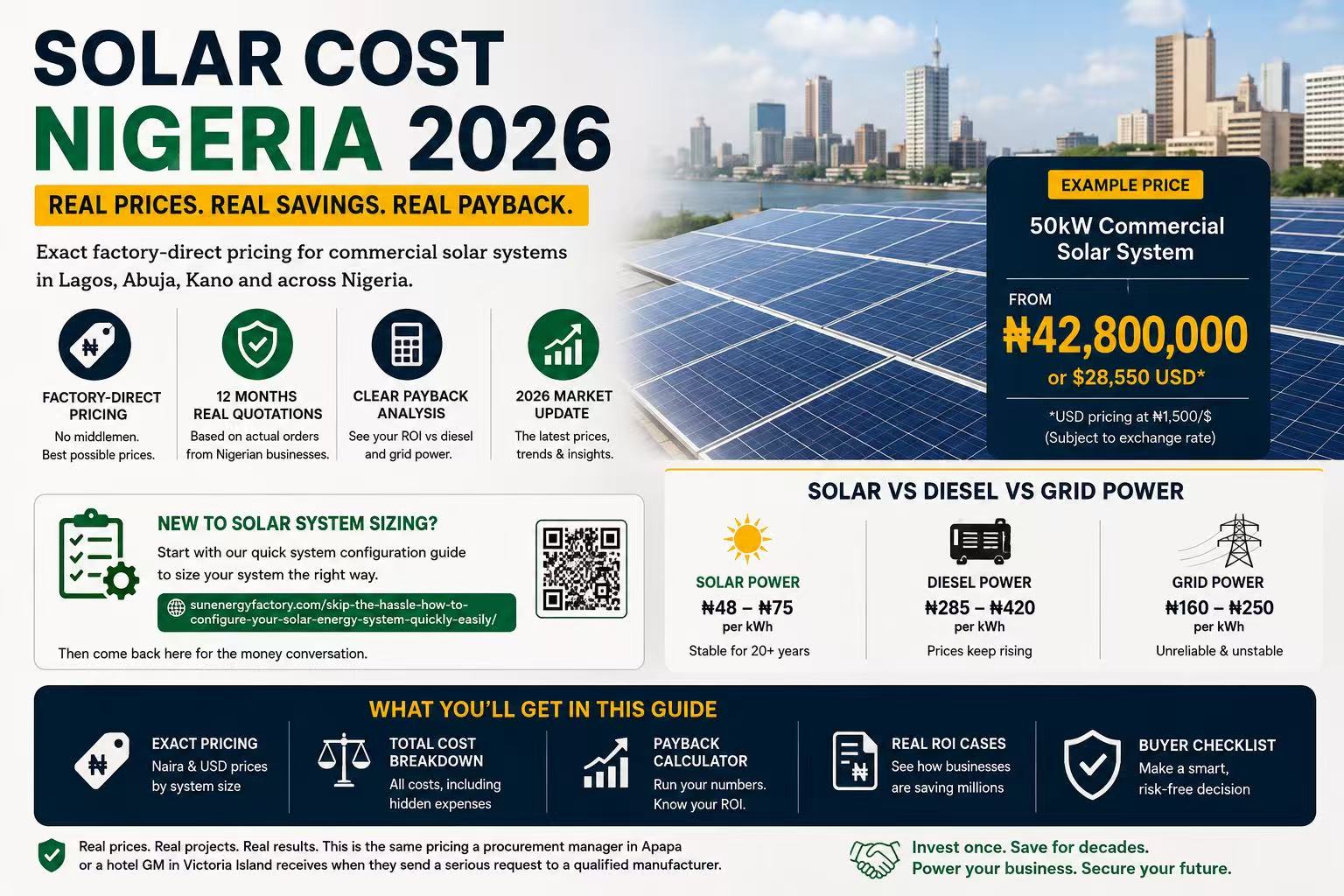 How Much Does Solar Cost in Nigeria? 2026 Real Pricing GuideSolar cost in Nigeria for 5kW to 250kW systems, in Naira and USD. Compare solar vs diesel vs grid, calculate payback, and explore financing options.
Do you like ?0
Read more -
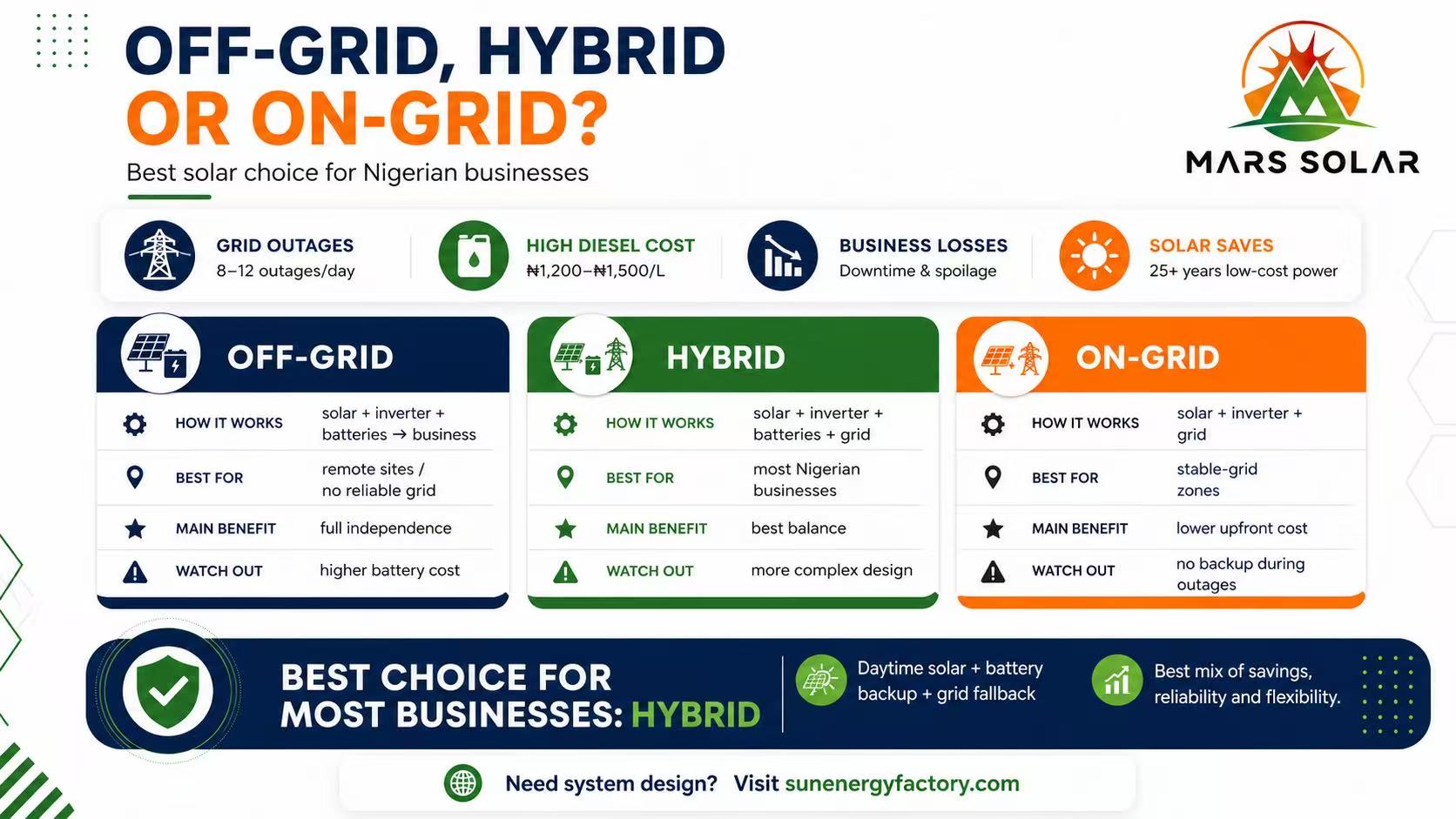 Solar Power Nigeria 2026: Off-Grid vs Hybrid vs On-GridNigeria’s unreliable grid and soaring diesel costs are forcing business owners to take solar seriously. But the biggest question remains: which system — off-grid, hybrid, or on-grid? This 2026 guide breaks down all three solar architectures for Nigeria
Do you like ?0
Read more -
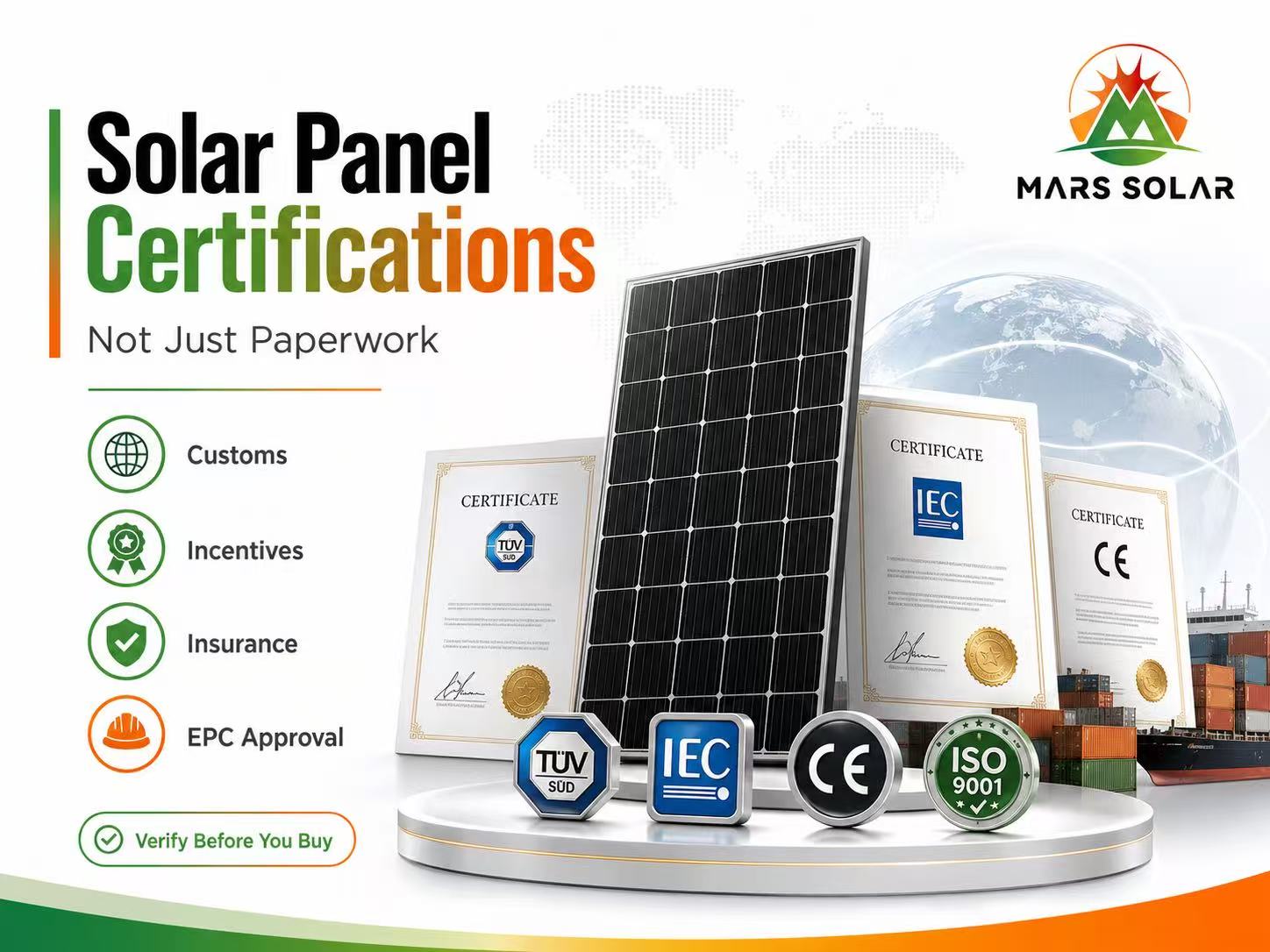 Solar Panel Certifications Explained: IEC, UL, TÜV, CE, ISO — The 2026 GuideA solar panel without proper certifications is unsellable in 90% of international markets. This 2026 guide explains every major certification — IEC 61215, IEC 61730, UL 61730, TÜV, CE, ISO 9001/14001/45001 — what it tests, who issues it, which markets req
Do you like ?0
Read more -
 Solar Panel Shipping & Container Loading: The 2026 Complete GuideThe solar panels leaving the factory are perfect. By the time they arrive at your warehouse, 3–7% might be damaged, delivery could be 2 weeks late, and demurrage at the destination port could wipe out your margin. This 2026 guide covers container types (2
Do you like ?0
Read more -
 Solar Panel Factory Verification: The 7-Step Due Diligence GuideEvery year, international solar buyers lose millions to fraudulent suppliers — fake certificates, empty factories, and panels that don't match spec. This 7-step verification guide shows you exactly how to qualify any China solar factory before you wire mo
Do you like ?0
Read more