Brazil's installed photovoltaic capacity enters the world's top 15
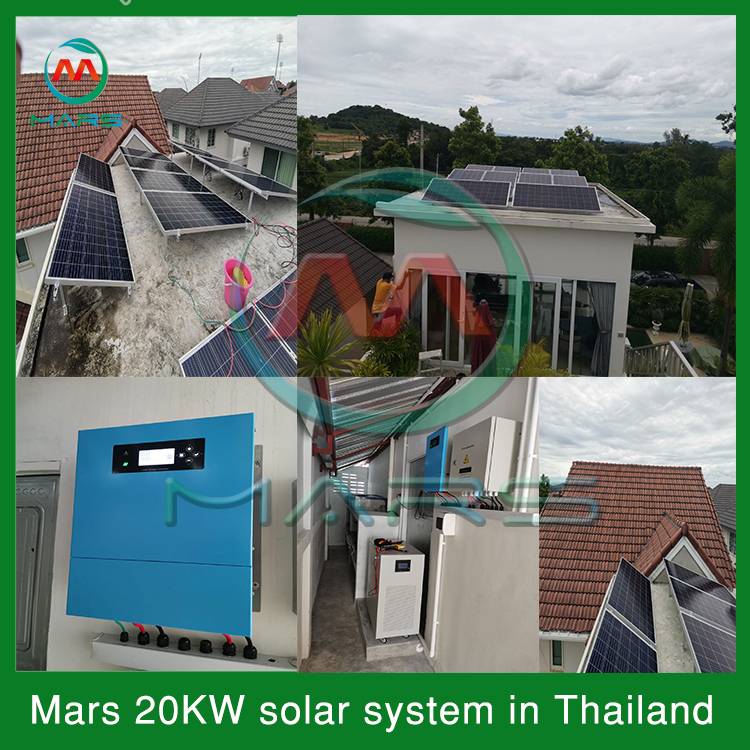
Quick answer: A 5KW solar system of this configuration produces about 33.6KWH per day from 16x350W monocrystalline panels and driven by a 5KW/7KVA inverter. Built by Mars Solar (factory since 2008), CE/ROHS certified, 25-year panel life, shipped factory-direct to 130+ countries.
Brazil's installed solar capacity has exceeded the 10,000 MW Household Solar Generator mark, which is equivalent to 70% of the installed capacity of the world's second largest hydropower station-Itaipu Hydropower Station, and Brazil has therefore ranked 14th in the global solar installed capacity rankings.
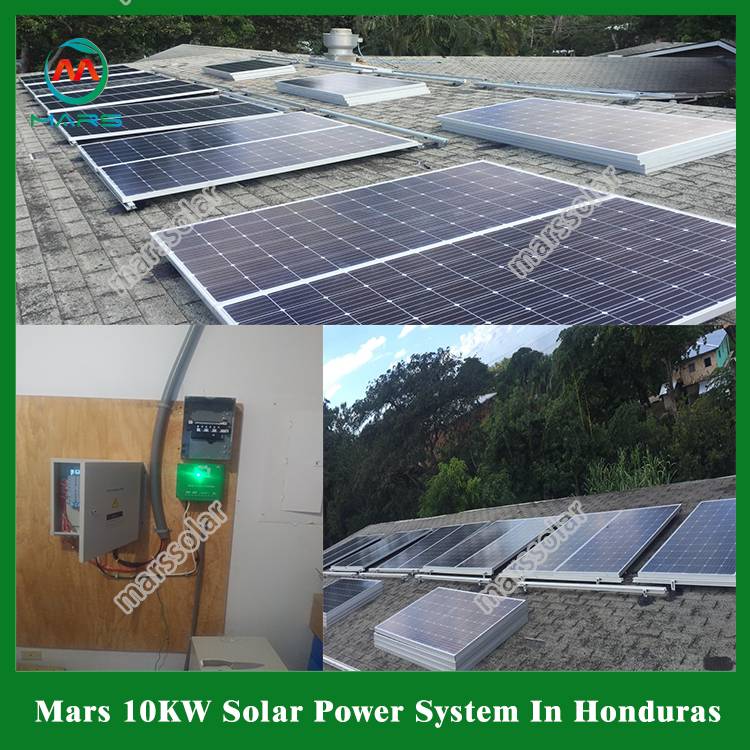
At present, solar energy occupies the fifth place in Brazil's electric energy structure, which is higher than that of thermal power plants powered by petroleum and other fossil fuels, which have an installed capacity of about 9,100 megawatts. The Brazilian Photovoltaic Solar Association (Absolar) stated that this achievement is directly attributable to the investment of more than 52.7 billion reais since 2012. The market expects that after the new regulatory framework for distributed power generation is approved, the The investment will continue to grow.
The new law stipulates that projects currently under construction and projects established within 12 months after the promulgation of the new law can enjoy discounts on power grid usage fees before 2045. The Brazilian Association of Distributed Generation (ABGD) estimates that this measure may encourage an additional 10,000 megawatts of installed capacity within two years.
With the growth of installed capacity, Brazil's solar power generation also set two consecutive historical records: at 12:14 on July 19, the instantaneous power generation reached a peak of 2,211 megawatts; on July 30, the average daily power generation reached 682 megawatts watt. In terms of centralized photovoltaic power generation, Brazil’s solar power plants have an installed capacity of 3,500 megawatts, equivalent to 1.9% of the national power supply. Among the four tenders held by the government in 2019 and 2021, solar power generation is the most competitive and the price is the lowest. In terms of distributed power generation, the installed capacity is about 6,500 megawatts, including photovoltaic panels installed on the roofs of homes or industrial and commercial buildings, and solar power plants built in accordance with the requirements of private customers.
Rodrigo Sauaia, President of the Brazilian Photovoltaic Solar Association, said: “Due to the flexibility and convenience of solar technology, only one day of installation time can turn a home or business into a small power plant. Clean, renewable and affordable electricity. For a large solar power plant, it takes less than 18 months from auction to start of power generation. Therefore, solar energy is recognized as the fastest in the construction of new power generation capacity. Fast."
However, the Consumer Protection Association (Idec) believes that the current incentive model transfers a large part of the operating cost of the distribution network to consumers with lower incomes, because consumers who have the ability to invest in solar distributed power generation can instead Enjoy more discounts. The Brazilian Electricity Regulatory Agency (Aneel) has also estimated that the relevant price impact is about 3 billion reais per year.
Companies in the photovoltaic industry believe that incentives ensure the growth of clean energy, and the investment requirements for transmission lines are low, because solar power generation facilities can be installed near large power consumption centers. Sawaya said: "The power generation price of large-scale solar power plants is ten times cheaper than current emergency fossil energy thermal power plants or electricity imported from neighboring countries, and these two are the main factors that currently drive up electricity prices."
Ronaldo Koloszuk, Chairman of the Board of Directors of the Brazilian Photovoltaic Solar Association, believes: "The evolution to a 100% clean and renewable electricity energy structure is entirely possible. It depends more on political will and leadership rather than technology. And economic conditions, the government should give more incentives to the planning and expansion of self-owned power generation and large-scale centralized photovoltaic power plants."
-
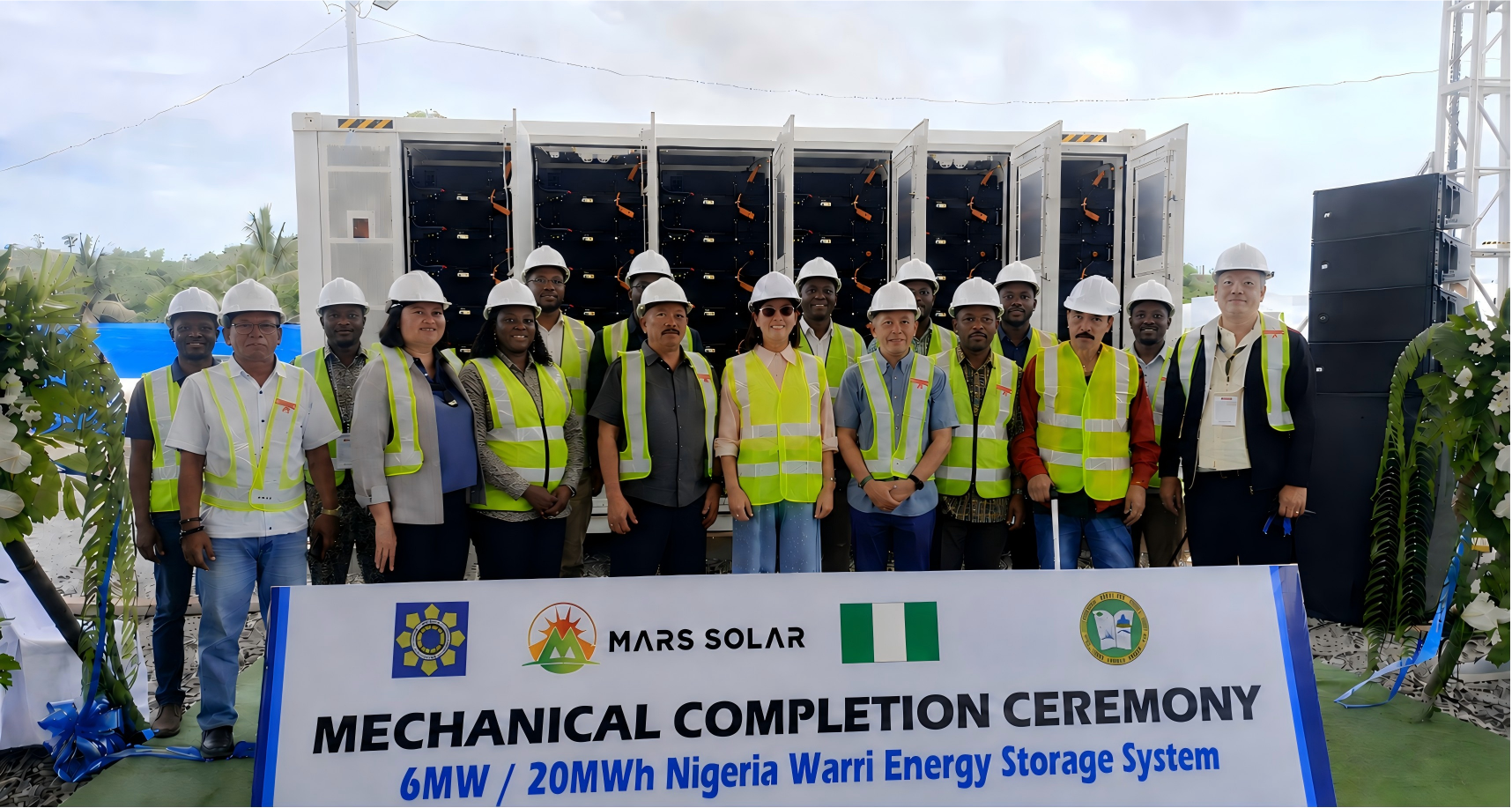 6MW 20MWh Solar Storage in Nigeria Factory + Farm + Residential Case StudyA 6MW solar PV + 20MWh LFP battery storage system in Nigeria powers an integrated factory, farm, and residential complex. The system delivers $108,000+ in monthly electricity savings, reaches payback in approximately 24 months, and provides 25 years of renewable power. This case study covers the engineering configuration, financial model, and operational performance of one of West Africa's most ambitious factory + farm + residential solar deployments.
Do you like ?0
Read more -
 Solar Panel Shipping & Container Loading: The 2026 Complete GuideThe solar panels leaving the factory are perfect. By the time they arrive at your warehouse, 3–7% might be damaged, delivery could be 2 weeks late, and demurrage at the destination port could wipe out your margin. This 2026 guide covers container types (2
Do you like ?0
Read more -
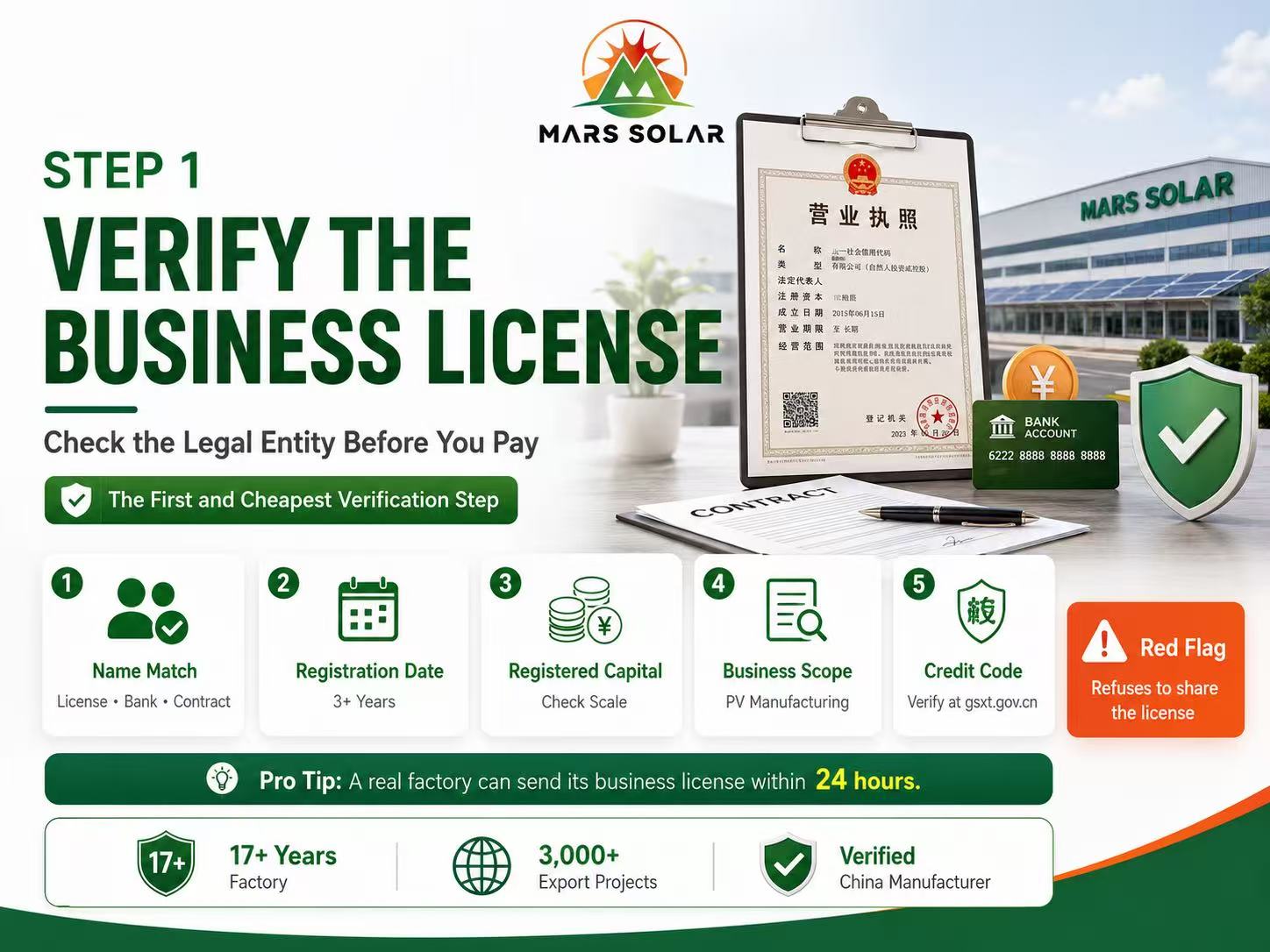 Solar Panel Factory Verification: The 7-Step Due Diligence GuideEvery year, international solar buyers lose millions to fraudulent suppliers — fake certificates, empty factories, and panels that don't match spec. This 7-step verification guide shows you exactly how to qualify any China solar factory before you wire mo
Do you like ?0
Read more -
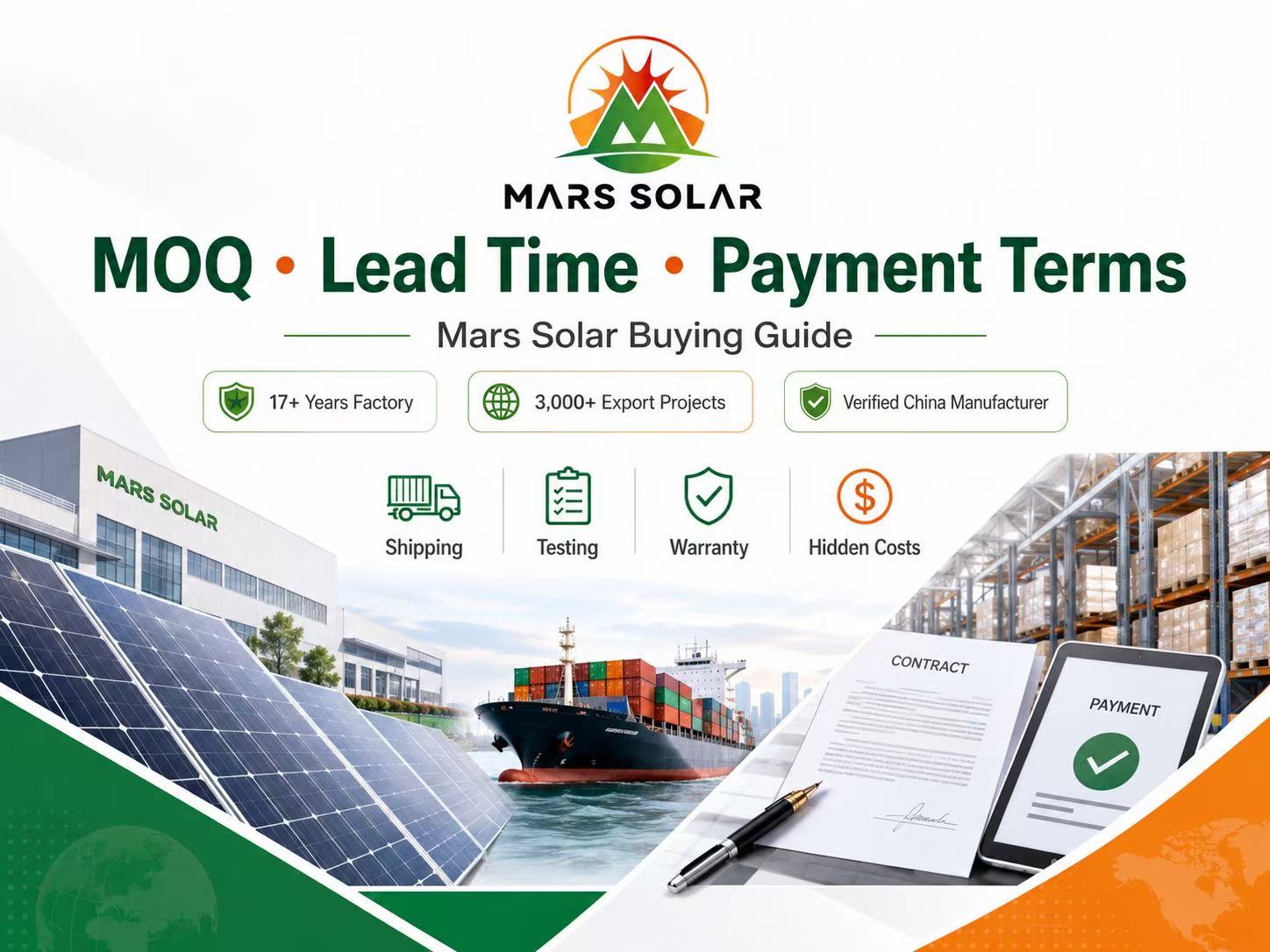 Solar Panel MOQ, Lead Time & Payment Terms: The Complete 2026 Buyer's GuideMOQ, lead time, and payment terms are the 3 questions every solar buyer asks — and the 3 answers most suppliers hide behind vague emails. This guide gives you complete, honest answers from a verified China factory with 17+ years and 3,000+ export projects
Do you like ?0
Read more -
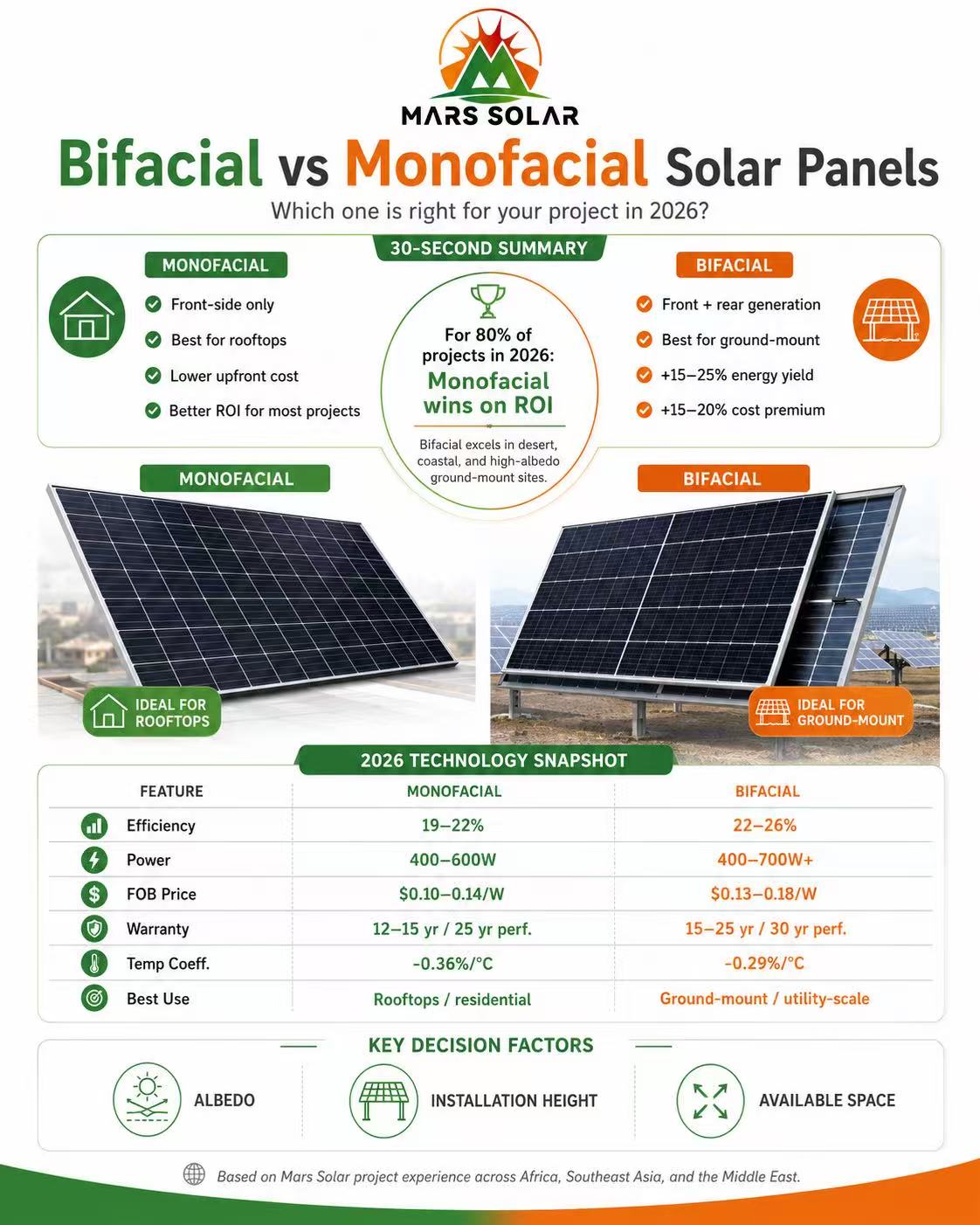 Solar Panel Selection Guide: Monofacial vs. Bifacial — 2026 EditionMonofacial and bifacial solar panels look identical but deliver 15-25% output difference. This 2026 guide compares 15 technical parameters, analyzes 5 real project ROI cases (Nigeria, Philippines, Ghana, Kenya, DRC), and gives you 3 decision frameworks to
Do you like ?0
Read more -
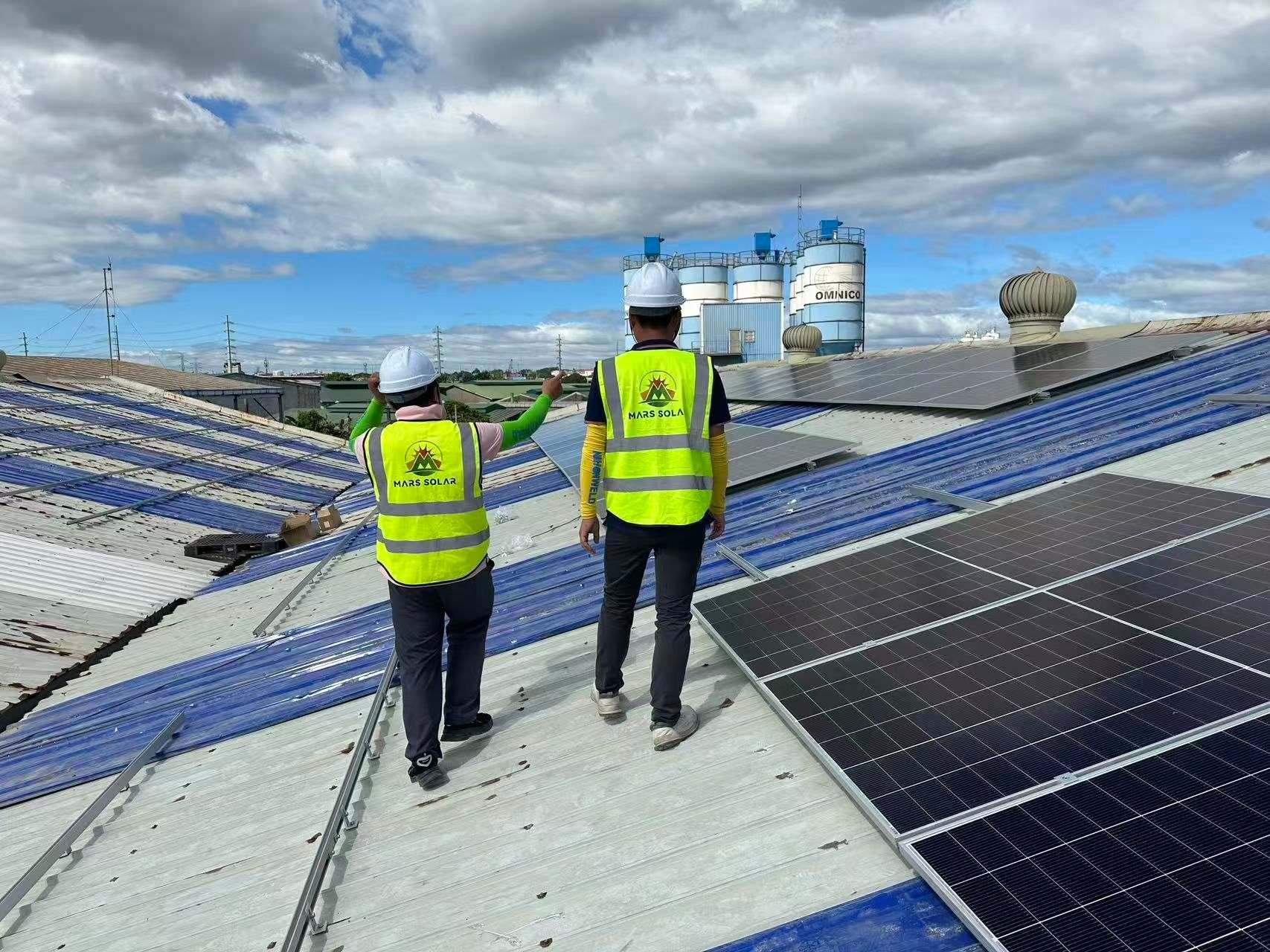 Top 10 Solar Panel Manufacturers China 2026 | Best BrandsDiscover the top 10 solar panel manufacturers China 2026. Compare Jinko, LONGi, Trina & more. Find Tier 1 suppliers.
Do you like ?0
Read more