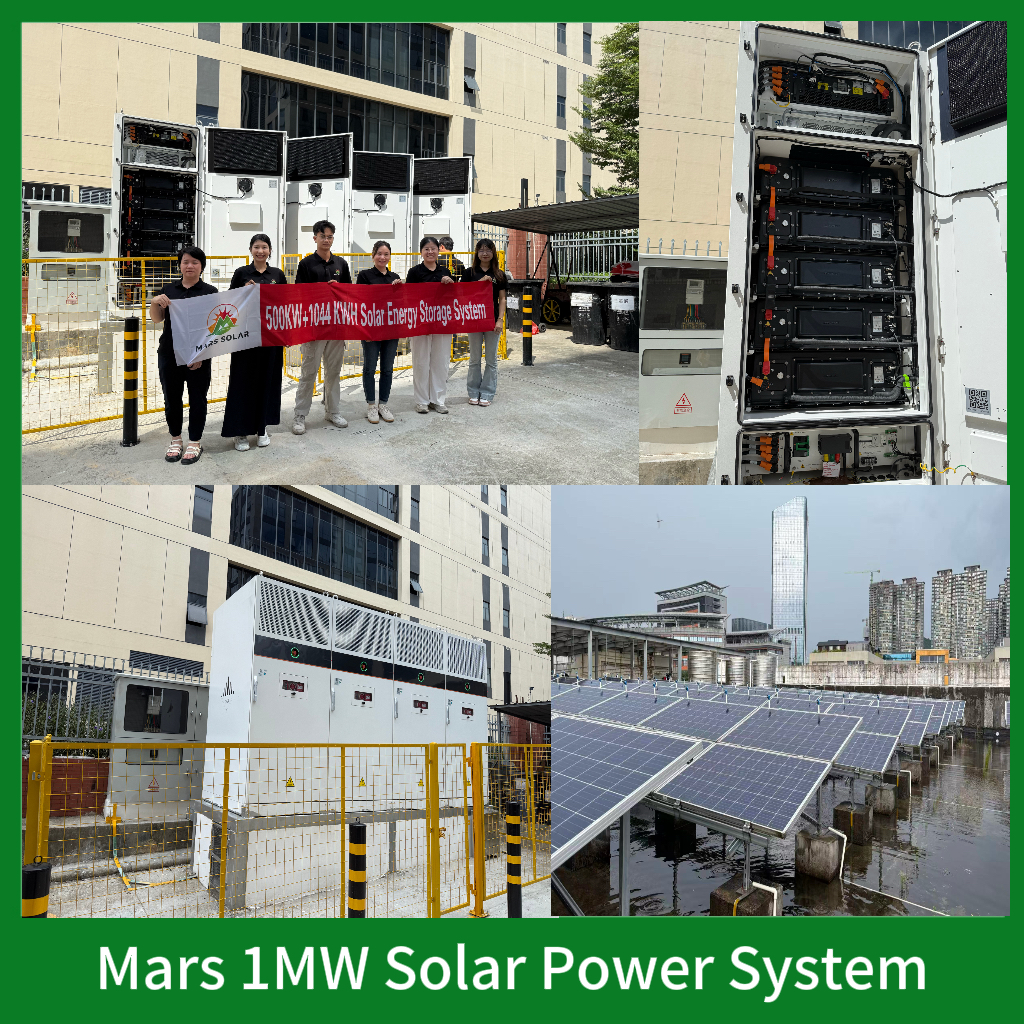
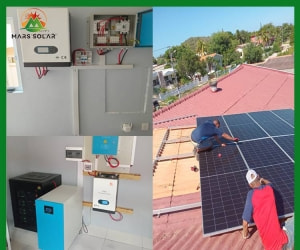
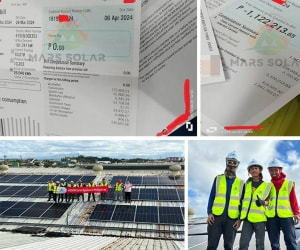
Mars Solar 100KW Solar System for Nigerian Hotel — Real Savings, Real Data
Quick answer: A 10KW solar system of this configuration produces about 62KWH per day from 28x360W monocrystalline panels and driven by a 10KW/14.3KVA inverter. Built by Mars Solar (factory since 2008), CE/ROHS certified, 25-year panel life, shipped factory-direct to 130+ countries.
Mars Solar 100KW Solar System for Nigerian Hotel
Real Savings, Real Data
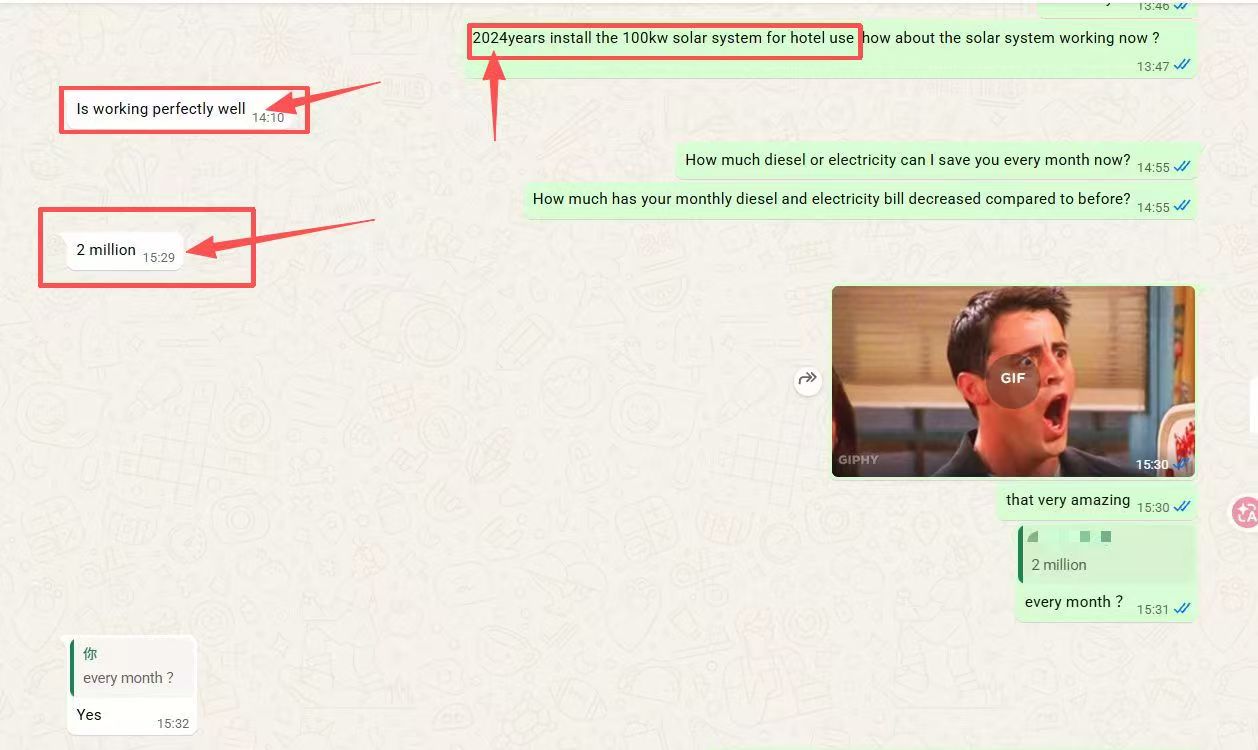
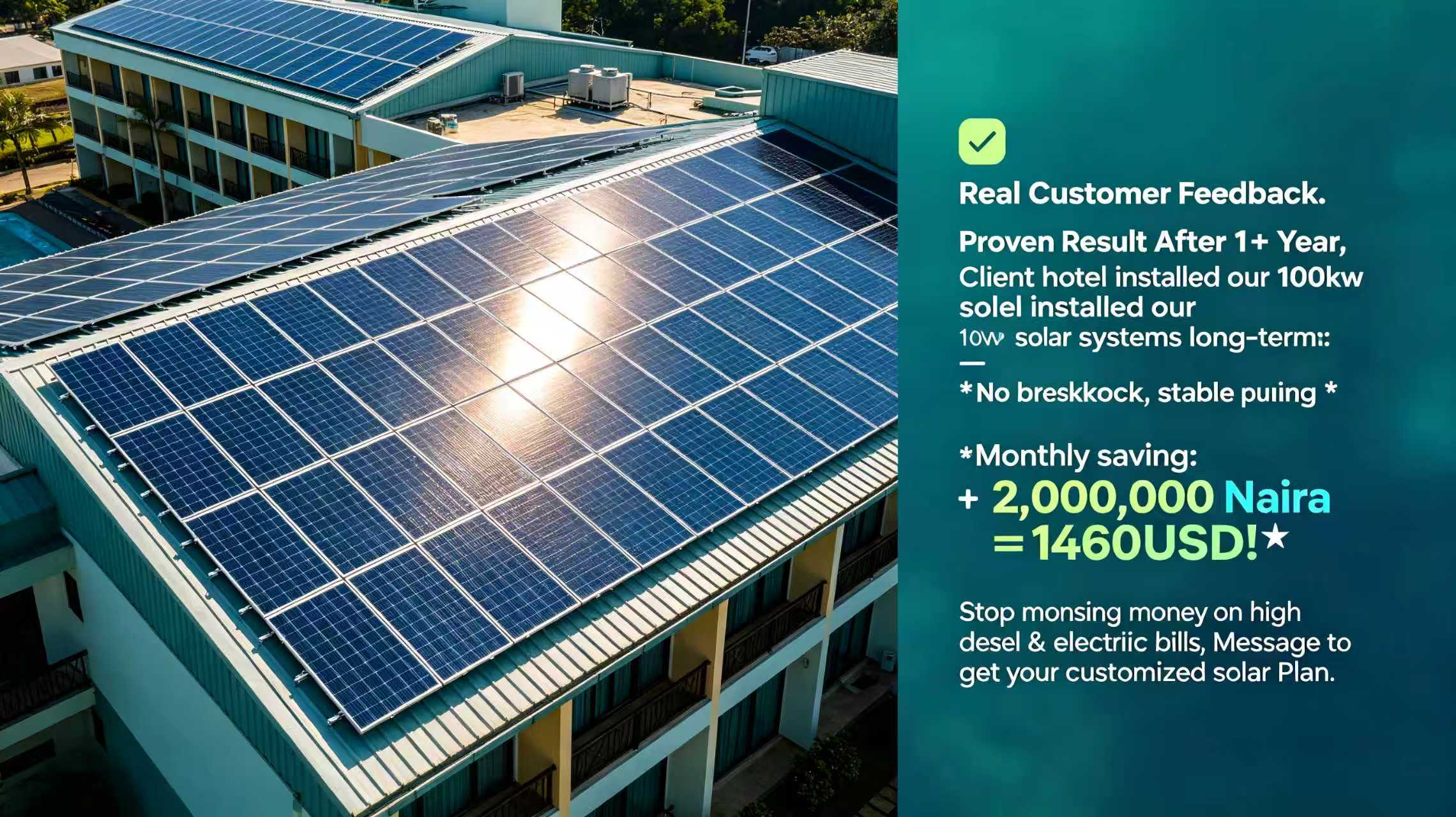
Running 12+ months with zero breakdowns | Monthly savings: ₦2,000,000 (~$1,460 USD)
Why Hotels in Nigeria Are Switching to Solar
Nigeria’s electricity supply remains unreliable — hotels depend on diesel generators running 18+ hours daily. Diesel costs ₦1,200–1,500/litre and keep rising. A 100-room hotel can spend ₦3–5 million monthly on diesel alone.
Solar eliminates that cost permanently.
Case Study: 100KW Mars Solar Hotel Installation — Nigeria (2024)
|
Metric |
Before Solar |
After Solar |
Difference |
|
Monthly energy cost |
₦3,000,000+ (diesel + grid) |
₦1,000,000 (grid supplement) |
₦2,000,000 saved |
|
Power reliability |
3–5 outages/day |
Zero outages |
100% uptime |
|
System runtime |
— |
12+ months |
Zero breakdowns |
|
Monthly USD savings |
— |
~$1,460 |
— |
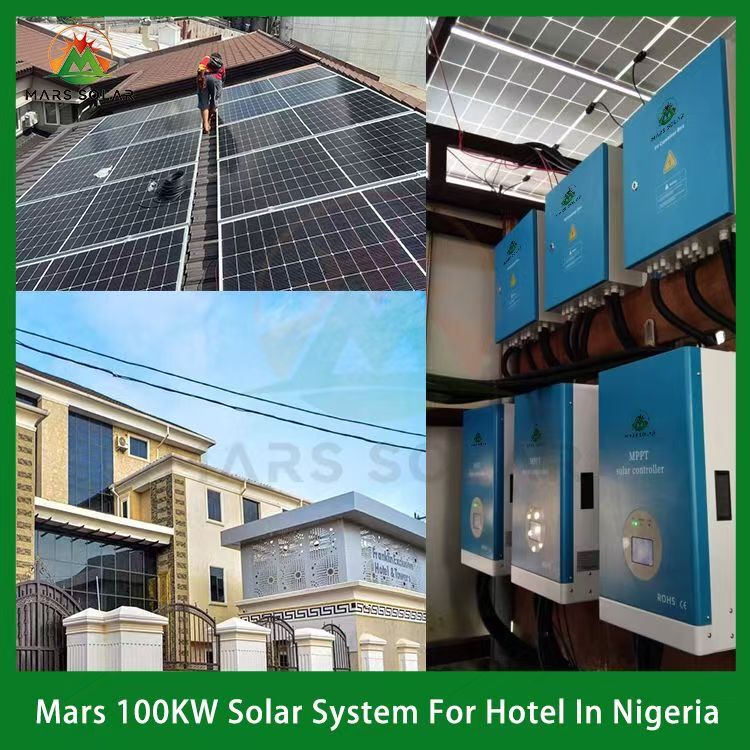
Customer feedback (June 2026):
“Is working perfectly well. No breakdown since installation.”
What Makes This System Work
- 100KW capacity — sized to cover 70–80% of hotel peak load, grid used only as backup
- Mars Solar hybrid inverter — seamless switch between solar/grid/battery
- Lithium battery bank — covers evening/night demand without diesel
- Professional installation — local Mars Solar engineering team in Nigeria
Solar vs Diesel: 5-Year Cost Comparison for Hotels
|
Item |
Diesel Generator (5yr) |
Mars Solar 100KW (5yr) |
|
Capital cost |
₦5–8M (generator purchase) |
₦15–20M (solar system) |
|
Running cost / month |
₦3–5M (fuel + maintenance) |
₦0 (free sunlight) |
|
5-year total |
₦180–300M |
₦15–20M (one-time) |
|
5-year net savings |
— |
₦160–280M |
|
Break-even point |
— |
8–12 months |
How to Choose a Solar System for Your Hotel in Nigeria
- Calculate peak load — Most 50–150 room hotels need 50–200KW
- Hybrid > pure off-grid — Keep grid connection for backup; solar handles 70–80% of load
- Battery sizing matters — Night-time demand determines battery bank size
- Choose proven brands — Mars Solar has 5+ years of Nigerian installations
- Local support is critical — Diesel mechanics are everywhere; solar technicians must be too
FAQ — Frequently Asked Questions About Solar for Hotels in Nigeria
Q: How much can a hotel save with solar power in Nigeria?
A: A typical Nigerian hotel running diesel generators saves ₦2–5 million per month after installing solar. The 100KW Mars Solar hotel installation documented here saves ₦2,000,000 (~$1,460) monthly — verified over 12+ months of operation.
Q: What size solar system does a hotel need in Nigeria?
A: A 50-room hotel typically needs 50–80KW; a 100-room hotel needs 100–150KW. Mars Solar sizes systems based on actual peak load data, not estimates.
Q: Is solar power reliable enough for a hotel that needs 24/7 power?
A: Yes — when designed as a hybrid system with battery storage. The hotel in this case study has had zero power interruptions and zero equipment breakdowns for over 12 months.
Q: How long does it take for a hotel solar system to pay back in Nigeria?
A: Most Mars Solar hotel installations reach payback in 8–12 months. After that, power is essentially free for the 25+ year system lifespan.
Q: Can solar fully replace diesel generators for Nigerian hotels?
A: Solar + battery can replace 80–95% of diesel usage. A small generator may still be needed for rare extended cloudy periods, but fuel consumption drops to near zero.
-
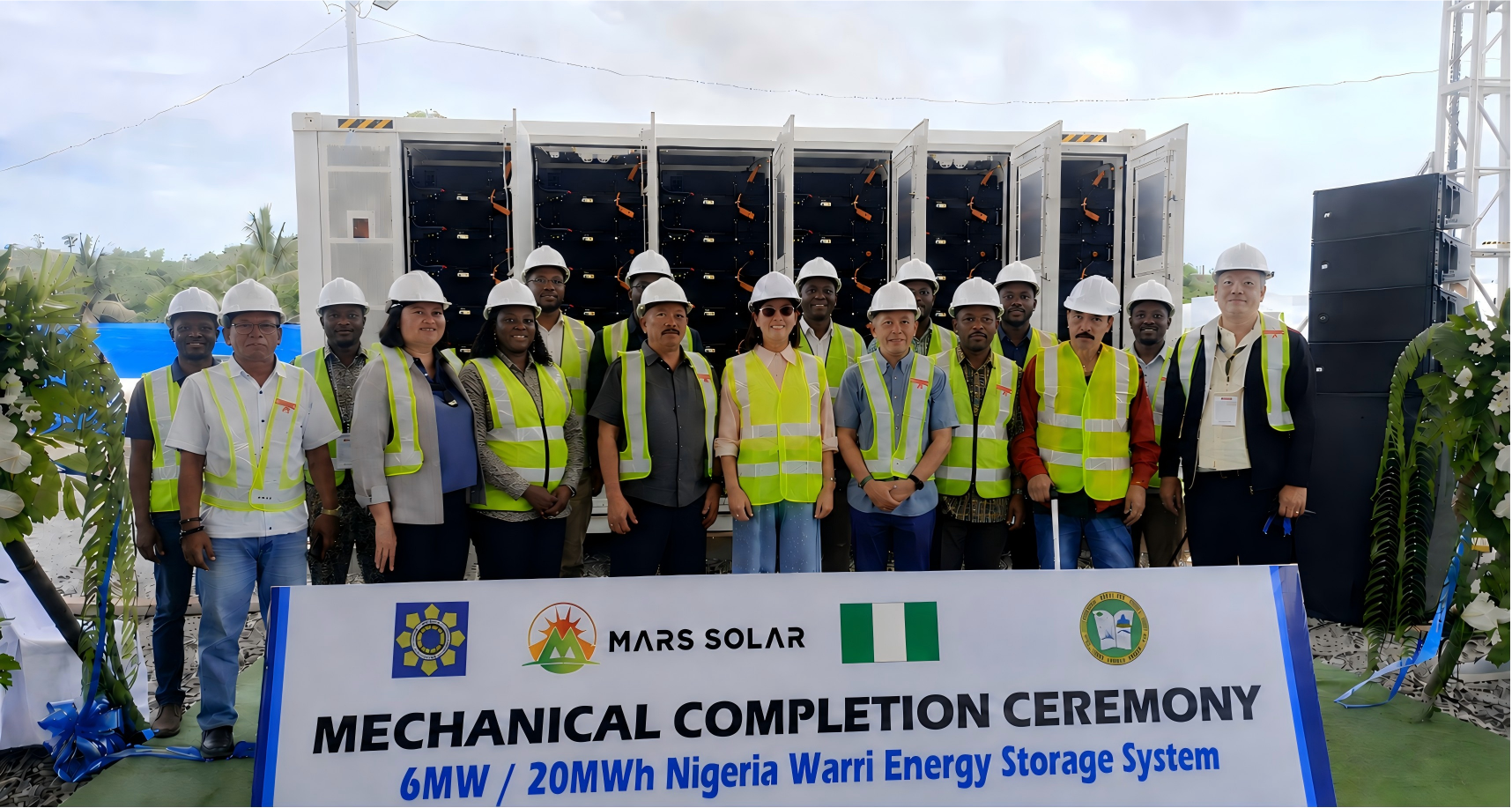 6MW 20MWh Solar Storage in Nigeria Factory + Farm + Residential Case StudyA 6MW solar PV + 20MWh LFP battery storage system in Nigeria powers an integrated factory, farm, and residential complex. The system delivers $108,000+ in monthly electricity savings, reaches payback in approximately 24 months, and provides 25 years of renewable power. This case study covers the engineering configuration, financial model, and operational performance of one of West Africa's most ambitious factory + farm + residential solar deployments.
Do you like ?0
Read more -
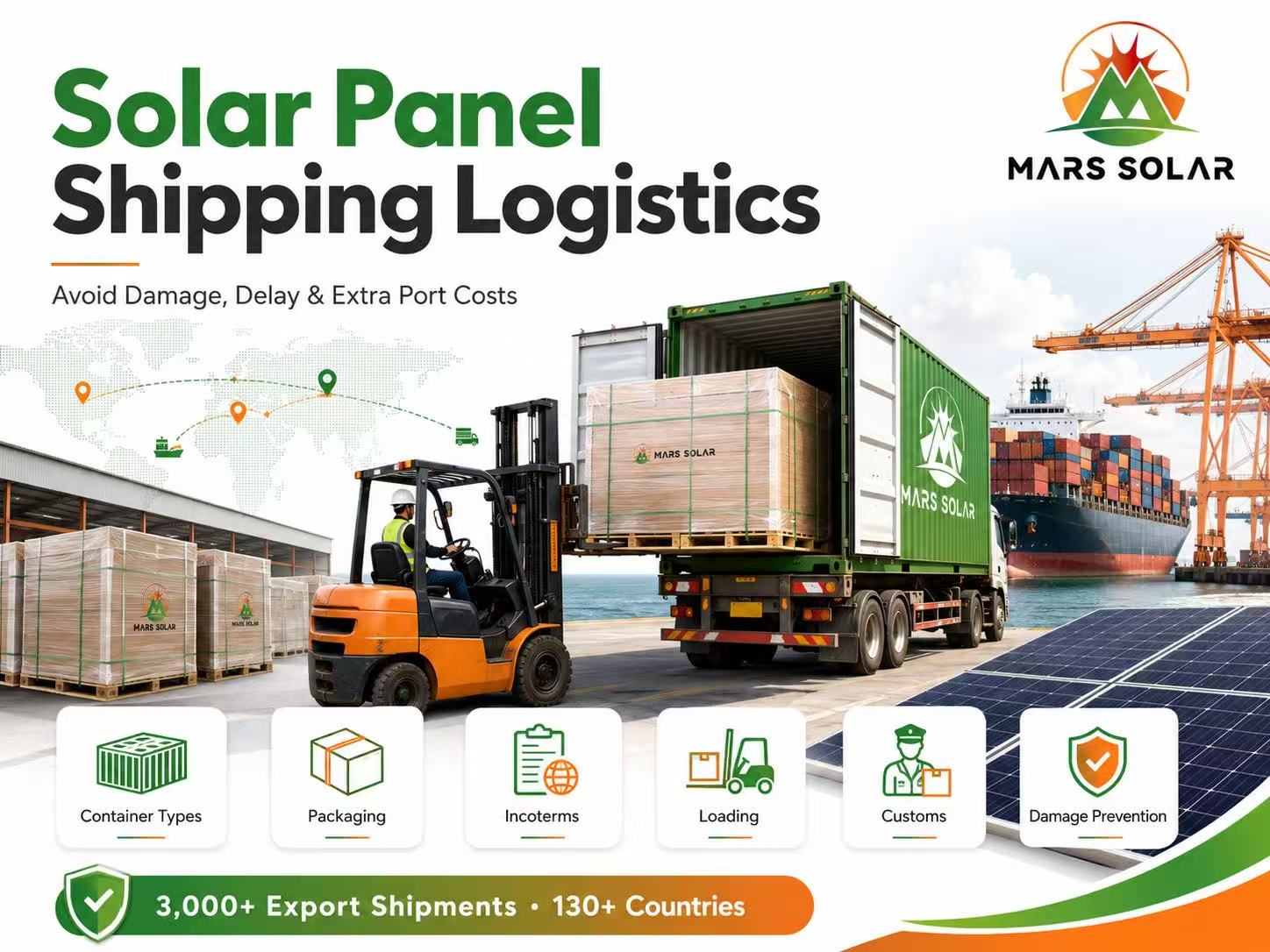 Solar Panel Shipping & Container Loading: The 2026 Complete GuideThe solar panels leaving the factory are perfect. By the time they arrive at your warehouse, 3–7% might be damaged, delivery could be 2 weeks late, and demurrage at the destination port could wipe out your margin. This 2026 guide covers container types (2
Do you like ?0
Read more -
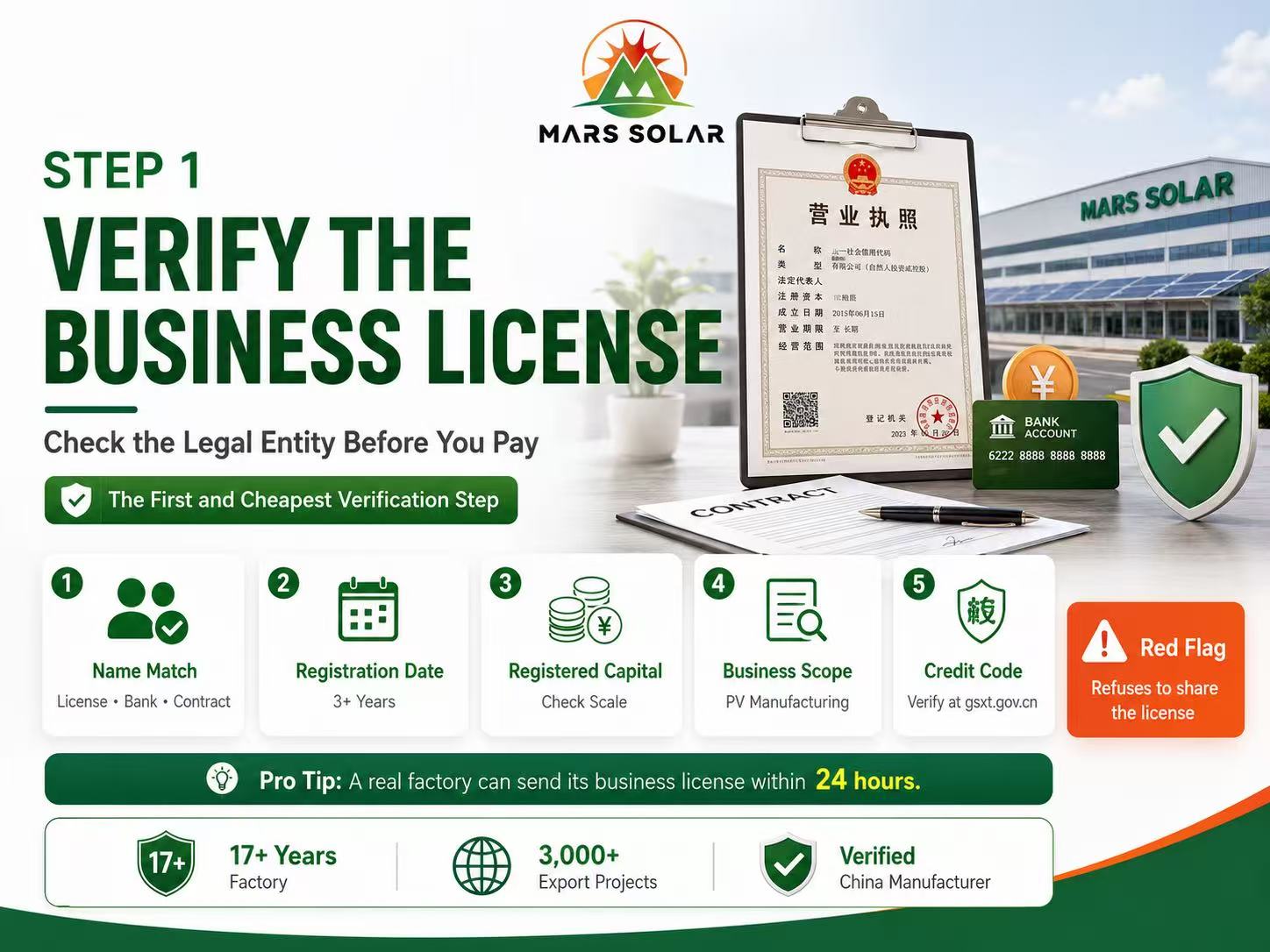 Solar Panel Factory Verification: The 7-Step Due Diligence GuideEvery year, international solar buyers lose millions to fraudulent suppliers — fake certificates, empty factories, and panels that don't match spec. This 7-step verification guide shows you exactly how to qualify any China solar factory before you wire mo
Do you like ?0
Read more -
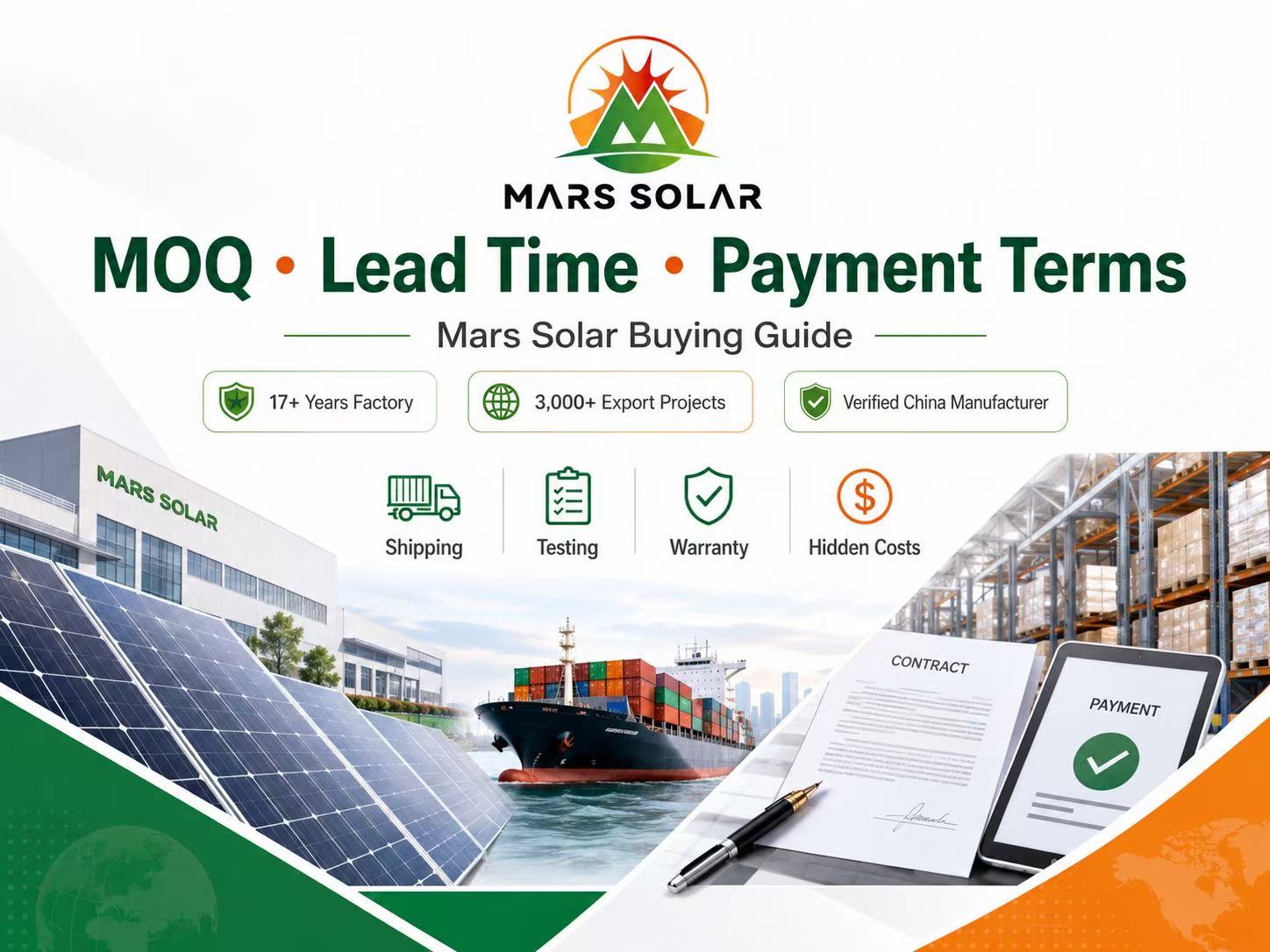 Solar Panel MOQ, Lead Time & Payment Terms: The Complete 2026 Buyer's GuideMOQ, lead time, and payment terms are the 3 questions every solar buyer asks — and the 3 answers most suppliers hide behind vague emails. This guide gives you complete, honest answers from a verified China factory with 17+ years and 3,000+ export projects
Do you like ?0
Read more -
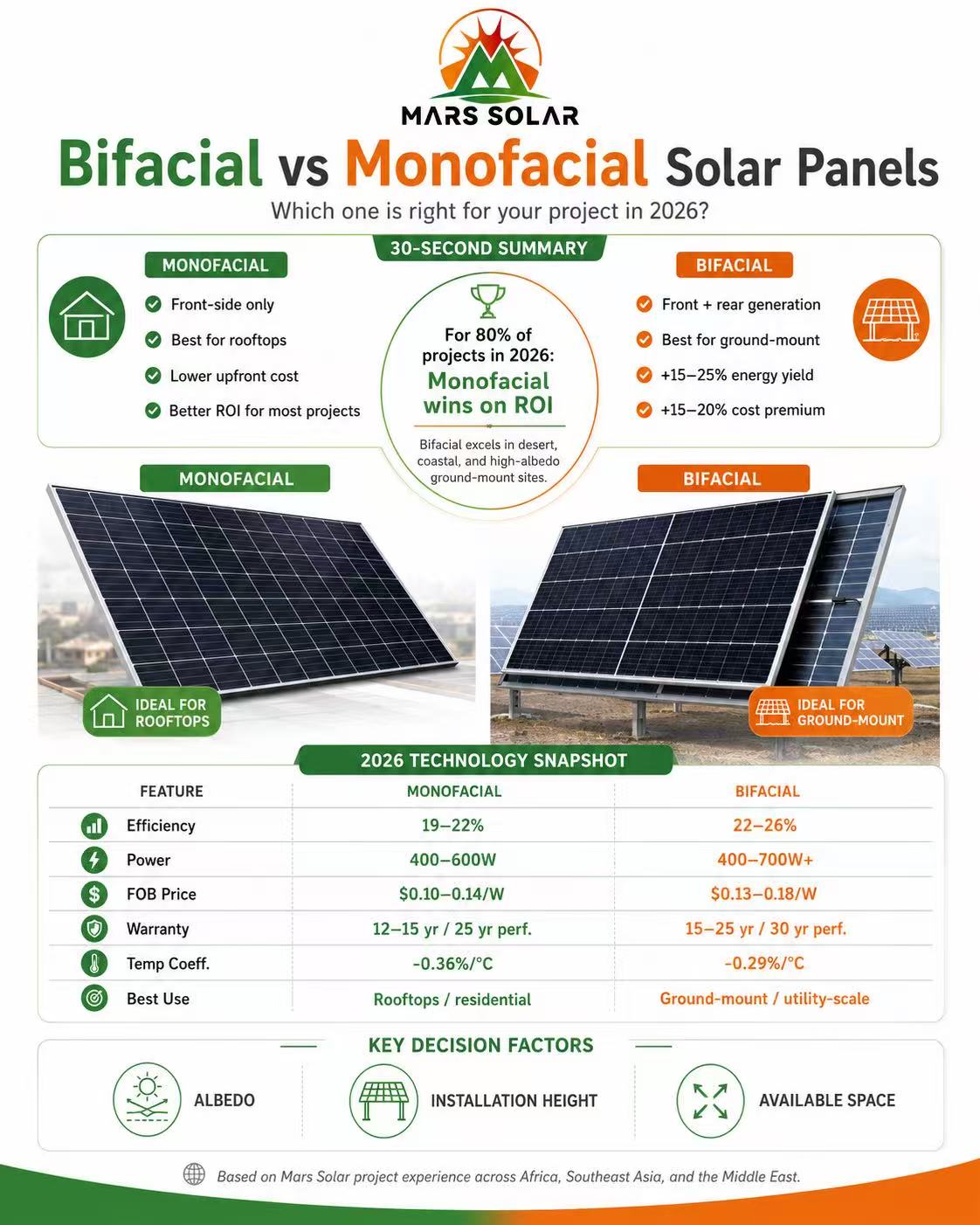 Solar Panel Selection Guide: Monofacial vs. Bifacial — 2026 EditionMonofacial and bifacial solar panels look identical but deliver 15-25% output difference. This 2026 guide compares 15 technical parameters, analyzes 5 real project ROI cases (Nigeria, Philippines, Ghana, Kenya, DRC), and gives you 3 decision frameworks to
Do you like ?0
Read more -
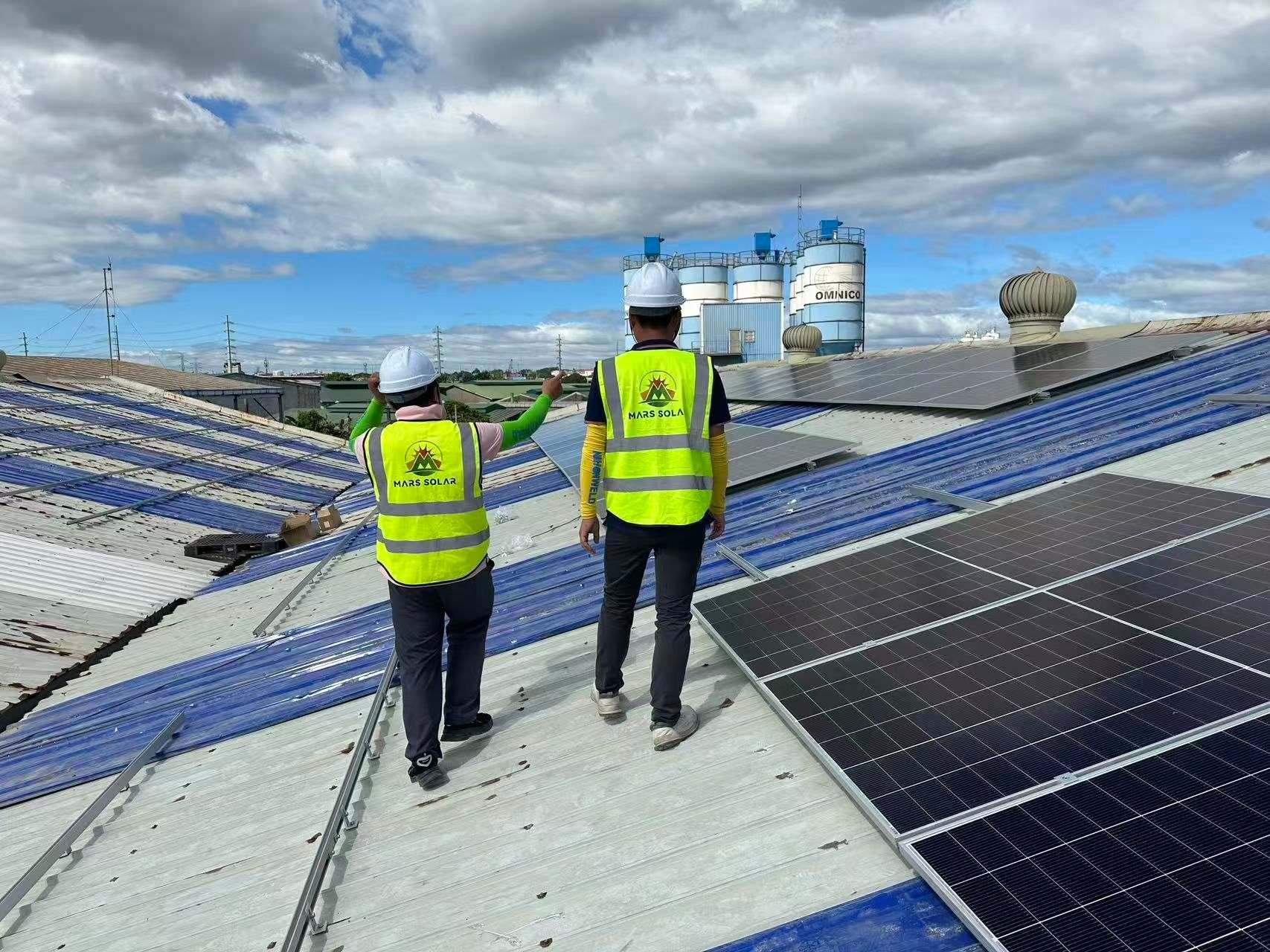 Top 10 Solar Panel Manufacturers China 2026 | Best BrandsDiscover the top 10 solar panel manufacturers China 2026. Compare Jinko, LONGi, Trina & more. Find Tier 1 suppliers.
Do you like ?0
Read more