Quick answer: A 8KW solar system of this configuration produces about 50.4KWH per day from 24x350W monocrystalline panels and driven by a 8KW/11.4KVA inverter. Built by Mars Solar (factory since 2008), CE/ROHS certified, 25-year panel life, shipped factory-direct to 130+ countries.
Turkey was considered the most promising photovoltaic market in Europe two years ago, but the recession of the Turkish economy, the change in the photovoltaic policy pattern and the unsuccessful YEKA bidding have all destroyed the country ’s solar power plant development. Analysts said that if the new net measurement rules released in May 2020 will make solar energy attractive to businesses and households, then Turkey's rooftop photovoltaics will usher in vigorous development.
According to the report of the Institute of Energy Economics and Financial Analysis (IEEFA), under the existing net metering system, the average payback period for rooftop photovoltaic power generation in Turkey is 16 years, but the new net metering policy will reduce the payback period for rooftop arrays by 11 years . According to the proposed reform measures: the elimination of 18% of equipment VAT, the elimination of fixed fees, loan subsidies, and the matching US $ 0.14 / kWh feed-in tariff will reduce the payback period of systems installed in 2020 to less than 7 years .
It is reported that from the beginning of the currency collapse to the end of last year, Turkey's continued economic crisis led to a rapid increase in electricity prices month by month, with a cumulative increase of 61% in electricity prices. The Turkish Energy Market Regulatory Authority (EPDK) has announced that it will freeze further electricity price increases. Due to stagnant wages, if the economic benefits of the new net metering rules power subsidies are sufficient to attract consumers, then the prospects for rooftop photovoltaic installations in Turkey are bright.
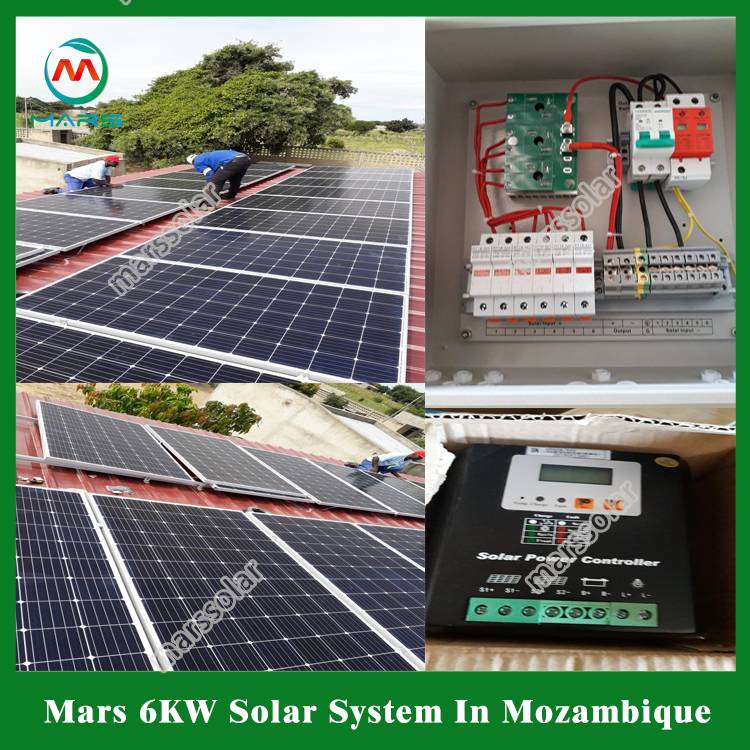
In addition, the government enacted energy storage regulations in April 2019, which are expected to take effect this year. Combining battery storage with rooftop solar energy allows households and businesses to meet more energy needs through on-site power generation. This is particularly important in Turkey, because Turkey ’s peak energy demand electricity price (between 5 and 10 pm) is 90% higher than during the day, giving consumers the opportunity to use their energy reserves during expensive peak hours and save more Electricity expenses.
-
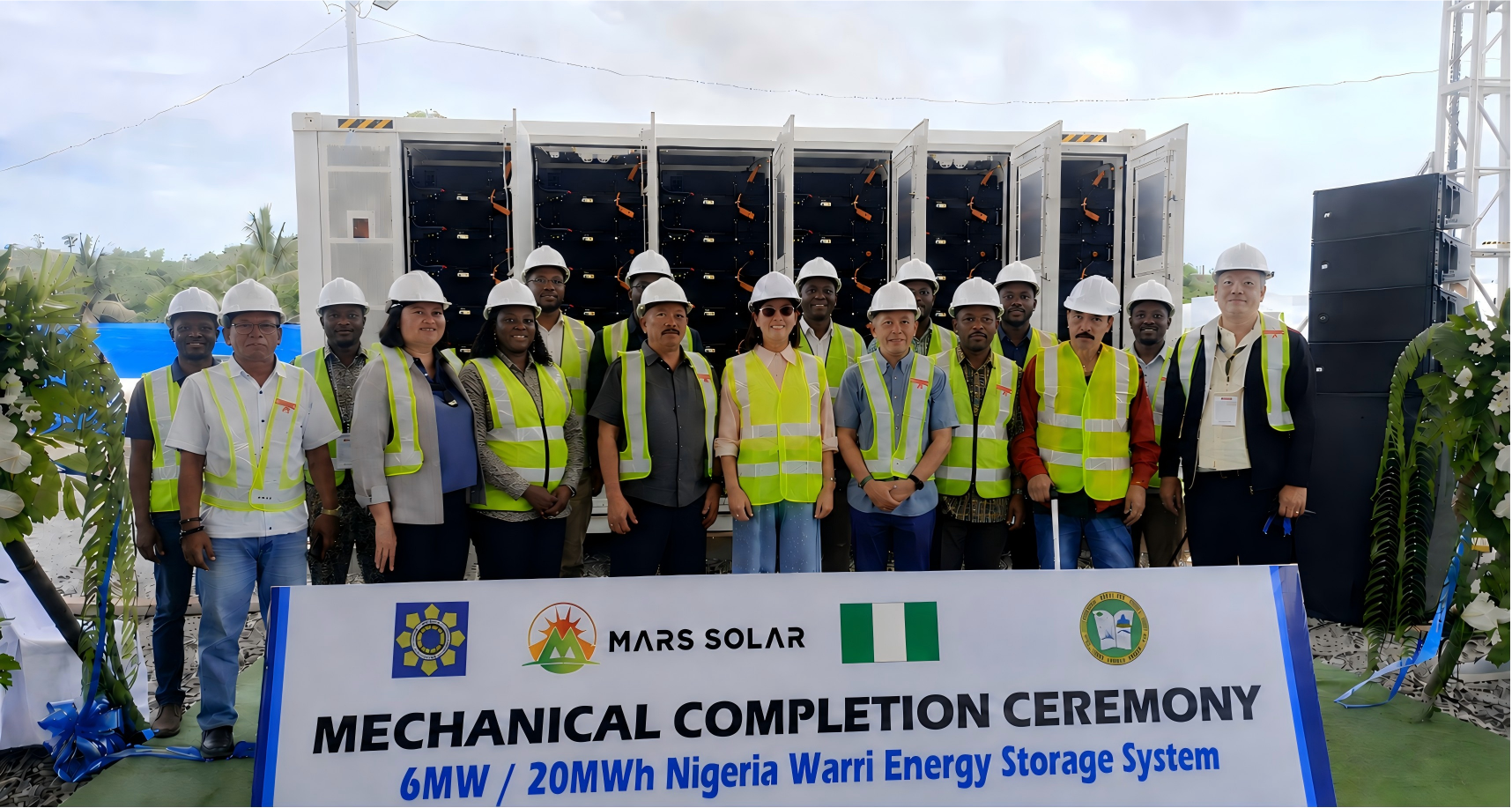 6MW 20MWh Solar Storage in Nigeria Factory + Farm + Residential Case StudyA 6MW solar PV + 20MWh LFP battery storage system in Nigeria powers an integrated factory, farm, and residential complex. The system delivers $108,000+ in monthly electricity savings, reaches payback in approximately 24 months, and provides 25 years of renewable power. This case study covers the engineering configuration, financial model, and operational performance of one of West Africa's most ambitious factory + farm + residential solar deployments.
Do you like ?0
Read more -
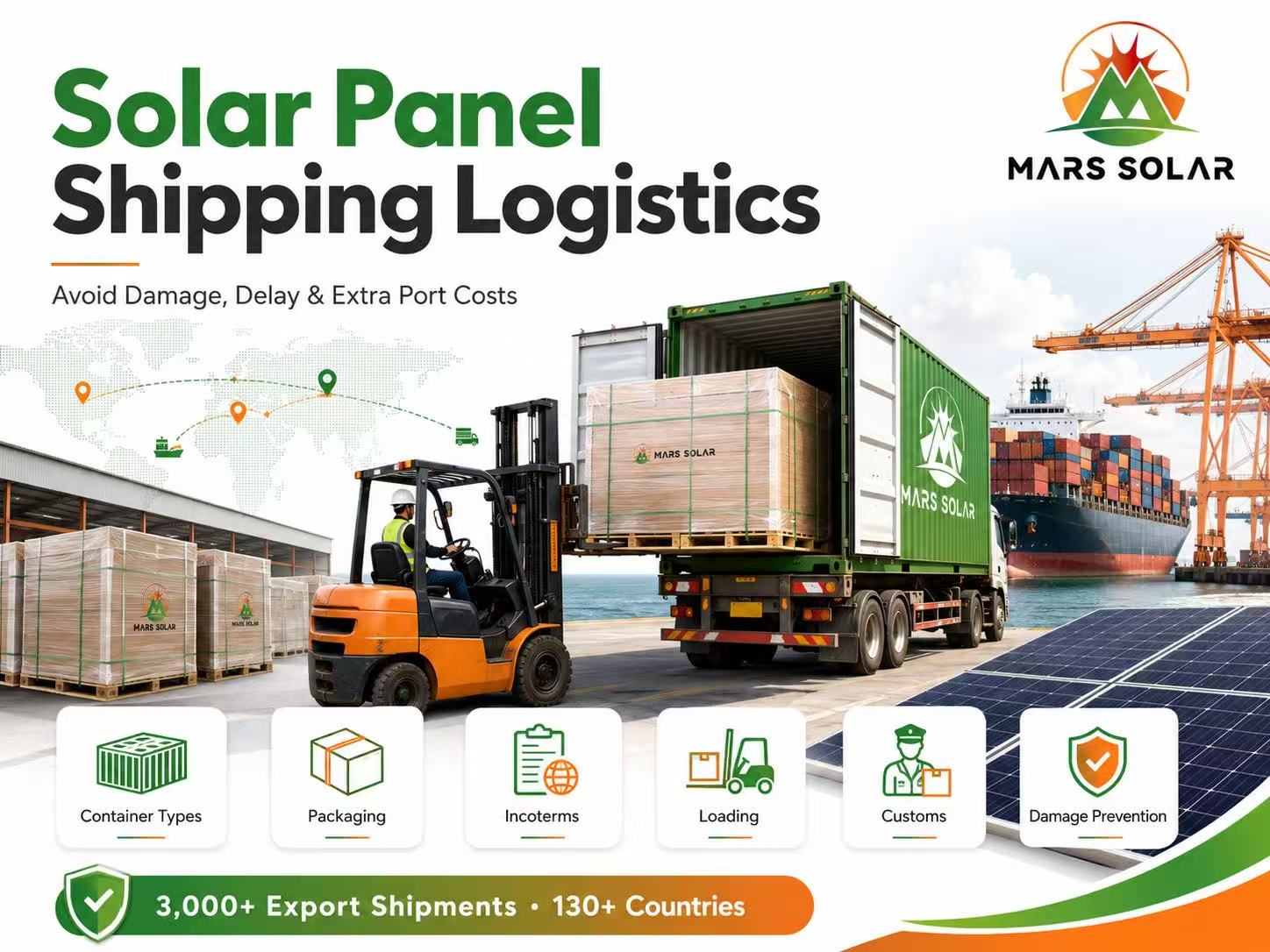 Solar Panel Shipping & Container Loading: The 2026 Complete GuideThe solar panels leaving the factory are perfect. By the time they arrive at your warehouse, 3–7% might be damaged, delivery could be 2 weeks late, and demurrage at the destination port could wipe out your margin. This 2026 guide covers container types (2
Do you like ?0
Read more -
 Solar Panel Factory Verification: The 7-Step Due Diligence GuideEvery year, international solar buyers lose millions to fraudulent suppliers — fake certificates, empty factories, and panels that don't match spec. This 7-step verification guide shows you exactly how to qualify any China solar factory before you wire mo
Do you like ?0
Read more -
 Solar Panel MOQ, Lead Time & Payment Terms: The Complete 2026 Buyer's GuideMOQ, lead time, and payment terms are the 3 questions every solar buyer asks — and the 3 answers most suppliers hide behind vague emails. This guide gives you complete, honest answers from a verified China factory with 17+ years and 3,000+ export projects
Do you like ?0
Read more -
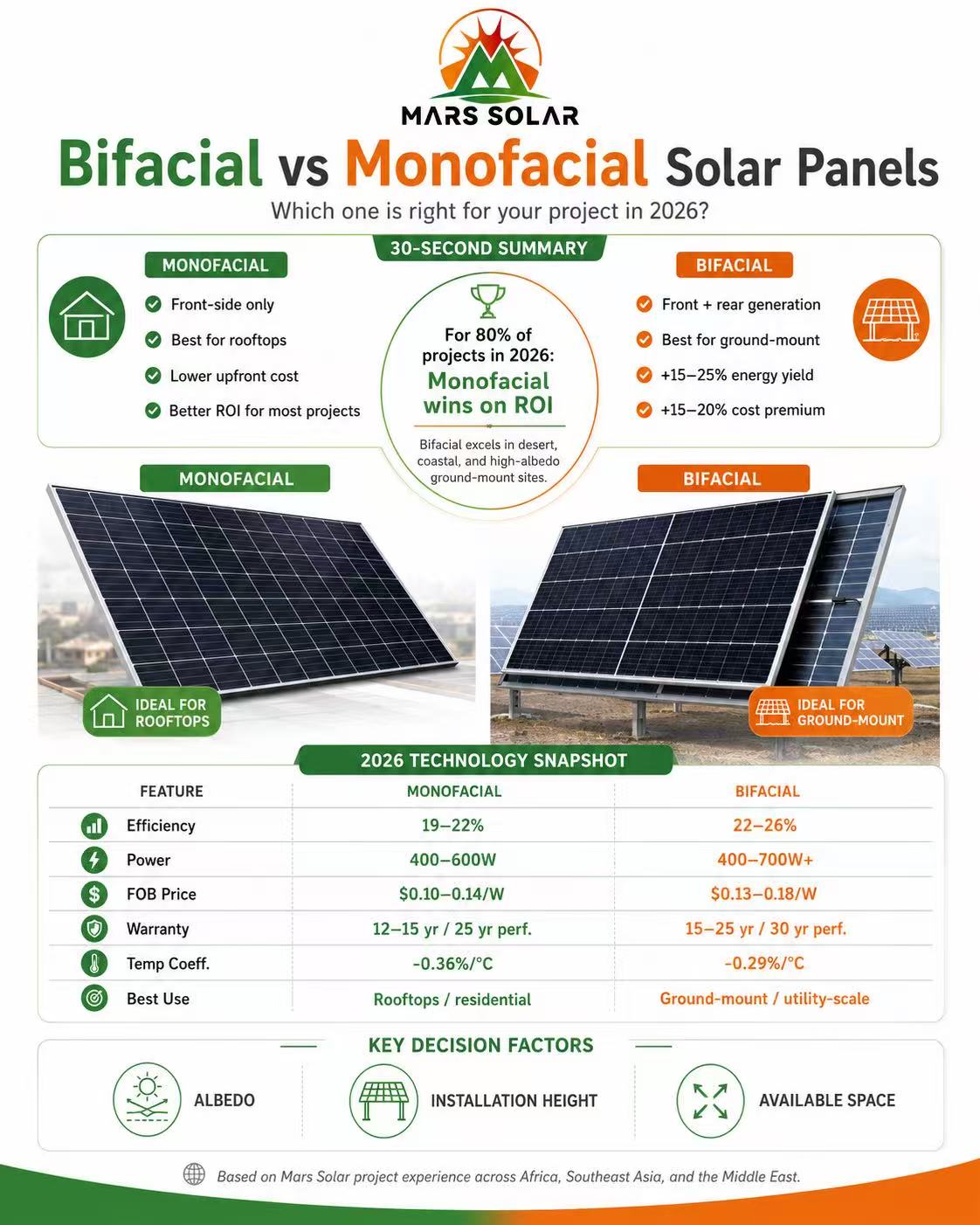 Solar Panel Selection Guide: Monofacial vs. Bifacial — 2026 EditionMonofacial and bifacial solar panels look identical but deliver 15-25% output difference. This 2026 guide compares 15 technical parameters, analyzes 5 real project ROI cases (Nigeria, Philippines, Ghana, Kenya, DRC), and gives you 3 decision frameworks to
Do you like ?0
Read more -
 Top 10 Solar Panel Manufacturers China 2026 | Best BrandsDiscover the top 10 solar panel manufacturers China 2026. Compare Jinko, LONGi, Trina & more. Find Tier 1 suppliers.
Do you like ?0
Read more