Quick answer: A 8KW solar system of this configuration produces about 50.4KWH per day from 24x350W monocrystalline panels and driven by a 8KW/11.4KVA inverter. Built by Mars Solar (factory since 2008), CE/ROHS certified, 25-year panel life, shipped factory-direct to 130+ countries.
As a major hydropower country, Brazil's hydropower installed capacity accounts for nearly 80% of the total renewable energy power installed capacity so far. With the rapid economic growth and the impact of the drought this year, Brazil's energy supply has tightened, and both coal and natural gas need to be imported in large quantities. In this context, wind power and Solar Home Electricity have become the best options for Brazil to reduce its dependence on fossil energy.
Inspired by the mid- to long-term emission reduction targets and the continuous improvement of renewable energy competitiveness, Brazil has had a strong willingness to develop renewable energy in recent years. A few days ago, Brazilian energy regulatory agency Aneel approved a new regulation for multi-energy complementary power stations, hoping to promote the development of renewable energy represented by wind power and photovoltaic power through continuous improvement of relevant laws and regulatory systems.
New regulations promote clean energy development
It is reported that the new bill released by Brazil first defines the range of energy types for multi-energy complementary power stations, clearly supports power stations with wind power and photovoltaic power generation as the main energy type, and allows the addition of hydropower and thermal power plants to encourage the synergy of different energy combinations Development has prompted Brazil to make better use of renewable energy.
In addition, the new bill also promulgated the electricity price setting mechanism for such power stations, grid access thresholds, rules for signing electricity sales contracts, network fees, and related preferential tax policies.
It is understood that as early as 2017, Brazilian public utilities began the exploration of multi-energy complementary power stations. Since then, some small demonstration projects have been put into operation. And just before Aneel approved the new bill, a batch of multi-energy complementary power plants based on wind power and photovoltaic power generation were still under construction.
Aneel pointed out that investing in the construction of multi-energy complementary power stations can coordinate the planning of wind power, photovoltaic and other renewable energy power stations, effectively solving the problem of excessively large area of power stations due to decentralization and other reasons, saving land and other non-technical costs, and also saving power transmission. The construction cost of the network reduces the risk of power plant operators.
Elisa Bastos, head of Aneel, said: “The promulgation of the new bill can be seen as a milestone in the development of Brazil’s multi-energy complementary power stations. It provides a theoretical framework for the industry and ensures that investors, constructors, and operators have a clear understanding and strategy. Significance. Multi-energy complementary power stations integrate different types of energy, which can reduce grid-related investments and increase the diversity of renewable energy technologies."
-
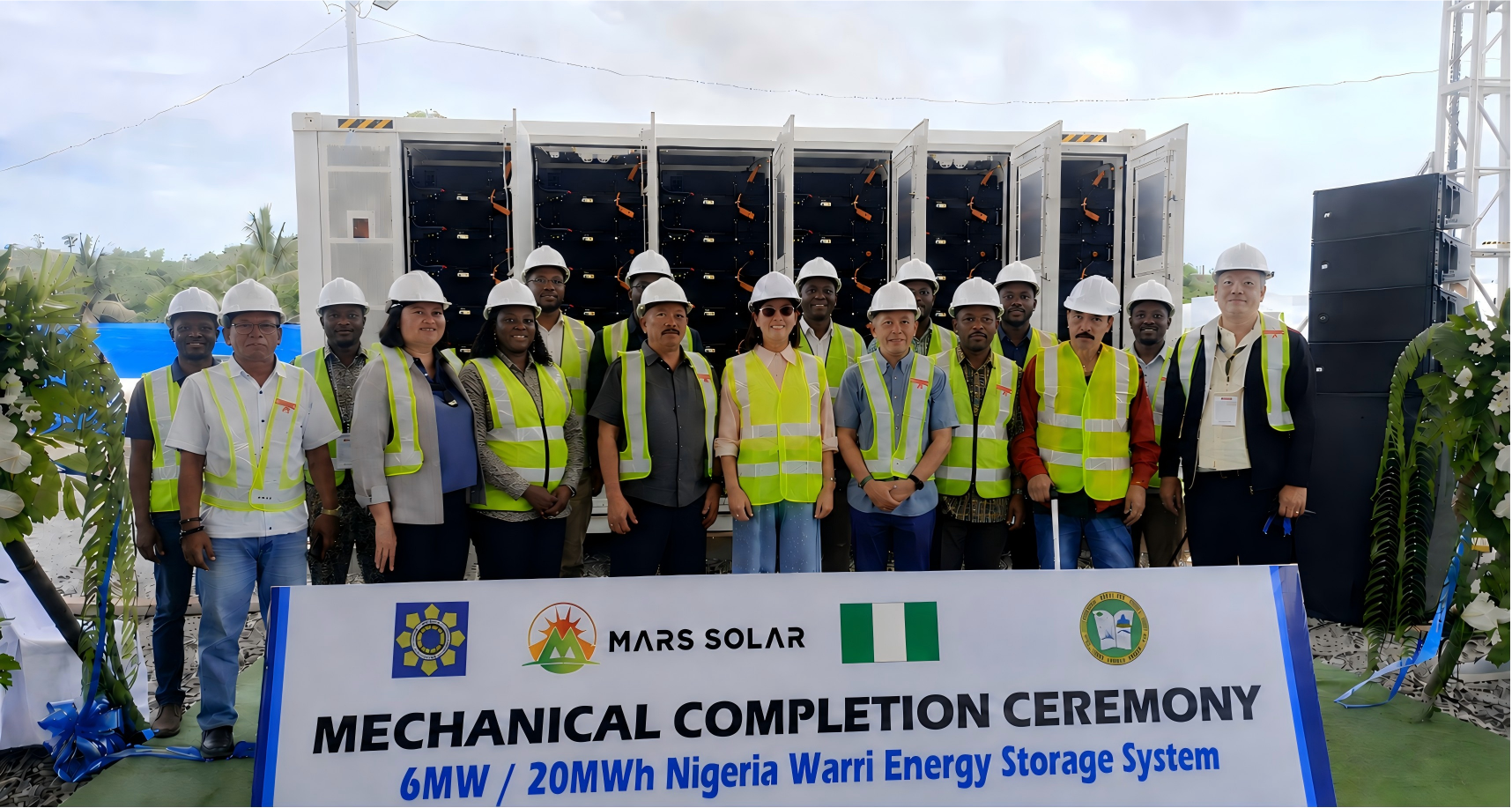 6MW 20MWh Solar Storage in Nigeria Factory + Farm + Residential Case StudyA 6MW solar PV + 20MWh LFP battery storage system in Nigeria powers an integrated factory, farm, and residential complex. The system delivers $108,000+ in monthly electricity savings, reaches payback in approximately 24 months, and provides 25 years of renewable power. This case study covers the engineering configuration, financial model, and operational performance of one of West Africa's most ambitious factory + farm + residential solar deployments.
Do you like ?0
Read more -
 Solar Panel Shipping & Container Loading: The 2026 Complete GuideThe solar panels leaving the factory are perfect. By the time they arrive at your warehouse, 3–7% might be damaged, delivery could be 2 weeks late, and demurrage at the destination port could wipe out your margin. This 2026 guide covers container types (2
Do you like ?0
Read more -
 Solar Panel Factory Verification: The 7-Step Due Diligence GuideEvery year, international solar buyers lose millions to fraudulent suppliers — fake certificates, empty factories, and panels that don't match spec. This 7-step verification guide shows you exactly how to qualify any China solar factory before you wire mo
Do you like ?0
Read more -
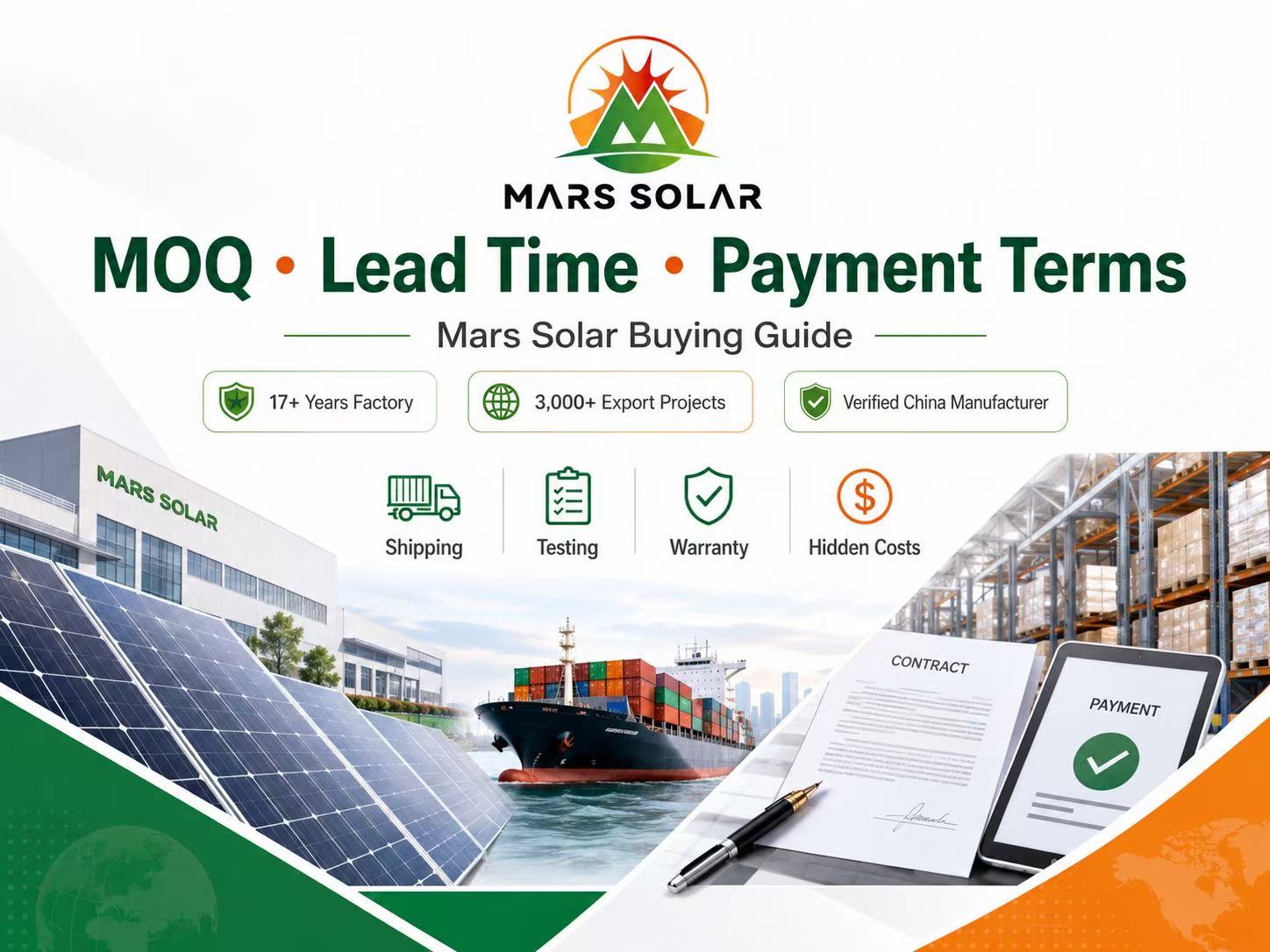 Solar Panel MOQ, Lead Time & Payment Terms: The Complete 2026 Buyer's GuideMOQ, lead time, and payment terms are the 3 questions every solar buyer asks — and the 3 answers most suppliers hide behind vague emails. This guide gives you complete, honest answers from a verified China factory with 17+ years and 3,000+ export projects
Do you like ?0
Read more -
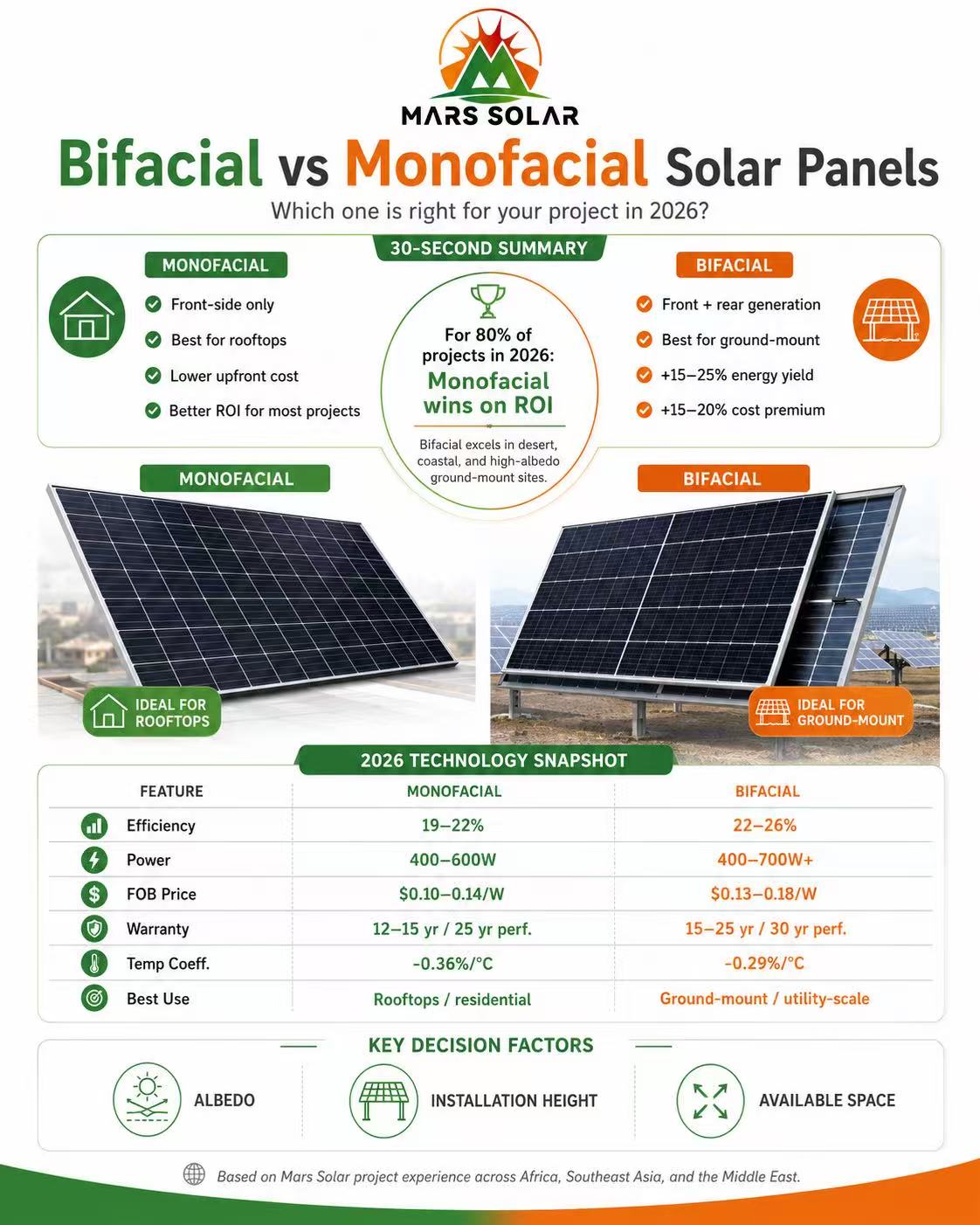 Solar Panel Selection Guide: Monofacial vs. Bifacial — 2026 EditionMonofacial and bifacial solar panels look identical but deliver 15-25% output difference. This 2026 guide compares 15 technical parameters, analyzes 5 real project ROI cases (Nigeria, Philippines, Ghana, Kenya, DRC), and gives you 3 decision frameworks to
Do you like ?0
Read more -
 Top 10 Solar Panel Manufacturers China 2026 | Best BrandsDiscover the top 10 solar panel manufacturers China 2026. Compare Jinko, LONGi, Trina & more. Find Tier 1 suppliers.
Do you like ?0
Read more