On-Grid vs Off-Grid Solar Power Systems: A B2B Decision Guide for 2026
Quick answer: A 10KW solar system of this configuration produces about 62KWH per day from 28x360W monocrystalline panels and driven by a 10KW/14.3KVA inverter. Built by Mars Solar (factory since 2008), CE/ROHS certified, 25-year panel life, shipped factory-direct to 130+ countries.
On-Grid vs Off-Grid Solar Power Systems
A B2B Decision Guide for Commercial & Industrial Buyers in Emerging Markets
By Mars Solar Technical Content Team | June 2026
1. Introduction
For B2B buyers evaluating solar power systems, one of the first and most consequential decisions is whether to go on-grid or off-grid. This choice shapes system design, CAPEX, operational complexity, and long-term energy strategy.
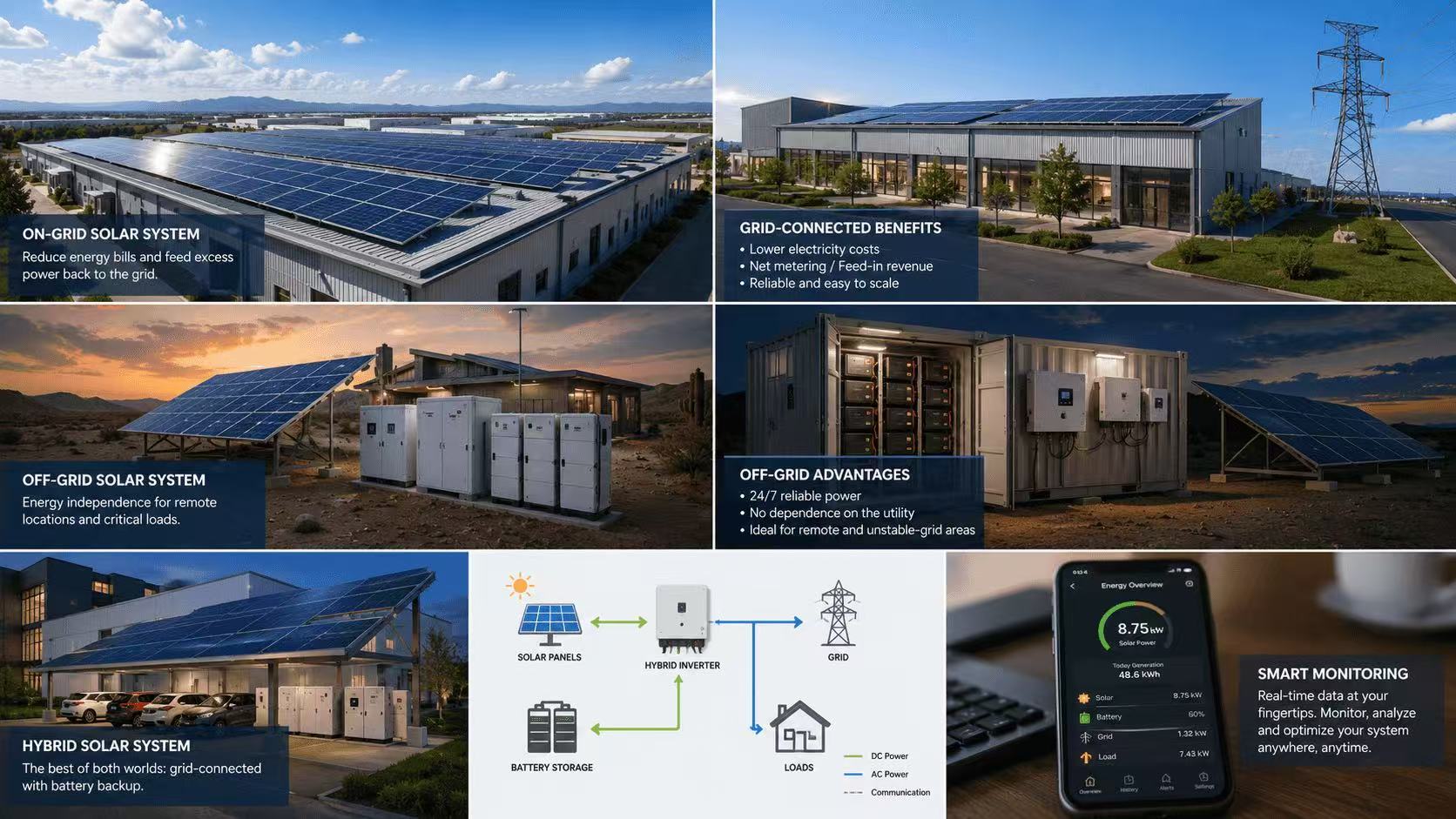
On-grid (grid-tied) systems remain connected to the utility and can export surplus power. Off-grid systems operate independently, typically paired with battery storage for energy autonomy.
This guide provides a structured comparison across 10 decision dimensions, with specific data points relevant to commercial and industrial (C&I) buyers in markets such as Africa, Southeast Asia, and the Middle East — the core markets Mars Solar serves.
2. Side-by-Side System Comparison
|
Dimension |
On-Grid Solar |
Off-Grid Solar |
|
Grid Dependency |
Tied to grid; no power during outages (without storage) |
Fully independent; works during grid failures |
|
Battery Required |
Optional (for backup only) |
Mandatory for overnight/autonomy |
|
Initial CAPEX |
Lower (no battery bank) |
Higher (battery 30-50% of system cost) |
|
Payback Period |
3-7 years (exports + savings) |
5-10 years (savings only) |
|
System Complexity |
Moderate |
High (storage management) |
|
Scalability |
Easy to expand |
Requires battery bank redesign |
|
Best For |
Stable-grid areas; demand reduction |
Remote sites; unreliable grid; critical loads |
|
Grid Export |
Yes — revenue opportunity |
No (off-grid) |
|
Maintenance |
Lower (fewer components) |
Higher (battery monitoring required) |
|
Carbon Impact |
High (full grid displacement) |
High (full diesel displacement) |
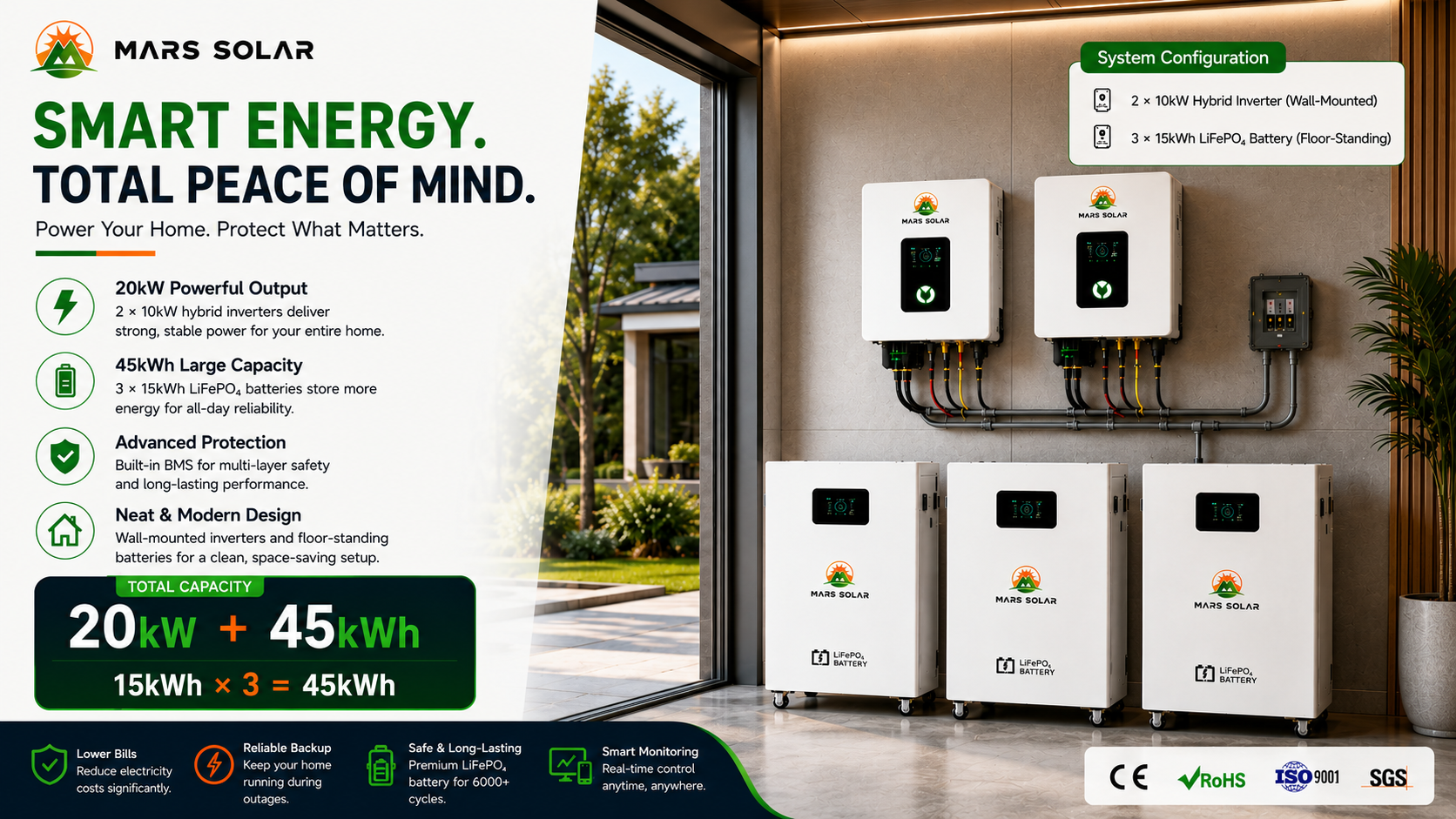
3. Detailed Decision Breakdown
3.1 Initial Cost & CAPEX
The battery bank is the primary cost driver in off-grid systems. For a 100kW commercial installation:
|
Component |
On-Grid (100kW) |
Off-Grid (100kW + 215kWh BESS) |
|
Solar Panels (100kW) |
$12,000 – $14,000 |
$12,000 – $14,000 |
|
Inverter / Inverter+Charger |
$3,000 – $5,000 |
$3,000 – $5,000 |
|
Battery Storage |
$0 (optional backup) |
$30,000 – $40,000 |
|
Mounting & BOS |
$8,000 – $13,000 |
$9,000 – $15,000 |
|
Total CAPEX Estimate |
$21,000 – $33,000 |
$55,000 – $75,000 |
Note: Battery costs have declined ~85% since 2010. Lithium-ion BESS now ranges $280–$560/kWh for C&I systems in 2026. Off-grid ROI improves significantly in markets with high diesel costs ($0.35–$0.60/L) or frequent outages.
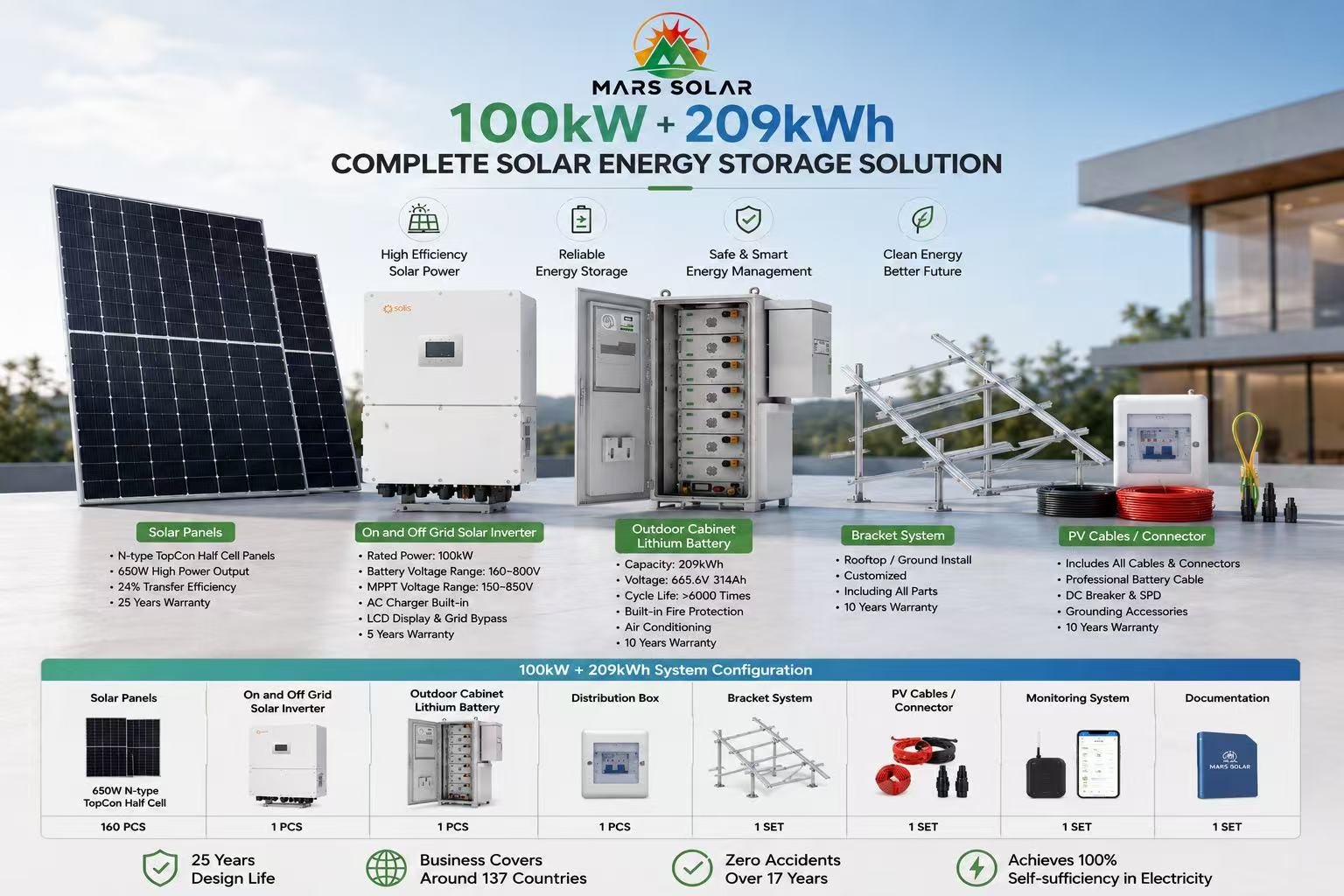
3.2 ROI & Payback Analysis
On-grid systems in stable-grid markets typically achieve 3-7 year paybacks by reducing peak demand charges and exporting surplus. Off-grid systems achieve ROI through diesel displacement and outage cost avoidance:
|
Metric |
On-Grid (100kW, Stable Grid) |
Off-Grid (100kW + 215kWh, Diesel Backup) |
|
Annual Energy Bill Savings |
$18,000 – $35,000/yr |
$40,000 – $80,000/yr |
|
Diesel Cost Avoidance |
$15,000 – $28,000/yr |
$25,000 – $50,000/yr |
|
Outage Cost Avoidance |
Minimal |
$20,000 – $100,000/yr |
|
Estimated Payback |
1–2 years |
1–3 years |
|
25-Year IRR |
18–25% |
20–30% |
3.3 When to Choose On-Grid
- Grid reliability index > 95% — minimal outage risk
- Grid tariff is > $0.10/kWh with net metering or feed-in tariff available
- Roof/land space is limited — higher system efficiency per sqm is needed
- Initial CAPEX budget is constrained — lower upfront investment preferred
- System expansion is anticipated — on-grid scaling is more modular
3.4 When to Choose Off-Grid
- Grid availability < 8 hours/day or unreliable (common in rural Africa and remote SE Asia)
- Diesel is the primary backup — off-grid achieves 40–70% cost reduction vs. diesel alone
- Critical loads require uninterrupted power (cold storage, hospitals, telecom towers, data centers)
- Grid connection infrastructure cost is prohibitive (remote locations)
- Government policy incentivizes energy independence (e.g., industrial zones in Sudan, Kenya)
3.5 Hybrid Systems: The Middle Path
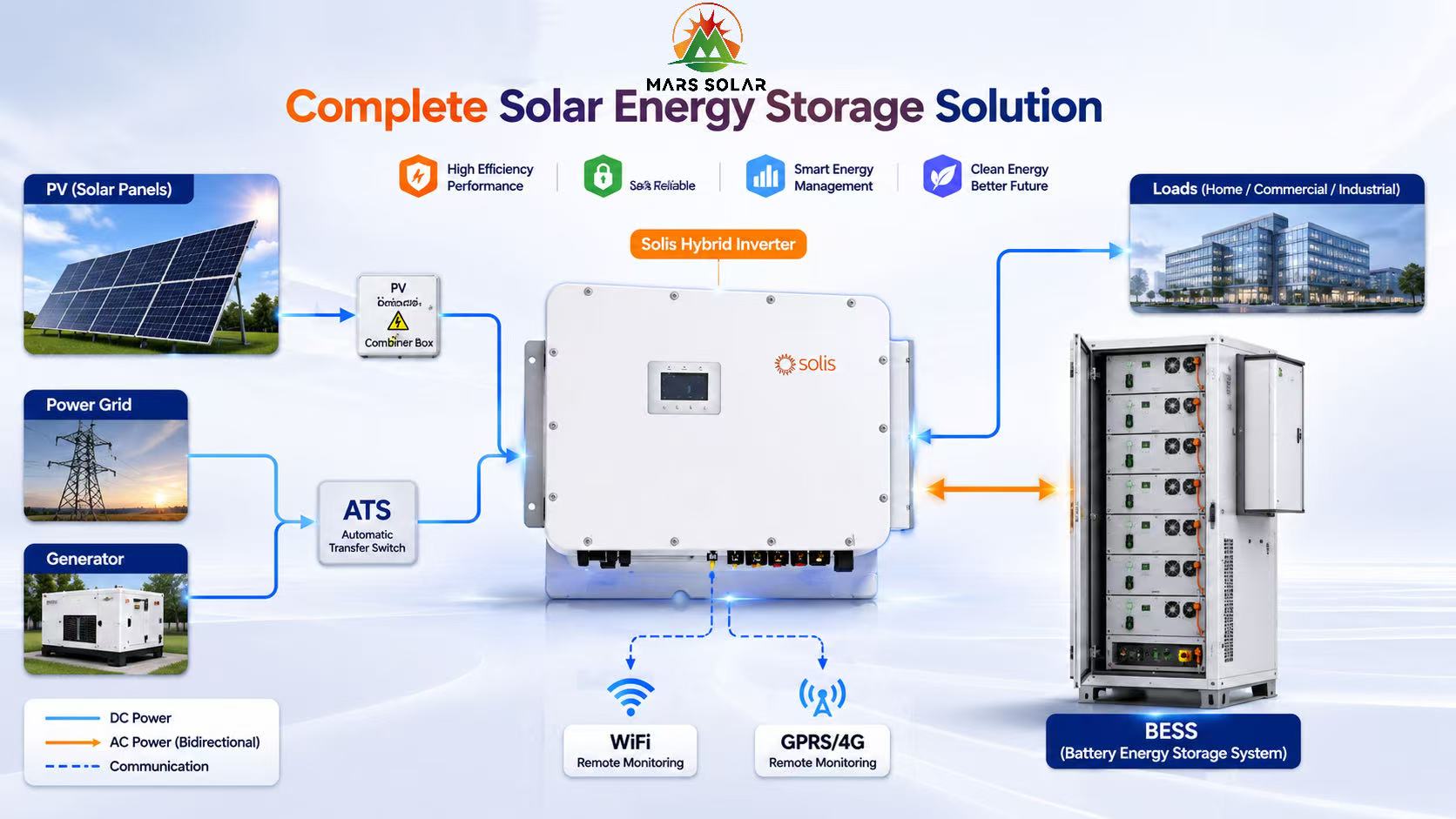
Hybrid systems combine on-grid connectivity with battery storage, offering the best of both worlds. A 100kW hybrid system with 215kWh BESS can:
- Grid-tie and export surplus during low-demand periods
- Island during outages, providing full backup for 4–8 hours
- Optimize self-consumption to reduce peak demand charges
- Participate in demand response programs where available
For markets like Nigeria, Kenya, and the Philippines — where grid reliability is improving but not guaranteed — hybrid is increasingly the recommended default for C&I buyers.
4. Market-Specific Recommendations
|
Country / Region |
Grid Reliability |
Recommended Primary System |
Rationale |
|
Nigeria |
Low (frequent outages) |
Off-Grid or Hybrid |
Critical for C&I; diesel costs $0.40–0.55/L |
|
Kenya |
Moderate |
Hybrid (preferred) / Off-Grid |
Improving grid but outages common; high solar irradiance |
|
South Africa |
Low-Moderate (loadshedding) |
Hybrid with BESS |
Load shedding drives storage demand; NMD incentive |
|
Philippines |
Moderate |
On-Grid (retail) / Hybrid (C&I) |
High grid tariff; WESM export available |
|
Sudan |
Low |
Off-Grid |
Grid instability; strong industrial solar policy |
|
Papua New Guinea |
Low |
Off-Grid |
Remote islands; no grid infrastructure |
|
Angola |
Very Low |
Off-Grid |
Widespread grid deficiency; large mining sector |
|
Ghana |
Moderate |
Hybrid |
Improving grid; mercury tariff volatility |
5. Frequently Asked Questions
Q1: Can an on-grid system work during a power outage?
Standard on-grid systems automatically shut down during outages (anti-islanding protection) to protect utility workers. To enable backup, you need either: (a) a hybrid system with BESS, or (b) a separate backup inverter system.
Q2: How long do lithium batteries last in off-grid solar systems?
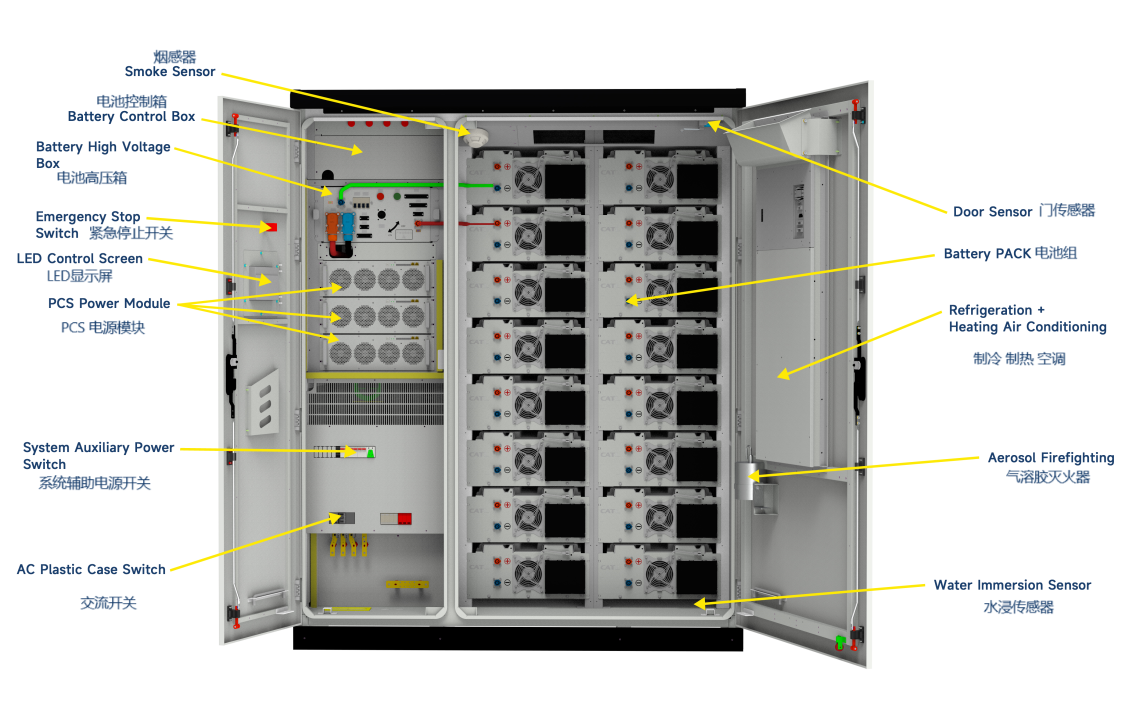
Modern lithium iron phosphate (LiFePO4) batteries carry a 10-year warranty at 80% depth of discharge (DOD) cycling. With proper sizing (DOD < 50% daily), a quality BESS can exceed 15 years of useful life. Mars Solar's rack-mounted BESS uses LFP cells rated for 6,000+ cycles at 80% DOD.
Q3: Does off-grid mean no electricity bills?
In most markets, off-grid systems eliminate energy charges from the grid but may still incur fixed grid connection fees or standby charges. In some African markets, these fees are minimal or waived for fully off-grid installations. A complete ROI analysis should include all grid-related costs.
Q4: Can we start with on-grid and add storage later?
Yes, but with caveats. Hybrid-ready inverters can be specified at the initial install, allowing batteries to be added later. However, some inverters are not hybrid-ready, so specifying hybrid-capable equipment at the design stage is strongly recommended for future flexibility.
Q5: What is the minimum system size for off-grid to be economically viable?
Off-grid economics improve significantly above 50kW. Below 20kW, battery costs often dominate to the point where the ROI stretches beyond 10 years. For small commercial loads (<20kW) in unreliable grid areas, hybrid systems with minimal storage (2–4 hours) are often the better economic choice.
6. Quick Decision Framework
Use this 5-step framework to guide your internal decision-making:
- Assess grid reliability: Is grid availability < 8 hrs/day? → Go off-grid or hybrid
- Calculate outage cost: What does 1 hour of unplanned downtime cost your facility?
- Check diesel costs: Is diesel > $0.30/L? Off-grid diesel displacement becomes economically compelling
- Evaluate CAPEX budget: Can you absorb higher upfront costs for long-term energy independence?
- Plan for 5-year expansion: Do you anticipate load growth? On-grid scales more easily.
If you are still uncertain after working through these steps, Mars Solar's engineering team provides free system design consultation for projects 10kW and above. Our engineers can model both on-grid and off-grid scenarios against your actual load profile and utility tariff structure.

7. About This Guide
This guide is produced by Mars Solar's technical content team for commercial and industrial buyers evaluating solar power systems in emerging markets. Mars Solar has delivered 3,000+ solar projects across 120+ countries since 2008.
For a customized system design proposal or project consultation, contact:
- Website: solarpowermanufacturer.com
- Email: [email protected]
- Phone: +86 13929145333
-
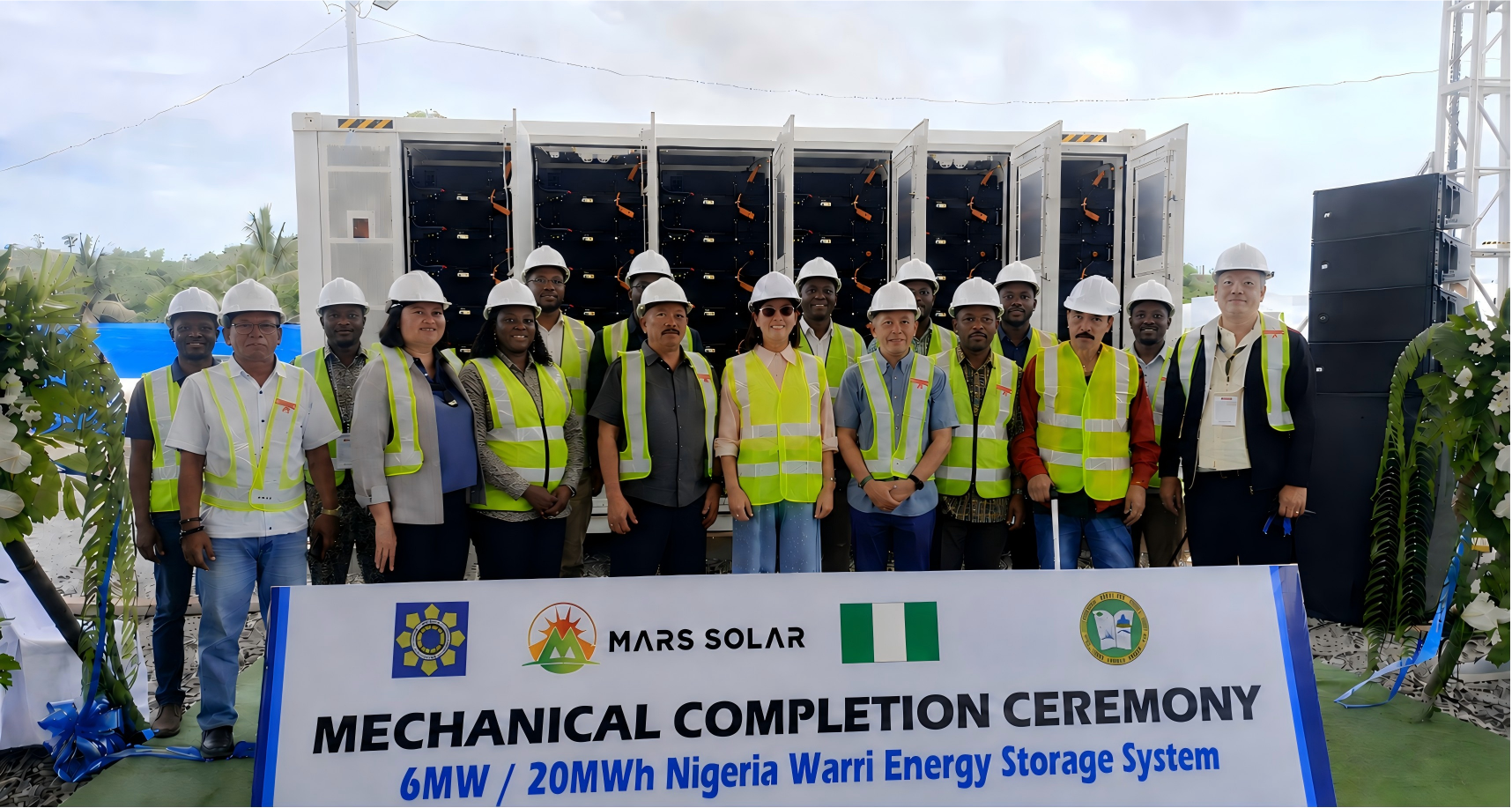 6MW 20MWh Solar Storage in Nigeria Factory + Farm + Residential Case StudyA 6MW solar PV + 20MWh LFP battery storage system in Nigeria powers an integrated factory, farm, and residential complex. The system delivers $108,000+ in monthly electricity savings, reaches payback in approximately 24 months, and provides 25 years of renewable power. This case study covers the engineering configuration, financial model, and operational performance of one of West Africa's most ambitious factory + farm + residential solar deployments.
Do you like ?0
Read more -
 Solar Panel Shipping & Container Loading: The 2026 Complete GuideThe solar panels leaving the factory are perfect. By the time they arrive at your warehouse, 3–7% might be damaged, delivery could be 2 weeks late, and demurrage at the destination port could wipe out your margin. This 2026 guide covers container types (2
Do you like ?0
Read more -
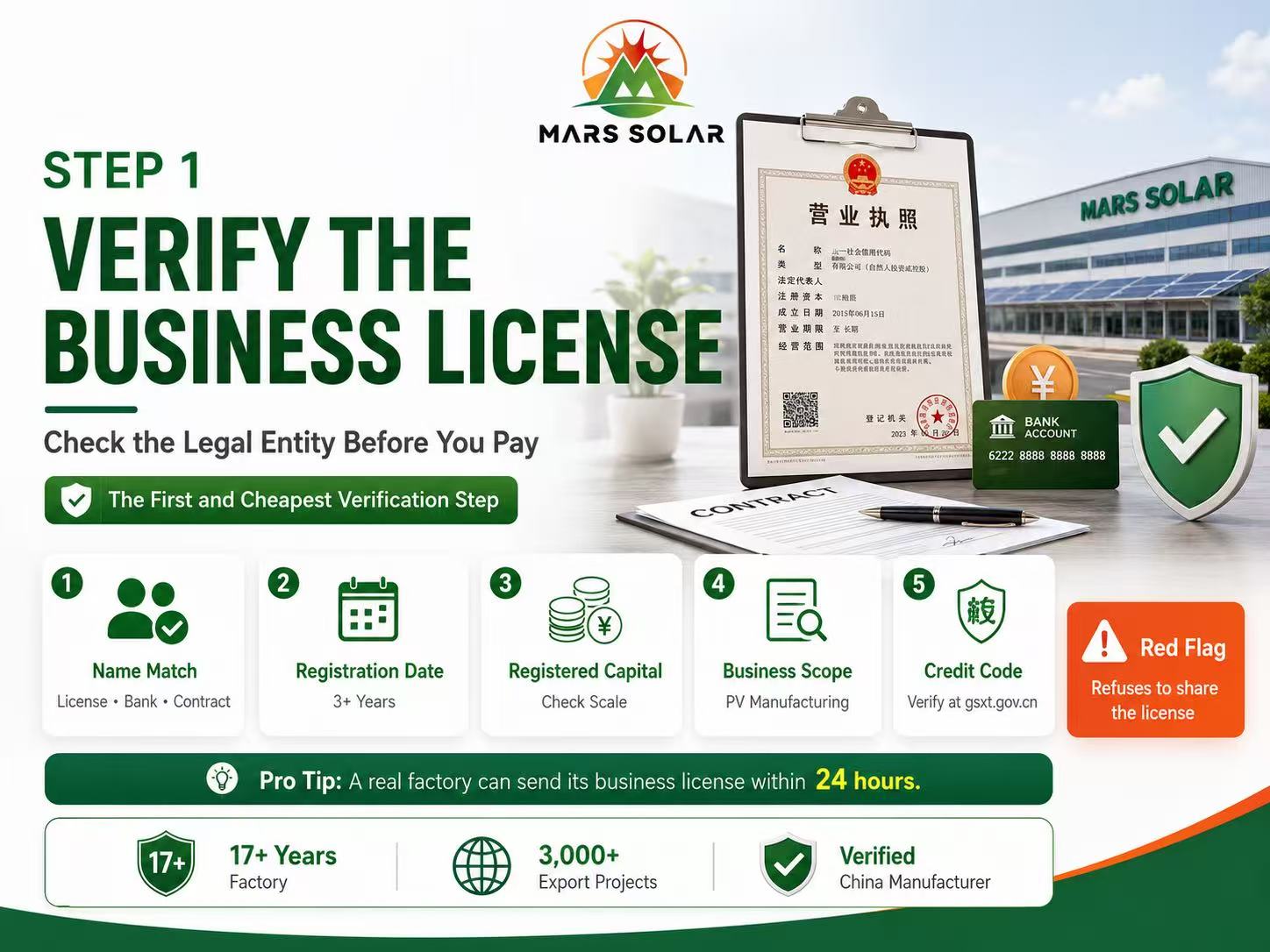 Solar Panel Factory Verification: The 7-Step Due Diligence GuideEvery year, international solar buyers lose millions to fraudulent suppliers — fake certificates, empty factories, and panels that don't match spec. This 7-step verification guide shows you exactly how to qualify any China solar factory before you wire mo
Do you like ?0
Read more -
 Solar Panel MOQ, Lead Time & Payment Terms: The Complete 2026 Buyer's GuideMOQ, lead time, and payment terms are the 3 questions every solar buyer asks — and the 3 answers most suppliers hide behind vague emails. This guide gives you complete, honest answers from a verified China factory with 17+ years and 3,000+ export projects
Do you like ?0
Read more -
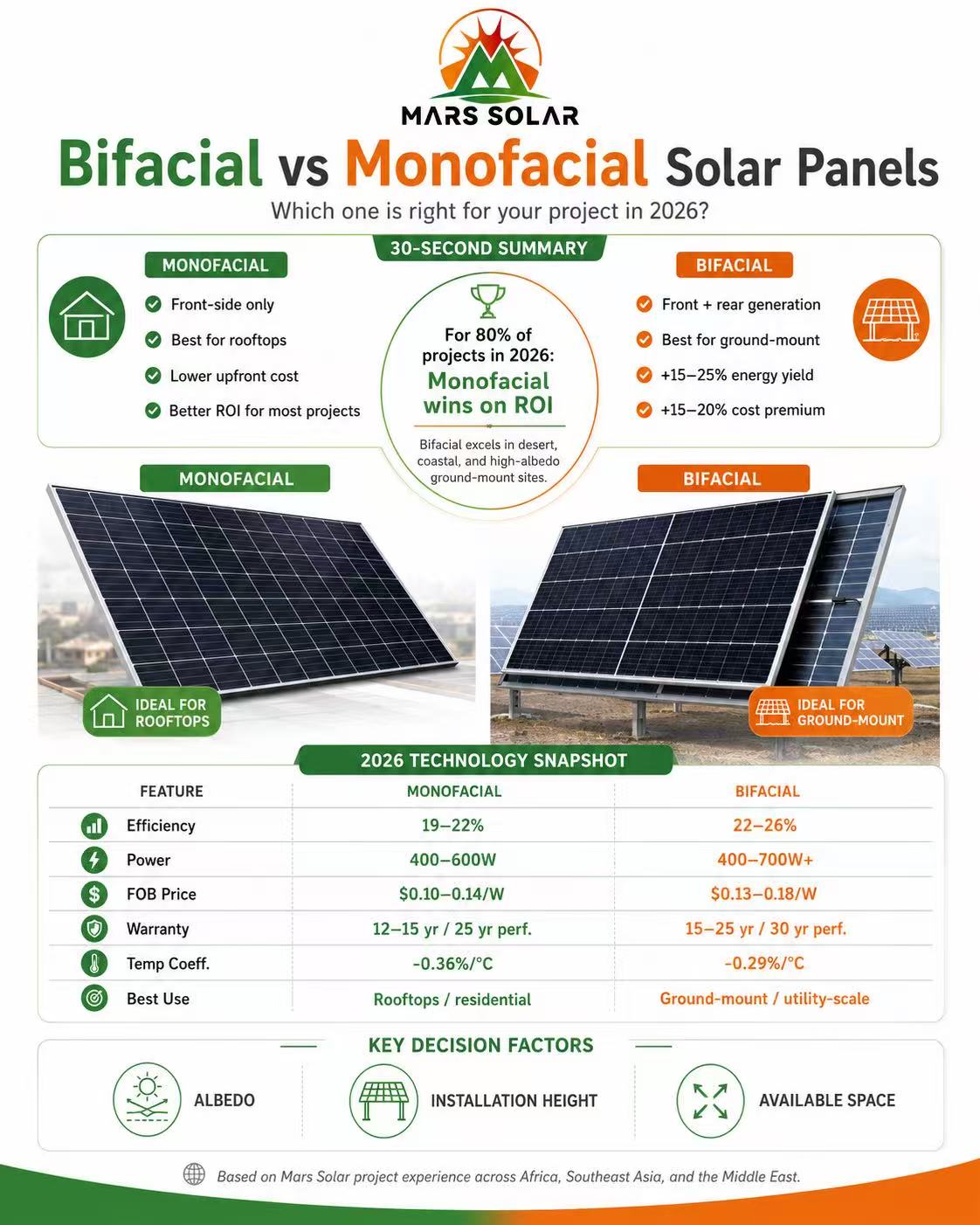 Solar Panel Selection Guide: Monofacial vs. Bifacial — 2026 EditionMonofacial and bifacial solar panels look identical but deliver 15-25% output difference. This 2026 guide compares 15 technical parameters, analyzes 5 real project ROI cases (Nigeria, Philippines, Ghana, Kenya, DRC), and gives you 3 decision frameworks to
Do you like ?0
Read more -
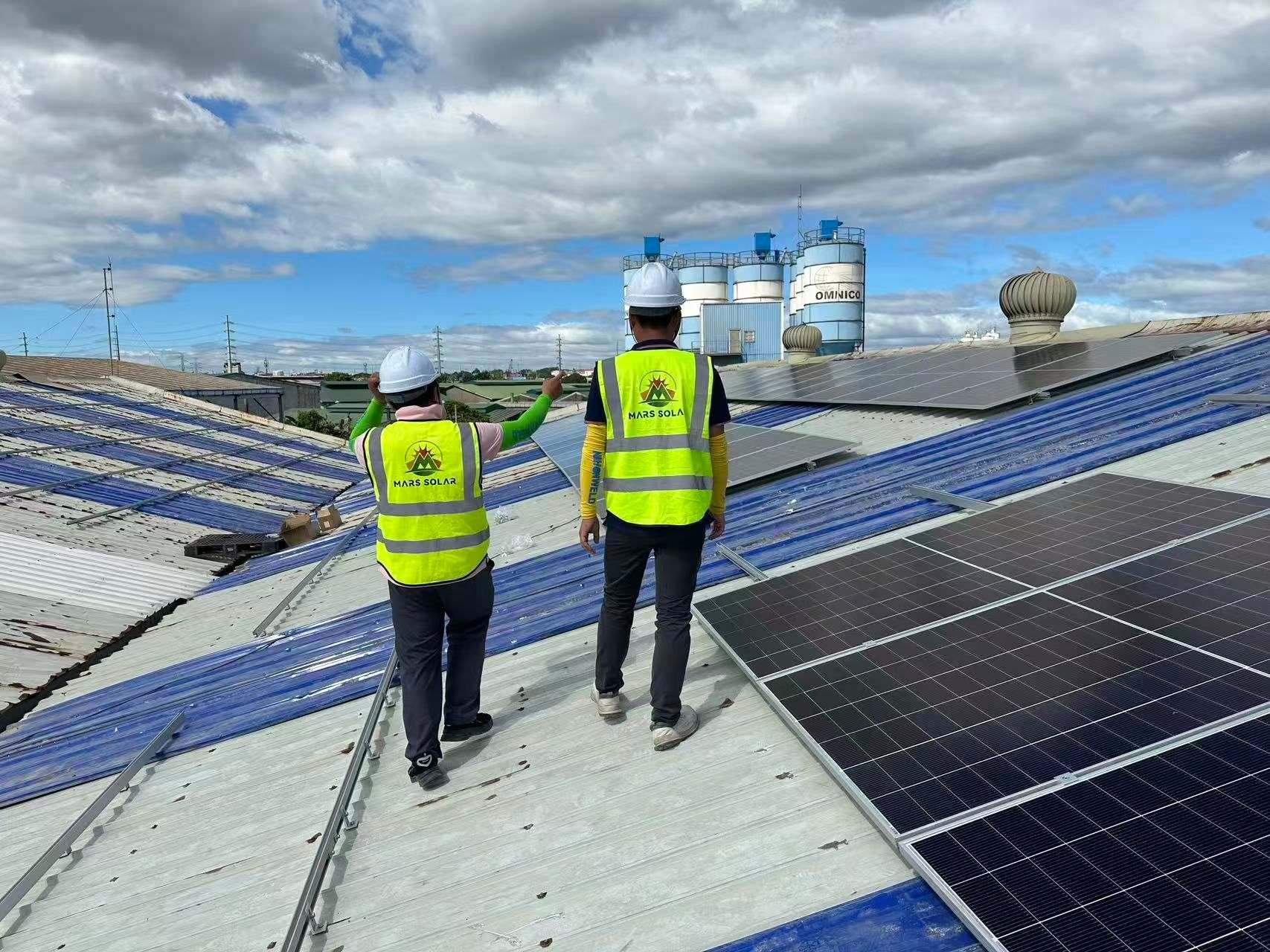 Top 10 Solar Panel Manufacturers China 2026 | Best BrandsDiscover the top 10 solar panel manufacturers China 2026. Compare Jinko, LONGi, Trina & more. Find Tier 1 suppliers.
Do you like ?0
Read more