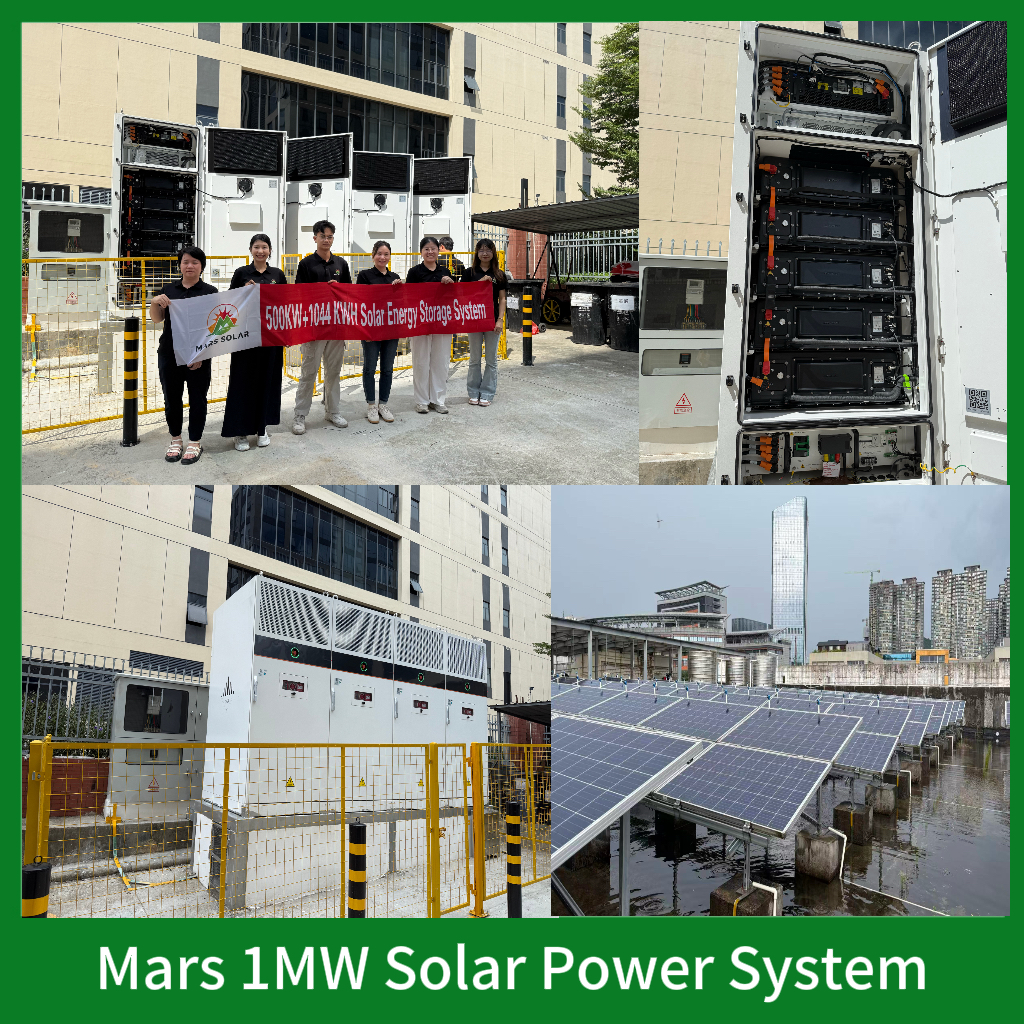
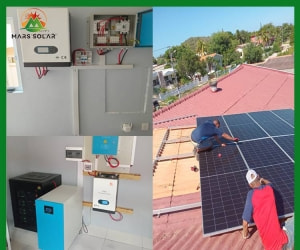
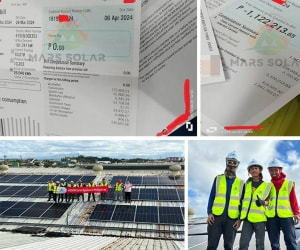
A study recently released by the South African Science and Industrial Research Council showed that South Africa is experiencing the worst power cuts in history, causing huge economic losses. In order to alleviate the "power shortage" problem, the South African government will increase investment in energy infrastructure, especially solar electric power renewable energy.
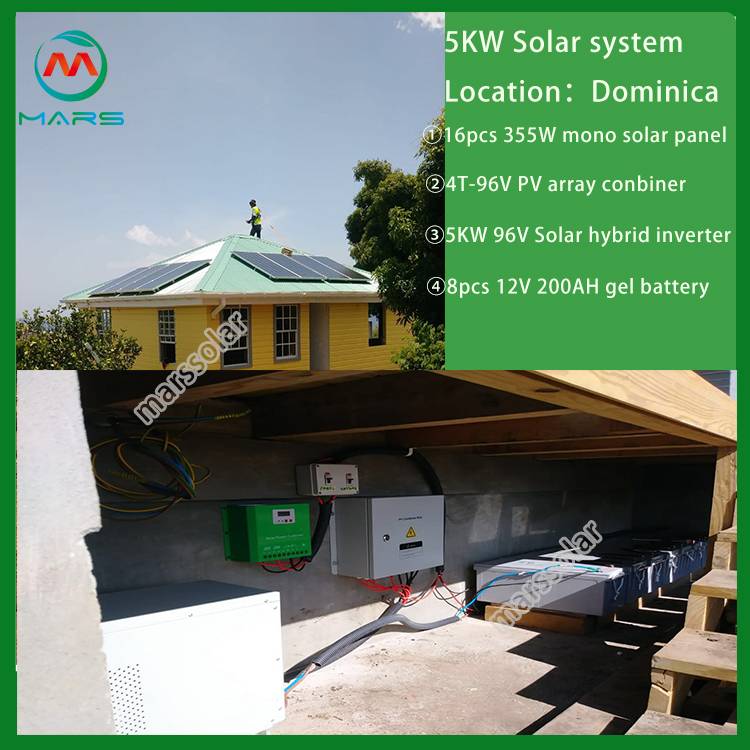
The study found that from January to August 2020, South Africa reduced its power supply by 1498 GWh, which has exceeded the figure of 1352 GWh for the entire year of last year, and the scale of power curtailment has reached a record high. It is expected that in the next two to three years, South Africa will continue to take measures to cut off electricity.
South Africa is the most industrialized economy in Africa. South Africa’s National Power Company accounts for more than 90% of the country’s power generation. However, due to the ageing of coal-fired power plant equipment, lack of maintenance, and design defects, the company has been unable to meet South Africa’s electricity demand for many years. The above-mentioned research estimates that last year, South Africa’s power cuts caused up to 120 billion rand (about 7.2 billion US dollars) in economic losses.
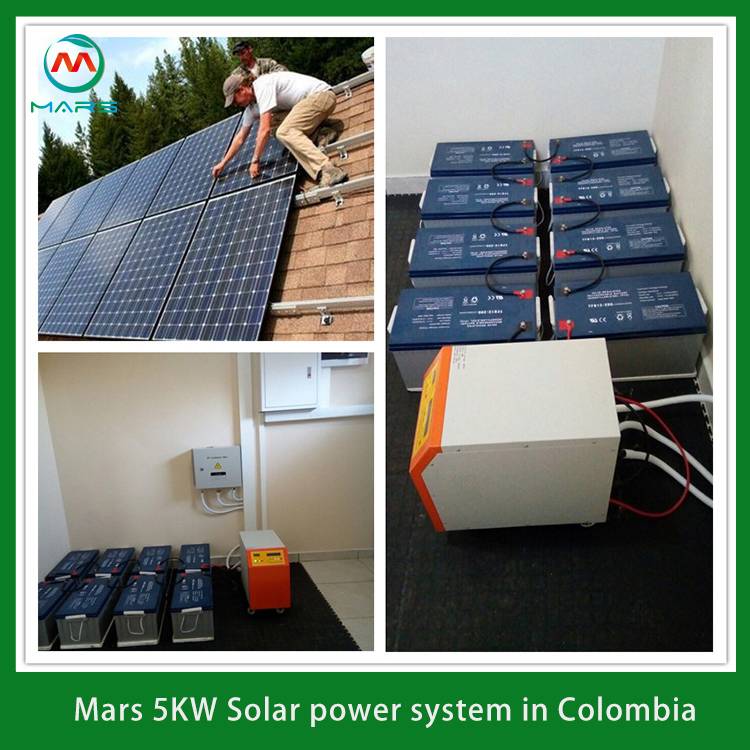
In recent years, although the South African government has allocated funds for rescue many times, the South African National Electric Company is still in a deep debt crisis. In view of this, the South African government plans to split and reorganize the company and gradually increase electricity prices; at the same time, South Africa will adjust its energy structure and increase investment in energy infrastructure, especially renewable energy, to alleviate the "power shortage" problem and increase Investor confidence.
Latest posts
-
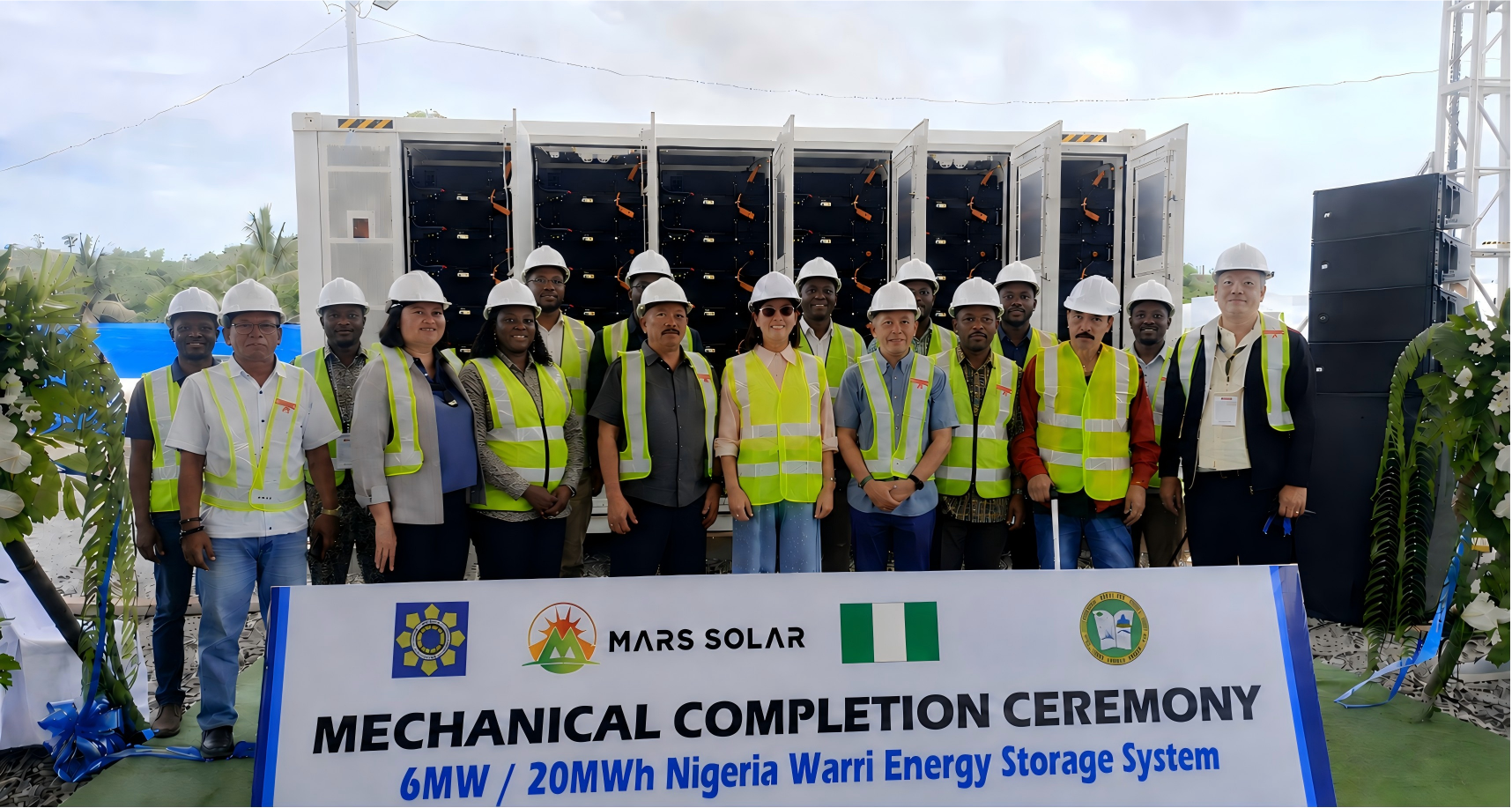 6MW 20MWh Solar Storage in Nigeria Factory + Farm + Residential Case StudyA 6MW solar PV + 20MWh LFP battery storage system in Nigeria powers an integrated factory, farm, and residential complex. The system delivers $108,000+ in monthly electricity savings, reaches payback in approximately 24 months, and provides 25 years of renewable power. This case study covers the engineering configuration, financial model, and operational performance of one of West Africa's most ambitious factory + farm + residential solar deployments.
Do you like ?0
Read more -
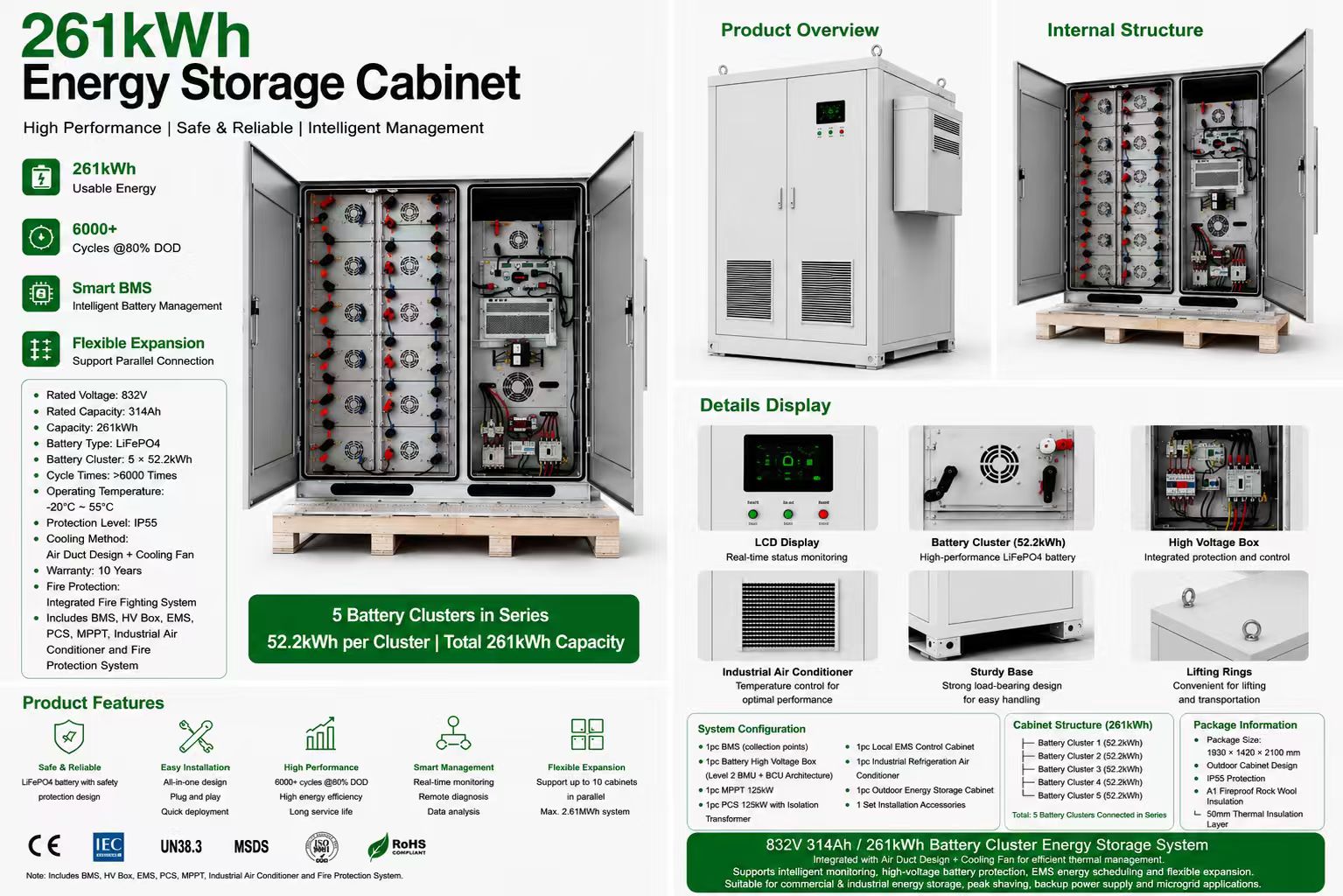 BESS in Nigeria 2026: Battery Energy Storage Cost, Diesel Payback & Import GuideBESS in Nigeria: 2026 pricing, diesel payback, SONCAP, China import guide. Save 60%+ vs diesel. Factory-direct LFP from Mars Solar.
Do you like ?0
Read more -
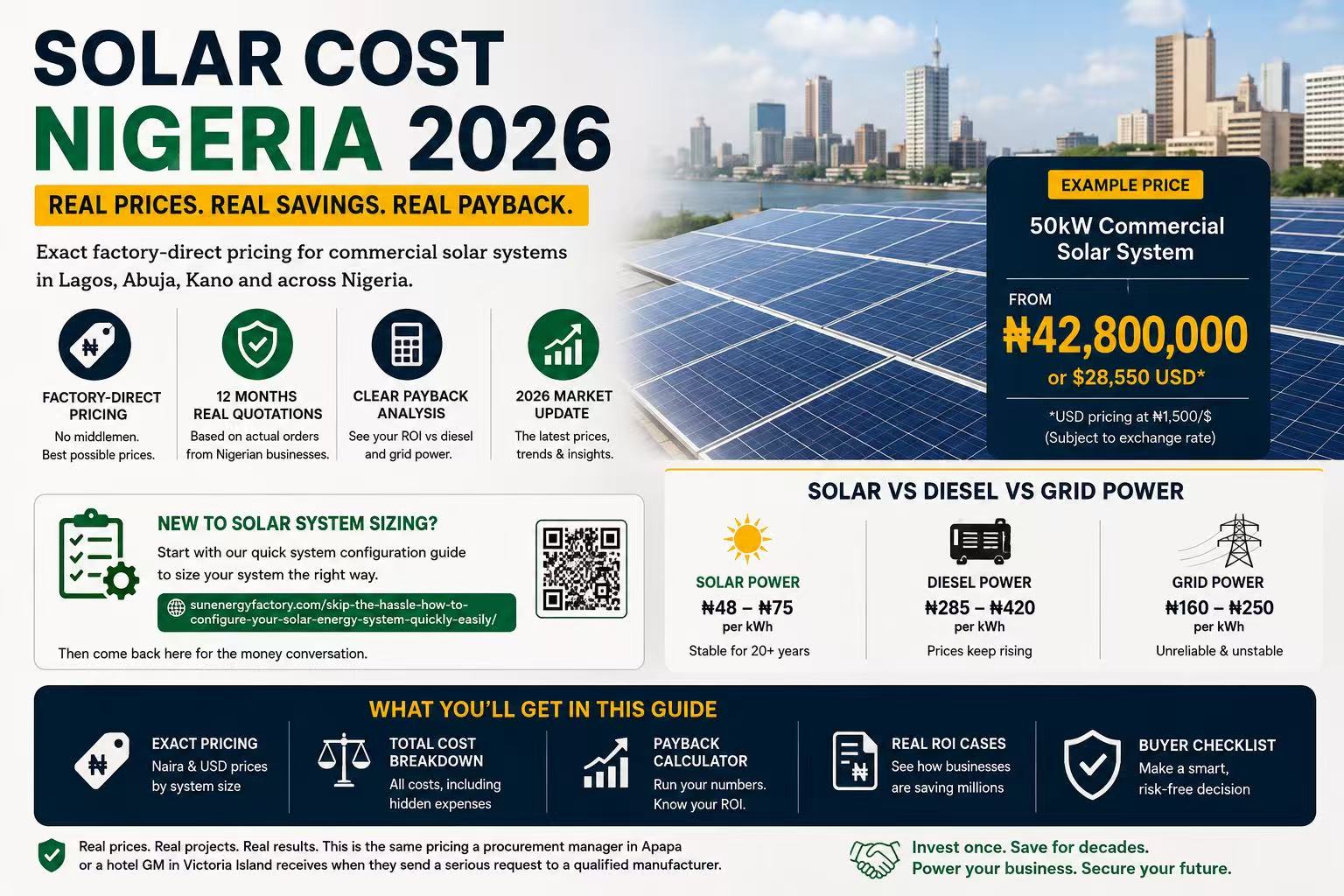 How Much Does Solar Cost in Nigeria? 2026 Real Pricing GuideSolar cost in Nigeria for 5kW to 250kW systems, in Naira and USD. Compare solar vs diesel vs grid, calculate payback, and explore financing options.
Do you like ?0
Read more -
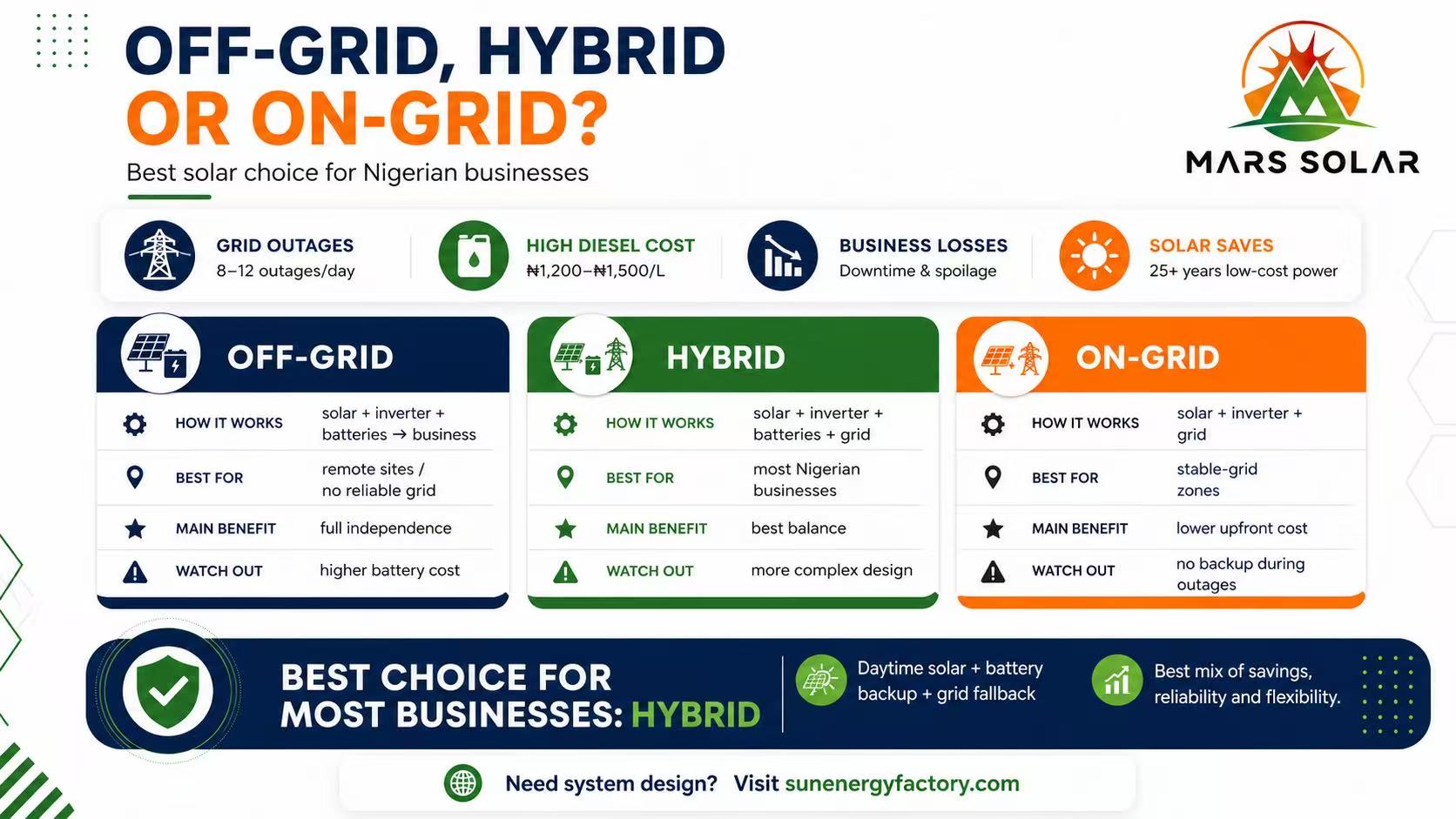 Solar Power Nigeria 2026: Off-Grid vs Hybrid vs On-GridNigeria’s unreliable grid and soaring diesel costs are forcing business owners to take solar seriously. But the biggest question remains: which system — off-grid, hybrid, or on-grid? This 2026 guide breaks down all three solar architectures for Nigeria
Do you like ?0
Read more -
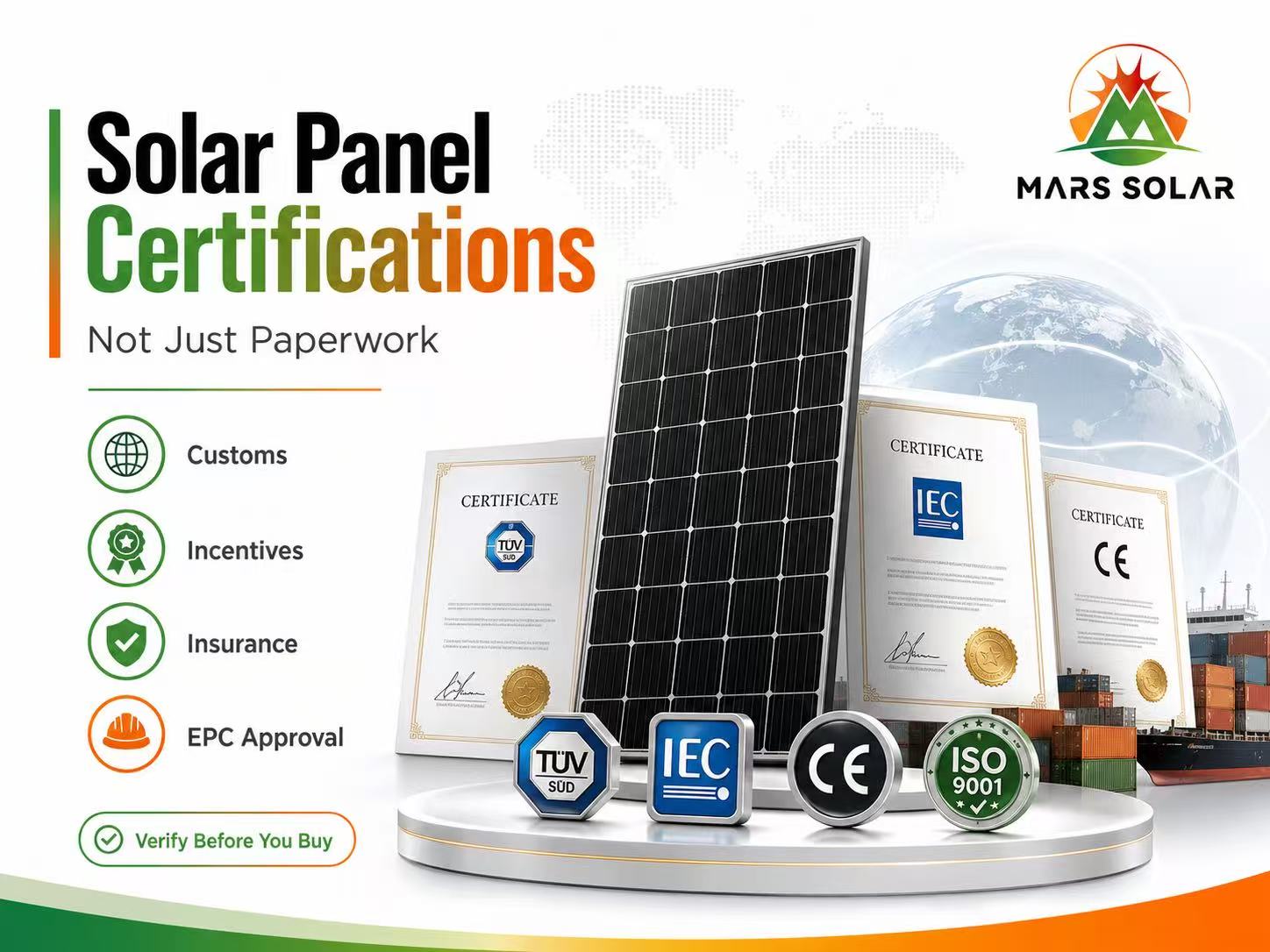 Solar Panel Certifications Explained: IEC, UL, TÜV, CE, ISO — The 2026 GuideA solar panel without proper certifications is unsellable in 90% of international markets. This 2026 guide explains every major certification — IEC 61215, IEC 61730, UL 61730, TÜV, CE, ISO 9001/14001/45001 — what it tests, who issues it, which markets req
Do you like ?0
Read more -
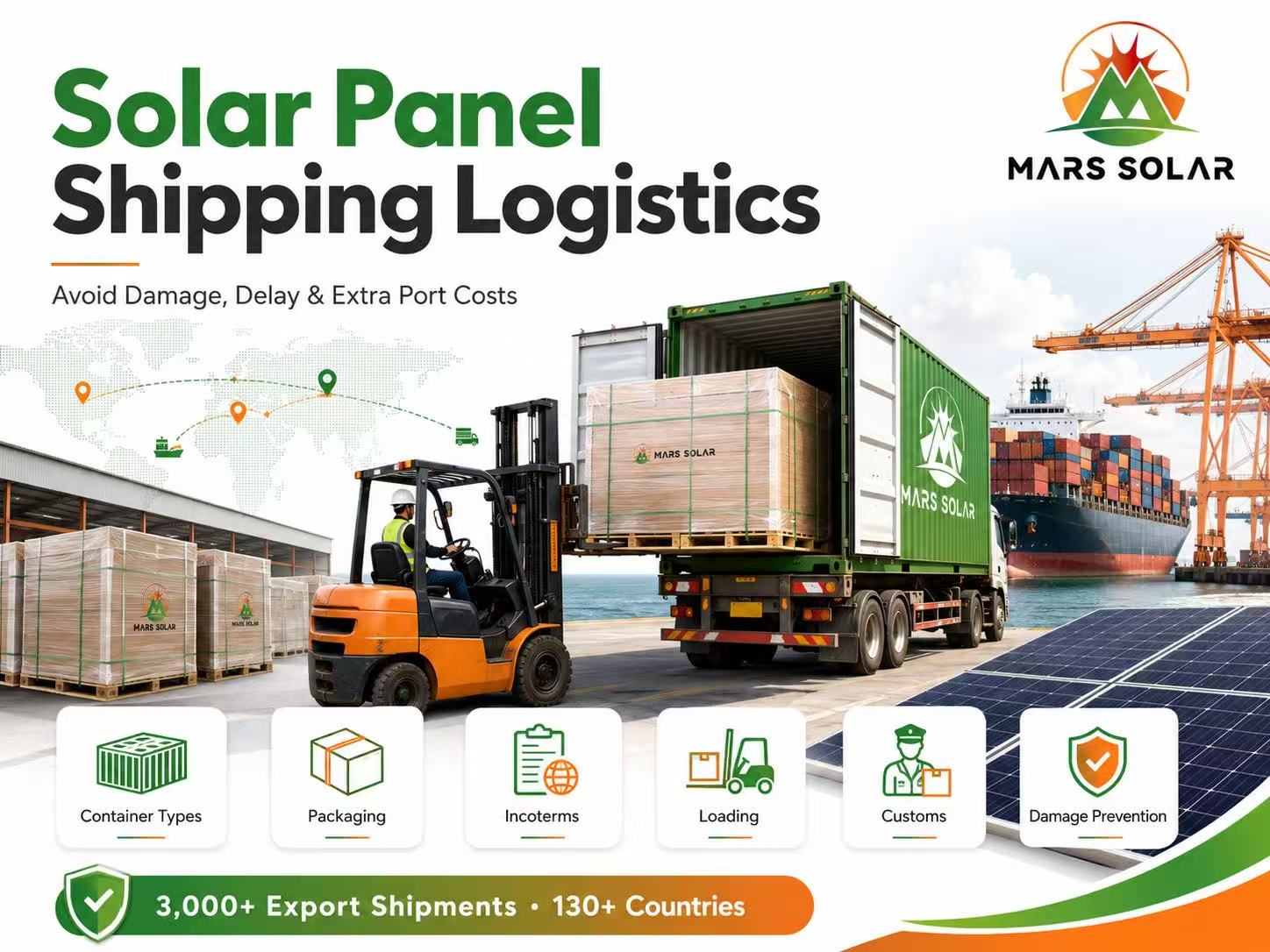 Solar Panel Shipping & Container Loading: The 2026 Complete GuideThe solar panels leaving the factory are perfect. By the time they arrive at your warehouse, 3–7% might be damaged, delivery could be 2 weeks late, and demurrage at the destination port could wipe out your margin. This 2026 guide covers container types (2
Do you like ?0
Read more