Low frequency stand alone inverter and high frequency stand alone inverter
Quick answer: A 5KW solar system of this configuration produces about 33.6KWH per day from 16x350W monocrystalline panels and driven by a 5KW/7KVA inverter. Built by Mars Solar (factory since 2008), CE/ROHS certified, 25-year panel life, shipped factory-direct to 130+ countries.
The low frequency stand alone inverter first inverts the direct current into a power frequency low voltage alternating current; and then boosts it into 220V through a power frequency transformer, and the 50Hz alternating current is used for the load. This kind stand alone inverter advantage is that the structure is simple, and various protection functions can be realized at a lower voltage. Because there is a power frequency transformer between the stand alone inverter and the load, the stand alone inverter operates stably, reliably, with overload capacity and impact resistance, and can suppress high-order harmonic components in the waveform.
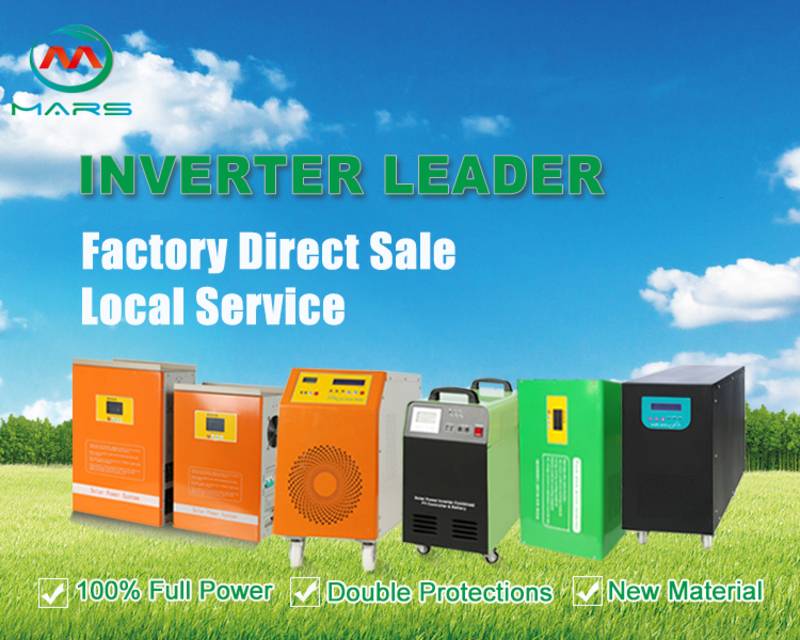
The high-frequency stand alone inverter firstly inverts the low-voltage direct current into high-frequency low-voltage alternating current through high-frequency DC/DC conversion technology; then, after being boosted by the high-frequency transformer, it is rectified by a high-frequency rectification filter circuit to be generally above 300V. High-voltage direct current; finally, through the power frequency off grid power inverter circuit, 220V power frequency AC power is used for the load. Since the high-frequency off grid power inverter adopts a small-sized and light-weight high-frequency magnetic core material, the power density of the circuit is greatly improved, so that the no-load loss of the off grid power inverter power source is small, and the off grid power inverter efficiency is improved.
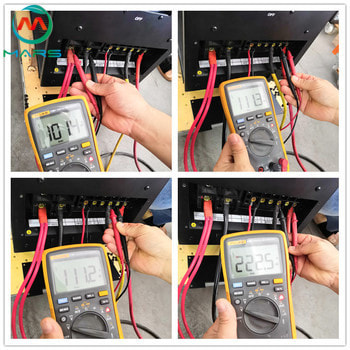
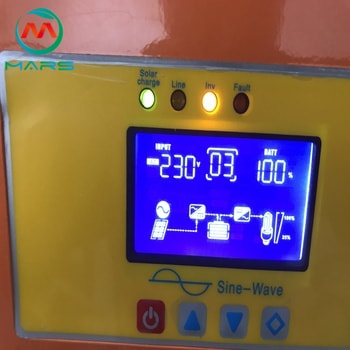
The difference between high frequency off grid power inverter and low frequency off grid inverter charger:
The advantages of the high-frequencyoff grid inverter charger are mainly light weight, small size, light weight, no isolation transformer, low standby power and high efficiency (relatively save power). The disadvantage is that the impact resistance is not as good as the low frequency off grid inverter charger, and may not be able to drive the inductive load.
The main features of the low frequency off grid inverter charger are strong overload capacity and load impact resistance. The disadvantage is that the volume is large and bulky. The power frequencyoff grid inverter charger is suitable for large loads (such as off-grid power stations, etc.), high frequencyoff grid inverter charger is suitable for the telecommunications industry.
-
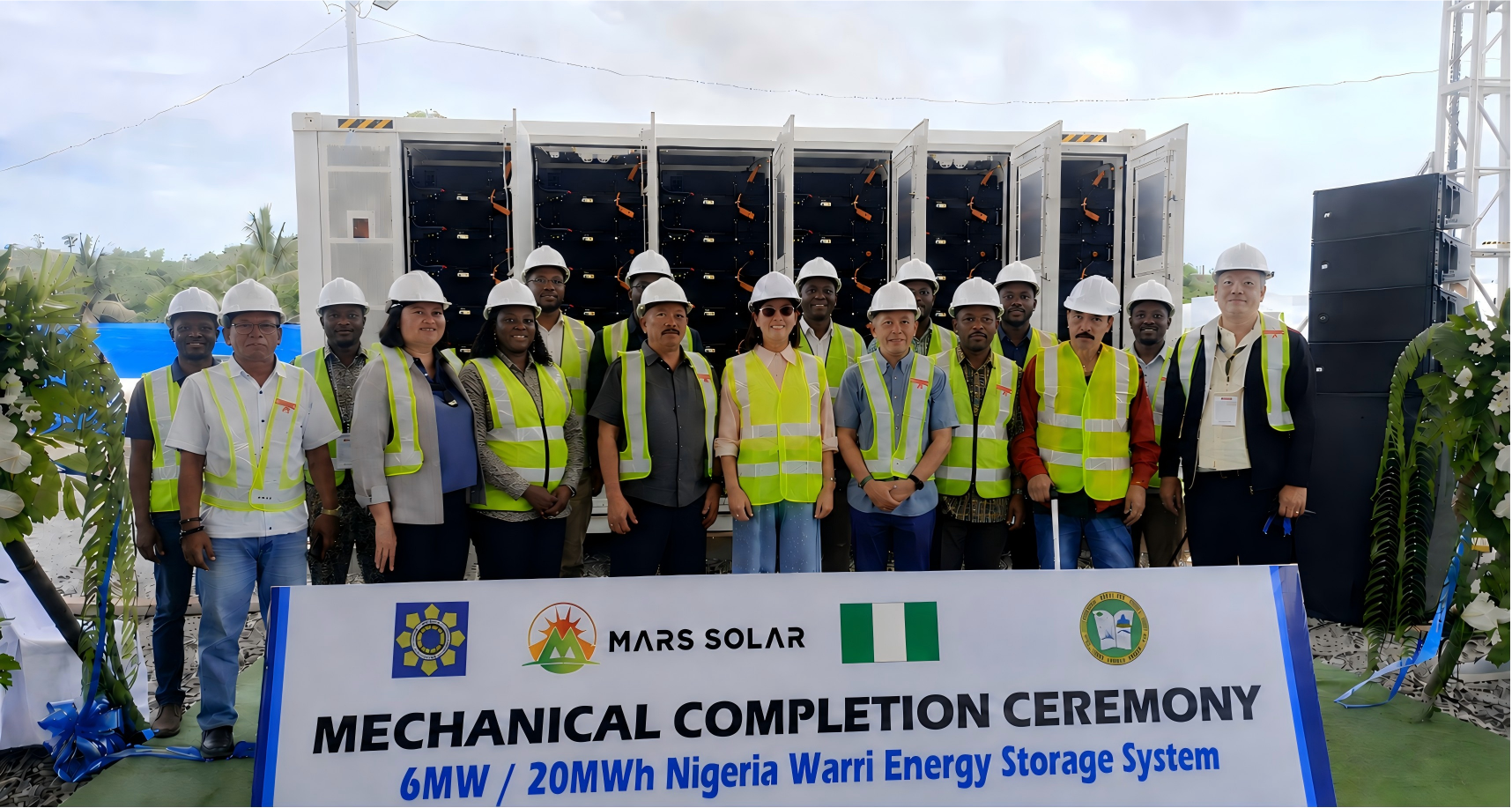 6MW 20MWh Solar Storage in Nigeria Factory + Farm + Residential Case StudyA 6MW solar PV + 20MWh LFP battery storage system in Nigeria powers an integrated factory, farm, and residential complex. The system delivers $108,000+ in monthly electricity savings, reaches payback in approximately 24 months, and provides 25 years of renewable power. This case study covers the engineering configuration, financial model, and operational performance of one of West Africa's most ambitious factory + farm + residential solar deployments.
Do you like ?0
Read more -
 Solar Panel Shipping & Container Loading: The 2026 Complete GuideThe solar panels leaving the factory are perfect. By the time they arrive at your warehouse, 3–7% might be damaged, delivery could be 2 weeks late, and demurrage at the destination port could wipe out your margin. This 2026 guide covers container types (2
Do you like ?0
Read more -
 Solar Panel Factory Verification: The 7-Step Due Diligence GuideEvery year, international solar buyers lose millions to fraudulent suppliers — fake certificates, empty factories, and panels that don't match spec. This 7-step verification guide shows you exactly how to qualify any China solar factory before you wire mo
Do you like ?0
Read more -
 Solar Panel MOQ, Lead Time & Payment Terms: The Complete 2026 Buyer's GuideMOQ, lead time, and payment terms are the 3 questions every solar buyer asks — and the 3 answers most suppliers hide behind vague emails. This guide gives you complete, honest answers from a verified China factory with 17+ years and 3,000+ export projects
Do you like ?0
Read more -
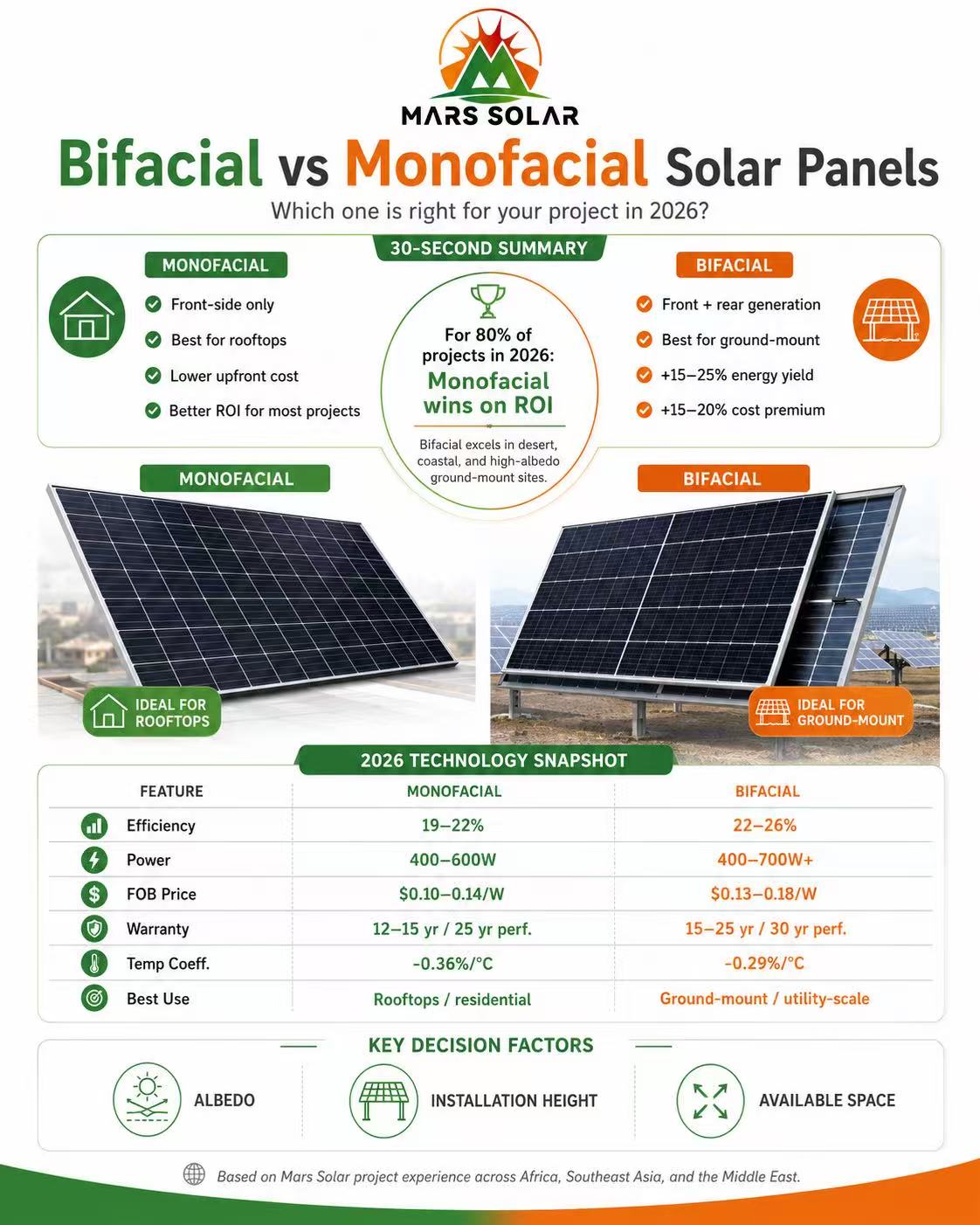 Solar Panel Selection Guide: Monofacial vs. Bifacial — 2026 EditionMonofacial and bifacial solar panels look identical but deliver 15-25% output difference. This 2026 guide compares 15 technical parameters, analyzes 5 real project ROI cases (Nigeria, Philippines, Ghana, Kenya, DRC), and gives you 3 decision frameworks to
Do you like ?0
Read more -
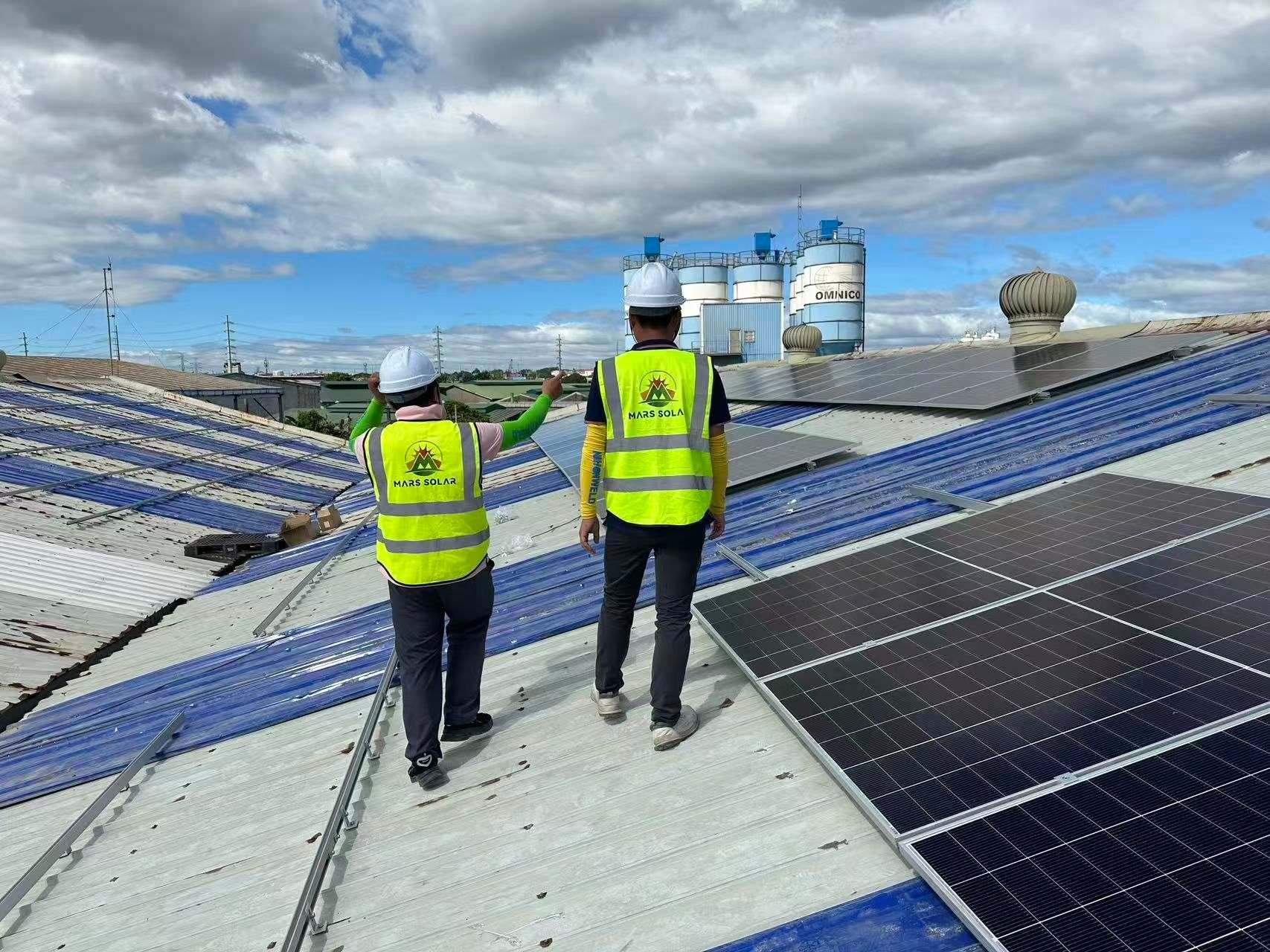 Top 10 Solar Panel Manufacturers China 2026 | Best BrandsDiscover the top 10 solar panel manufacturers China 2026. Compare Jinko, LONGi, Trina & more. Find Tier 1 suppliers.
Do you like ?0
Read more