Hotel Solar Philippines: What the P660/kW Demand Charge Really Costs You
Quick answer: hotel solar Philippines
A hotel solar Philippines project is sized against your daytime load profile, not against your roof area. At July 2026 Meralco General Power rates the demand charge alone runs about ₱660.17 per kW of peak every month, so the return comes from an array that is generating at the moment your peak would otherwise be set — not from the total kWh you produce. Modelled on a 40-room hotel with a daytime-heavy profile, a 120 kWp rooftop array produced a 39% reduction in the total bill.
The charge that arrives whether guests check in or not
A hotel in Metro Manila runs its chillers through a 34°C afternoon. The lobby is full, housekeeping is turning rooms, the kitchen is prepping for dinner service. Then the month ends and the Meralco bill lands with a line item that has nothing to do with how many rooms were sold.
It is the demand charge, and it is billed on your single highest sustained draw in the month — not your average.
For a General Power customer the July 2026 rates (VAT-exclusive) put transmission at ₱427.97 per kW and distribution demand at ₱232.20 per kW every month. That is roughly ₱660.17 per kW of peak, before a single kilowatt-hour is consumed. Run your biggest load for one hour or for seven hundred — if it is on when your peak occurs, you pay for that capacity all month.
 Caption: Peak demand is a monthly charge on capacity, not consumption — which is why a hotel's daytime load profile matters more than its total usage.
Three costs hotel operators underestimate
1. The demand charge is capacity, not consumption. Above 5 kW of demand, Meralco moves a business from household-style billing into General Service B or General Power, and the structure inverts: the per-kWh distribution charge collapses to about 6% of the residential rate, and a per-kW demand charge takes its place. A 100 kW peak costs about ₱66,017 a month in demand charges alone — roughly ₱792,204 a year for capacity you may draw for minutes.
2. Most hotel load lands in exactly the wrong window. Guest rooms, lobby air conditioning, kitchen refrigeration and pool pumps all run hardest during daylight — the same hours a rooftop array is producing. That is the single best load profile a commercial solar system can hope for, and it is why hotels consistently model better than evening-peaking businesses.
3. Distribution costs are heading up, not down. The Energy Regulatory Commission approved Meralco's first distribution rate reset in over a decade in October 2026, setting an average distribution rate of ₱1.48 per kWh for the July 2026 to June 2030 period. That is well below the ₱2.34 Meralco proposed, but still about 10% above the current ₱1.35. Doing nothing is not a flat cost — it is a rising one.
These three are why a hotel solar Philippines assessment starts with twelve months of billing data rather than a roof measurement: demand, load timing and a rising distribution rate are all visible in the bills before anyone climbs a ladder.
What a hotel rooftop actually changes
A correctly sized hotel solar Philippines array attacks both axes of the bill.
- Energy: every kWh the array produces during daylight displaces grid energy at roughly ₱10.1355 per kWh, including generation and system loss.
- Demand: because hotel load peaks in the afternoon, the array is frequently generating at the exact moment your peak would otherwise be set — which is the only way solar touches the demand line.
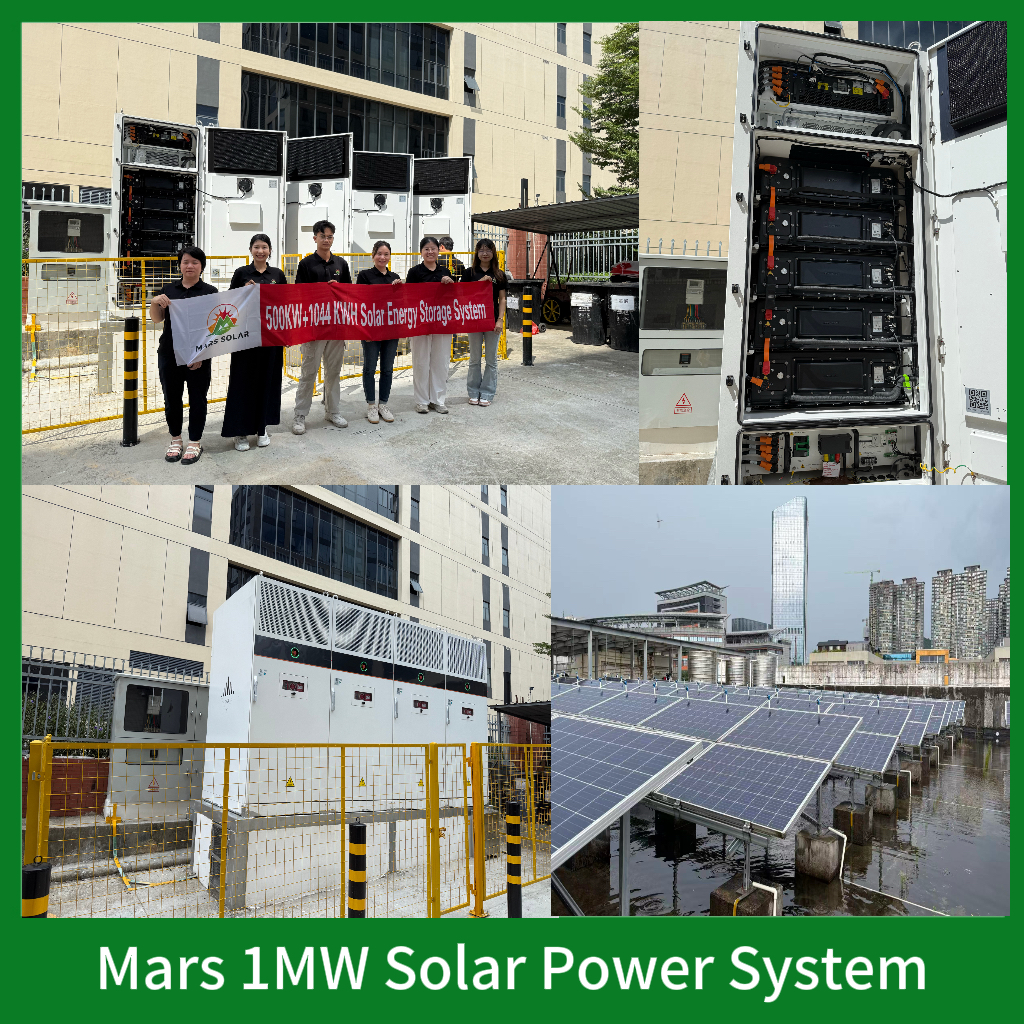
- Comfort risk: with hybrid inverter and Mars Solar commercial BESS (100 kW / 209 kWh outdoor cabinet), cooling and refrigeration stay online through a brownout without the fuel cost, noise and maintenance of a generator.
The distinction matters. A system quoted on kWh savings alone will overstate the return for a hotel, and a system quoted without looking at your load profile will understate it.
 Caption: Guest rooms, lobby cooling and kitchen refrigeration peak during daylight — the same window a rooftop array produces.
A worked scenario
Take a 40-room hotel with a daytime-heavy profile: guest rooms, a restaurant kitchen, lobby and corridor cooling, and pool circulation. Modelling from the equipment schedule upward, at 2026 Meralco General Power rates, a 120 kWp rooftop array produced a 39% reduction in the total bill.
Mars Solar builds commercial hotel systems in this class — for example a 100 kW array paired with 209 kWh of storage — and sizes each project against the customer's own twelve months of billing data rather than a rule of thumb.
The same modelling exercise put a water refilling station at 82% and a supermarket at 31% — identical technology, identical tariff. The spread is not about roof size or budget. It is about when the load occurs. A hotel sits in the favourable half of that range because its peak is a weekday afternoon.
For hotels above 100 kW of demand there is a second lever worth pricing alongside solar: the ERC lowered the Retail Competition and Open Access (RCOA) contestability threshold to 100 kW effective 26 June 2026, letting mid-sized businesses buy generation from a Retail Electricity Supplier. It is complementary to solar, not a substitute, and the two should be evaluated together.
Where the savings actually come from
| Line item | 2026 rate | What solar does |
|---|---|---|
| Generation | ₱9.2504 /kWh | Displaced during daylight |
| System loss | ₱0.8751 /kWh | Displaced during daylight |
| Transmission (demand) | ₱427.97 /kW/mo | Reduced when the array covers your peak |
| Distribution (demand) | ₱232.20 /kW/mo | Reduced when the array covers your peak |
| Distribution (energy) | ₱0.1339 /kWh | Largely displaced |
What to have ready before you ask for a quote
Roof area and orientation, twelve months of Meralco bills, and your billed demand in kW. From the bills alone a supplier can compute your load factor — monthly kWh divided by (kW × 720). Above 0.6 means a steady draw where solar leads; 0.4 to 0.6 means pairing solar with demand management; below 0.4 means fixing sequencing first.
Get a hotel-specific assessment
Generic solar quotes are built on roof area. Hotel economics are built on load profile. Mars Solar sizes commercial hotel systems against twelve months of your actual billing data, not a rule of thumb.
That is the difference between a quotation and an assessment for hotel solar Philippines: one is derived from square metres, the other from when your load actually occurs.
Request your load-profile assessment — send twelve months of Meralco bills and your roof dimensions. You will receive a load-profile assessment and an indicative system size within 24 hours, with no obligation.
Frequently asked questions about hotel solar Philippines
How much of a Meralco bill can hotel solar Philippines actually cut?
In the worked scenario on this page, a 40-room hotel with a daytime-heavy profile and a 120 kWp rooftop array modelled at a 39% reduction in the total bill. The same modelling put a water refilling station at 82% and a supermarket at 31% on an identical tariff, so the spread comes from when the load occurs, not from the equipment.
Does solar reduce the demand charge, or only the energy charge?
It can reduce both, but only under one condition. At July 2026 rates the demand charge is about ₱660.17 per kW of peak per month (₱427.97 transmission plus ₱232.20 distribution), billed on your single highest sustained draw. Solar touches that line only when the array is generating at the moment your peak would otherwise be set — which is why timing matters more than total output.
What size system does a hotel need?
It depends on load profile rather than room count, and that is the first thing a hotel solar Philippines assessment establishes. The 40-room scenario above used 120 kWp. Mars Solar builds commercial hotel systems in this class — for example a 100 kW array paired with 209 kWh of storage — and sizes each project against the customer's own twelve months of billing data.
Why does a hotel model better than a supermarket?
Because guest rooms, lobby air conditioning, kitchen refrigeration and pool pumps all peak during daylight — the same hours a rooftop array produces. A hotel sits in the favourable half of the modelled range (39% versus 31% for a supermarket) because its peak is a weekday afternoon rather than an evening one.
What is load factor, and what does mine mean for sizing?
Load factor is monthly kWh divided by (kW × 720), and a supplier can compute it from your bills alone. Above 0.6 means a steady draw where solar leads; 0.4 to 0.6 means pairing solar with demand management; below 0.4 means fixing equipment sequencing first.
Does a hotel in the Philippines need battery storage?
Not for the bill arithmetic, but yes for continuity. With hybrid inverter and Mars Solar commercial BESS (100 kW / 209 kWh outdoor cabinet), cooling and refrigeration stay online through a brownout without the fuel cost, noise and maintenance of a generator. For a hotel, an air-conditioning outage is a guest experience problem, not just an energy one.
Is switching electricity supplier a better option than solar?
They are complementary, not alternatives. The ERC lowered the Retail Competition and Open Access contestability threshold to 100 kW effective 26 June 2026, letting mid-sized businesses buy generation from a Retail Electricity Supplier. Solar still reduces the demand and distribution lines, which switching supplier does not.
What do I need to send to get an assessment?
Roof area and orientation, twelve months of Meralco bills, and your billed demand in kW. You will receive a load-profile assessment and an indicative system size within 24 hours, with no obligation.
-
 6MW 20MWh Solar Storage in Nigeria Factory + Farm + Residential Case StudyA 6MW solar PV + 20MWh LFP battery storage system in Nigeria powers an integrated factory, farm, and residential complex. The system delivers $108,000+ in monthly electricity savings, reaches payback in approximately 24 months, and provides 25 years of renewable power. This case study covers the engineering configuration, financial model, and operational performance of one of West Africa's most ambitious factory + farm + residential solar deployments.
Do you like ?0
Read more -
Germany's installed capacity demand will reach 11GW and 70GW in 2023As one of the leading countries in the European photovoltaic market, Germany's new installed capacity will reach 11GW in 2023. Looking back at the installed capacity data from January to October 2022, the new installed capacity in German
Do you like ?0
Read more