Nigeria Solar Financing and Incentives 2026: DARES, EDTI and VAT Zero-Rating
Most Nigeria solar financing conversations happen too late. A buyer prices the equipment, negotiates the container, then discovers that the incentives which would have changed the project's shape were available all along — and that some of them only apply if the structure is set up before the invoice is raised.
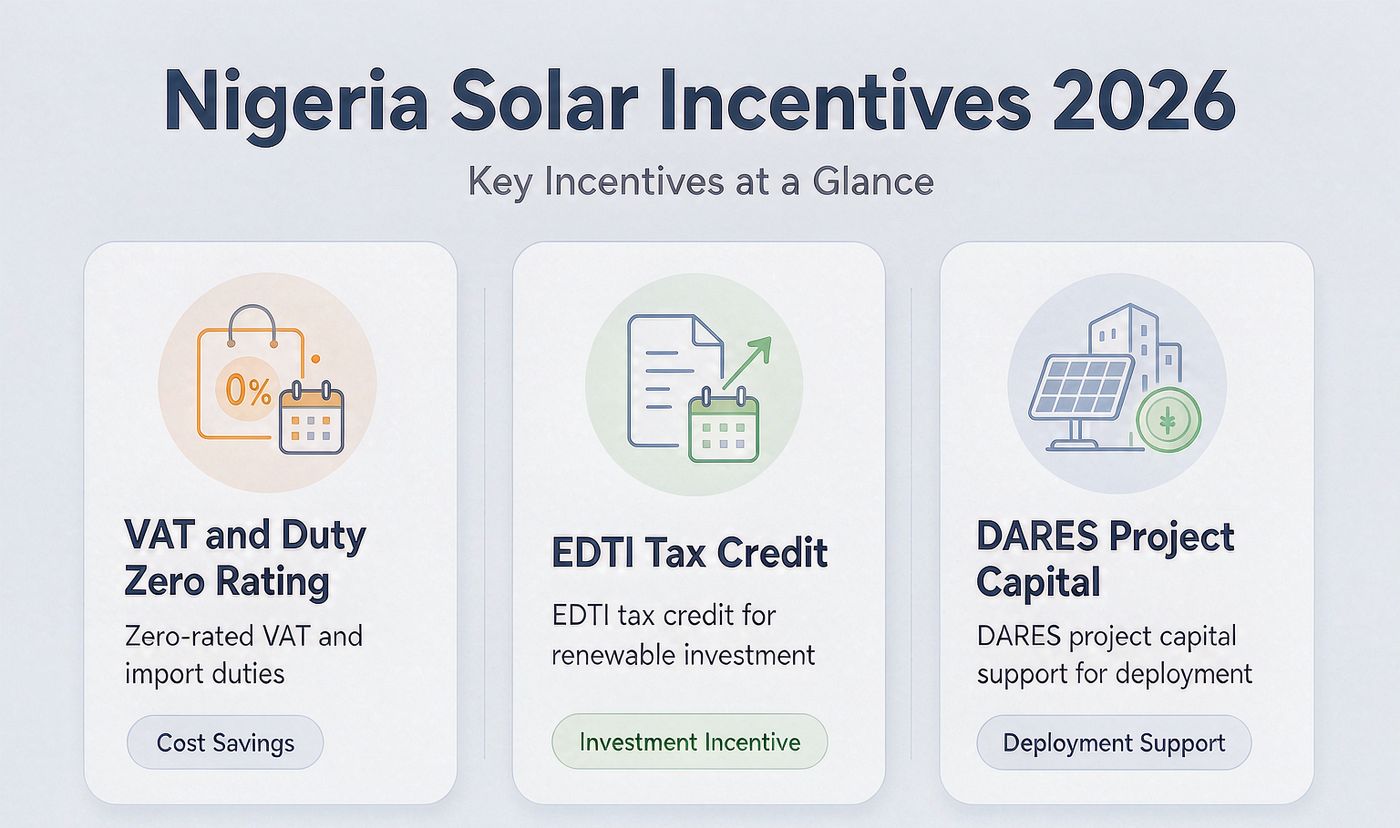
The three that matter in 2026 are different in kind. DARES is project capital for the access market. EDTI is a corporate tax credit on your own capital spending. VAT zero-rating is a straight cost line on every import. Only the third one applies automatically, and only if the HS classification on your entry is right.
This guide covers what each one actually is, who qualifies, and where the gaps are.
Quick answer: what solar incentives are available in Nigeria in 2026?
Nigeria solar financing in 2026 rests on three pillars. Solar panels, inverters, batteries and charge controllers are zero-rated for VAT and exempt from import duty under the Nigerian Tax Act and Nigeria Customs Circular T&T/2024/18. The Economic Development Tax Incentive replaced Pioneer Status from January 2026, offering a 5 percent annual tax credit on qualifying capital expenditure in priority sectors including renewable energy. And the DARES programme channels more than USD 750 million of World Bank and donor funding into distributed renewable energy, with over 830,000 solar home systems deployed as of April 2026.
VAT and import duty: what Nigeria solar actually gets zero-rated
The tax position for solar equipment in 2026 is more favourable than the headline VAT rate suggests. Nigeria's standard VAT rate rose to 10 percent, but solar equipment was carved out.
| Item | VAT | Import duty | Basis |
|---|---|---|---|
| Solar panels | 0% | 0% | NTA Section 144; CET Circular 18 |
| Inverters | 0% | 0% | Eleventh Schedule |
| Batteries | 0% | 0% | HS 8541.42 / 8541.43 |
| Charge controllers | 0% | 0% | ECOWAS CET |
The legal basis is Section 144 of the Nigerian Tax Act together with Nigeria Customs Circular T&T/2024/18. The correct HS codes are 8541.42.00.00 and 8541.43.00.00, which carry 0 percent duty and are VAT-free under the ECOWAS Common External Tariff for 2022 to 2027.
The Nigeria solar duty-free status has been reversed before
This is the part worth knowing before you build a Nigeria solar financing model around zero duty.
The Nigeria Customs Service reaffirmed in its 2024 circular that solar panels remain exempt, and in doing so clarified that some customs units had been mistakenly classifying panels under Heading 85.01 rather than the correct Heading 85.41. That matters because the same reclassification argument was run in 2018, when panels were moved to a heading that attracted import charges on the basis that panels with diodes function as generators rather than simple photovoltaic components. Industry pushback took years to reverse.
The lesson is not that duty-free status is fragile today. It is that Nigeria solar import treatment has been contested and reversed before, so treat the current position as confirmed rather than permanent, and verify current HS-code guidance before large orders.
Zero duty does not mean zero Nigeria solar paperwork
Duty and conformity are separate regimes. Photovoltaic modules, inverters, batteries and energy storage systems are all regulated products under SONCAP, and zero duty does not exempt them.
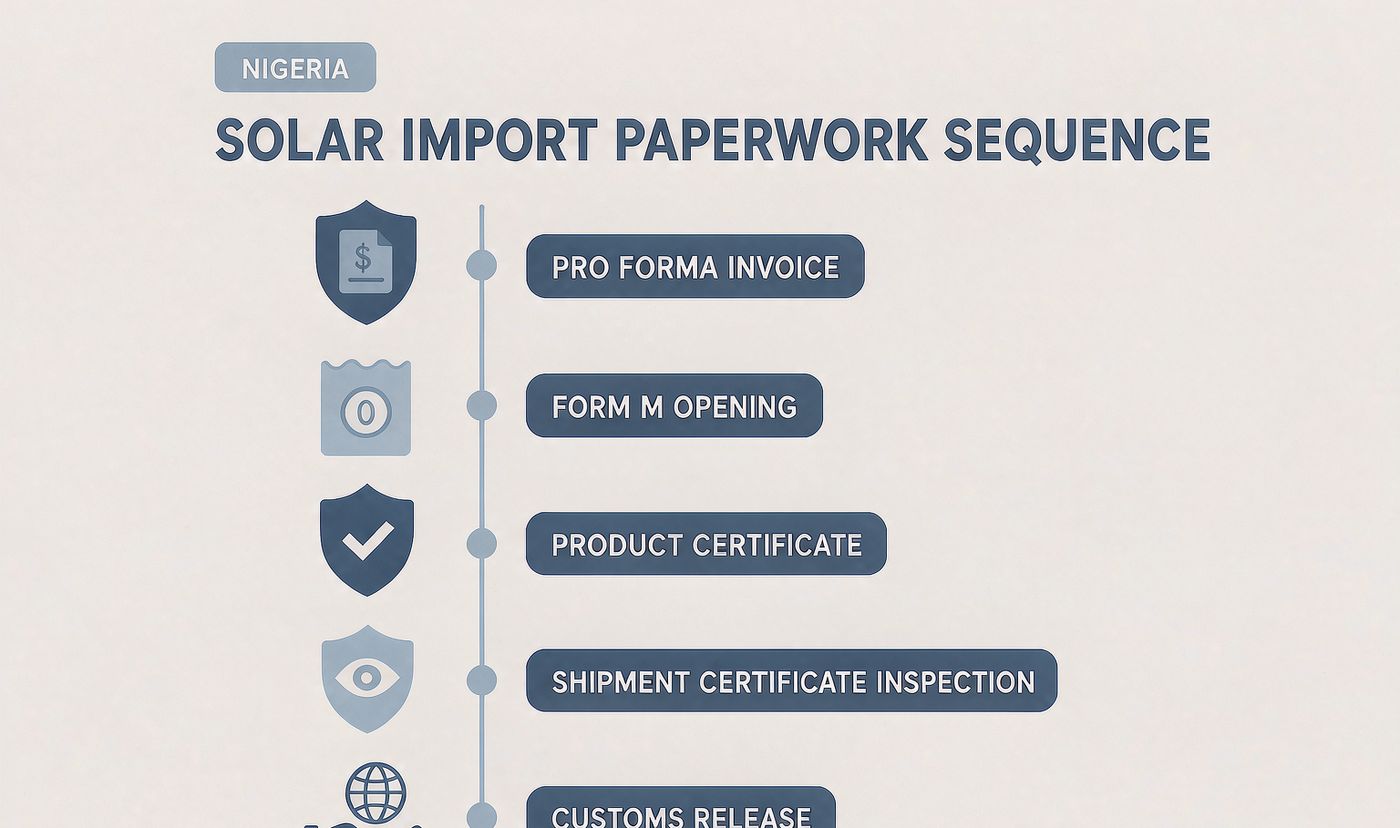
SONCAP is a two-tier programme run by the Standards Organisation of Nigeria. Tier one is a Product Certificate registered to the product and manufacturer — budget two to four months, and PC3 grade adds a factory quality-system audit. Tier two is a Shipment Certificate applied per consignment, issued only after physical inspection at the loading port, and synced to the Nigeria Single Window.
Form M is mandatory above USD 20,000 and must be opened through a Nigerian authorised dealer bank before the supplier ships. It requires a pro-forma invoice with itemised FOB value, freight and insurance, plus cargo insurance from a Nigerian insurer.
EDTI: the Nigeria solar tax credit that replaced Pioneer Status
From January 2026, Nigeria formally replaced the Pioneer Status Incentive with the Economic Development Tax Incentive framework. This is the change most Nigeria solar financing models have not yet absorbed.
Pioneer Status granted tax holidays. EDTI does something different: it offers a 5 percent annual tax credit on qualifying capital expenditure in priority sectors, renewable energy among them. For a company investing in its own generation assets, that is a credit against tax liability rather than an exemption from it.
Two practical consequences follow. First, the incentive is tied to capital spending actually incurred, so the timing of your investment affects when the credit arises. Second, because it is a credit and not a holiday, it is only worth anything to an entity with tax liability to offset.
Input VAT is still recoverable on Nigeria solar
Companies selling zero-rated equipment can still recover VAT paid on business expenses. Under Section 155 of the Nigerian Tax Act, input VAT can be deducted where costs relate to taxable business activities, subject to apportionment rules and a five-year claim window. If output VAT is zero but inputs were taxed, refunds or carried-forward credits are available.
Two conditions to note. Only VAT linked to taxable activities is claimable. And where a company provides installation services without selling equipment, VAT applies to the service fee — the zero-rating covers goods, not labour.
DARES: where Nigeria solar project capital is
The Distributed Access through Renewable Energy Scale-Up programme is the largest structural shift in Nigeria solar financing, and it is not a tariff order or a customs circular.
DARES is a USD 750 million World Bank-supported initiative implemented by the Rural Electrification Agency. Counterpart funding brings the total higher: ₦100 billion from Lotus Bank, ₦100 billion from First City Monument Bank, USD 83 million from the International Finance Corporation, and over USD 200 million from the Japan International Cooperation Agency. A further tranche confirmed in June 2026 brought JICA's combined commitment to roughly USD 393.8 million, with the United States channelling about USD 49.1 million through a separate trust fund.
The programme targets electricity access for more than 17.5 million Nigerians and about 465 MW of renewable capacity, deploying solar hybrid mini-grids alongside standalone solar home systems.
Nigeria solar DARES progress as of 2026
As of April 2026, over 830,000 solar home systems had been deployed — 41.5 percent of the 2 million installation target — covering nearly 3.9 million people across Nigeria's six geopolitical zones, with strong coverage in Kaduna, Akwa Ibom, Enugu, Abia, Adamawa and Bauchi states. The broader programme reports reaching more than 4.1 million people.
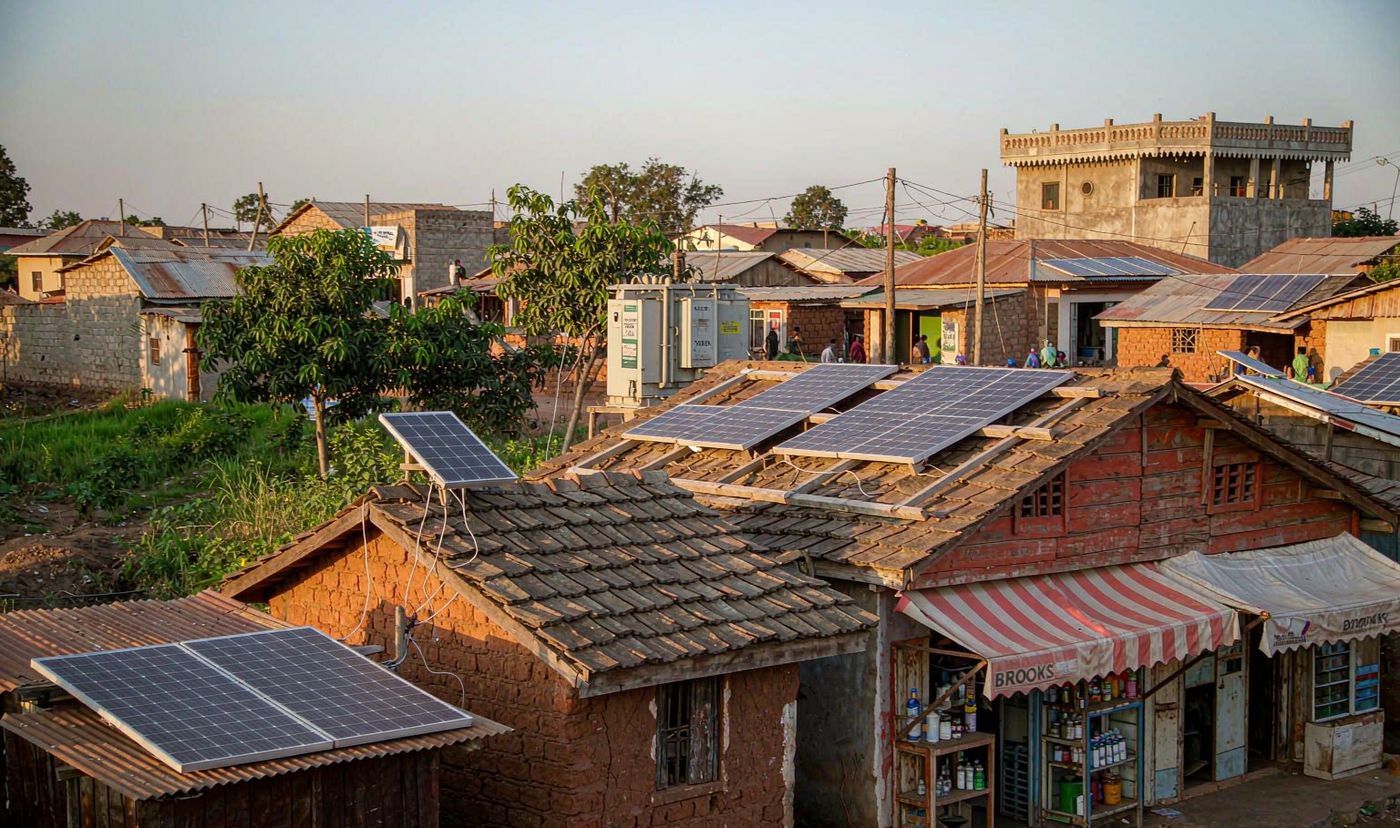
The IFC-backed facility is structured as a revolving debt facility providing longer-tenor capital to developers, with the platform expected to mobilise more than USD 150 million across current and planned transactions.
What DARES means if you are not a Nigeria solar developer
Be clear about who this money reaches. DARES financing flows to developers deploying mini-grids and solar home systems, not to a factory buying storage for its own load. If you are a commercial or industrial buyer self-funding a rooftop or hybrid system, this is not your funding source.
Where it does matter to you is as a market signal and, indirectly, as a supply-chain effect. A programme deploying hundreds of thousands of systems changes what is stocked locally, what spare parts exist, and what installers are trained on. It also shifts the mini-grid regulatory picture in your favour.
Nigeria solar mini-grid capacity limits were raised
One regulatory change is directly useful to commercial buyers. NERC revised the mini-grid regulation, which previously limited developers to systems of up to 1 MW. The updated framework allows up to 5 MW for isolated mini-grids and up to 10 MW for interconnected mini-grids.
That opens a size band that was previously awkward: sites large enough to justify their own generation but too large to fit the old mini-grid ceiling.
How these three stack up for Nigeria solar in practice
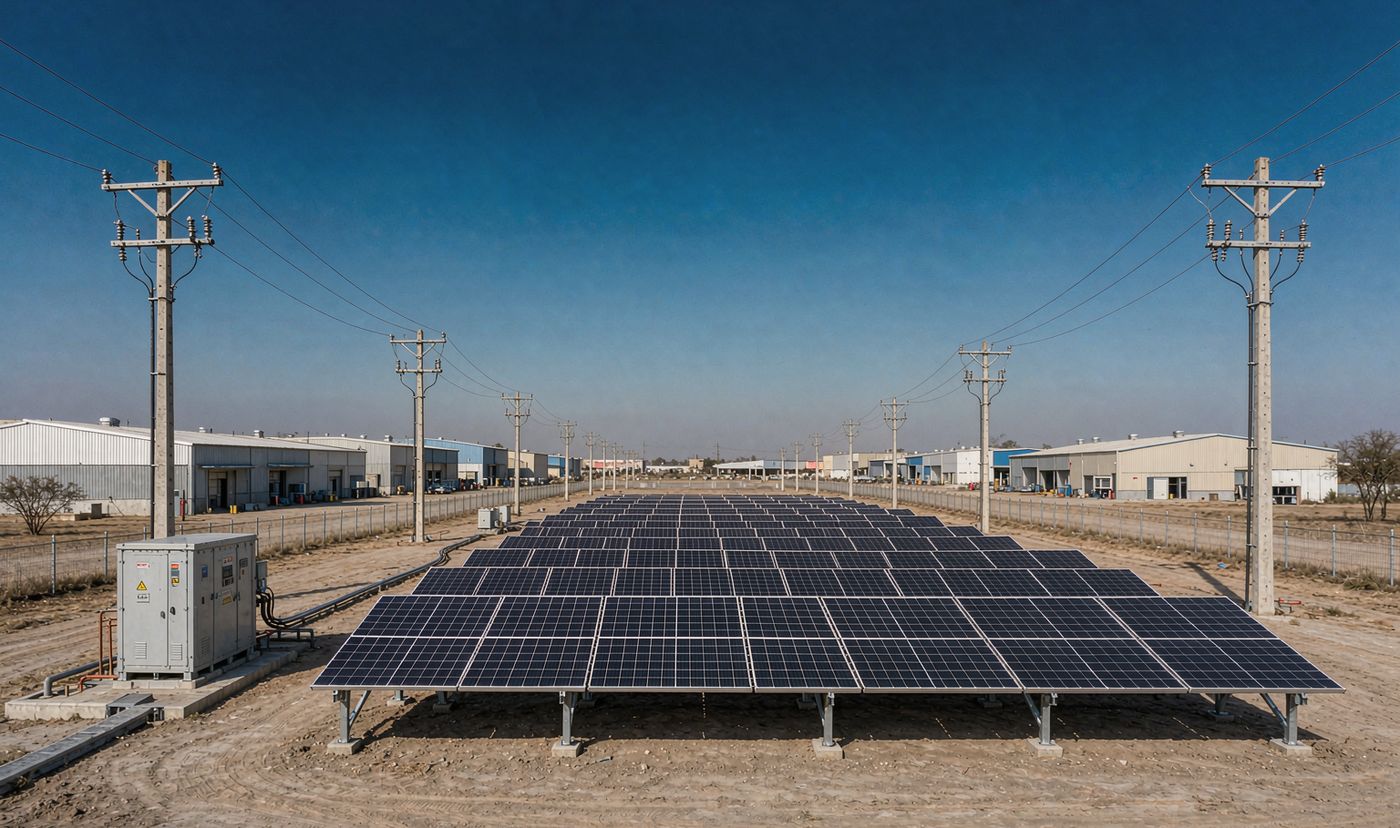
The incentives apply at different points and to different entities, which is why they are usually discussed separately and rarely modelled together. For Nigeria solar financing purposes, the practical split is:
- VAT and duty zero-rating — applies to nearly every equipment import, automatically, provided HS classification is correct. This is the one that touches every project.
- EDTI — applies to Nigerian entities with tax liability making qualifying capital expenditure. Relevant to local partners, EPC firms and companies investing in their own assets.
- DARES — applies to access-market developers. Relevant to mini-grid and solar home system projects, not to self-consumption systems.
The most common mistake is assuming the DARES headline number is available to a commercial buyer. It is not. The most expensive mistake is getting the HS code wrong on a large import and losing the duty exemption to a classification argument.
Frequently asked questions
Is Nigeria solar equipment still duty-free in 2026?
Yes. Solar panels, inverters, batteries and charge controllers are zero-rated for VAT and exempt from import duty under Section 144 of the Nigerian Tax Act and Nigeria Customs Circular T&T/2024/18, using HS codes 8541.42.00.00 and 8541.43.00.00. This has been contested before, so verify current HS guidance before large orders.
What replaced Pioneer Status for Nigeria solar in 2026?
The Economic Development Tax Incentive, or EDTI, replaced Pioneer Status from January 2026. Rather than granting tax holidays, it offers a 5 percent annual tax credit on qualifying capital expenditure in priority sectors including renewable energy. It is a credit against tax liability, not an exemption.
Does VAT zero-rating apply to installation services?
No. Zero-rating covers goods. Companies providing installation services without selling equipment must still charge VAT on the service fee. Equipment sales and installations remain exempt unless the Minister of Finance issues a formal commencement order.
Can I access DARES funding for my Nigeria solar factory system?
No. DARES financing flows to developers deploying mini-grids and solar home systems in underserved communities. Commercial and industrial buyers funding their own self-consumption systems are outside its scope, though the programme affects local supply chains and installer capacity.
How much Nigeria solar funding has DARES deployed?
The programme is built on a USD 750 million World Bank facility with counterpart funding including ₦100 billion each from Lotus Bank and FCMB, USD 83 million from IFC and over USD 200 million from JICA, with JICA's combined commitment reaching about USD 393.8 million after a June 2026 tranche. Over 830,000 solar home systems were deployed as of April 2026.
Do I need SONCAP if duty is zero?
Yes. Duty and conformity are separate regimes. Modules, inverters, batteries and storage systems are regulated products under SONCAP, requiring both a Product Certificate registered to the product and manufacturer and a per-shipment Shipment Certificate issued after inspection at the loading port.
What is the Nigeria solar mini-grid capacity limit now?
NERC revised the regulation to allow up to 5 MW for isolated mini-grids and up to 10 MW for interconnected mini-grids, up from a previous 1 MW ceiling. This opens the band for sites large enough to justify dedicated generation but too large for the old limit.
Can a solar company recover input VAT if its sales are zero-rated?
Yes. Under Section 155 of the Nigerian Tax Act, input VAT on business expenses can be deducted where costs relate to taxable business activities, subject to apportionment and a five-year claim window. Refunds or carried-forward credits are possible where input VAT exceeds output VAT.
Planning a Nigeria solar project?
The Nigeria solar incentives above change the arithmetic but not the sequence. Confirm your HS codes before you order, confirm SONCAP certificate status before you ship, and confirm which of these three actually applies to your structure before you model the savings.
Send us your Nigeria solar site load profile and your import structure, and we will quote against the duty and VAT treatment that actually applies to your configuration.
About Mars Solar
Mars Solar is a solar system factory in Foshan, China, manufacturing and supplying solar power systems, battery energy storage and street lighting since 2008. We hold SONCAP Product Certificates and support importers across Nigeria, Ghana, Kenya, the Philippines, the Gulf, the Caribbean and Central America.
-
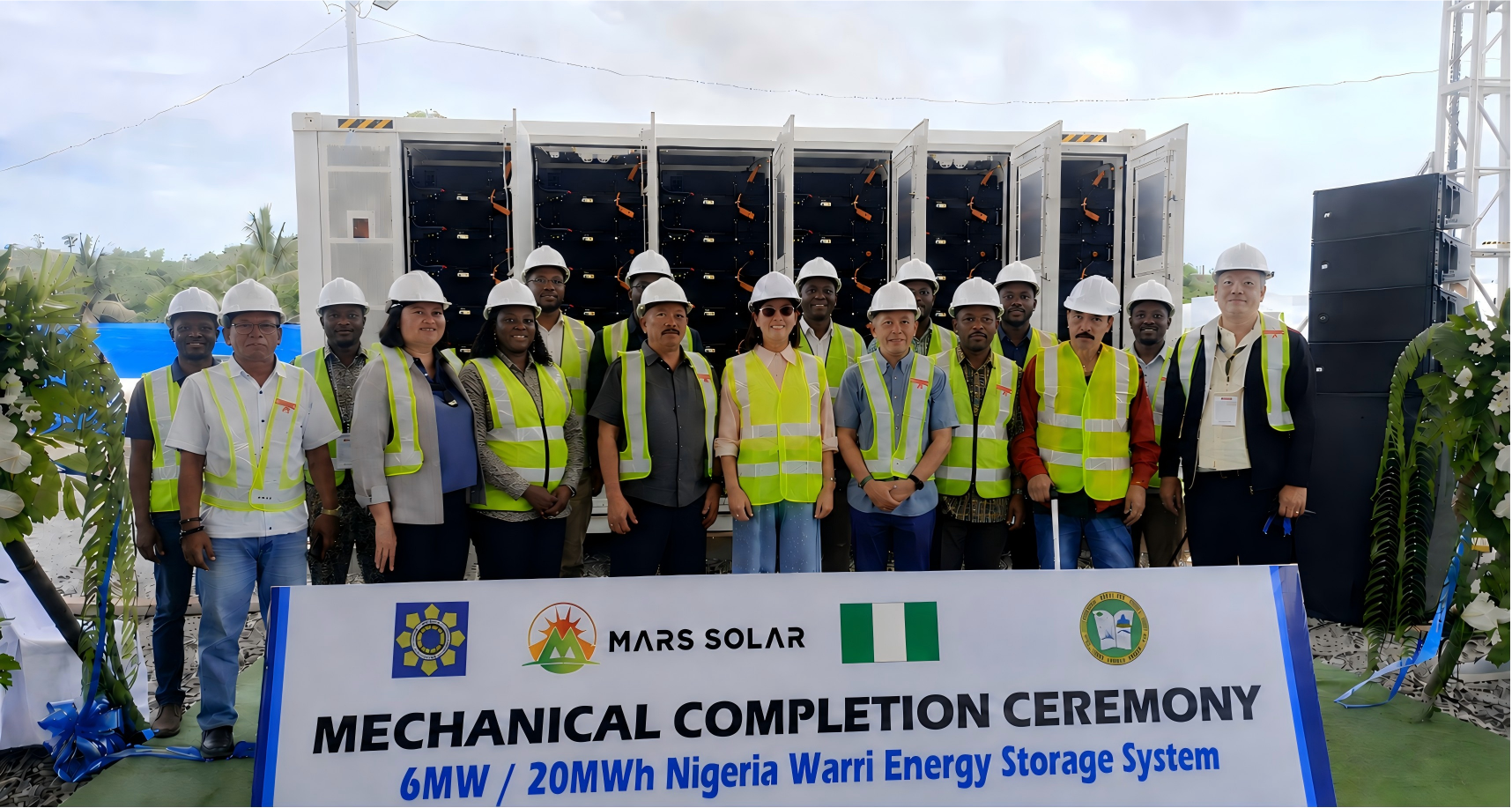 6MW 20MWh Solar Storage in Nigeria Factory + Farm + Residential Case StudyA 6MW solar PV + 20MWh LFP battery storage system in Nigeria powers an integrated factory, farm, and residential complex. The system delivers $108,000+ in monthly electricity savings, reaches payback in approximately 24 months, and provides 25 years of renewable power. This case study covers the engineering configuration, financial model, and operational performance of one of West Africa's most ambitious factory + farm + residential solar deployments.
Do you like ?0
Read more -
Germany's installed capacity demand will reach 11GW and 70GW in 2023As one of the leading countries in the European photovoltaic market, Germany's new installed capacity will reach 11GW in 2023. Looking back at the installed capacity data from January to October 2022, the new installed capacity in German
Do you like ?0
Read more