Quick answer: A 5KW solar system of this configuration produces about 33.6KWH per day from 16x350W monocrystalline panels and driven by a 5KW/7KVA inverter. Built by Mars Solar (factory since 2008), CE/ROHS certified, 25-year panel life, shipped factory-direct to 130+ countries.
At present, there are three major countries in the blue ocean of the household solar panel and battery kit market: the United States, Germany and Australia. Why do you say that the solar panel and battery kit market in these three countries has great potential?
All states in the United States have relative autonomy in electricity pricing, power operation, and energy storage policies. Each state can develop its own energy storage development ideas according to its own characteristics. In 2009, the US government introduced the S.1091 program, called the Renewable and Green Energy Storage Act, which regulates the investment tax policy for grid-side and household-side solar panel and battery kit equipment. Subsequently, in 2012 and 2013, S. Acts 1845 and S.195 support solar panel and battery kit in terms of energy storage investment credit and tax credits. In addition, the electricity bill in the United States is relatively expensive, and the price of electricity in Hawaii is most prominent at about 1.7 yuan / kWh. Such high electricity prices will encourage users to choose solar panel and battery kit to meet electricity demand. According to relevant data, about 1.7% of households in the United States installed solar panel kit with battery in 2018, and this part of users will be potential users of household energy storage.
The development of household solar panel kit with battery in Germany once attracted the attention of the world. Because of the strong support for photovoltaic policy, the German photovoltaic market ushered in the installation boom, and let Germany jump to the top of the world photovoltaic market and took the top spot. However, the advancement is a decline in subsidies until it is minimal and tends to be cheap. Market position has also plummeted, but it does not matter. In 2015, German authorities launched the “Sonne Community” program, which prompted participants to store excess electricity in energy storage batteries. The latest subsidies for photovoltaic cells began on March 1, 2016. According to the data at the end of 2018, 30 million euros have been subsidized. In 2019, this incentive plan is still continuing.
Australia has a wealth of lighting conditions, which is also the glory of the Australian household solar panel kit with battery market in the past 10 years. It also allowed Chinese solar system manufacturer to get a share of it. Promoting household solar panel kit with battery Australia's measures are similar to those of the previous households supporting photovoltaics, giving subsidies, allowing users to get benefits and mobilizing users' enthusiasm. The first round of PV subsidies expired on December 31, 2016. The subsidy policy around solar panel kit with battery has been waiting for the industry for a long time, until Adelaide broke the deadlock and became Australia's first subsidy mechanism for solar kit with battery. The subsidy is for residential, school, and community users to install solar kit with battery storage system. The maximum subsidy is 5,000 Australian dollars. The amount of subsidy is calculated according to the size of the project. In contrast, the installed capacity of solar panel kit with battery in Australia is much higher than that in the United States, and Australia is 27%, so that 27% of users in the future will be the target and direction of the market. And the Australian authorities are also working hard to drive down the cost of energy storage, and to spread the battery storage capacity to millions of households, in the hope of achieving 90% of the solar kit with battery rate by 2030.
-
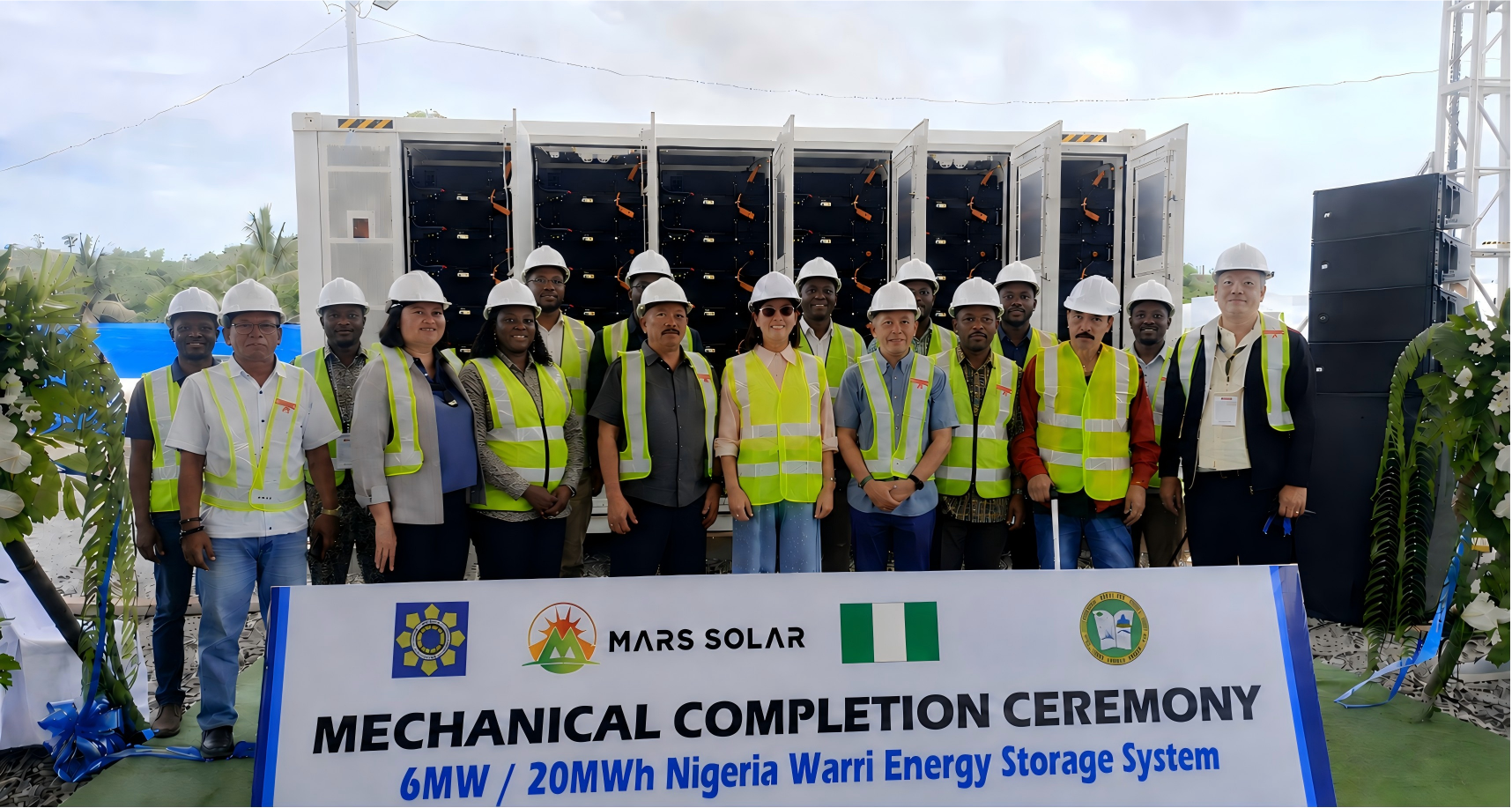 6MW 20MWh Solar Storage in Nigeria Factory + Farm + Residential Case StudyA 6MW solar PV + 20MWh LFP battery storage system in Nigeria powers an integrated factory, farm, and residential complex. The system delivers $108,000+ in monthly electricity savings, reaches payback in approximately 24 months, and provides 25 years of renewable power. This case study covers the engineering configuration, financial model, and operational performance of one of West Africa's most ambitious factory + farm + residential solar deployments.
Do you like ?0
Read more -
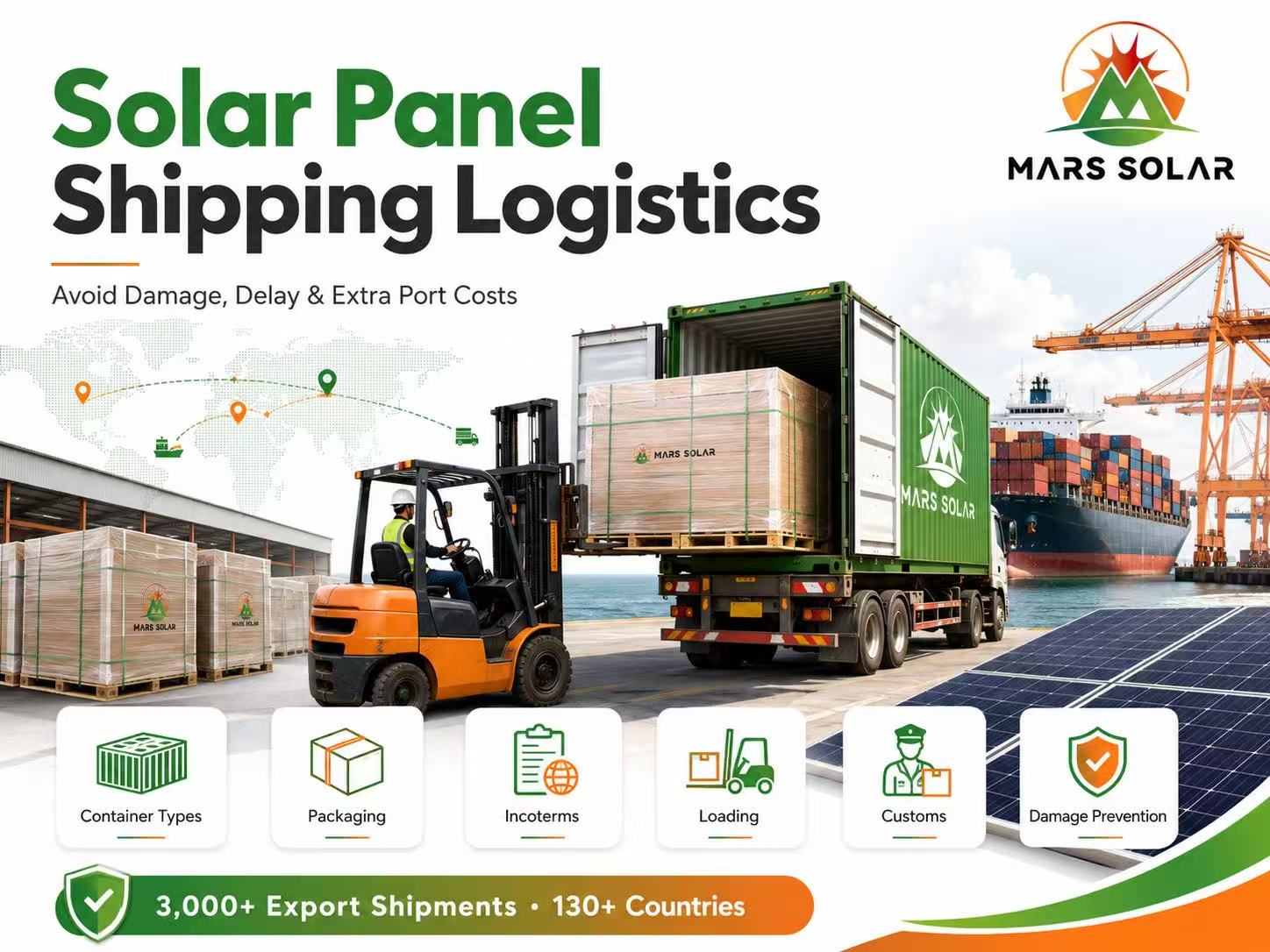 Solar Panel Shipping & Container Loading: The 2026 Complete GuideThe solar panels leaving the factory are perfect. By the time they arrive at your warehouse, 3–7% might be damaged, delivery could be 2 weeks late, and demurrage at the destination port could wipe out your margin. This 2026 guide covers container types (2
Do you like ?0
Read more -
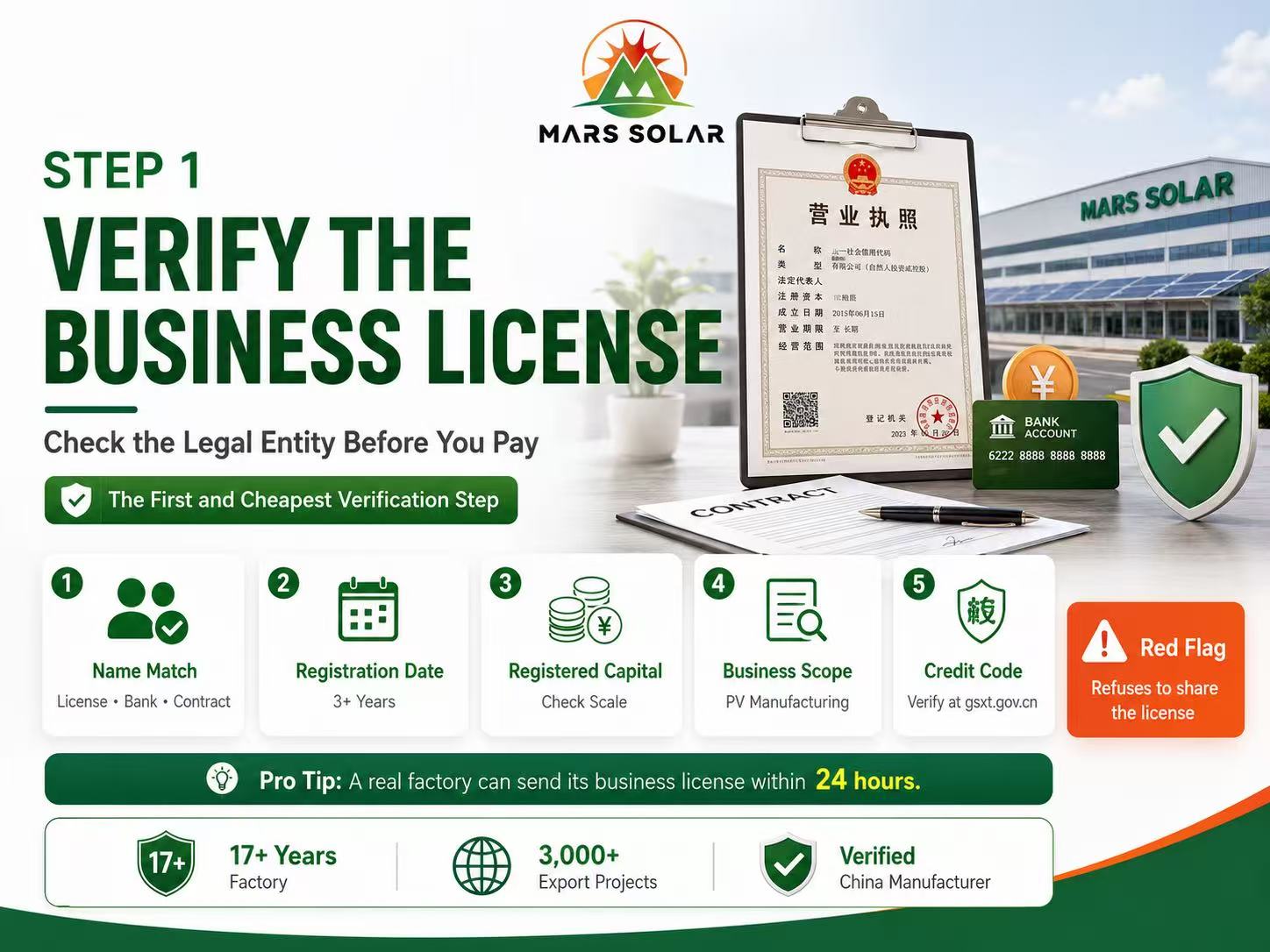 Solar Panel Factory Verification: The 7-Step Due Diligence GuideEvery year, international solar buyers lose millions to fraudulent suppliers — fake certificates, empty factories, and panels that don't match spec. This 7-step verification guide shows you exactly how to qualify any China solar factory before you wire mo
Do you like ?0
Read more -
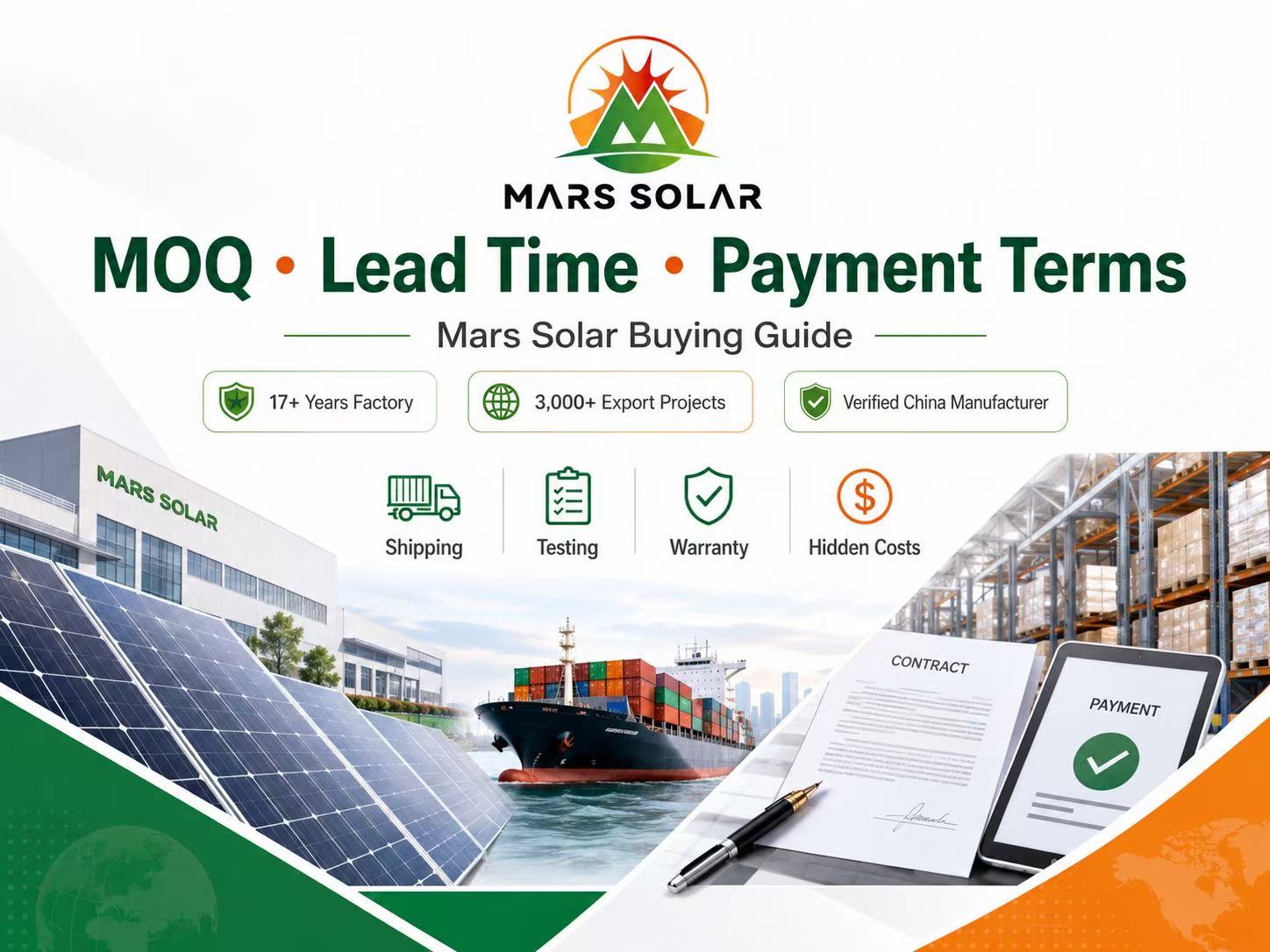 Solar Panel MOQ, Lead Time & Payment Terms: The Complete 2026 Buyer's GuideMOQ, lead time, and payment terms are the 3 questions every solar buyer asks — and the 3 answers most suppliers hide behind vague emails. This guide gives you complete, honest answers from a verified China factory with 17+ years and 3,000+ export projects
Do you like ?0
Read more -
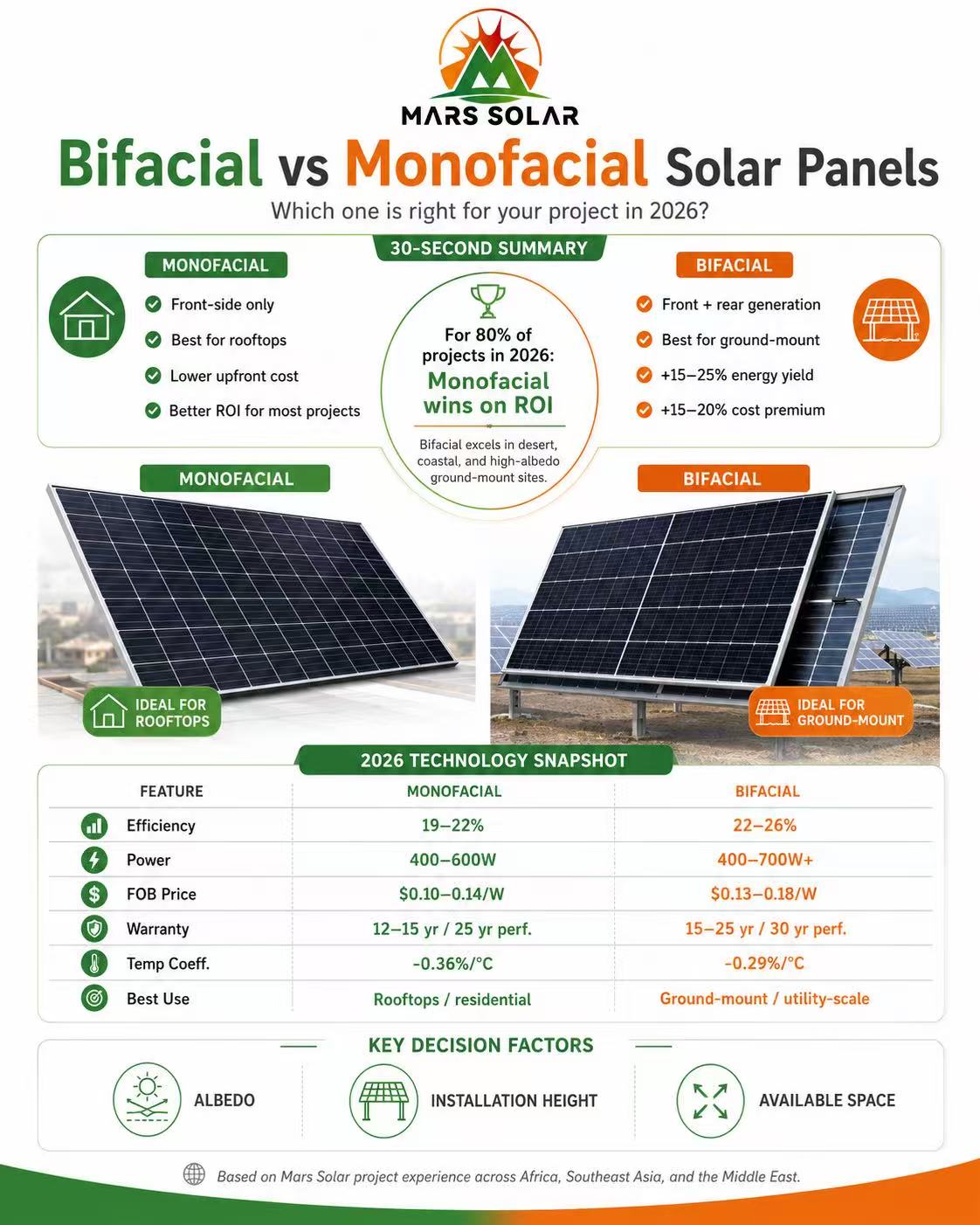 Solar Panel Selection Guide: Monofacial vs. Bifacial — 2026 EditionMonofacial and bifacial solar panels look identical but deliver 15-25% output difference. This 2026 guide compares 15 technical parameters, analyzes 5 real project ROI cases (Nigeria, Philippines, Ghana, Kenya, DRC), and gives you 3 decision frameworks to
Do you like ?0
Read more -
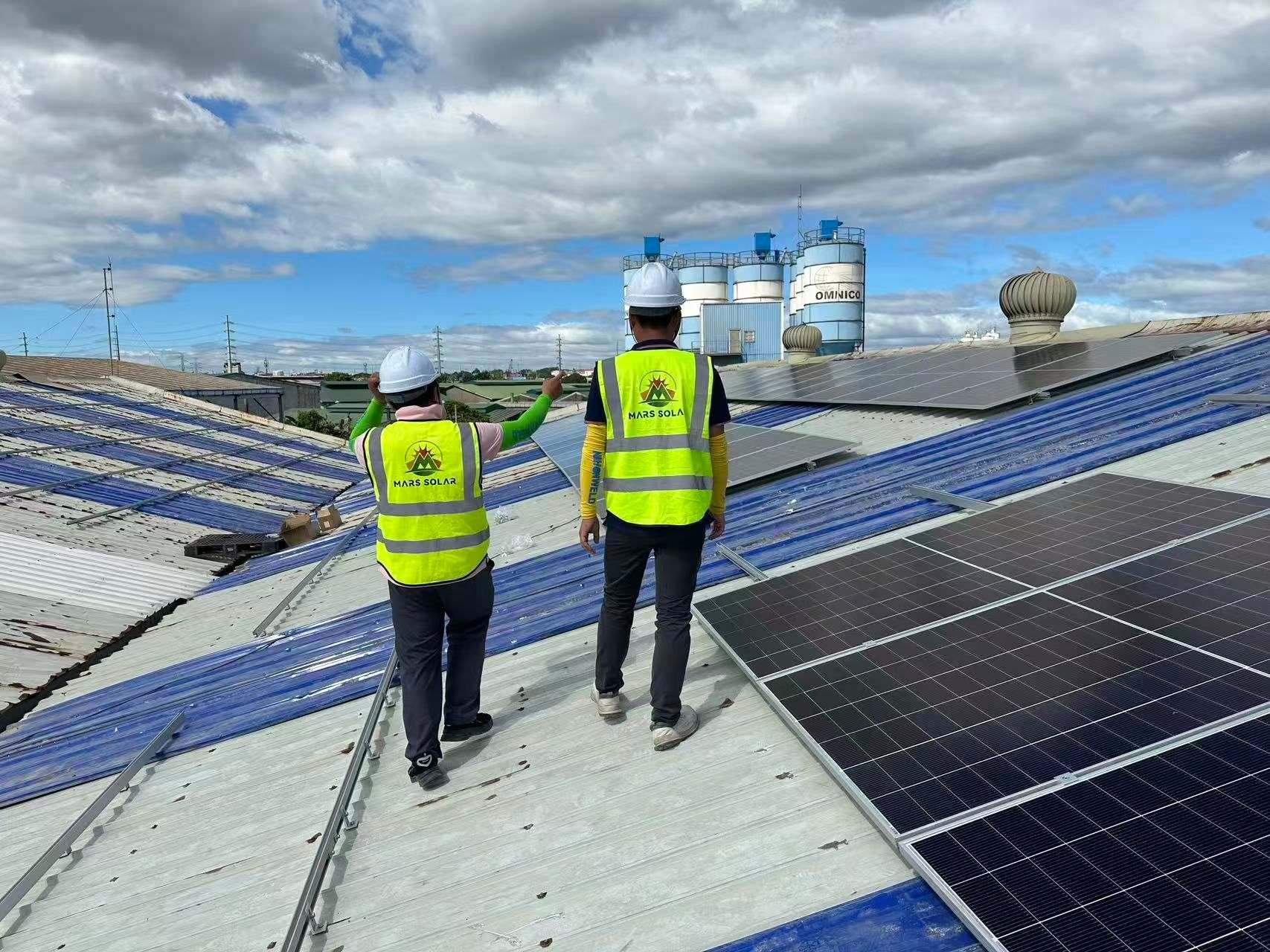 Top 10 Solar Panel Manufacturers China 2026 | Best BrandsDiscover the top 10 solar panel manufacturers China 2026. Compare Jinko, LONGi, Trina & more. Find Tier 1 suppliers.
Do you like ?0
Read more