Quick answer: 250kW solar Ghana
A 250kW solar system for a hotel in Ghana is sized around the worst hour, not the average day - check-in peaks, kitchen loads and air conditioning all land at once, and the grid will not cover the gap. That is why the battery room, not the array, is the part worth touring.
On this page
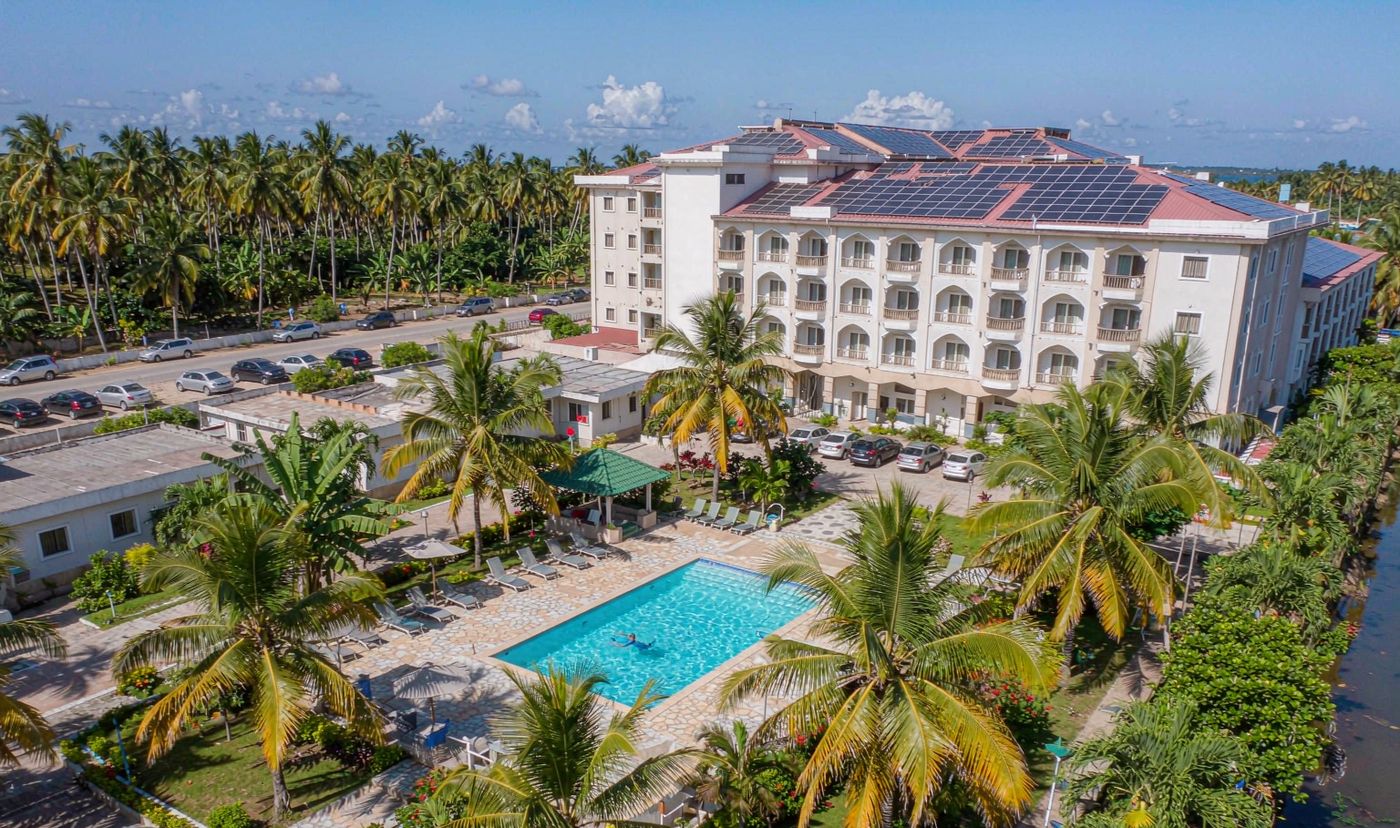
A 250kW solar installation for a hotel in Ghana is one of the more demanding commercial jobs in our order book — not because of the array, which is straightforward, but because a hotel is the hardest kind of building to back up with batteries. This article walks through the battery room and array design as the installation progresses, and explains why hotels break the assumptions that work fine for factories and cold storage.
Why a hotel is the hardest commercial load to back up
A factory has a load profile you can flatten: shift the heavy machines into daylight, run the array hard, recharge the bank before the night shift. A cold storage facility has a load you can predict: compressors run around the clock at a steady draw.
A hotel does neither. Its demand is spiky in a way that frustrates both of those strategies:
- The peak is in the evening — lighting, air conditioning, kitchens and entertainment all stack up after sunset, exactly when the array stops producing.
- Occupancy swings the load. A hall full of conference guests and an empty mid-week building are two different sites behind the same meter.
- Guest comfort cannot be load-shed. A factory can schedule its pumps; a hotel cannot schedule its guests. The backed-up circuits have to include everything a guest will notice, which is most of them.
The consequence is that a hotel system is sized from the evening peak and the backup window, not from the daily average. That is why the battery side of a 250kW hotel system ends up disproportionately large compared with a 250kW factory system running the same meter.
The battery room: what went into it
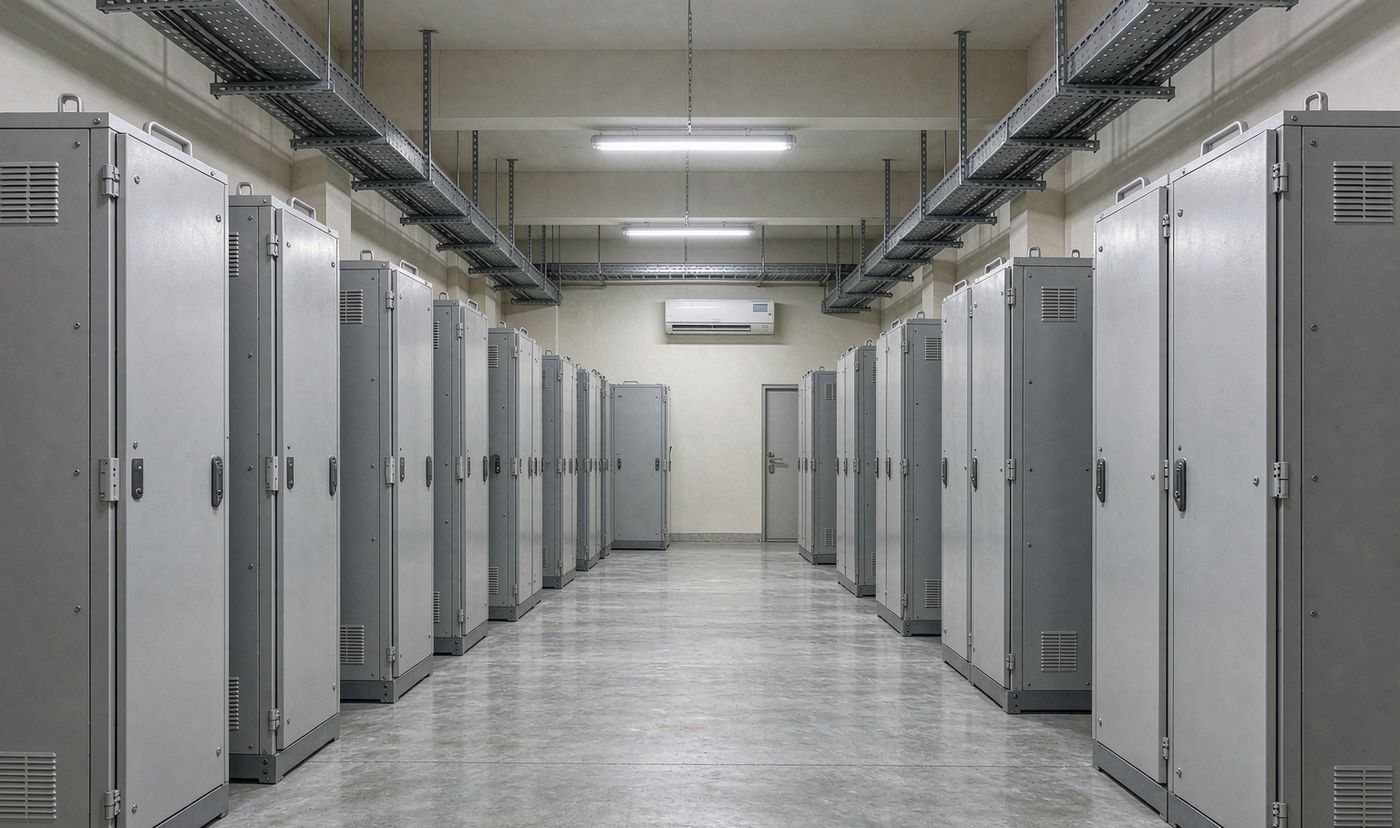
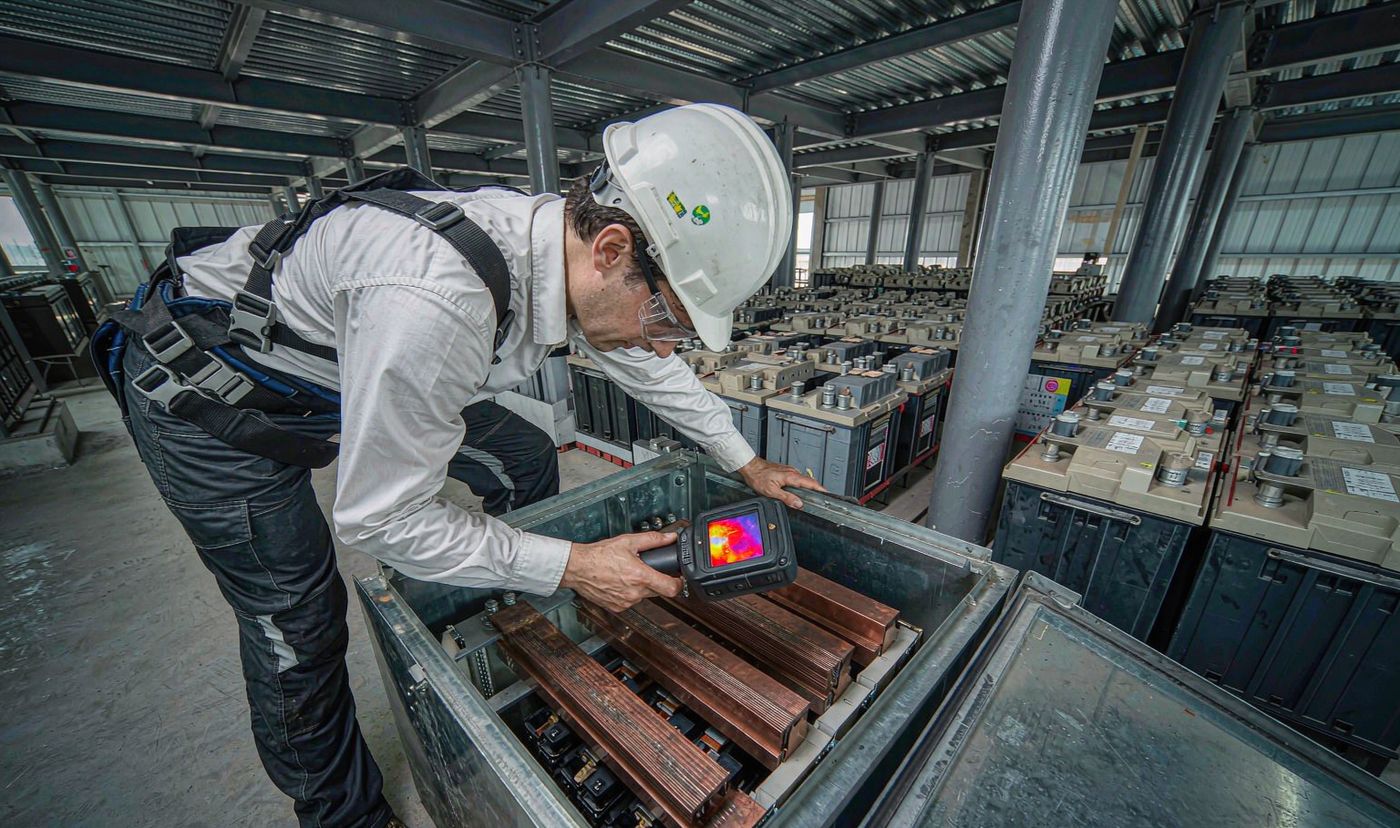
The battery room in this project houses the storage bank as a proper engineering space rather than an afterthought corner. From the build as installed, the elements that matter:
MPPT charge controllers in parallel banks. The room runs multiple MPPT solar charge controllers rather than one large unit. Paralleling controllers spreads the charging work across several units, keeps each within its current rating, and — practically — means a single controller fault degrades the system instead of ending it. The trade-off is honest: more units, more wiring discipline, and commissioning that must confirm each unit's sharing behavior, not just its output.
Battery cabinets with dedicated buswork and protection. The cabinets are racked with short, heavy DC connections and protected at the string level. Short runs matter at battery currents; every extra metre of undersized DC cable is heat and voltage drop exactly where the system cannot afford them.
Ventilation and separation. Battery rooms live or die by thermal management. In Ghana's ambient temperatures, a sealed room turns into an oven by mid-afternoon, and lithium cycle life is measured against cell temperature. The room layout keeps airflow around the cabinets and keeps the protection hardware accessible.
A dedicated PV combiner panel. Array strings land on a combiner before the controllers, which turns troubleshooting from a roof exercise into a room exercise: an underperforming string is found at the combiner in minutes.
The array side: metal roof mounting done properly
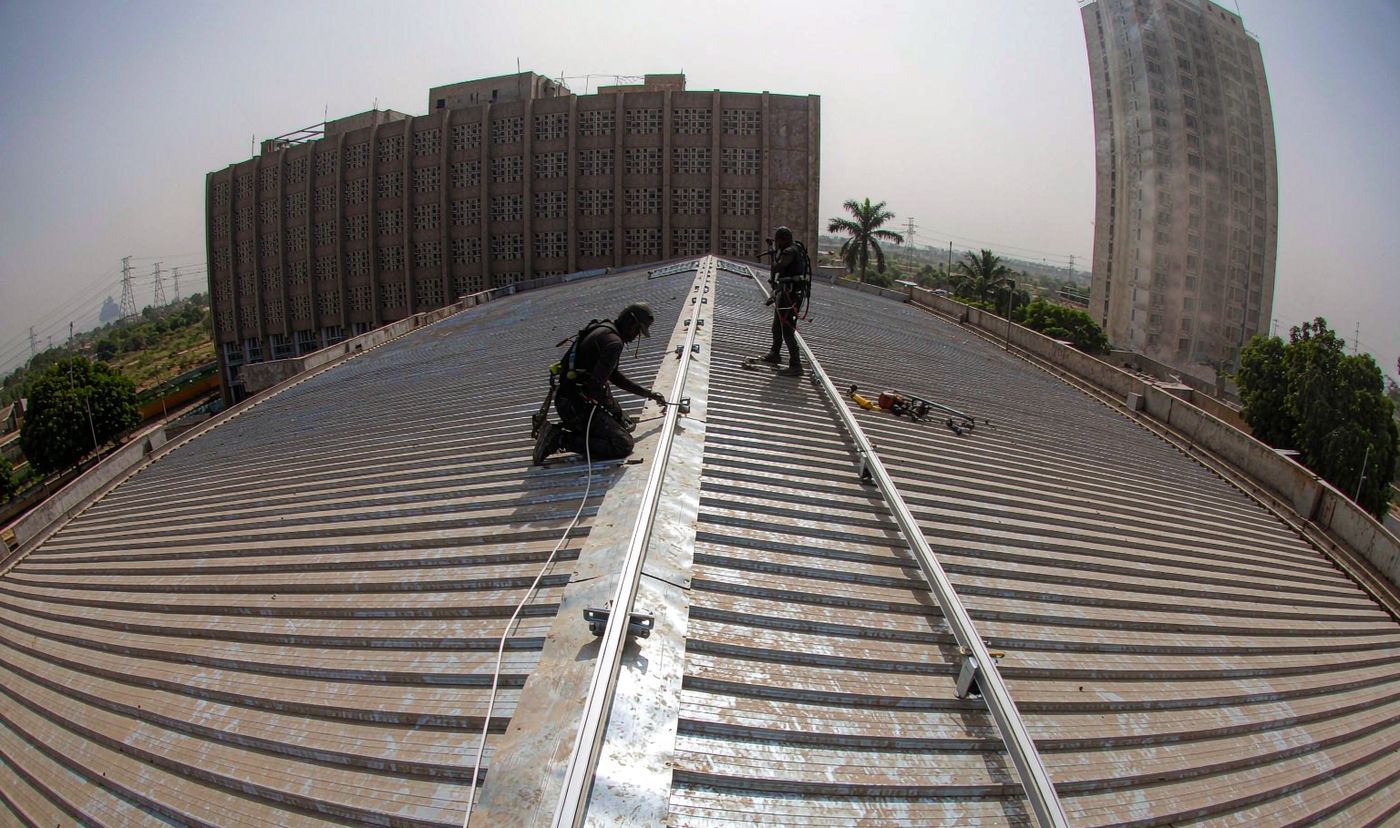
The hotel's roof is metal sheeting, which is the common commercial roof across West Africa and the one that punishes cheap mounting hardest.
Metal-roof mounting done right has three non-negotiables:
- Rail fixed to the purlins, not to the sheet. Screwed-to-sheet arrays leak and tear in the first serious storm. The rail must land on structure.
- Sealing at every penetration. Every fixing point is a roof leak waiting for the rainy season; EPDM washers and sealant at each foot are part of the mounting scope, not an installer's improvisation.
- Thermal expansion allowance. A 250kW array is a long metal run in full sun; rails need room to move or the fixings work loose over a few seasons.
Ghana's solar resource makes the array side forgiving — the design question is never "will the panels produce", it is "will the roof they sit on last as long as the warranty does".
The economics, honestly framed
The reference tariff for Ghanaian consumers was set at about 196.88 GHp/kWh for residential users in the 0–300kWh band in the PURC's second-quarter 2026 review (approximately USD 0.18 at the commission's applied exchange rate — a regulatory number, not a field measurement, and it moves every quarter).
What that tariff means for a hotel depends almost entirely on which tariff band the property sits in and how much diesel it currently burns. The structural math, though, is blunt: a hotel's evening peak is exactly the window where grid power and standby generators are most expensive, and exactly the window a battery-backed solar system covers best. The saving is not primarily from exporting surplus — it is from not running generators through the evening, and from shaving the demand peak the utility bills for.
What we would tell anyone planning a similar hotel project
- Start from the backed-up circuit list, not the kWh total. Which circuits will guests notice if they drop? That list decides the inverter and the bank, and it is a business decision before it is an engineering one.
- Plan the battery room as a room — ventilation, access, protection hardware, and space for the next cabinet if occupancy grows.
- Parallel MPPT architecture is a serviceability decision. It buys redundancy and granularity; it costs commissioning discipline. Decide which you value before the equipment ships.
- Metal roof mounting is an engineering scope. Purlin-fixed rails, sealed penetrations, expansion allowance — priced upfront, not discovered in the rainy season.
Frequently asked questions
Is 250kW the right size for a hotel?
It depends on the property's evening peak and how many circuits must stay live during an outage. 250kW of array is a substantial daytime supply for a mid-size property; the battery sizing is what the guest-experience decision drives.
Why parallel MPPT controllers instead of one large inverter?
Redundancy and granularity. Several controllers share the charging load, a fault takes out a fraction of charging capacity rather than all of it, and each unit stays within a well-understood rating. The cost is more wiring and more careful commissioning.
Does a hotel system need batteries at all, in a grid-tied configuration?
Only if the grid fails often enough that outages cost more than the batteries do. In markets where generators already cover outages, the battery displaces diesel — and that comparison, fuel and maintenance against cycling cost, is what decides it.
What warranty applies to the battery room equipment?
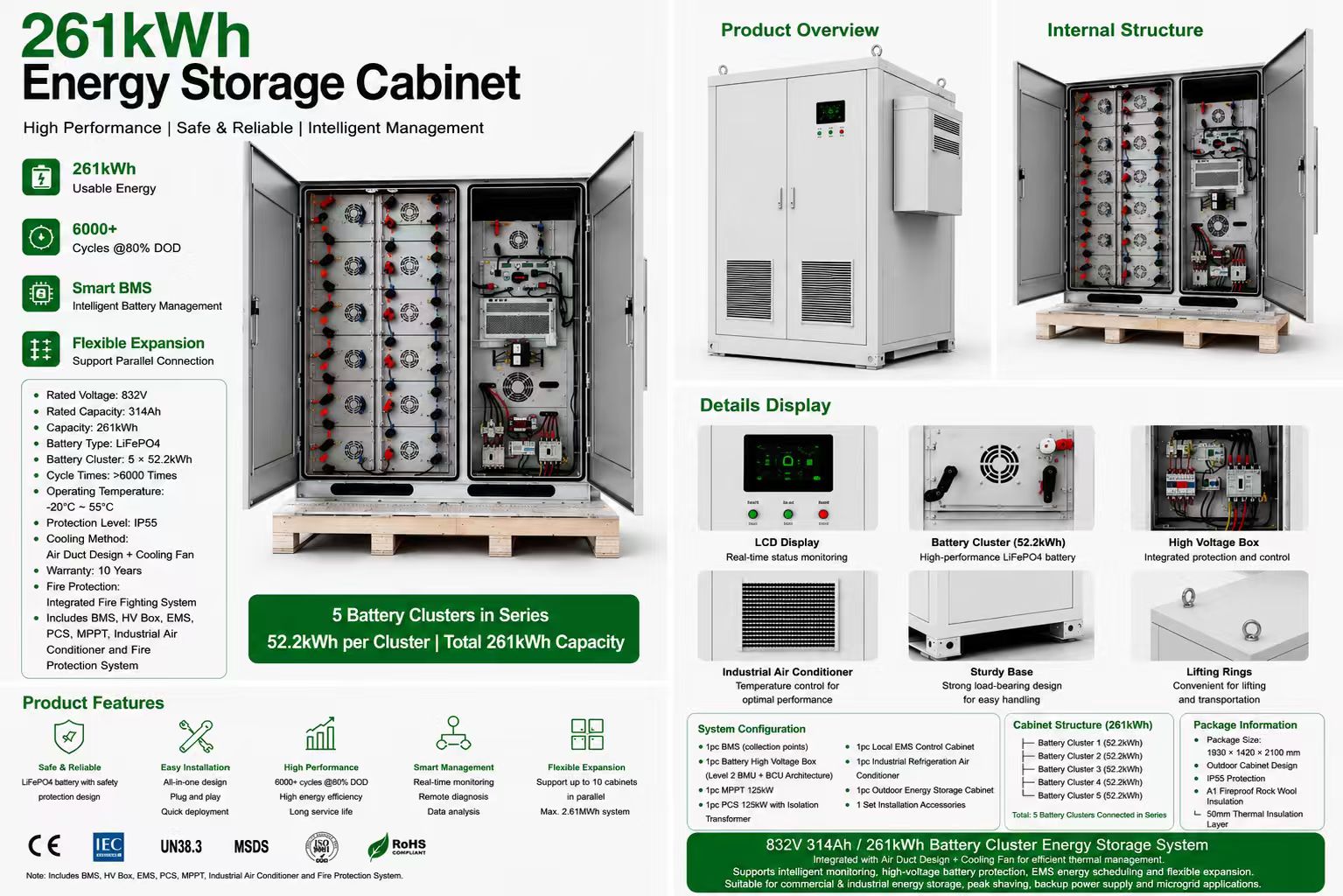
The storage cabinets in our commercial configurations carry a 10-year warranty; the controllers and mounting carry their own terms. The room's environment — heat, dust, access — decides how much of that warranty the site actually enjoys.
The short version
A hotel breaks the load assumptions that make factory solar straightforward: the peak lands after sunset, the load swings with occupancy, and none of it can be shed. That pushes the design toward a serious battery room, parallel MPPT architecture, and mounting engineered for a metal roof. The 250kW Ghana project on this page is being built to exactly that logic — and the parts worth studying are the room, the rails and the redundancy, not the panel count.
Built and shipped by Mars Solar West Africa projects, a solar and storage manufacturer supplying commercial projects across Africa, Southeast Asia and the Caribbean.
-
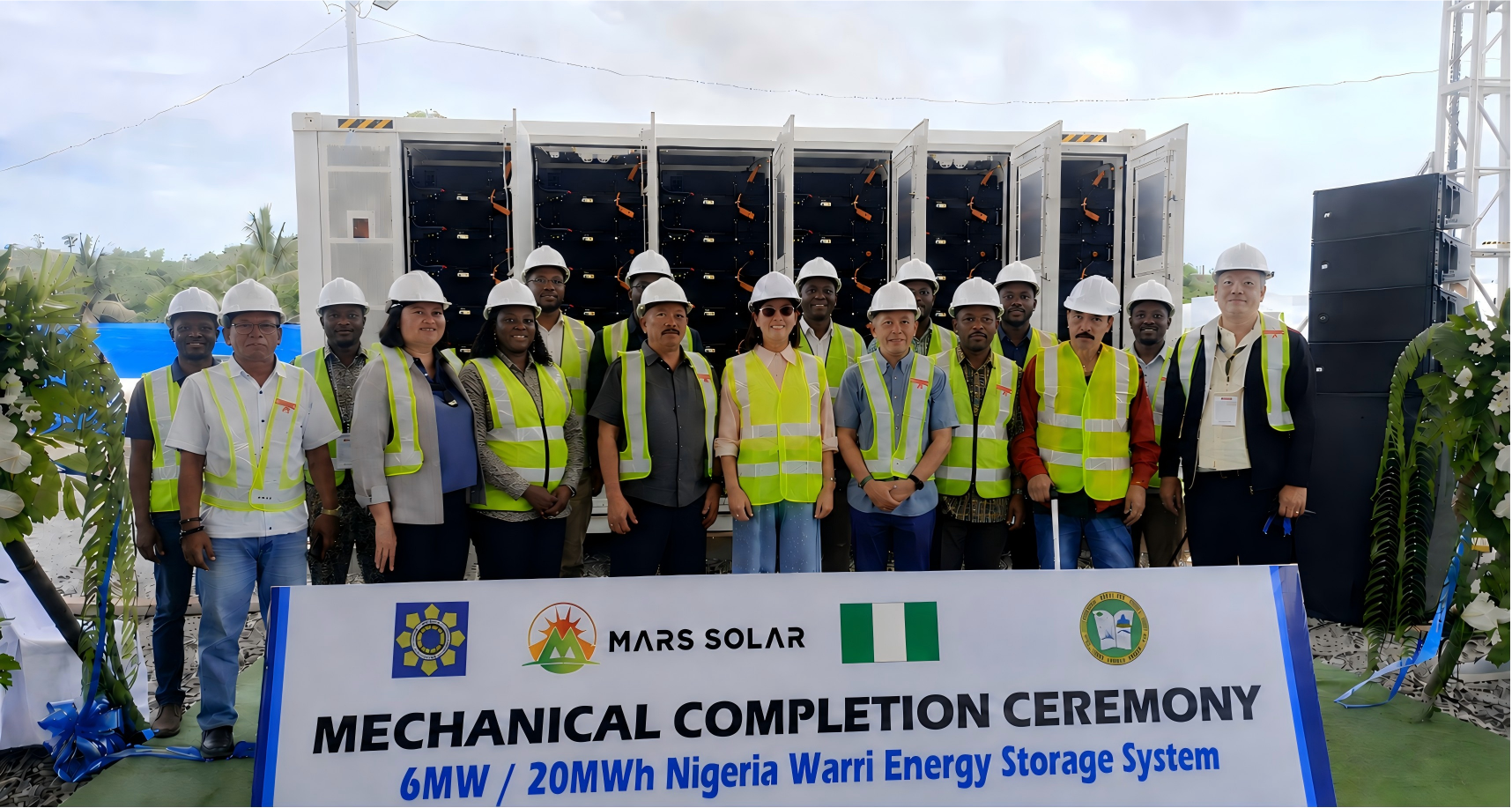 6MW 20MWh Solar Storage in Nigeria Factory + Farm + Residential Case StudyA 6MW solar PV + 20MWh LFP battery storage system in Nigeria powers an integrated factory, farm, and residential complex. The system delivers $108,000+ in monthly electricity savings, reaches payback in approximately 24 months, and provides 25 years of renewable power. This case study covers the engineering configuration, financial model, and operational performance of one of West Africa's most ambitious factory + farm + residential solar deployments.
Do you like ?0
Read more -
 BESS in Nigeria 2026: Battery Energy Storage Cost, Diesel Payback & Import GuideBESS in Nigeria: 2026 pricing, diesel payback, SONCAP, China import guide. Save 60%+ vs diesel. Factory-direct LFP from Mars Solar.
Do you like ?0
Read more -
 How Much Does Solar Cost in Nigeria? 2026 Real Pricing GuideSolar cost in Nigeria for 5kW to 250kW systems, in Naira and USD. Compare solar vs diesel vs grid, calculate payback, and explore financing options.
Do you like ?0
Read more -
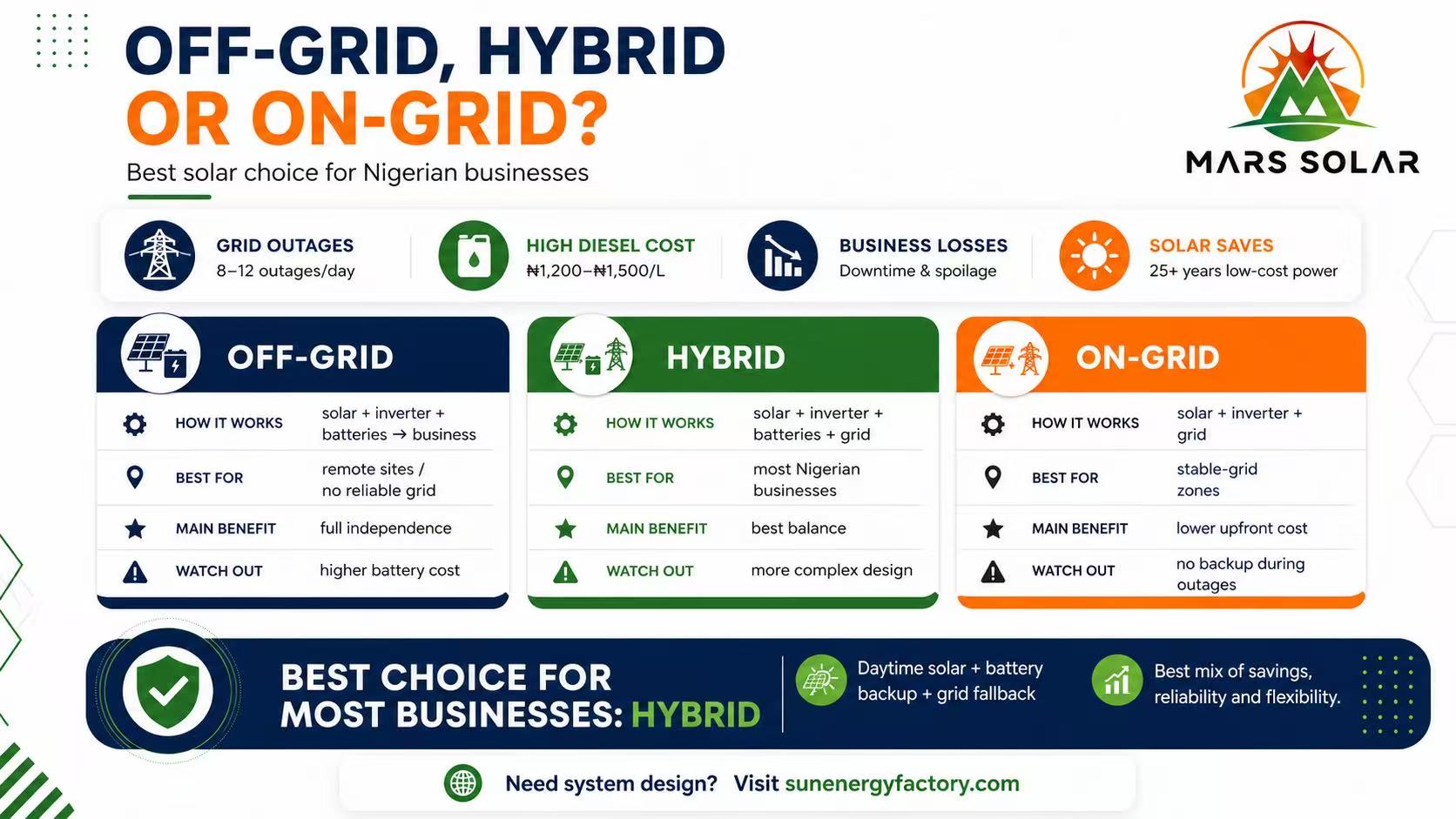 Solar Power Nigeria 2026: Off-Grid vs Hybrid vs On-GridNigeria’s unreliable grid and soaring diesel costs are forcing business owners to take solar seriously. But the biggest question remains: which system — off-grid, hybrid, or on-grid? This 2026 guide breaks down all three solar architectures for Nigeria
Do you like ?0
Read more -
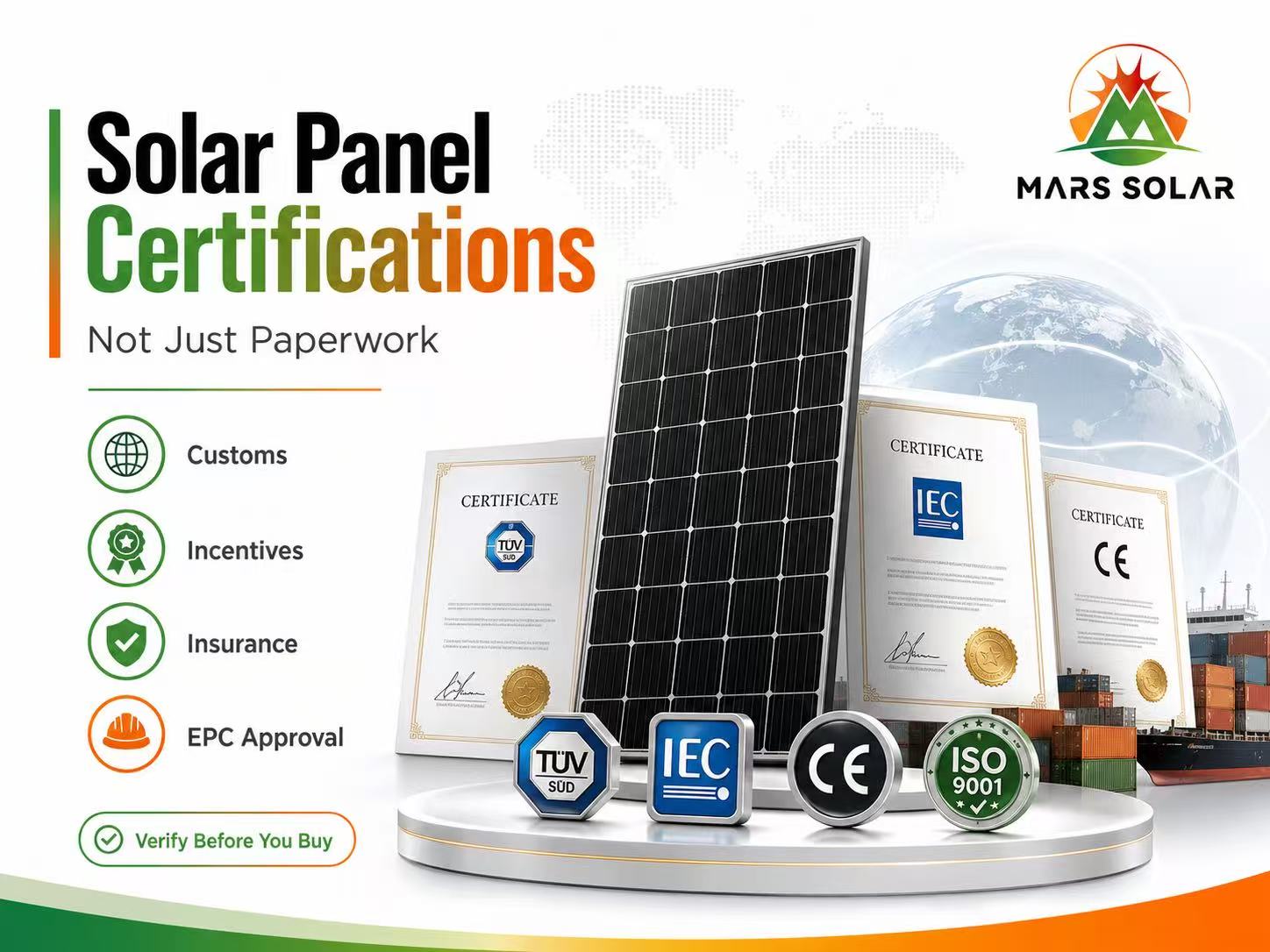 Solar Panel Certifications Explained: IEC, UL, TÜV, CE, ISO — The 2026 GuideA solar panel without proper certifications is unsellable in 90% of international markets. This 2026 guide explains every major certification — IEC 61215, IEC 61730, UL 61730, TÜV, CE, ISO 9001/14001/45001 — what it tests, who issues it, which markets req
Do you like ?0
Read more -
 Solar Panel Shipping & Container Loading: The 2026 Complete GuideThe solar panels leaving the factory are perfect. By the time they arrive at your warehouse, 3–7% might be damaged, delivery could be 2 weeks late, and demurrage at the destination port could wipe out your margin. This 2026 guide covers container types (2
Do you like ?0
Read more