Quick answer: 100kW solar Philippines
A 100kW solar system in the Philippines is technically straightforward and administratively fiddly. The six things that actually decide whether the commissioning goes smoothly are the transformer capacity, the three-phase wiring scheme, the anti-backflow meter setting, DC isolator placement, MC4 termination quality, and what the local utility tariff class will pay you for export.
On this page
- The site: cold storage, meat processing, and a load people undercount
- Lesson 1: The transformer decides whether a grid-tied system can even run
- Lesson 2: Three-phase three-wire versus four-wire — the Philippine meter trap
- Lesson 3: The equipment room needs internet, decided in advance
- Lesson 4: MC4 connectors are where "sudden performance drops" live
- Lesson 5: Add a DC isolator — for the service team, not the datasheet
- Lesson 6: Local installation cost is real, and it is quotable
- What the local electricity numbers looked like
- What we would put in every Philippine commercial quote checklist
- Frequently asked questions
- The short version
A 100kW grid-tied solar system for a cold storage and meat processing plant in Pangasinan taught us more in one commissioning week than most spec sheets teach in a year — because the problems that surface on a Philippine commercial site are almost never the panels. They are the transformer, the wiring scheme, the meter, and the things nobody confirmed before the container shipped.
This is a field post-mortem of that installation, written for anyone planning a similar commercial solar installation in the Philippines. The numbers below are from the project record — actual site conditions and actual costs in Philippine pesos, not market averages.
The site: cold storage, meat processing, and a load people undercount
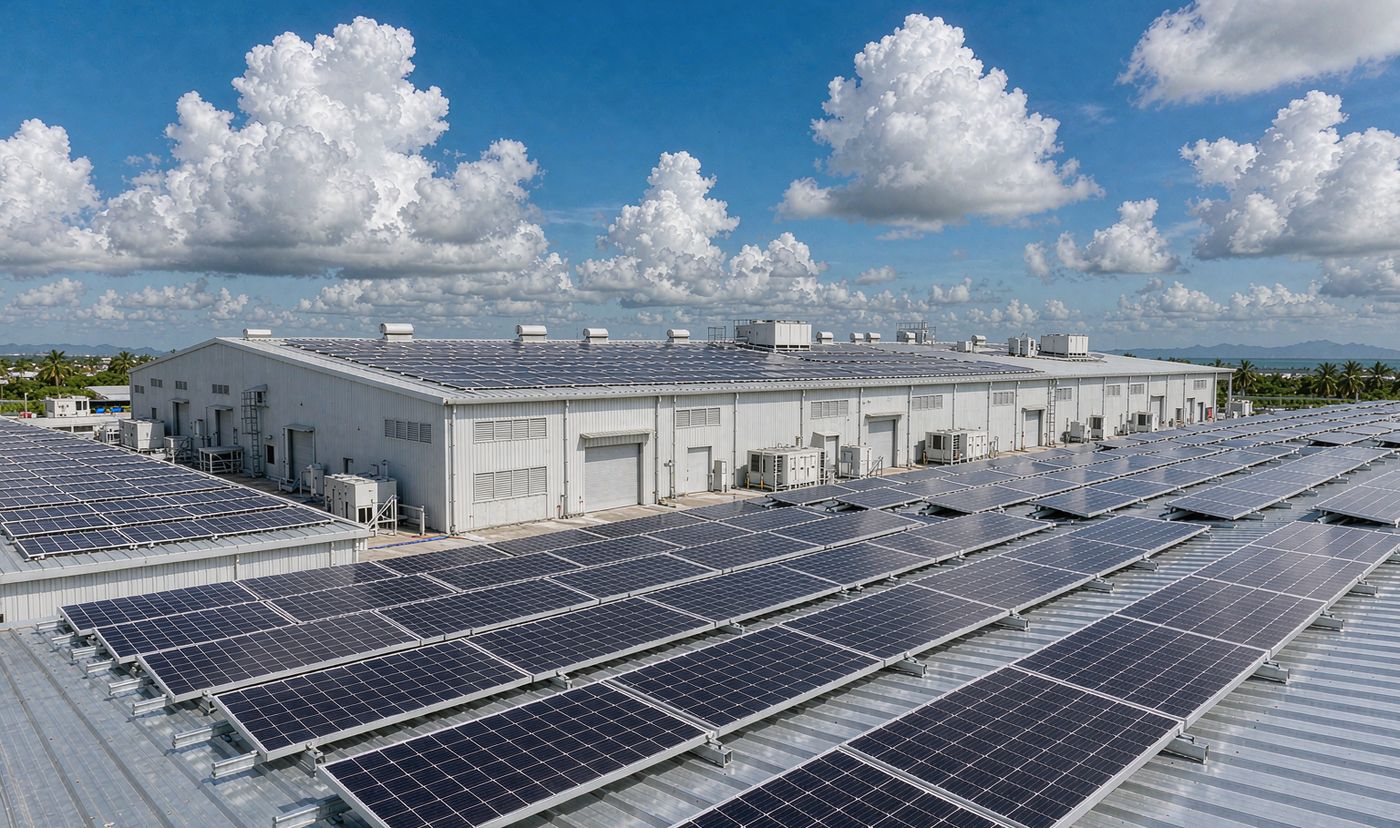
The facility runs cold rooms plus meat processing — which means the real load is not only the refrigeration compressors. Cutting machines and packaging machines share the same supply, and they start and stop in bursts that a compressor-only calculation would never predict.
That is lesson zero, and it applies to any agri-processing site: quote the whole production line, not the headline load. A cold storage quote built around compressor duty alone will undersize both the inverter's surge headroom and the battery's evening window, because the packaging line tends to run exactly when the cold rooms are recovering.
Lesson 1: The transformer decides whether a grid-tied system can even run
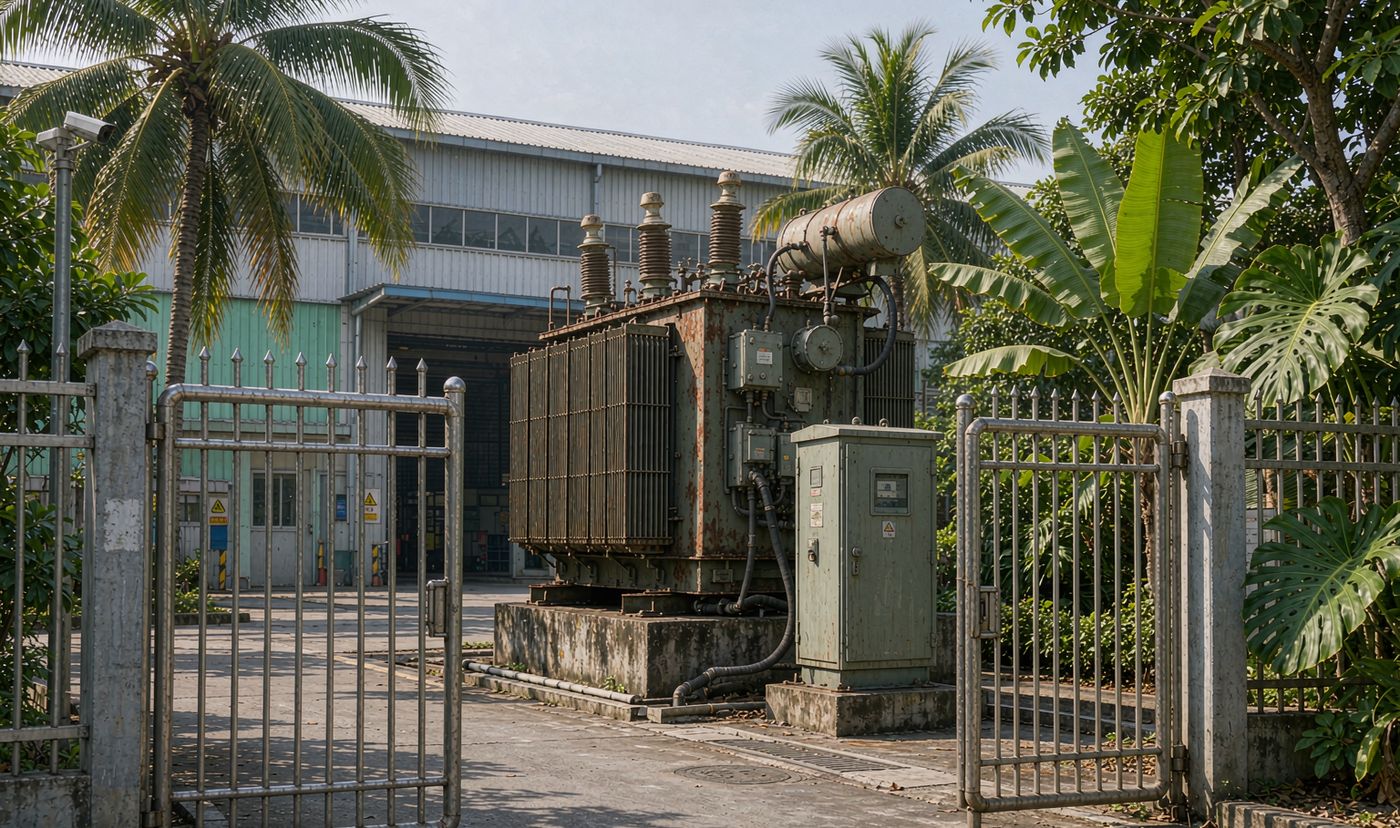
The site had two 75kVA transformers supplying a mix of three-phase 220V and single-phase circuits. When the 100kW system went to parallel operation, one inverter would run while the other refused to come online, reporting utility faults — even though each inverter, tested individually, worked fine.
The diagnosis landed on the supply side, not the hardware: the site needed an additional three-phase 220V transformer with proper 120° phase separation. On this project that replacement cost PHP 150,000 — a real number that had no line in the original budget, because nobody had surveyed the transformer before quoting.
Two rules came out of this job:
- Transformers cannot simply be paralleled; they must be correctly phased and configured. Assumed otherwise, and the second unit will never start.
- A grid-tied system must be quoted against the transformer's capacity and wiring, not against the customer's monthly bill. The bill tells you the energy; the transformer tells you whether the system can connect at all.
Lesson 2: Three-phase three-wire versus four-wire — the Philippine meter trap
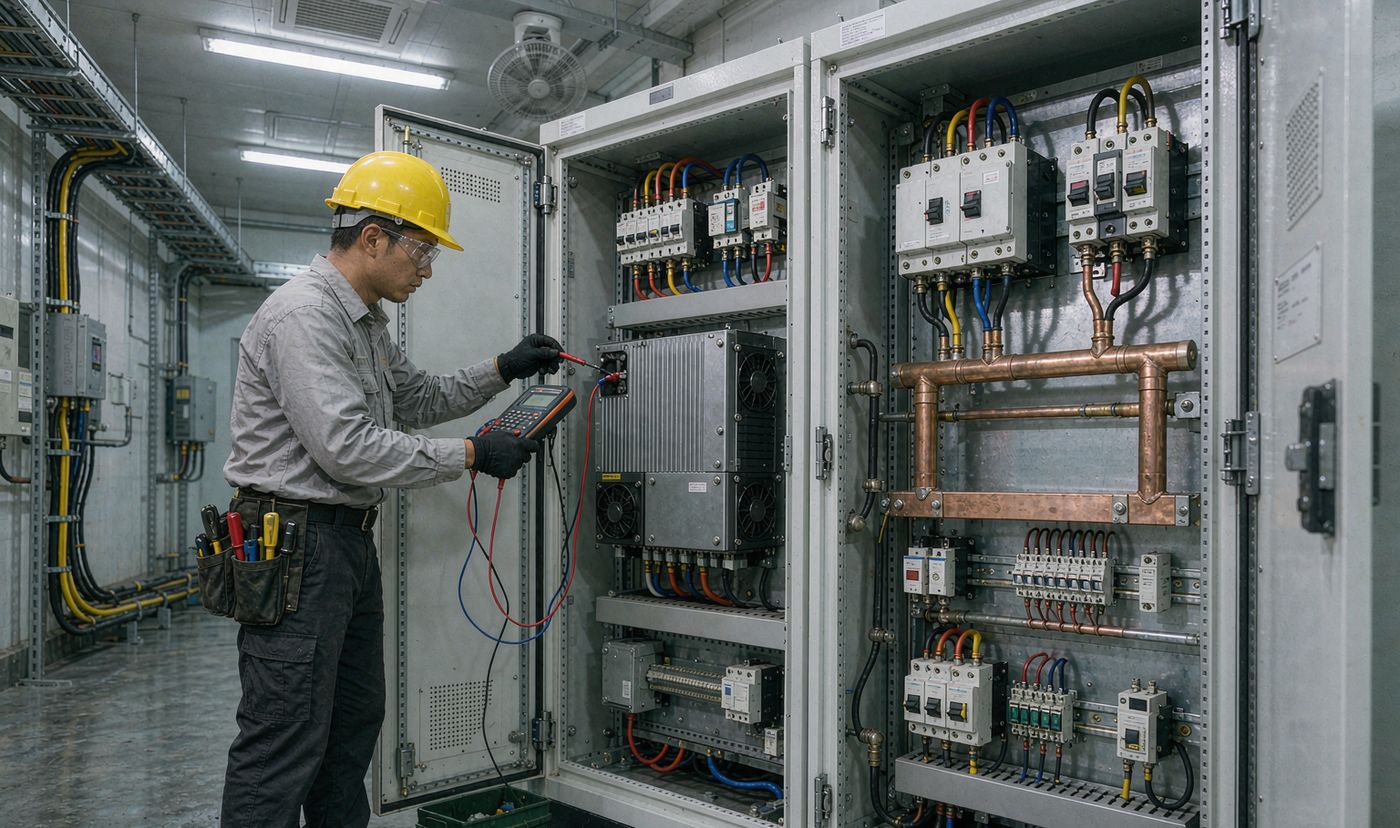
This is the one that catches the most first-time importers.
The customer's supply is three-phase three-wire. The anti-backflow (export-limit) metering solution supplied for the project expected three-phase four-wire. Connected to a three-wire supply, the meter reports faults that look exactly like hardware failure — and the fix is swapping to a meter that matches the site's wiring, not replacing the inverter.
The record from this job is blunt about it: most commercial supplies in the Philippines are three-phase three-wire, and this must be confirmed with the customer before the order is placed. One confirmatory question to the site electrician — "is your supply three-wire or four-wire?" — prevents a commissioning week of meter faults.
Lesson 3: The equipment room needs internet, decided in advance
Without a network drop in the equipment room, the monitoring platform can only be reached through a phone hotspot — workable for an hour of commissioning, unusable for ongoing remote support. On this project the site had no ready network, so setup fell back to hotspot tethering, which is fragile exactly when you need it most.
If the room where the inverters live has no LAN, have the customer pull one before the install team arrives. Remote diagnostics on an export market site — where the engineering team is usually a continent away — depends entirely on that connection staying up.
Lesson 4: MC4 connectors are where "sudden performance drops" live
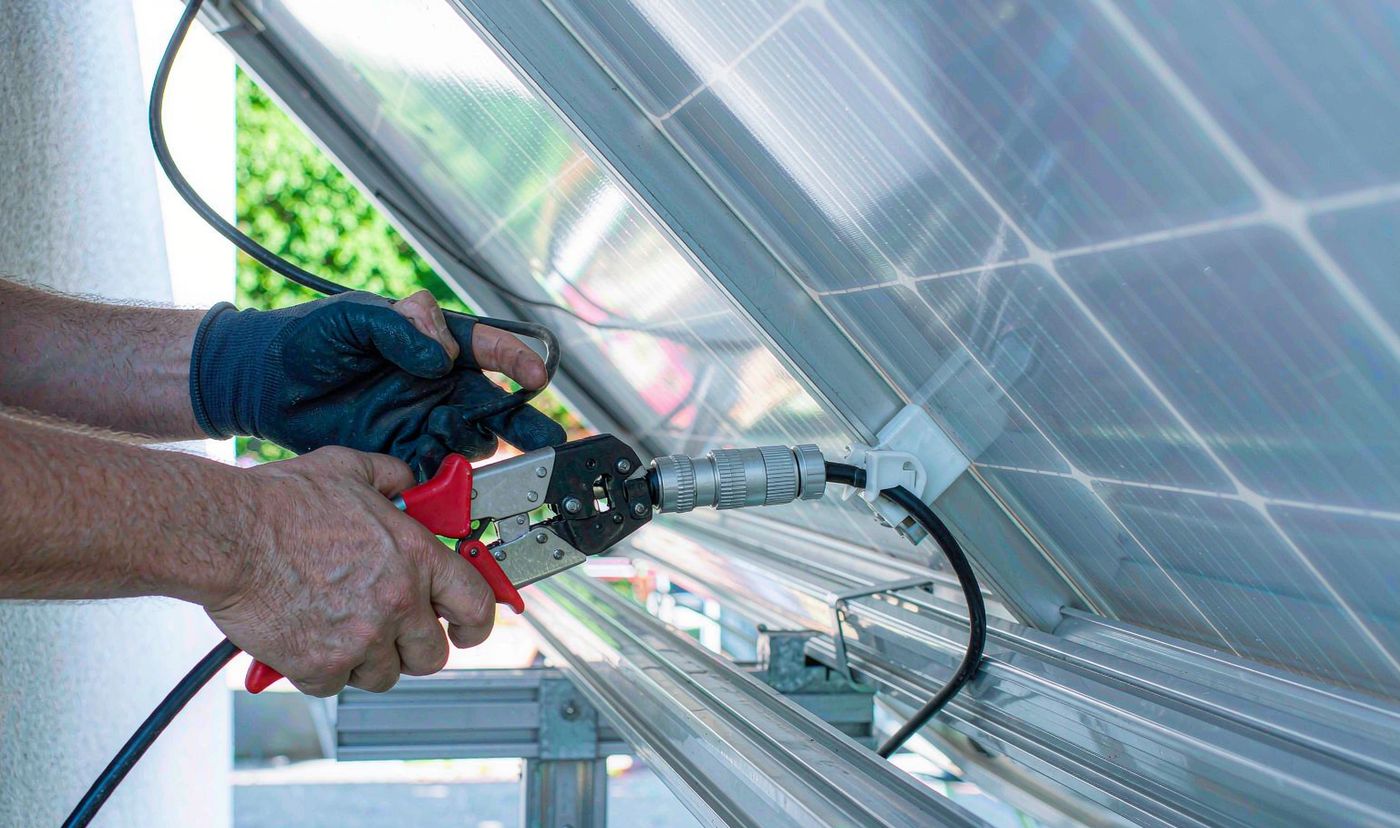
The record's maintenance note is worth repeating verbatim in spirit: if generation was strong and then falls off, go to the roof and check the MC4 connections first, and check the DC side for earth leakage before anything else.
A poorly seated MC4 develops resistance, heats, and eventually fails — and the array-level symptom is a quiet, partial loss of output that looks like everything else (dust, shading, inverter derating). It is also the failure most likely to escalate into burned connectors if the DC side cannot be isolated quickly. Which leads to the next point.
Lesson 5: Add a DC isolator — for the service team, not the datasheet
A DC disconnect between array and inverter costs little and buys the ability to de-energize the DC side safely when a connection is suspect. On this project the recommendation was explicit: include it, so that voltage and current can be checked safely during service visits and a failing MC4 cannot take the inverter with it.
None of this shows up in a performance comparison. All of it shows up in the second year.
Lesson 6: Local installation cost is real, and it is quotable
The installation on this project cost PHP 450,000 all-in; panels-only installation would have been PHP 250,000 with a one-year workmanship warranty. Those are Pangasinan numbers for a 100kW commercial rooftop — useful as an order-of-magnitude reference for budgeting, not as a quote, because access, roof type and travel all move it.
One more practical note from the trip record: a proper solar installation tool set (torque drivers, MC4 tooling, crimpers, cable strippers, hex sets, multimeters) is genuinely hard to source locally and expensive where it exists. Sites that budget for a tool kit alongside the hardware save their install crews a great deal of improvisation.
What the local electricity numbers looked like
For context on the payback side, the rates recorded around this project: energy sold back to the grid at about PHP 6/kWh, Manila residential around PHP 13/kWh, commercial around PHP 12/kWh, and Isabela Province around PHP 12 residential / PHP 8 commercial. Rates move with fuel and FX pass-throughs — treat them as the shape of the local market, and confirm the current band with the distribution utility before modeling payback.
The structural point survives any rate revision: a cold storage facility runs its heaviest load through daylight hours, which is precisely when a grid-tied array produces. That alignment — not the export tariff — is what makes the economics work for Philippine food processing sites.
What we would put in every Philippine commercial quote checklist
- Transformer capacity, wiring scheme and phase configuration — confirmed on site, in writing
- Supply type: three-phase three-wire or four-wire, and the exact anti-backflow meter model the utility requires
- LAN availability in the equipment room
- Full production-line load profile, including motor starting — not just the headline load
- DC isolator on the array side
- MC4 tooling and a torque-checked connection plan
- Installation scope priced locally, with workmanship warranty terms stated
Frequently asked questions
Is 100kW grid-tied suitable for a cold storage facility?
The load profile fits well — compressors run through daylight, which is when a grid-tied array produces. What decides feasibility is the site's transformer capacity and export-metering rules, both of which are survey items, not catalog items.
Why did the second inverter refuse to start?
Parallel operation requires correctly phased supply. The site's transformer configuration did not provide it, and the fix was a properly phased three-phase transformer, not an inverter replacement.
What does anti-backflow metering have to do with wiring?
Export-limit meters are built for either three-wire or four-wire supplies. Mismatched, they report meter faults that mimic hardware failure. Confirm the site's wiring before ordering the metering kit.
Can we skip the site survey if we have the electricity bills?
No. The bills describe energy; the survey describes whether and how the system can connect — transformer, wiring scheme, meter type, room network, roof condition. This project's PHP 150,000 transformer surprise is what an unsurveyed connection looks like.
The short version
On a Philippine commercial install, the panels are the easy part. The transformer phasing, the three-wire-versus-four-wire meter trap, the missing LAN drop and the MC4 you torque properly are what separate a system that commissions in a week from one that generates service calls for a year. Survey the connection, confirm the wiring, isolate the DC side — and quote the whole production line while you are at it.
Built and shipped by Mars Solar Philippines projects, a solar and storage manufacturer supplying commercial projects across Africa, Southeast Asia and the Caribbean.
-
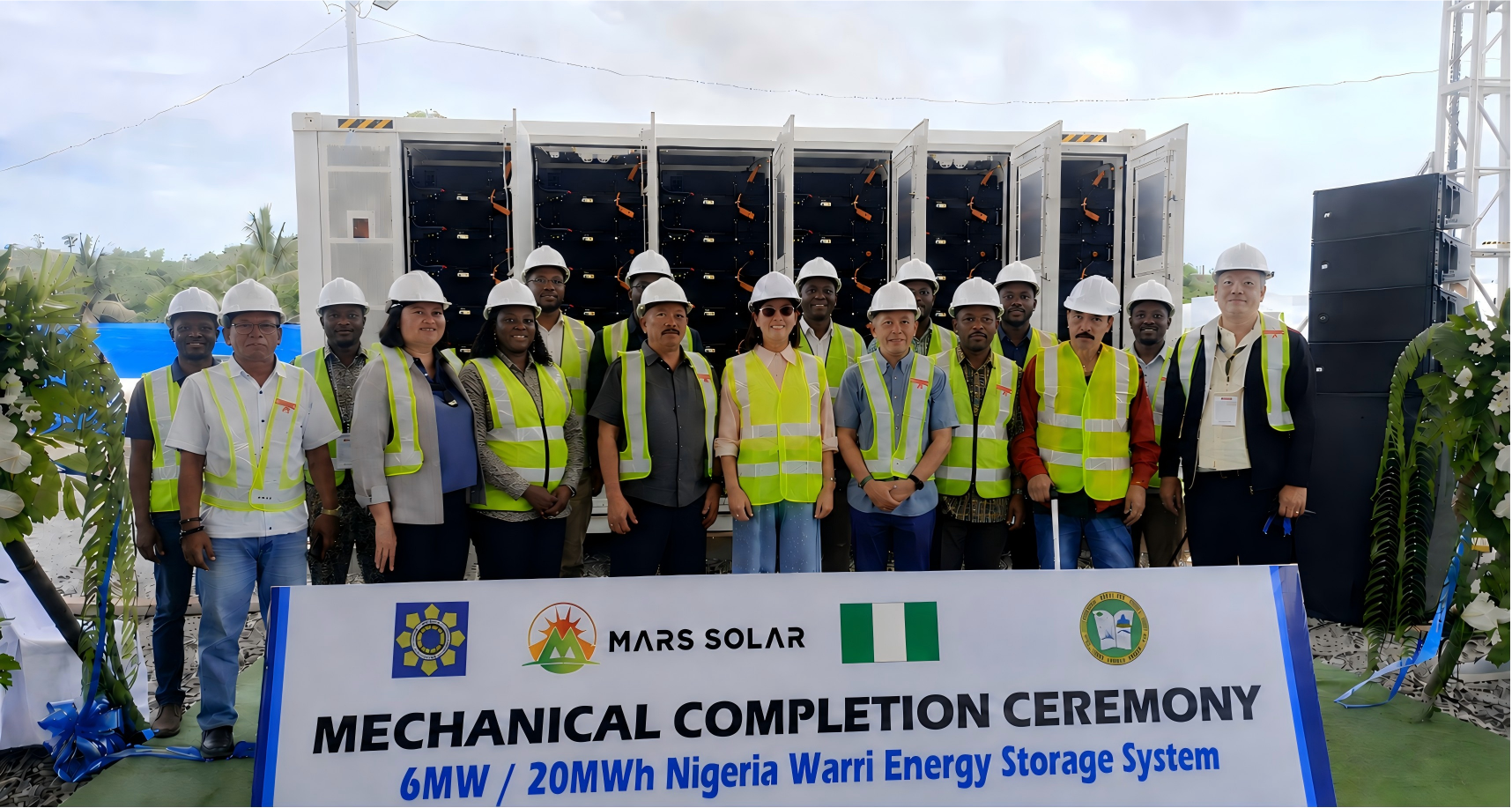 6MW 20MWh Solar Storage in Nigeria Factory + Farm + Residential Case StudyA 6MW solar PV + 20MWh LFP battery storage system in Nigeria powers an integrated factory, farm, and residential complex. The system delivers $108,000+ in monthly electricity savings, reaches payback in approximately 24 months, and provides 25 years of renewable power. This case study covers the engineering configuration, financial model, and operational performance of one of West Africa's most ambitious factory + farm + residential solar deployments.
Do you like ?0
Read more -
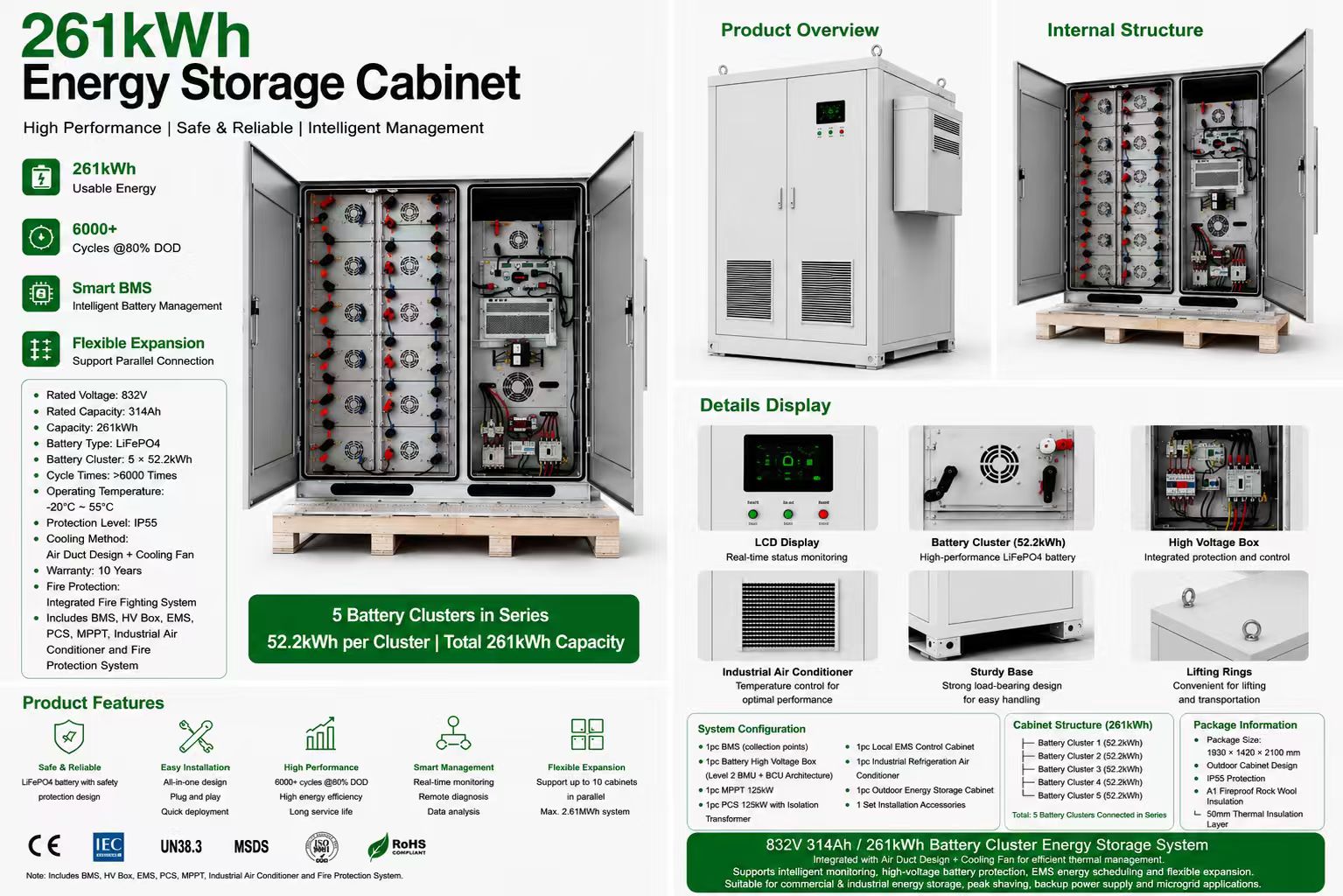 BESS in Nigeria 2026: Battery Energy Storage Cost, Diesel Payback & Import GuideBESS in Nigeria: 2026 pricing, diesel payback, SONCAP, China import guide. Save 60%+ vs diesel. Factory-direct LFP from Mars Solar.
Do you like ?0
Read more -
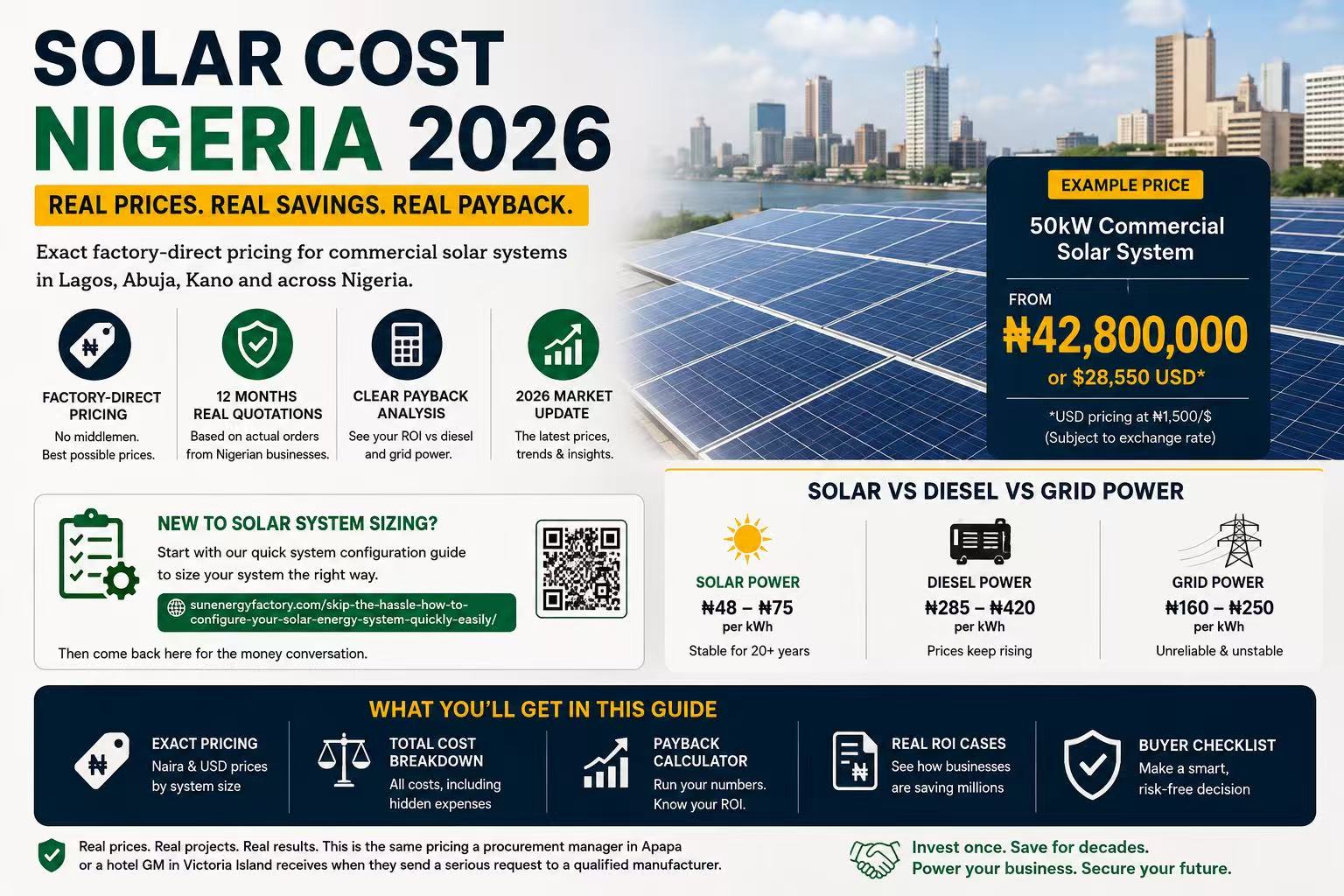 How Much Does Solar Cost in Nigeria? 2026 Real Pricing GuideSolar cost in Nigeria for 5kW to 250kW systems, in Naira and USD. Compare solar vs diesel vs grid, calculate payback, and explore financing options.
Do you like ?0
Read more -
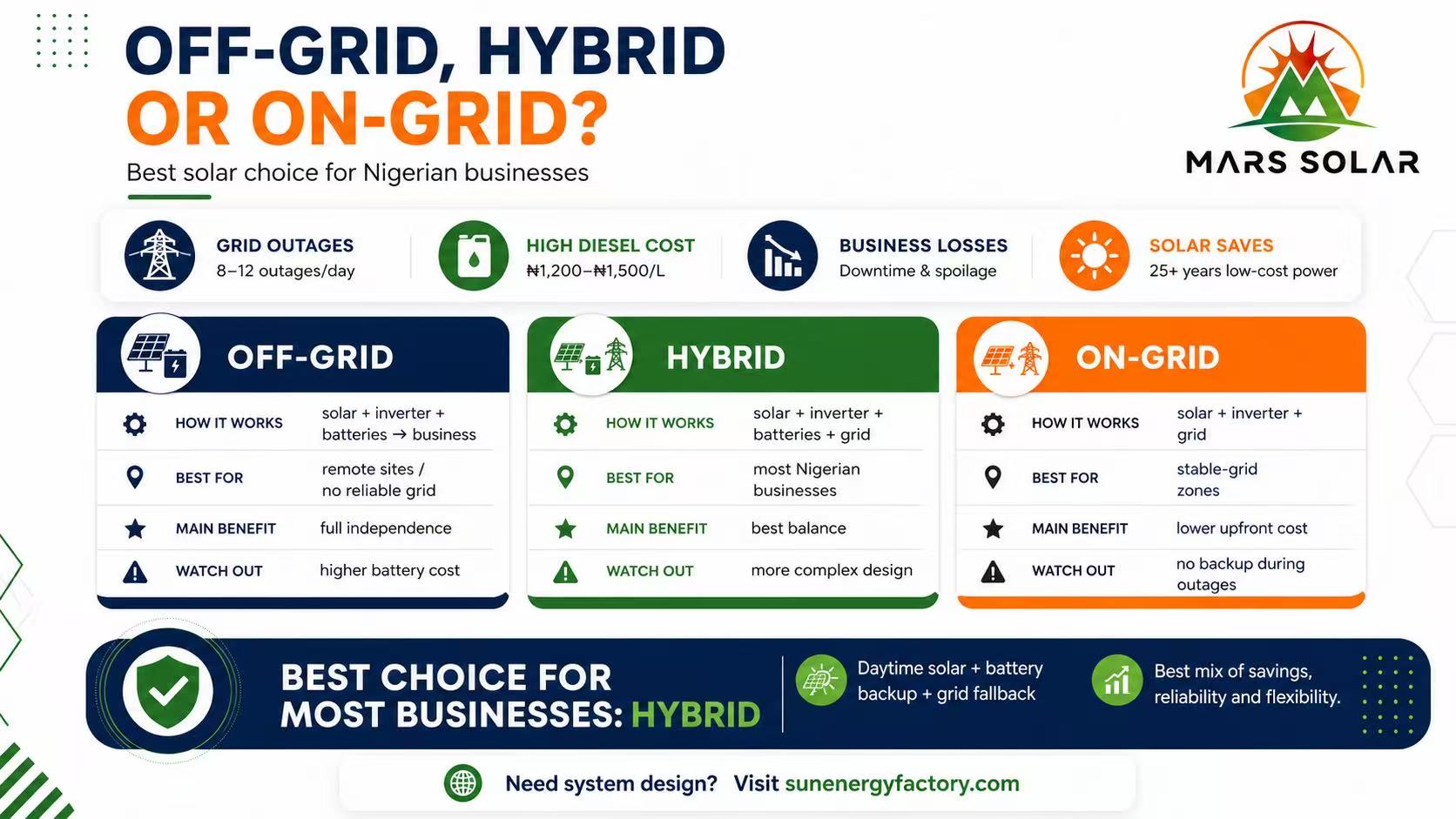 Solar Power Nigeria 2026: Off-Grid vs Hybrid vs On-GridNigeria’s unreliable grid and soaring diesel costs are forcing business owners to take solar seriously. But the biggest question remains: which system — off-grid, hybrid, or on-grid? This 2026 guide breaks down all three solar architectures for Nigeria
Do you like ?0
Read more -
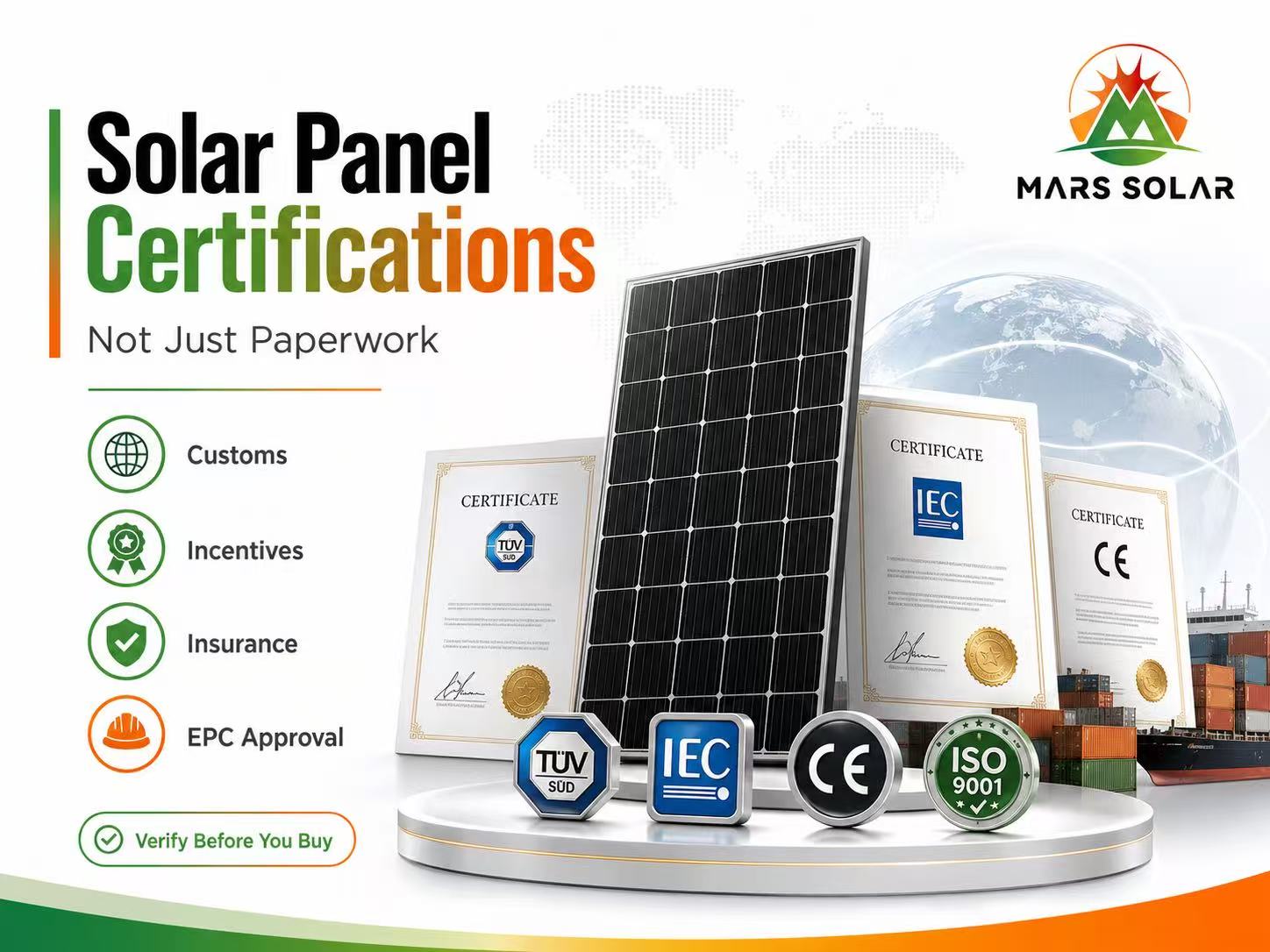 Solar Panel Certifications Explained: IEC, UL, TÜV, CE, ISO — The 2026 GuideA solar panel without proper certifications is unsellable in 90% of international markets. This 2026 guide explains every major certification — IEC 61215, IEC 61730, UL 61730, TÜV, CE, ISO 9001/14001/45001 — what it tests, who issues it, which markets req
Do you like ?0
Read more -
 Solar Panel Shipping & Container Loading: The 2026 Complete GuideThe solar panels leaving the factory are perfect. By the time they arrive at your warehouse, 3–7% might be damaged, delivery could be 2 weeks late, and demurrage at the destination port could wipe out your margin. This 2026 guide covers container types (2
Do you like ?0
Read more